

Saved Bookmarks
| 1. |
An ideal gas isexpanded from ( p_(1) ,V_(1),T_(1)) to (p_(2),V_(2), T_(2)) under different conditions. The correct statements (s) among the following is ( are ) : |
|
Answer» The work done by the gas is less when it is expanded reversiblyfrom `V_(1)` to `V_(2)`under adiabatic conditions as compared to that when expanded reversibley from `V_(1)`to `V_(2)` under isothermal conditions. 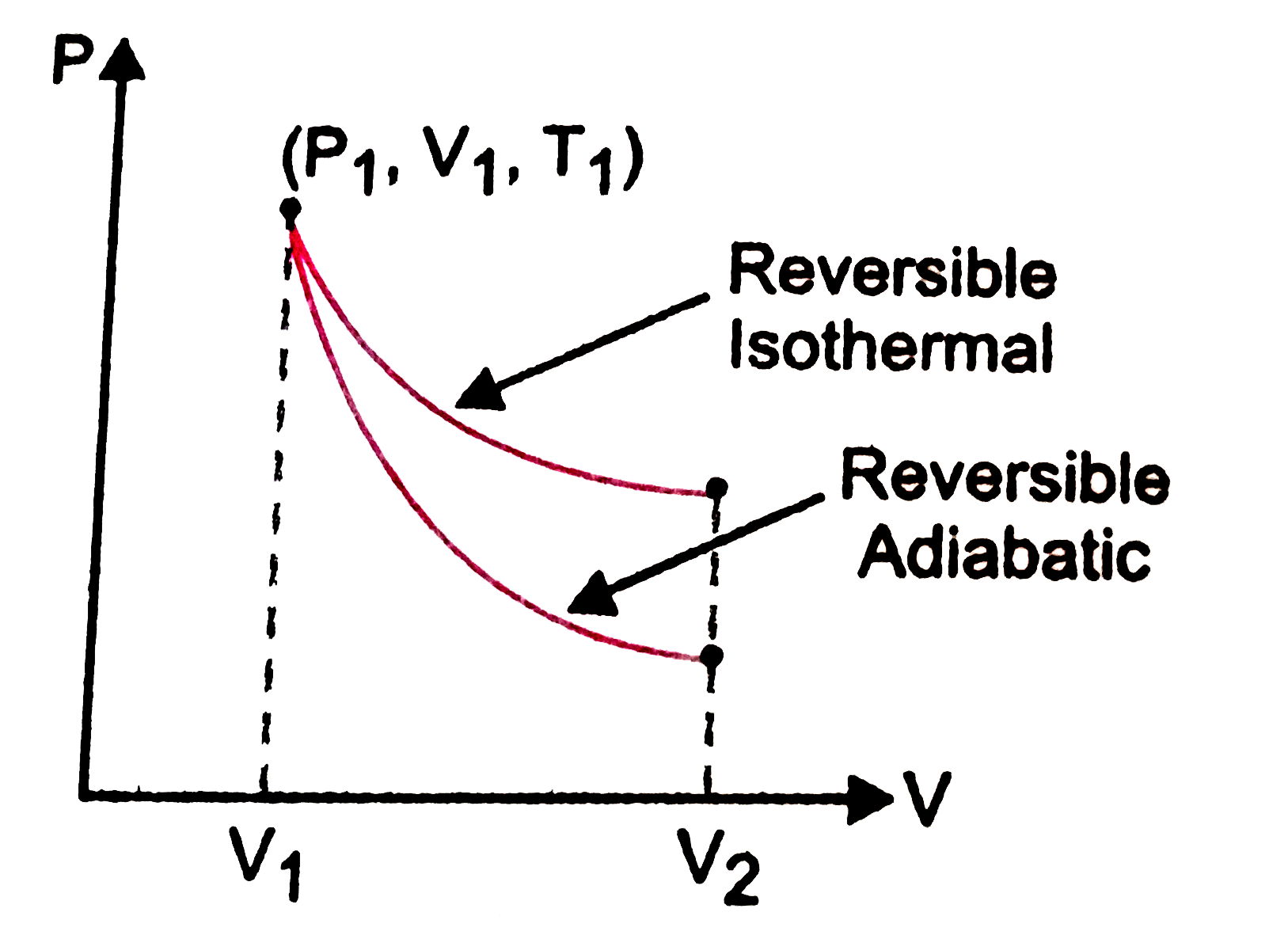 Area under the curve of reversible isothermal expansion is more thanthat under the adiabatic curve. Hence, work done in reversible isothermal expansion is more. (B) For reversible expansion with `T_(1) = T_(2)` means isothermal expansion.For reversible isothermal expansion of a gas, `DeltaU = 0 (:' DeltaU = n C_(v) DeltaT)` In reversible adiabatic expansion, `T_(2) LT T_91)` i.e., `DeltaT = -ve,:. DeltaU = n C_(v) DeltaT = -ve ` ( and not `+ve)` (c ) In free expansion , `P_(ext) = 0:. W=0` If process is carried out isothermally , `DeltaU =0`. Hence, by 1st law , `DeltaU= q + w` or `q= DeltaU -w=0-0=0` ( i.e. adiabatic). If process is carried out adiabatically , `q=0`. As `w=0`, therefore,by 1st law, `DeltaU = q+w =0` ( isothermal). (d) 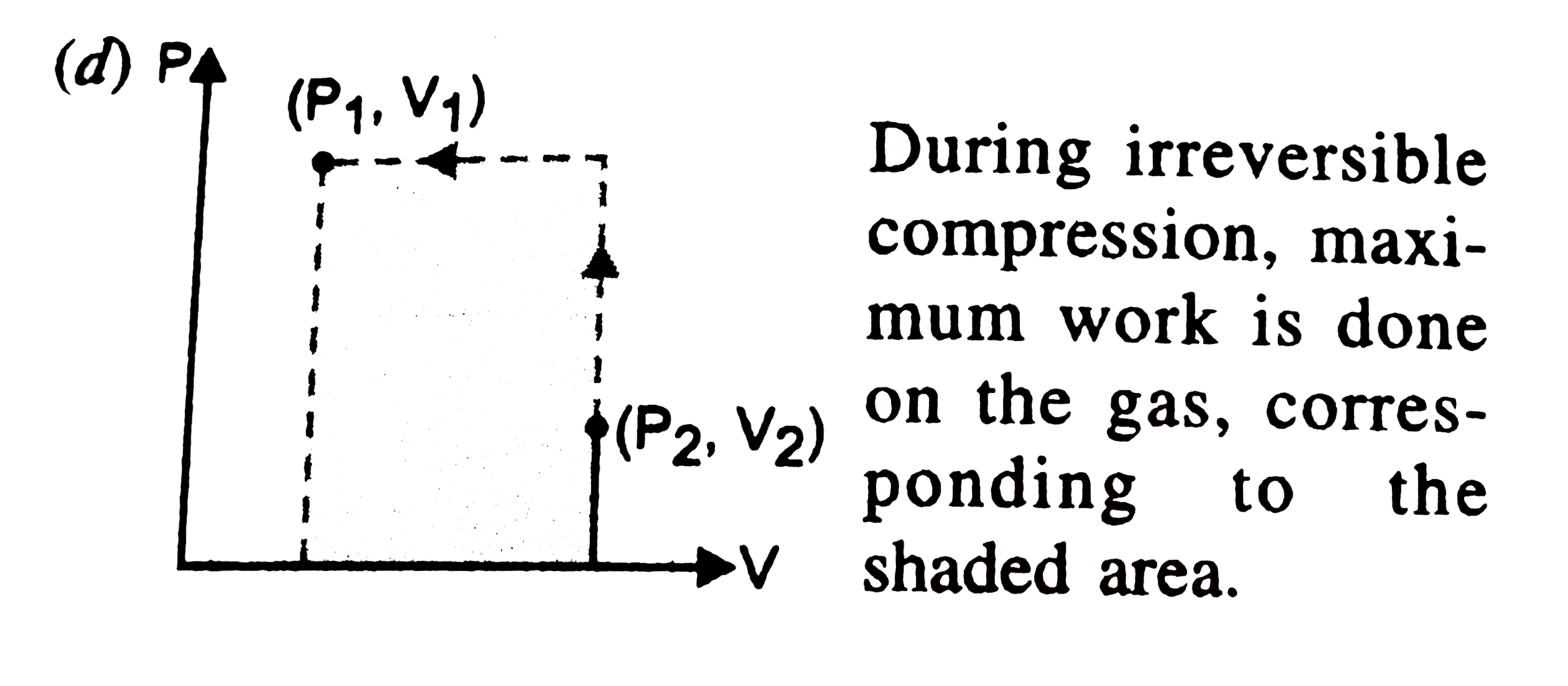 During irrevesible compression,maximum work is done on the gas, corresponding to the shaded area. During irrevesible compression,maximum work is done on the gas, corresponding to the shaded area.
|
|