

Saved Bookmarks
| 1. |
Answer the following (a) How many sigma, pi non - bonding electrons present in (i) P_(4)O_(6) (ii) P_(4)O_(10) (b) Which of the following are isostructural and isocelectonic ? NO_(3), CO_(3)^(2-),CIO_(3)^(Θ), SO_(3) (c ) Why CO_(2) and SO_(2) are not isostructural ? (d) Why PCI_(5) dissociate to give PCI_(3) and CI_(4) whereas SF_(6) does not dissociate to give SF_(4) and F_(2) on heating ? (e) Discuss the shapes of molecular orbitals formed by the combination of the following atomic orbitals (i) 2p_(z) and 2p_(z) (ii) 2p_(x) and 2p_(x) (f) Why IF_(7) dissociate to give IF_(2) + (5)/(2)F_(2) not IF_(2) + F_(2) Expalin (g) Why axial bonds of PCI_(5) are longer than equatorial bonds ? (h) BH_(4)^(Θ) and overset(o+)NH_(4) are isolobal Explain (i) Name the anion which is isostructural with BF_(3) (j) Name the cation which is isostructural with CH_(4) (k) Which of the following alkali metal chlorides is expected th have the highest melting point (i) LiCI (ii) KCI (iii) RbCI (iv) NaCI . |
|
Answer» Solution :`sigma` bonds `=12` `pi` BOND = Zero Each `P` has 1 lp of `e^(-')s` Four `P` ahs `4lp's =8` non-bonding `e^(-)s` Each O-atom has `2lp' s of e^-'s =32` `sigma` bonds `=12 + 4 =16` `pi` bond = 4 P-atom does not have `lp' s` of `e^-'s` The O-atom has `2 xx 10 = 20 lp's =40` non-bonding `e^-'s` (B) `NO_(3)^(Θ)` and `CO_(3)^(2-)` are isoelectronic and isostructural Number of `e^-'s` in `NO_(3)^(Θ) = 7 + 24 + 1 = 32` Number of `e^-'s` in `CO_(3)^(2-) = 6 + 24 + 2 = 32` Hence they are isoelectronic Therefore, hybridisation of central atom is both cases is `sp^(2)` Hence they are isotructural also (c )`C` in `CO_(2)` is sp hybridised and is linear `S` in `SO_(2)` in `sp^(2)` hybridised and is bent molecule (d)`PCI_(5)` and refer to Section 2.21 (5) for `SF_(6)` (h) Both are `sp^(3)` hybridised and have tetrahedral shape (i) `NO_(3)^(Θ)` (Triangular planar) (j) `overset(o+)(NH_(4)` (Tetrahedral) (k) LATTICE energey `(Delta_(U)H^(Θ))` decrease down the group `(darr)` . Although `Delta_(U)H^(Θ)` of LiCI is higher than that of NaCI but `LiCI` is covalent and NaCI is ionic in NATURE After `NaCI Delta_(U)H^(Θ)` decreases as the size of alkali metal ion increases As melting point depends upon lattice energy and ionic/covalent nature of the compounds thus naCI has the highest melting point . 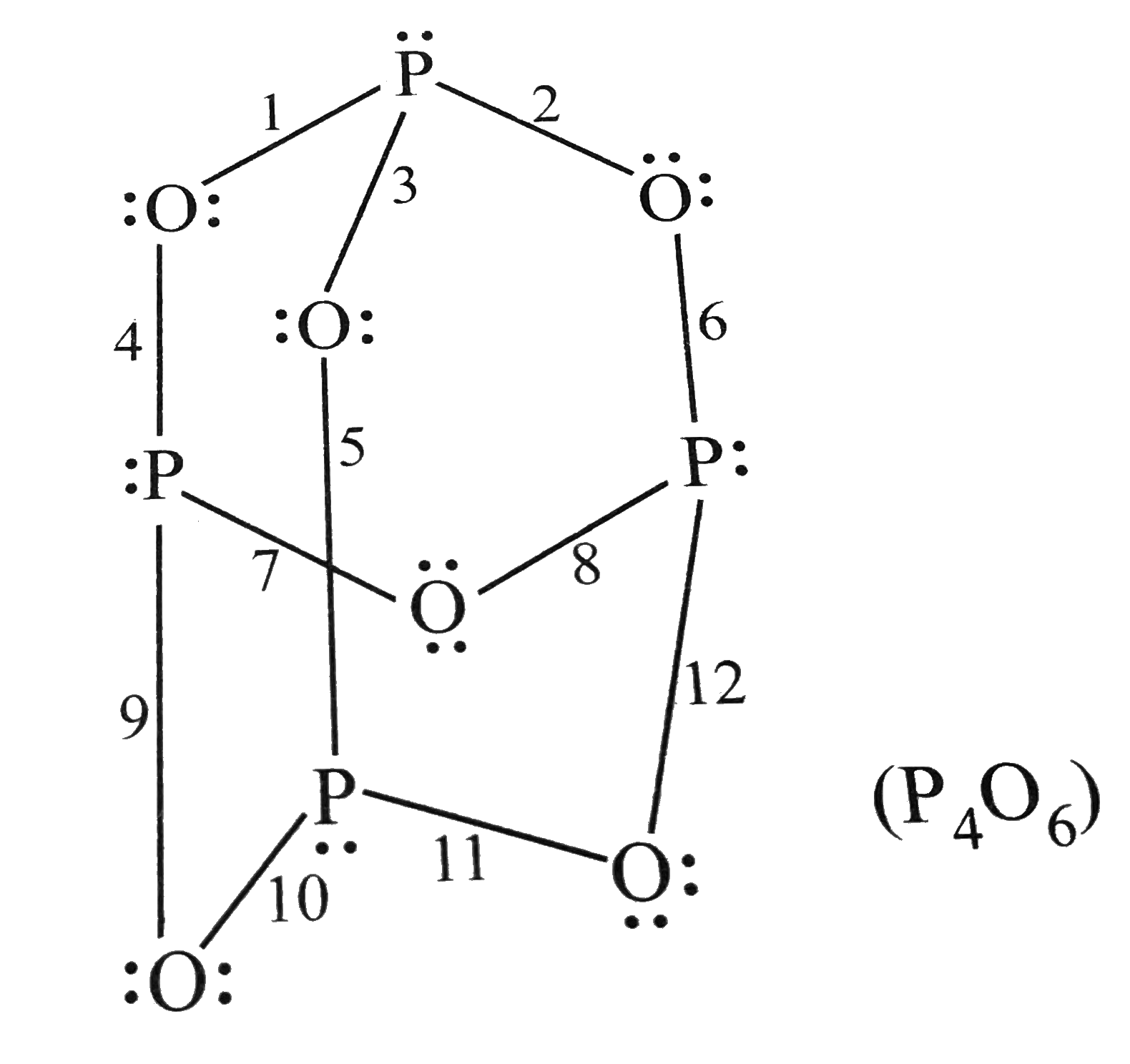 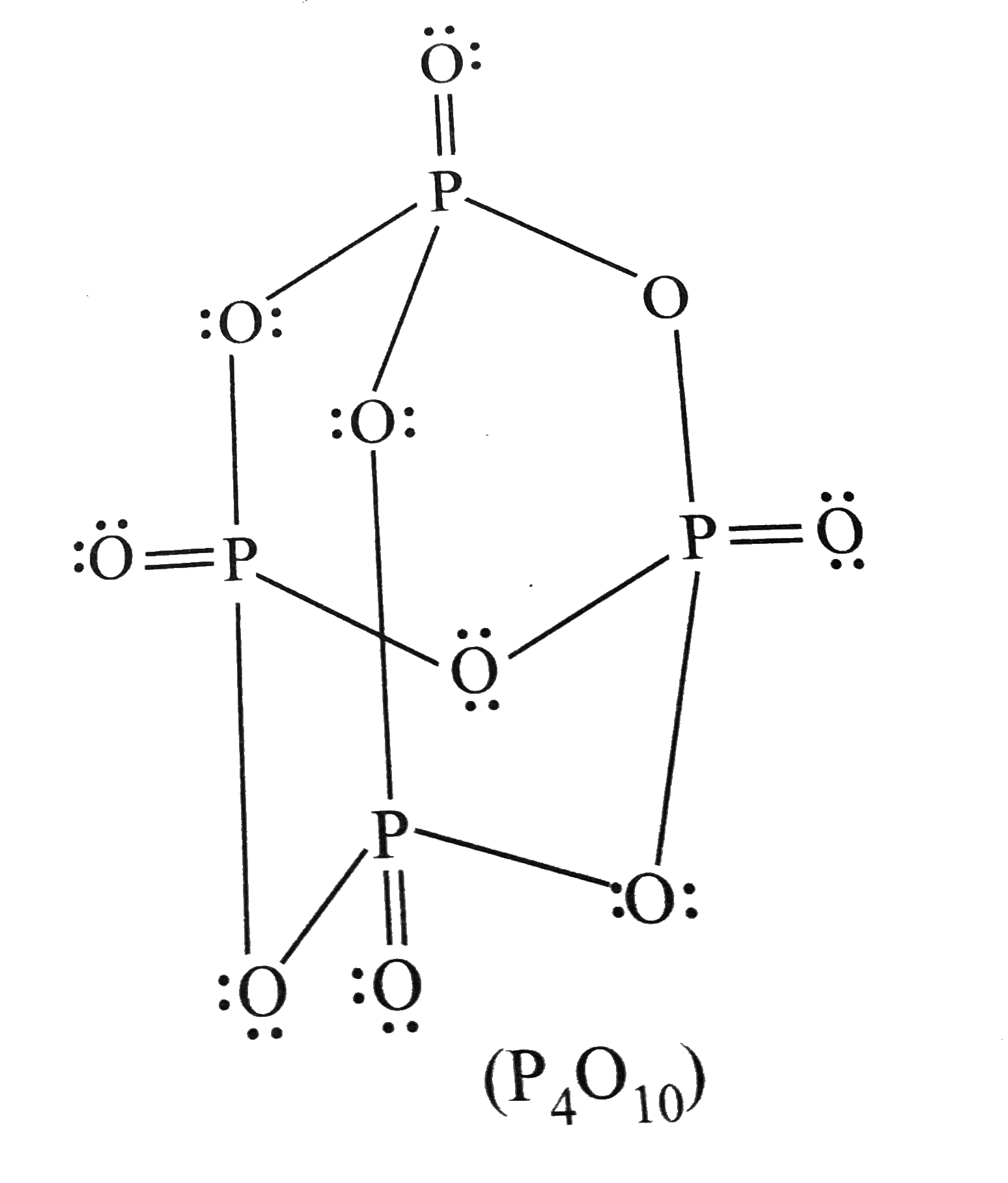 . .
|
|