Saved Bookmarks
| 1. |
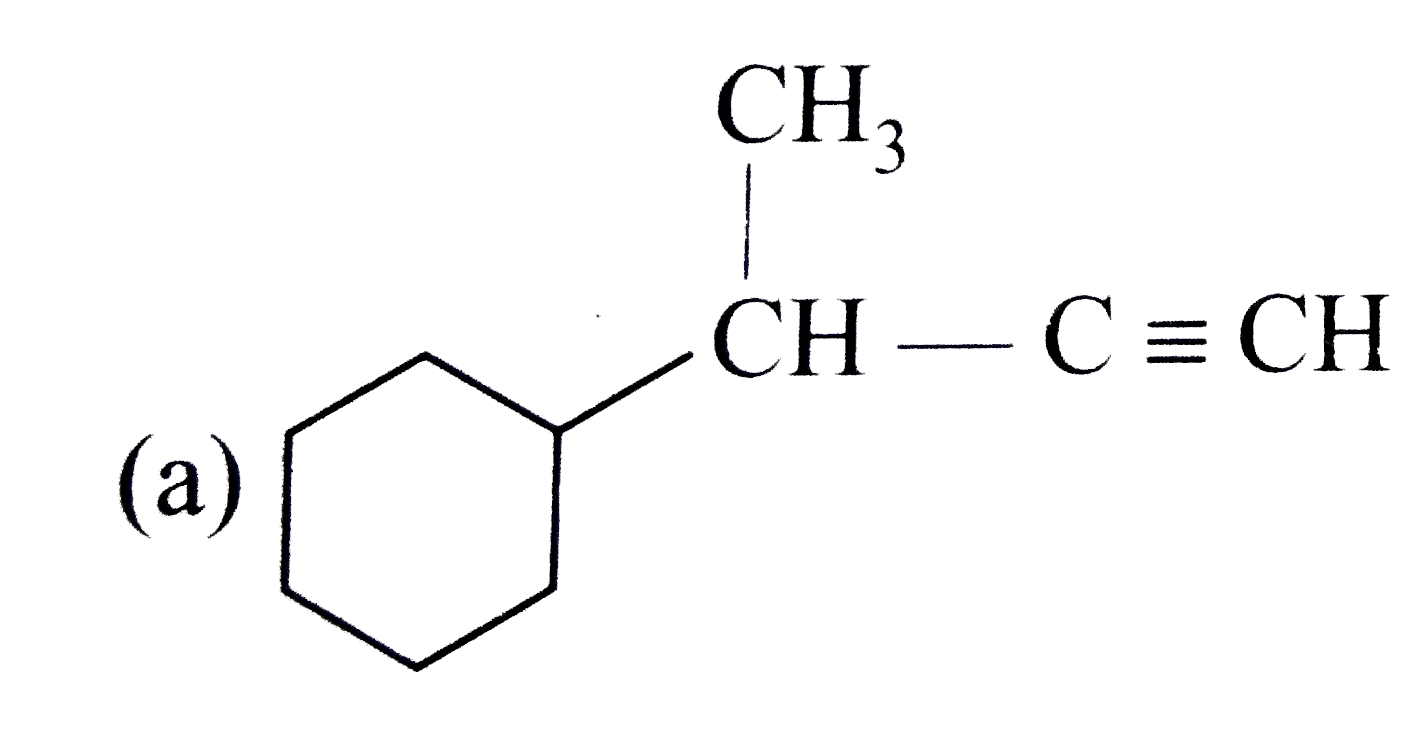
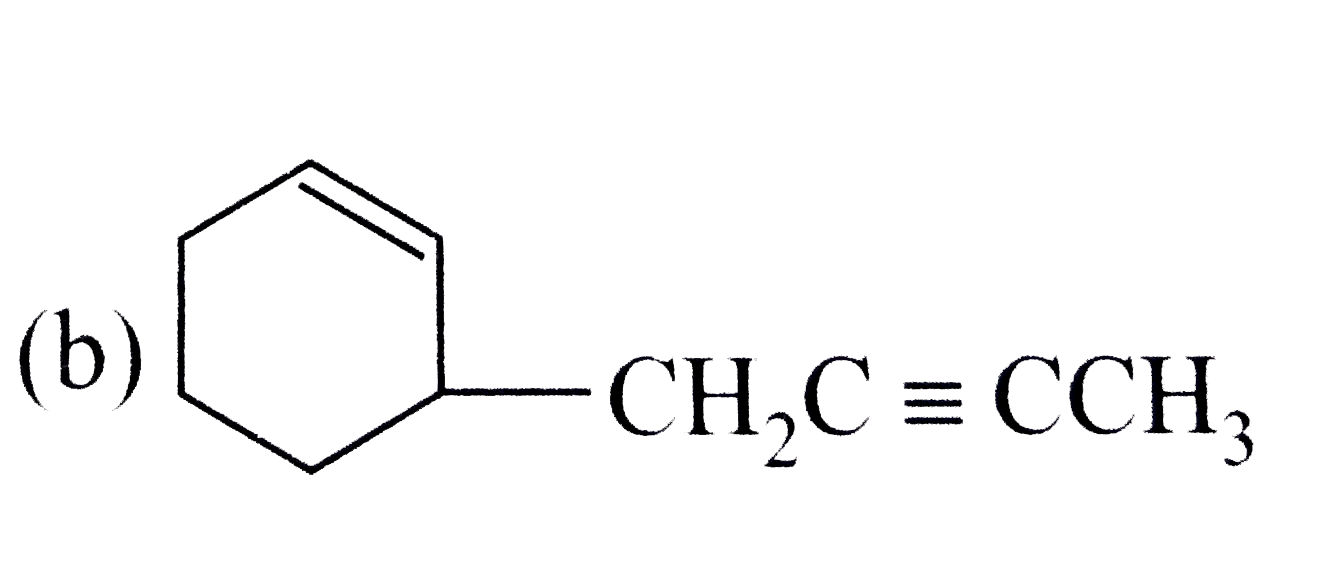
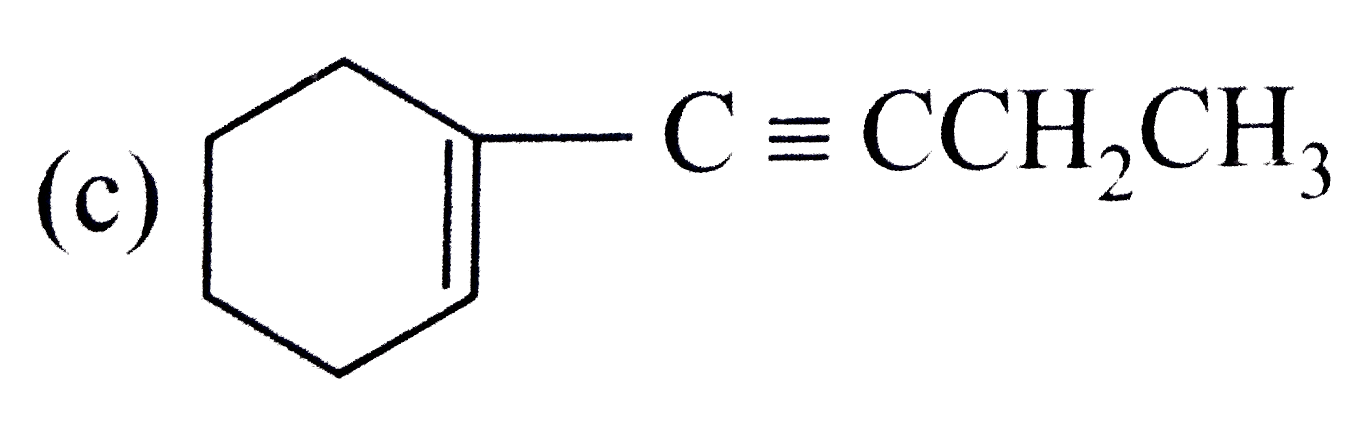
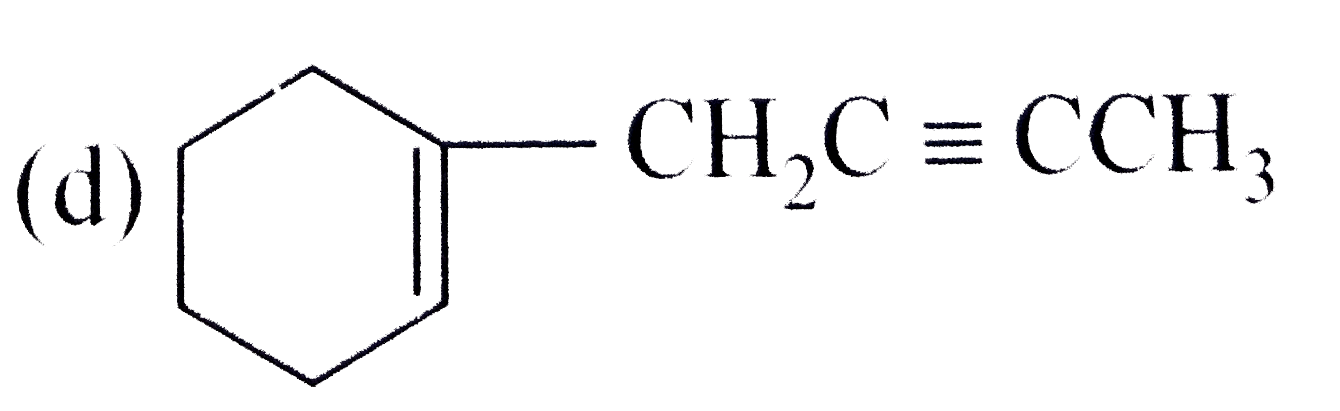
Catalytic hydrogenation of compound 'X'(C_(10)H_(14)) givesbutyl cyclohexane. Treatment of 'X' with Cu(NH_(3))_(2)+NaNH_(2). When 'X' is first reactedwith H_(2)//Ni_(2)B and then oxidatively ozonized, a non resolvable compound is formed. The organic compound 'X' is |
|
Answer»
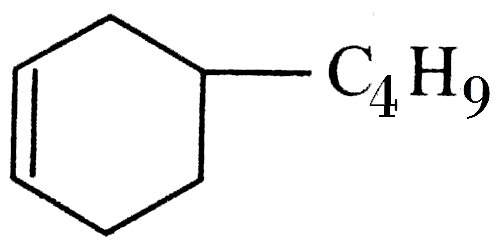 `Cu(NH_(3))_(2)^(+)` gives no ppt.`implies` no terminal triple bond but gives ppt. with `Cu(NH_(3))_(2)^(+)` on treatment of `NH_(2)^(-)` `implies` there is internal triple bond. In the ring triple bond is not POSSIBLE. `H_(2) //Ni_(2)B` treatment reduces triple bond to double bond. Now possible options are `(b)(C)` and `(d)`. Oxidative ozonolysis gives NON `-` resolvable compound. So only `(d)` is possible. 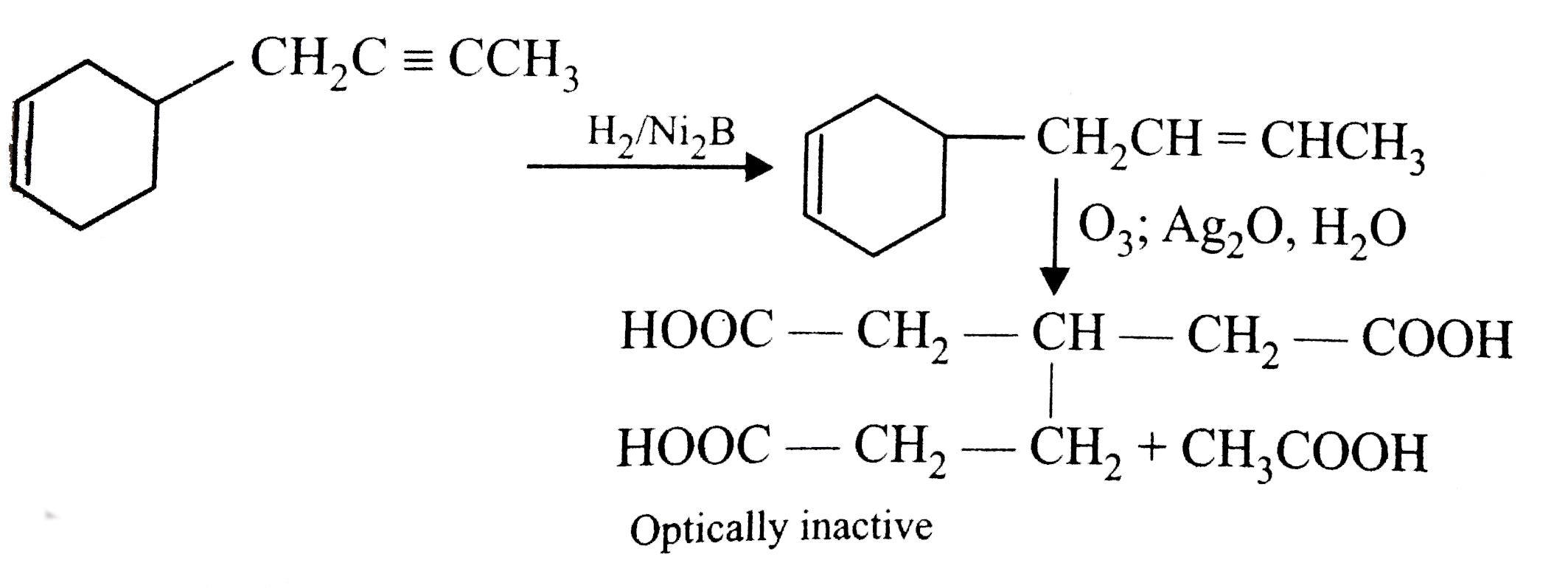
|
|