

Saved Bookmarks
| 1. |
Consider equation ((x^(2)+x)^2)+a(x^(2)+x)+4=0Match the values of a in Lits II for the types of roods in Lits I. |
|
Answer» `{:(,a,b,c,d),((1),p,q,r,s):}` Let `t=x^(2)+x=(x+1//2)^(2)-1//4`. `impliestin[-(1)/(4),OO]` Now, `f(t)=t^(2)+at+4=0""....(1)` (a) All four real and distinct roots. So, equation (1) has both roots greater then `-1//4`. 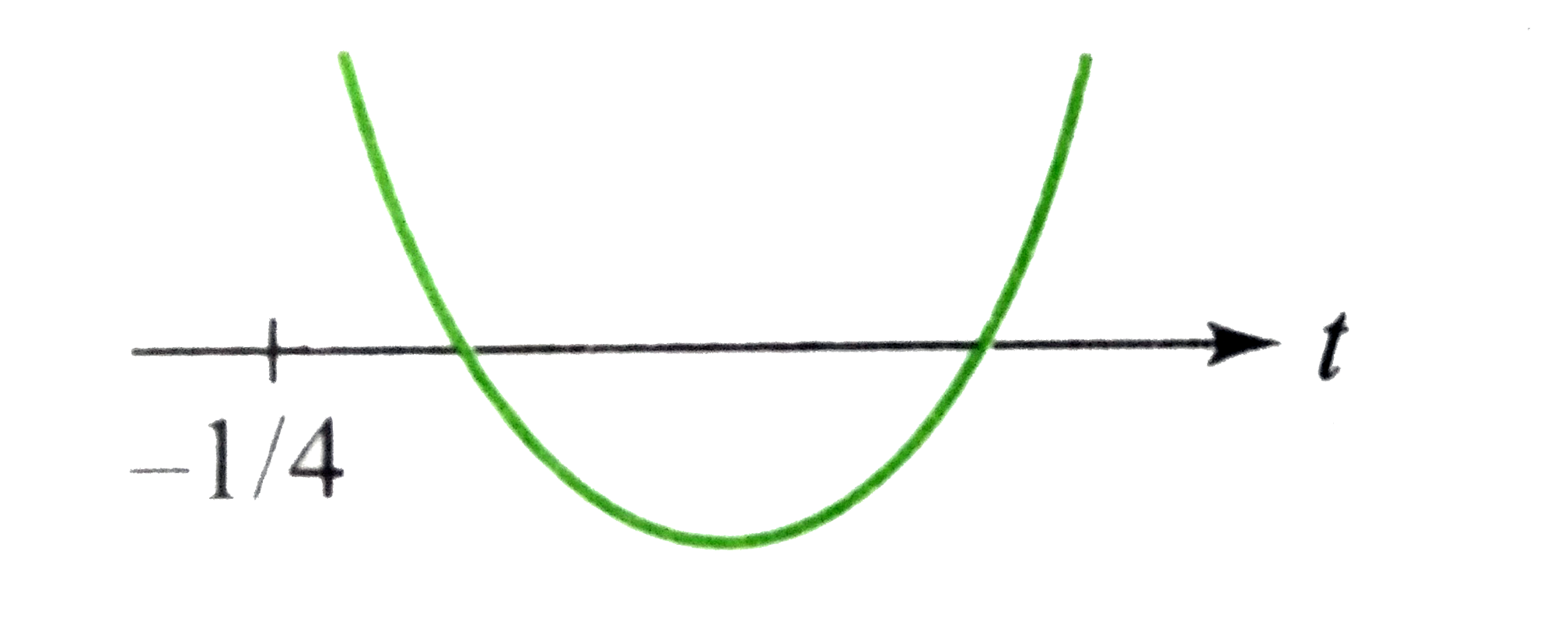 FOLLOWING conditions are required: `(i) Dgt0impliesa^(2)-16gt0implies|a|gt4` (ii) `f(-1//4)=(1)/(16)-(a)/(4)+4gt0impliesalt65//4` (iii) `-(B)/(2A)=(a)/(2)gt-(1)/(4)impliesalt(1)/(2)` `impliesain(-oo,-4)` (b) TWO real roots which are distinct. 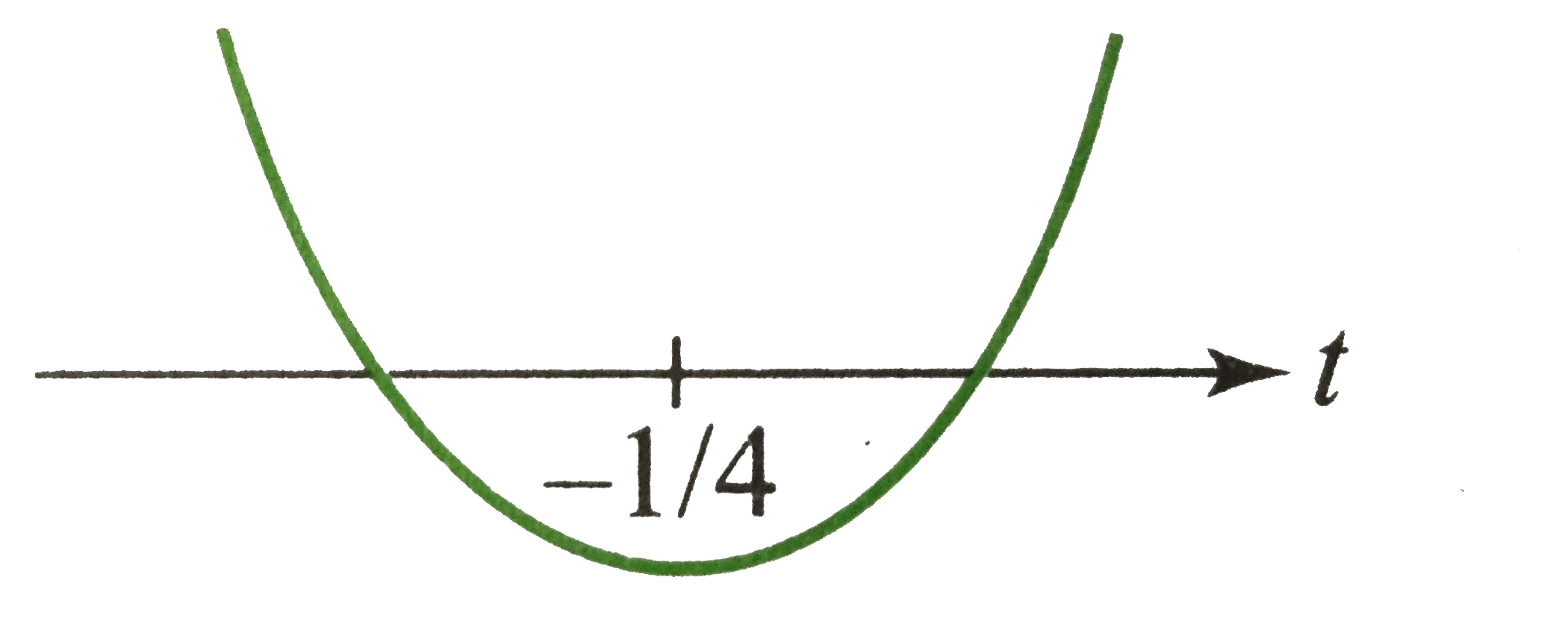 `impliesf(-1//4)lt0` `impliesagt65//4` `impliesain(65//4,oo)` (c) All four roots are imaginary. 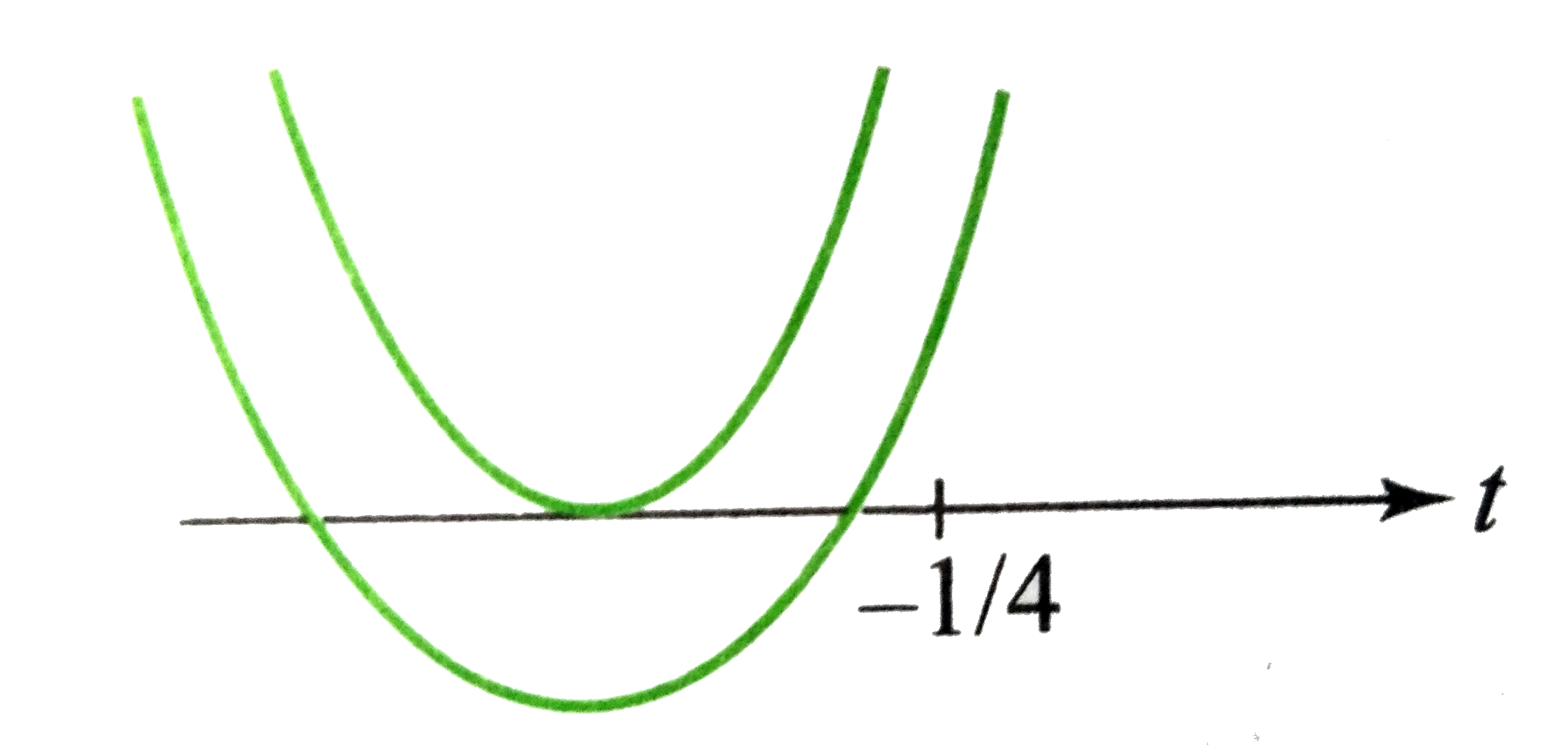 (i) `Dge0implies|a|ge4` (ii) `f(-1//4)gt0impliesalt(65)/(4)` (iii) `-(B)/(2A)LT-(1)/(4)impliesagt(1)/(2)impliesain[4,(65)/(4)]` Case II: `Dlt0` 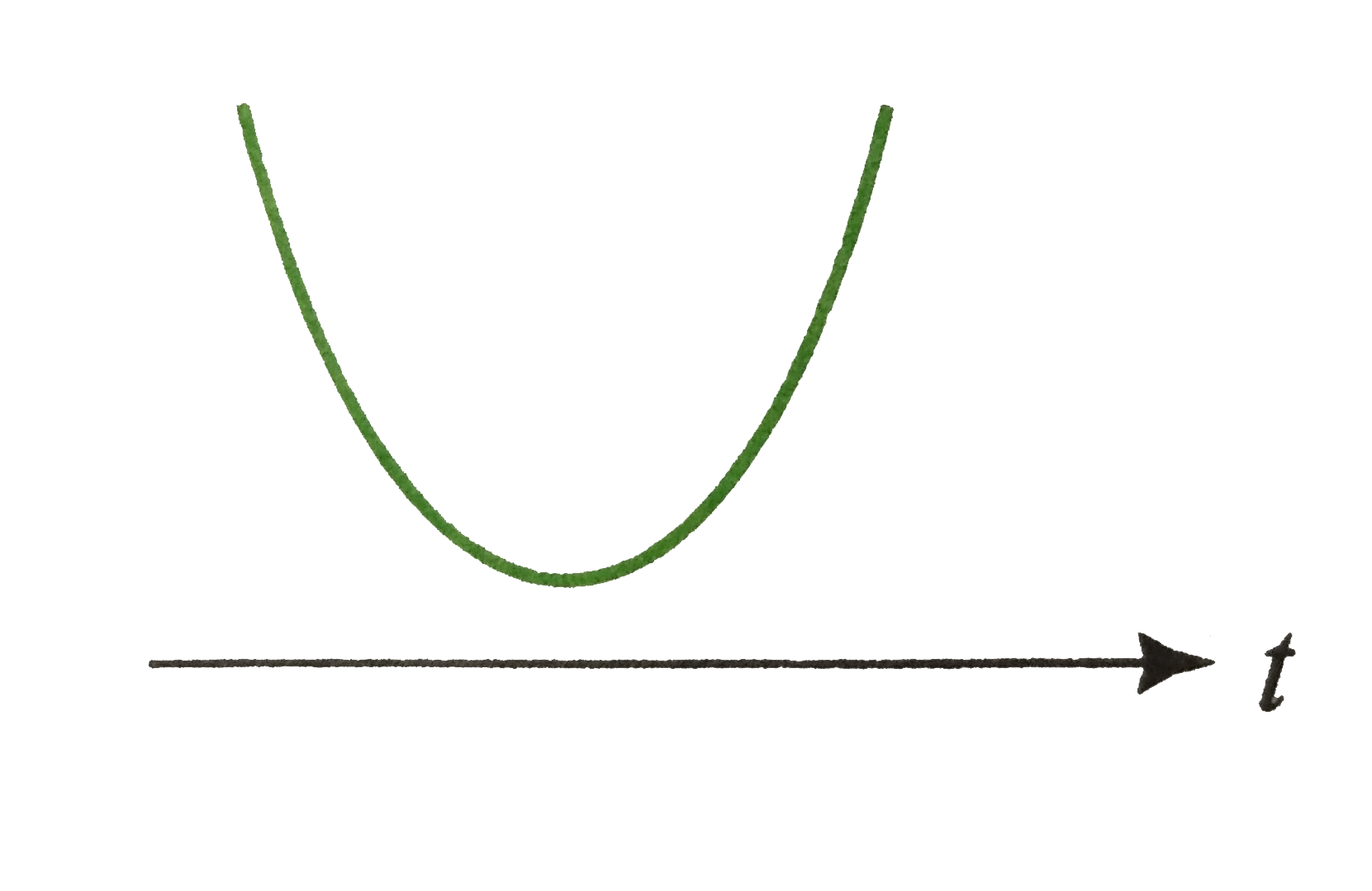 `impliesain(-4,4)""....(2)` From case I and case II, `ain(-4,(65)/(4))` (d) Four real roots in which two are equal. 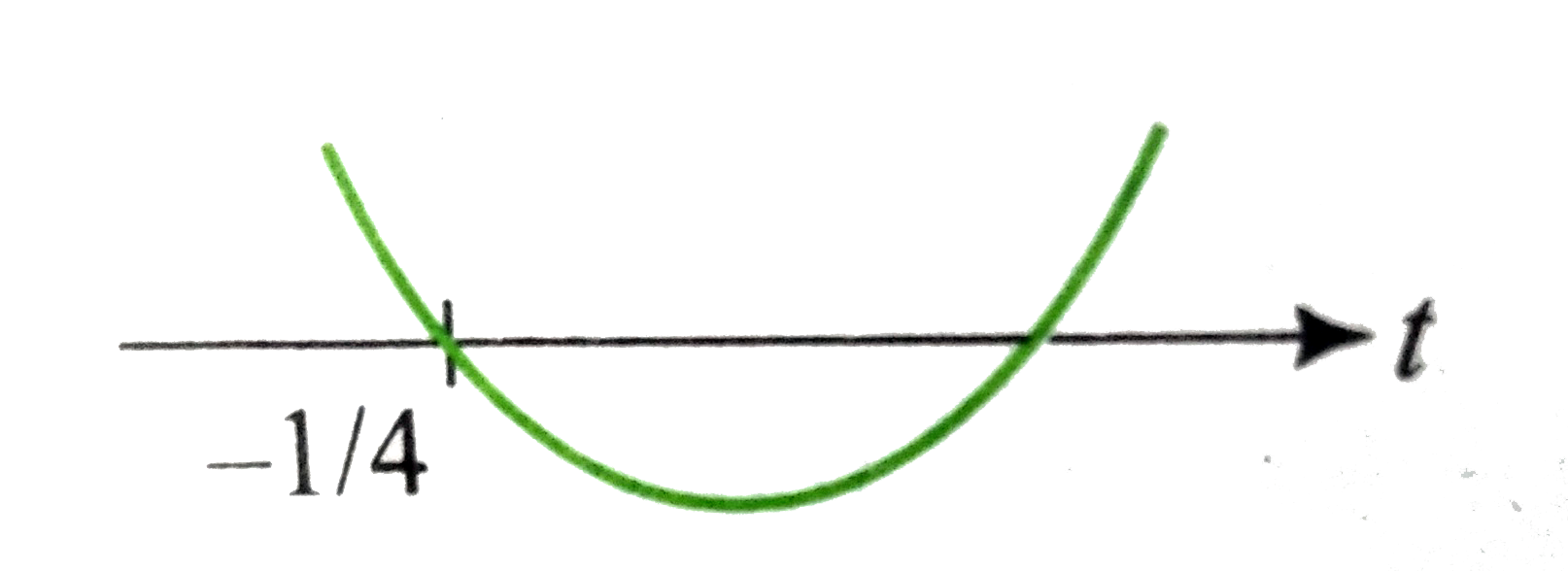 (i) `Dgt0implies|a|gt4` (ii) `f(-1//4)=0impliesa=65//4` (iii) `-(B)/(2A)gt-(1)/(4)impliesalt(1)/(2)` No common solution. `:.ainphi`. |
|