

Saved Bookmarks
| 1. |
Covalent radii (in A) for some elements of different groups and periods are listed below. Plot these values against atomic number. From the plot, explain the variation along a period and a group. 2^nd group elements : Be (0.89), Mg (1.36), Ca (1.74), Sr (1.91) Ba(1.98) 17^th group elements : F (0.72), CI (0.99), Br(1.14). T (1.33) 3^rd Period elements : Na(1.57), Mg(1.36). AI (1.25), Si(1.17). P(1.10), S(1.04). C1(0.99)4^th period elements : K(2.03), Ca(1.74). Sc(1.44). Ti(1.32), V(1.22), Cr(1.17), Mn(1.17) Fe(1.17). Co(1.16). Ni(1.15). Cu(1.17). Zn(1.25), Ga(1.25). Ge(1.22). As(1.21). Se(1.14). Br(1.14) |
Answer» Solution :`2^nd` group ELEMENTS : 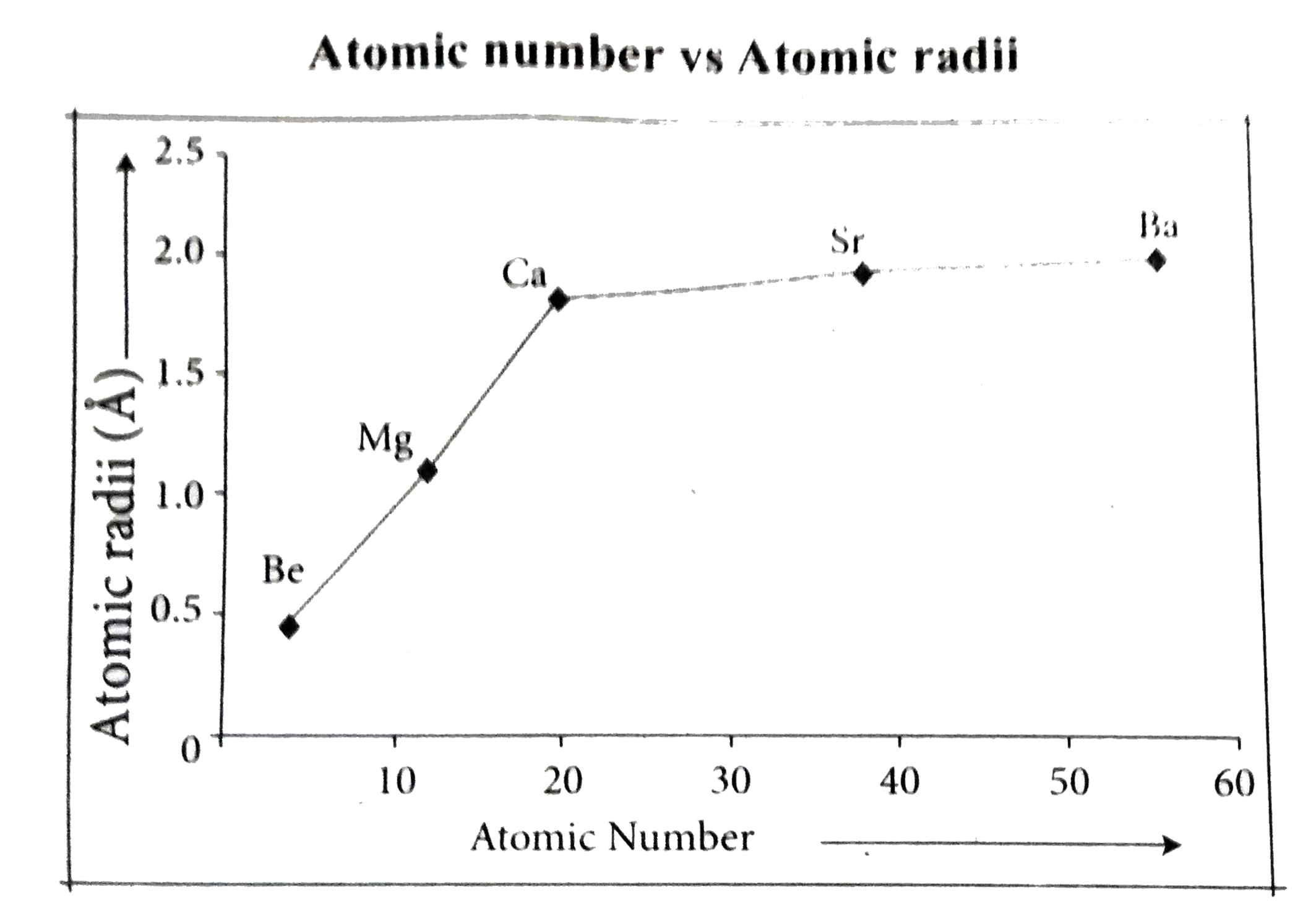 `17^th` group elements : 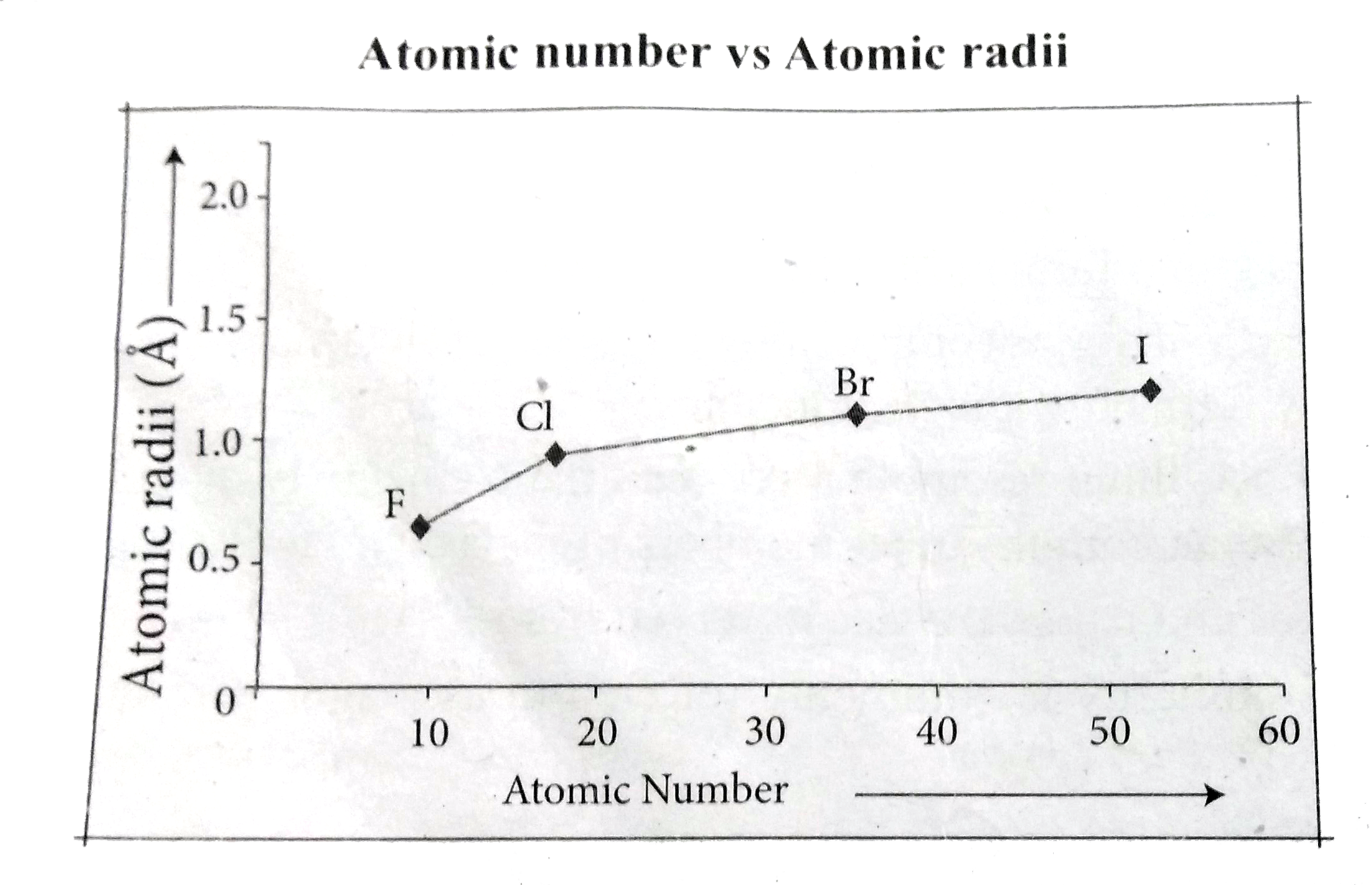 As we move down the group, atomic radii increase an INCREASES with the increase in atomic number. As we move down the group, the number energy levels increases, as the number of CICUS increases. Each subsequent energy level is further from the nucleus than the LAST. Therefore the atomic radius increases as the group and energy level increases. `3^rd` period: 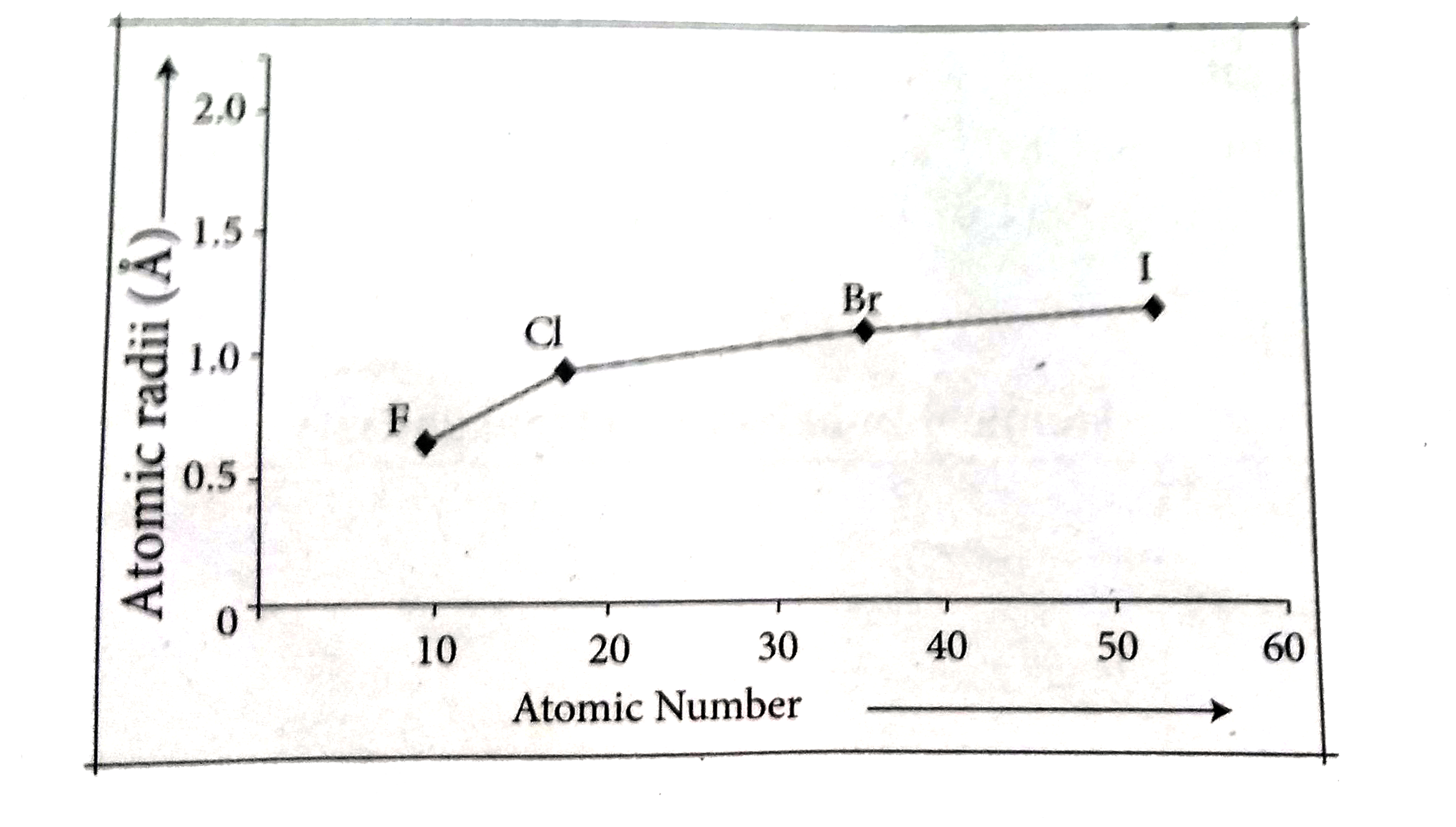 `4^th` period: 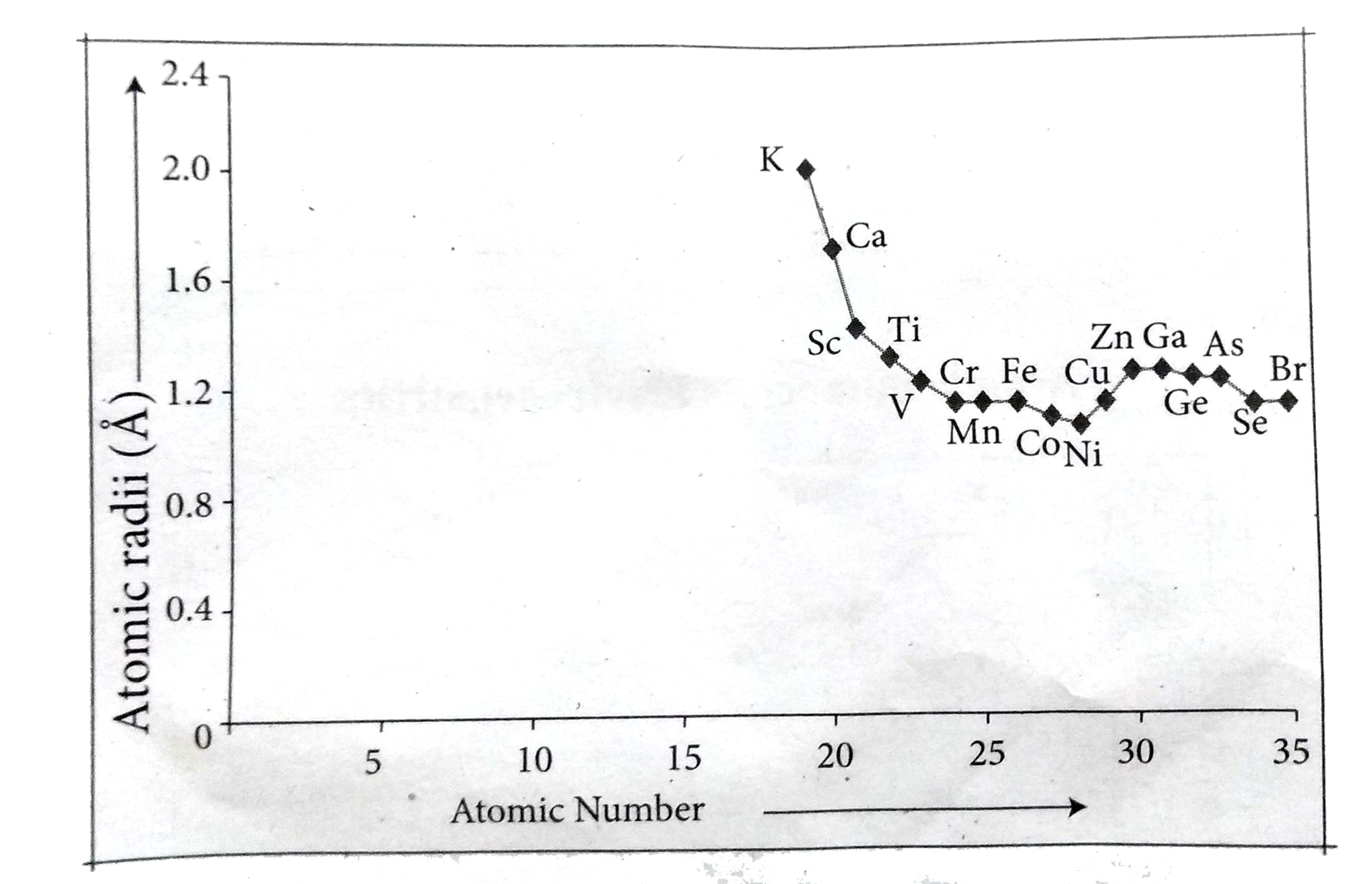 As we move across the period, the atomic radii generally decreases with the increase in atomic number. This is due to the increase in nuclear CHARGE. Across the period, the extra electrons are only added to the same quantum shell, as a RESULT, the electron cloud contracts and the atomic radius decreases |
|