

Saved Bookmarks
| 1. |
Given vecA + vecB + vecC + vecD = vec0, which of the following statements is not correct ? |
|
Answer» `vecA, vecB, vecC and vecD`must each be a null vector. (b) The statement is correct as proved below `vecA + vecB + vecC + vecD = vec0 or vecA + vecC = - (vecB + vecD)` `therefore |vecA + vecC| = |vecB + vecD|` (c ) The statement is correct and can be proved using triangular INEQUALITY. `|vecB| + |vecC| ge|vecR|""...(i)` `|vecR| + |vecD| ge|vecA|""...(II)` Using (i) and (ii), `|vecA| le |vecB| + |vecC| + |vecD|` (d) THe statement is correct as proved below `vecA + vecB + vecC + vecD = vec0 or vecA + (vecB + vecC) + vecD = vec0` The resultant sum of three vectors `vecA, (vecB+vecC)` and `vecD` can be zero only if `(vecB + vecC)` lies in the plane of `vecA and vecD` and these three vectors are represented by the three SIDES of a triangle taken in one order. IF `vecA and vecD` are collinear, then`(vecB + vecC)` must be in the line of `vecA and vecD`, only then the vector sum of all the vectors will be zero. 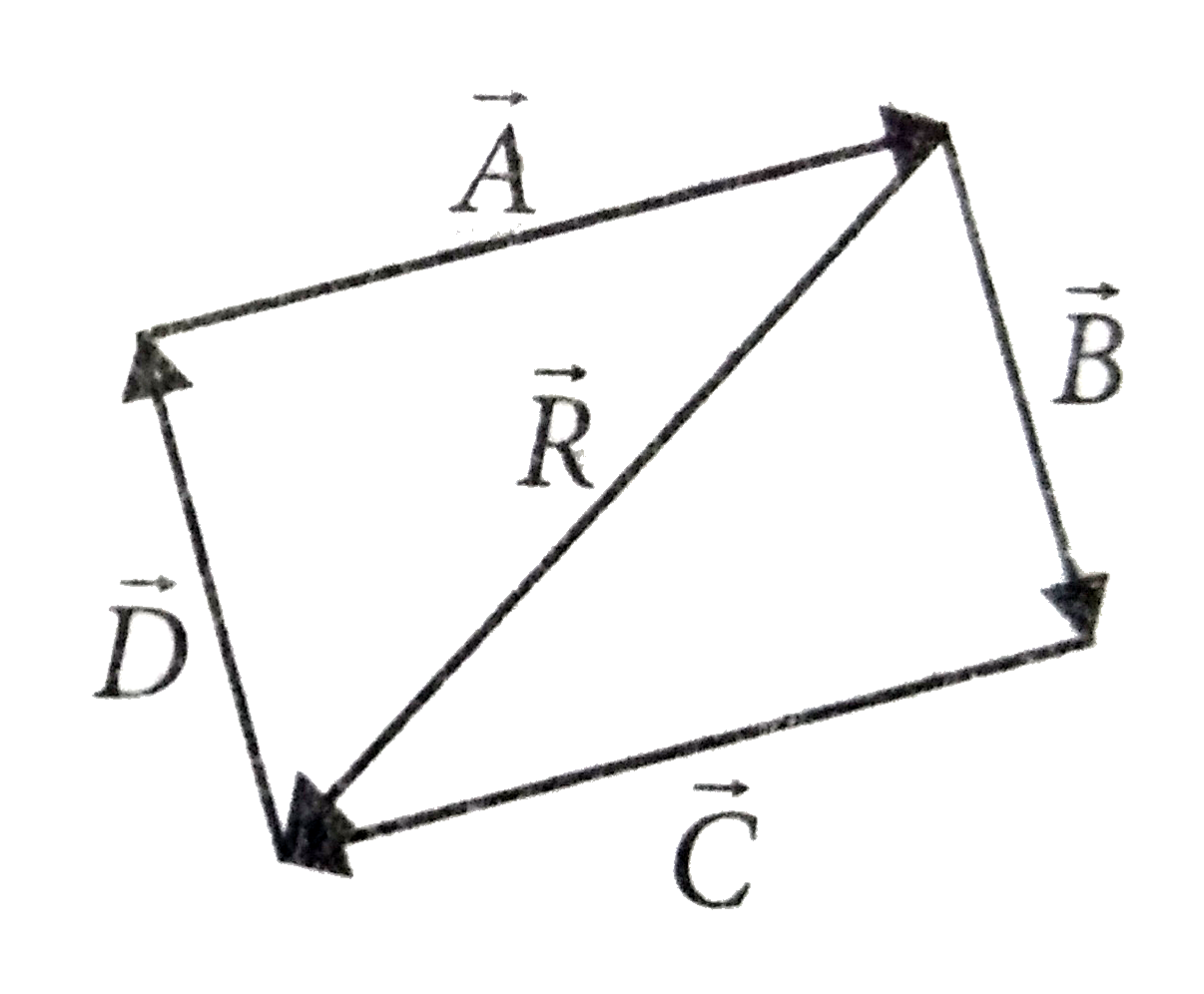
|
|