

Saved Bookmarks
| 1. |
(I) Arrange the compounds (a0 in the order of decreasing boilling points and (b) in the order of decreasing solubility in water (A) (1) Ethanol (2) Propane, (3) Pentanol (B) (1) Butane (2) 1,2,3-Pentanetriol (3) Buty1 alcohol (C ) Pentane (2) Pentanol (3) Hexanol (II) Arrange the following in the decreasing order of their boilling points (A) (1) C_(3)H_(8) (2) C_(2)H_(5)OH , (3) (CH_(3))_(2)O (4) HOH_(2)C-CH_(2)OH (B) (1) 3-Pentanol, (2) n-Pentane, (3) 2,2 Dimethyl propanol, (4) n-pentanol (III) Arrange the following alcohols (a) in the decreasing order of their boiling points and (b) in the decreasing order of their boilling points and (b) in the decreasing order of their solubility in water (1) n-Buty1 alcohol (2) sec-Buty1 alcohol and (3) tert Buty1 alcohol (IV) Arrange the following compounds in the order their increasing boiling points (1) CH_(3)COCI,(2)(CH_(3)CO)_(2)O,(3) CH_(3)CONH_(2),(4)CH_(3)COOH . |
|
Answer» Solution :(a) The decreasing order of boiling points is Pentanol gt Ethanol gt Propane `(3gt1gt2)` Pentanol and ethanol have I have H-bonding, but molecular mass of pentanol is more than ethanol, so it has high boiling point Propane has the least boiling point due to non-polar character and weak van der Waals forces of attrction (b) The decreasing order of solubility in `H_(2)O` is Ethanol gt Petanol gt Propane `(1 gt 3 gt 2)` Both ethanol and pentanol have H-bonding but non polar part in pentanol is LARGER than non polar part in ethanol So ethanol is more soluble in `H_(2)O` than pentanol Propane is least soluble because of the non-polar character (B) The decreasing order of boiling point is 1,2,3-Pentanetriol gtButy1 alcoholgt Butane `(2gt3 gt1)` Due to three `(HO)` groups in compound (2) it has more H-bonding than in alcolhol (3) (b)Decreasing solubility in `H_(2) O: (2) gt(3) gt(1)` There is more H-bonding in compound (2) han in (3) hence it has more solubility in `H_(2)O` (C) The decreasing order of boiling point is Hexanol gt Pentanol gtPentane `(3gt2gt1)` Both alcohols have same H-bonding, but molecular mass of `(3)gt(2)` Hence the boiling point order is as given above (b) The decreasing order of solubility in `H_(2)O` PentanolgtHexanolgtPentane [Same explanation as in I (A) (b) above] (II) The decreasing order of boiling point is `HOCH_(2)-CH_(2)OHgtC_(2)H_(5)OHgt(CH_(3))_(2)OgtC_(2)H_(8)(4gt2gt3gt1)` (Same explanation as I (B) (a) above) (II) The decreasing order of boiling point is n -pentanol gt2,2 Dimethy1 propanol Alcohols n-pentanol is a straight-chain compound and has a larger surface area, so the highest boiling point Alcohol (3) is more sterically hindered than alcohol (1) hence it requires more energy to BOIL off Therefore boiling point of alcohol (3)gt alcohol (1) The decreasing order of boiling points is All alcohols have H-bonding but alcohol (1) has more surface area Alcohol (2) has less surface area due to branching and alcohol (3) has more breanching and less surface area than in alcohol (2) Hence the boiling point order is as given above Decreasing solubility order in `H_(2)O` t-Buty1 alcocholgtsec-Buty1 alcoholgtn-Buty1 alcohol `(3gt2gt1)` Lesser the surface area, greater is the solubility in `H_(2)O` Hence the solubility order is as given above (IV) `CH_(3)COOH` undergoes intermolecular H-bonding while `CH_(3)COCI` does not The boiling point of `CH_(3)COOH` in higher than that of `CH_(3)COCI` The molecular mass of `(CH_(3)CO)_(2)O` is much higher than that of `CH_(3)COOH` As a RESULT `(CH_(3)CO)_(2)`O has a higher boiling point than that of `CH_(3)COOH` due to stroger van der Waals forces of attraction Like `CH_(3)COOH,CH_(3)CONH_(2)` also forms intermolecular H-bonds whereas in `CH_(3)COOH` only cyclic DIMERS are formed In `CH_(3)CONH_(2)` intermolecular H-bonds lead to the association of a number of molecules. As a result, the boiling point of `CH_(3)CONH_(2)` is much higher than that of `CH_(3)COOH` Further, this higher degree of association of `CH_(3)CONH_(2)` molecules compensates for the effect of increased molecular size of `(CH_(3)CO)_(2)O` Consequently, boiling point of `CH_(3)CONH_(2)` is even higher than that of `(CH_(3)CO)_(2)O` . In ther words, the boiling points follows the sequence `CH_(3)COCI lt CH_(3)COOH lt (CH_(3)CO)_(2)O lt CH_(3)CONH_(2)` 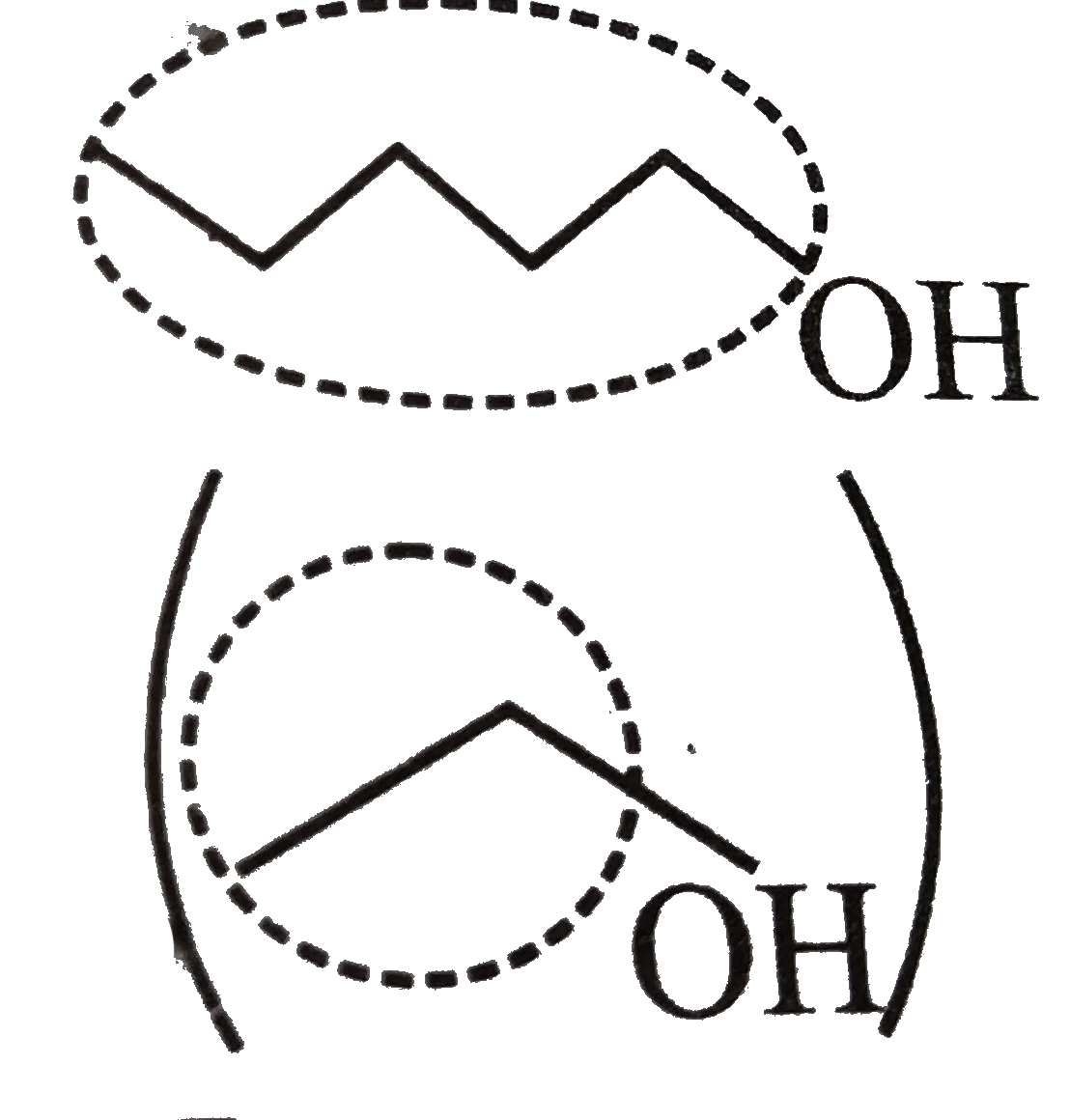 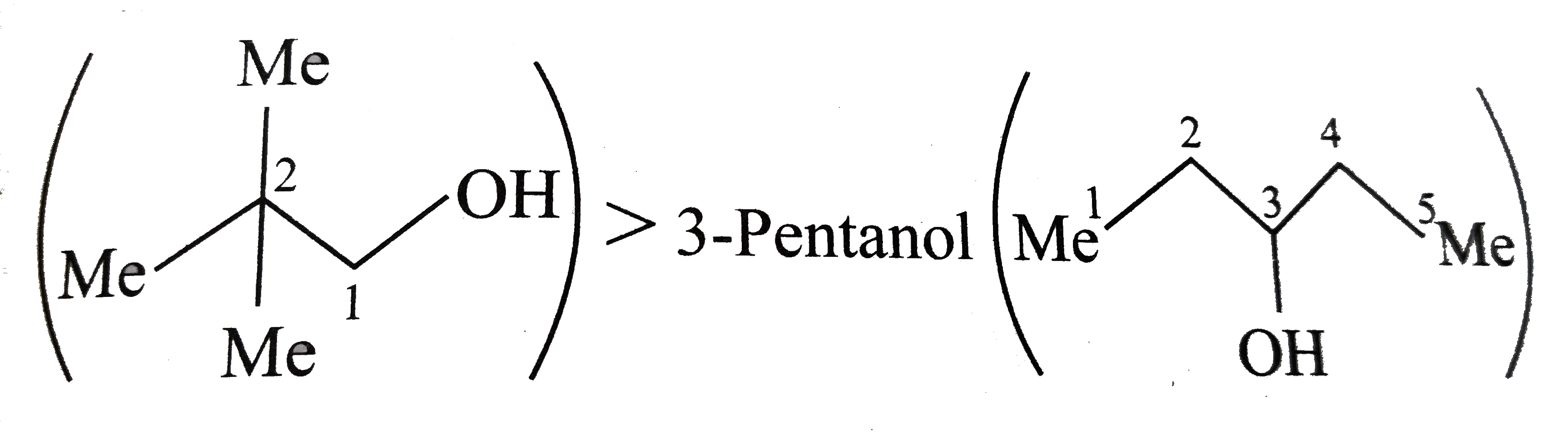 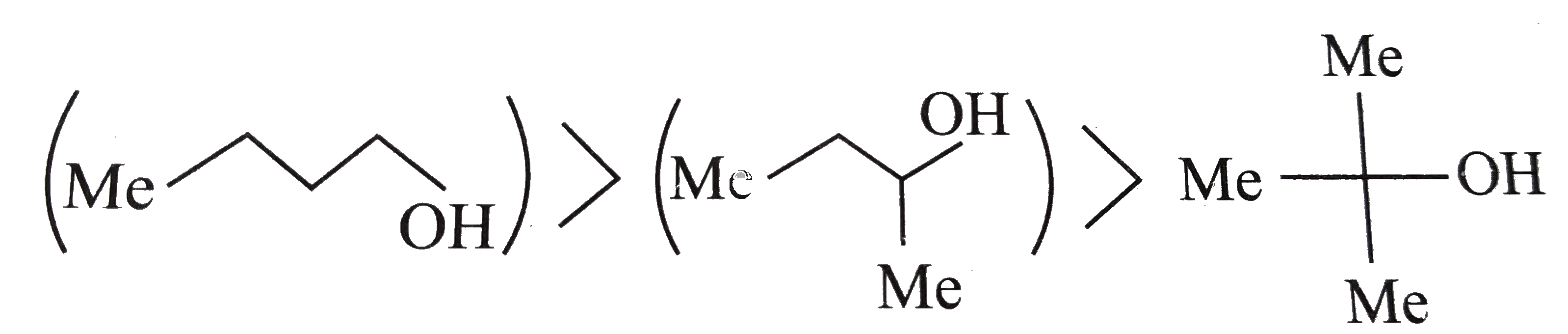 . .
|
|