

Saved Bookmarks
| 1. |
In the previous question, suppose contact angle is not zero, but it is theta (the surface not hemispherical) now find pressure at point 'A'. |
Answer» Solution :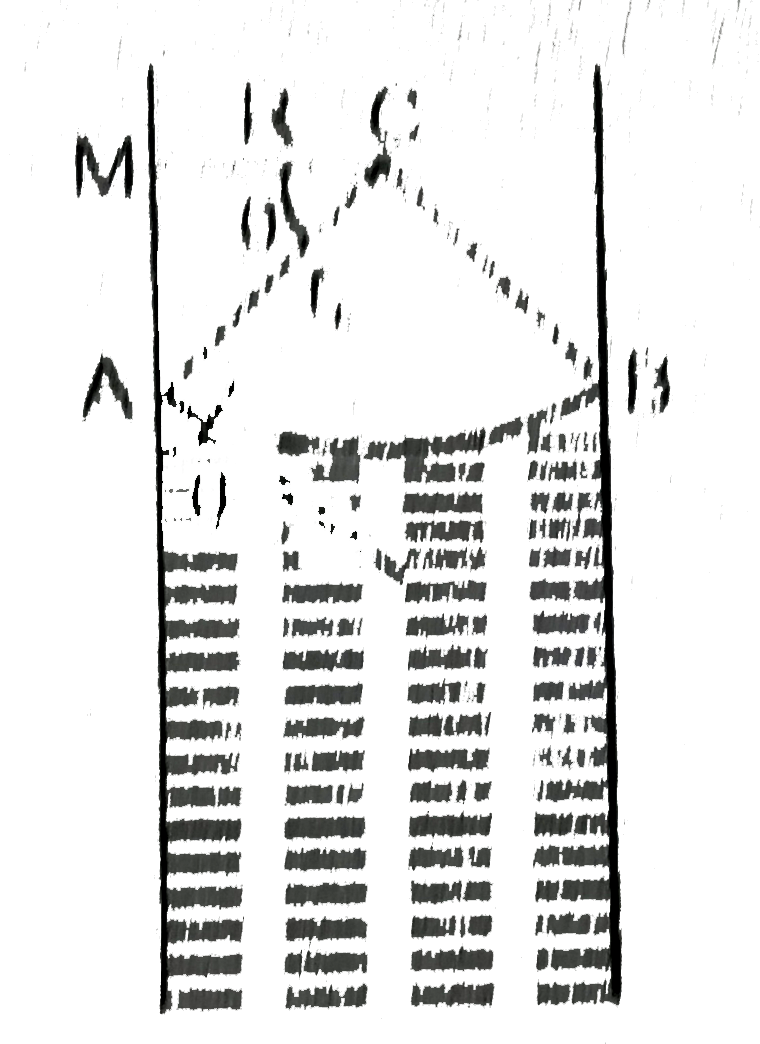 DRAW normal (radial lines) at point `A` and `B` of periophery. The point `(C)` WHERER radial lines meet is called centre of curvture. If contact angle is `theta`, from `Delta ACM, r_(C) = R sectheta` So RADIUS of curvature of the surface `r_(C) = R sectheta` Point to remember : If the LIQUID surface is hemispherical `(theta = 0)` then `r_(c) = R` If liquid surface is not hemispherical `(theta ne 0)` then `r_(c) = R sec theta` 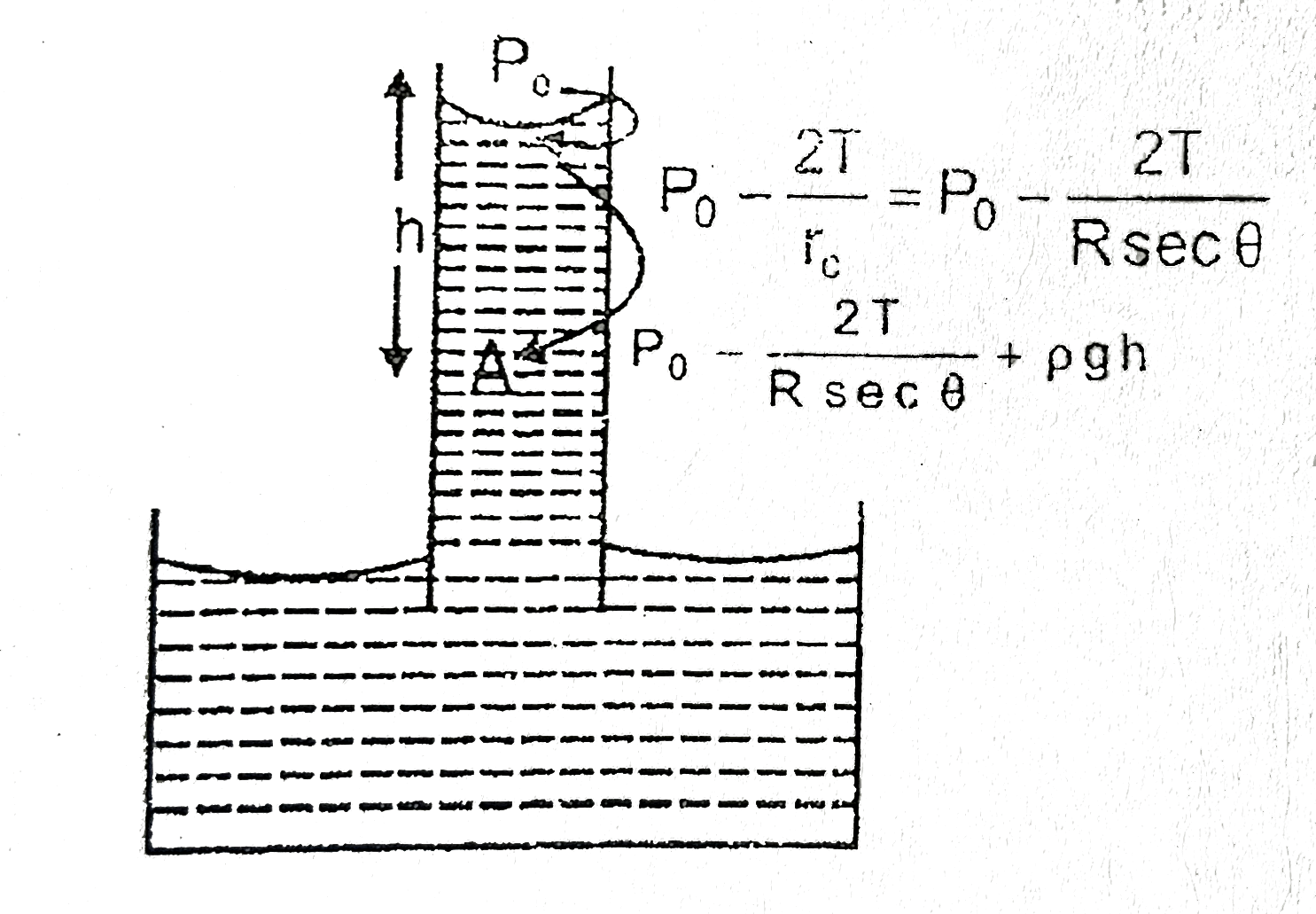 So pressure at `A` is `P_(0) - (2T)/(Rsectheta) + rhogh` |
|