

Saved Bookmarks
| 1. |
O is the origin and B is a point on the x-axis at a distance of 2 units from the origin. Match the following lists. |
Answer» 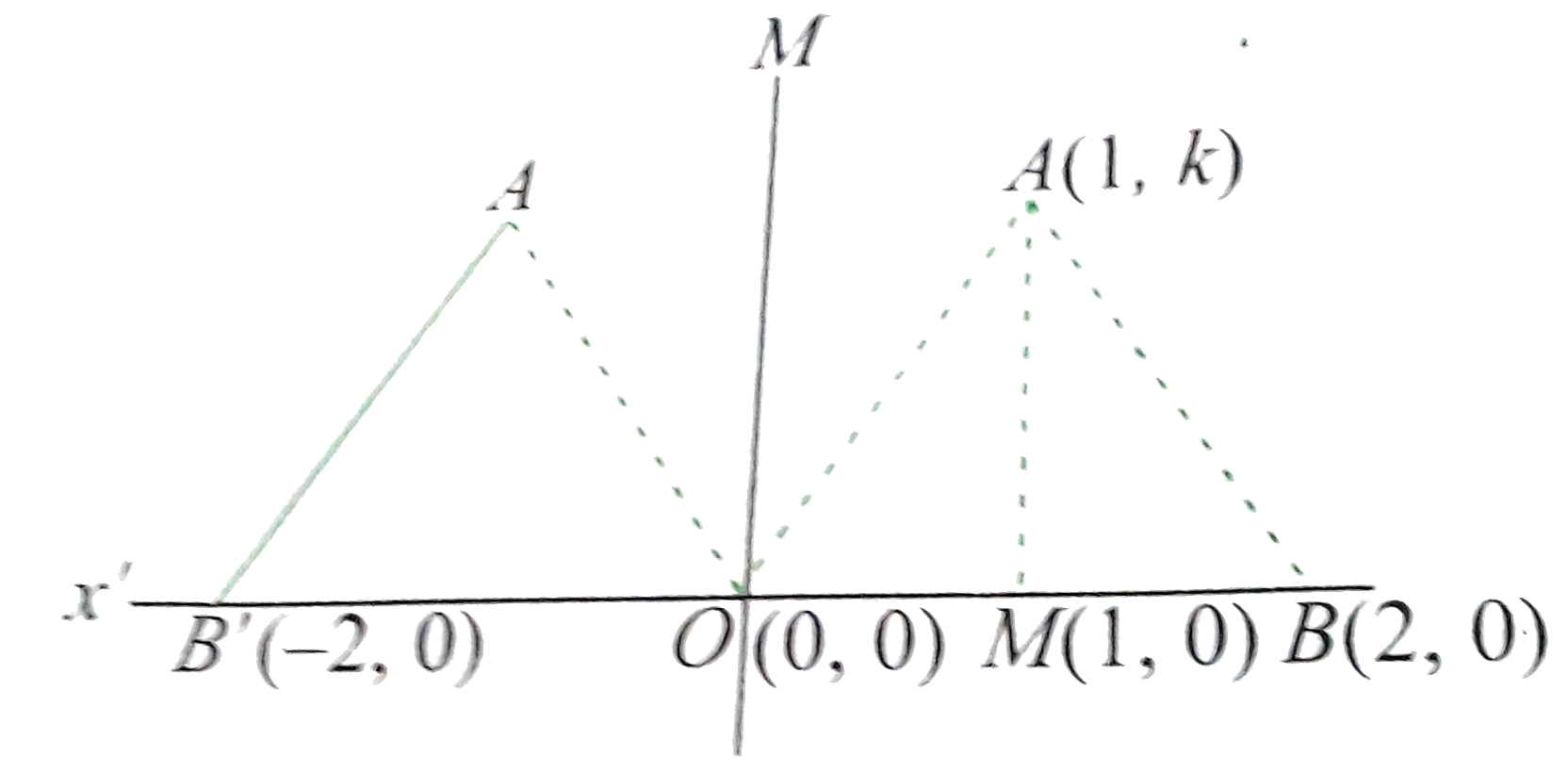 From the figure ,`Delta ABC` is equilateral. Hence, `tan60^@=k` i.e., `k=sqrt(3)` (for first quadrant) or `k=-sqrt(3)` (for fourth quadrant) then the possible coordinates are `(1,+-sqrt(3))`. Similarly , for the second quadrant, the point is `(-1,sqrt(3))` and for the third quadrant , the point is `(-1,-sqrt(3))`. (b)CASE i : If `OA=AB`, then `angleA=30^@`, Therefore 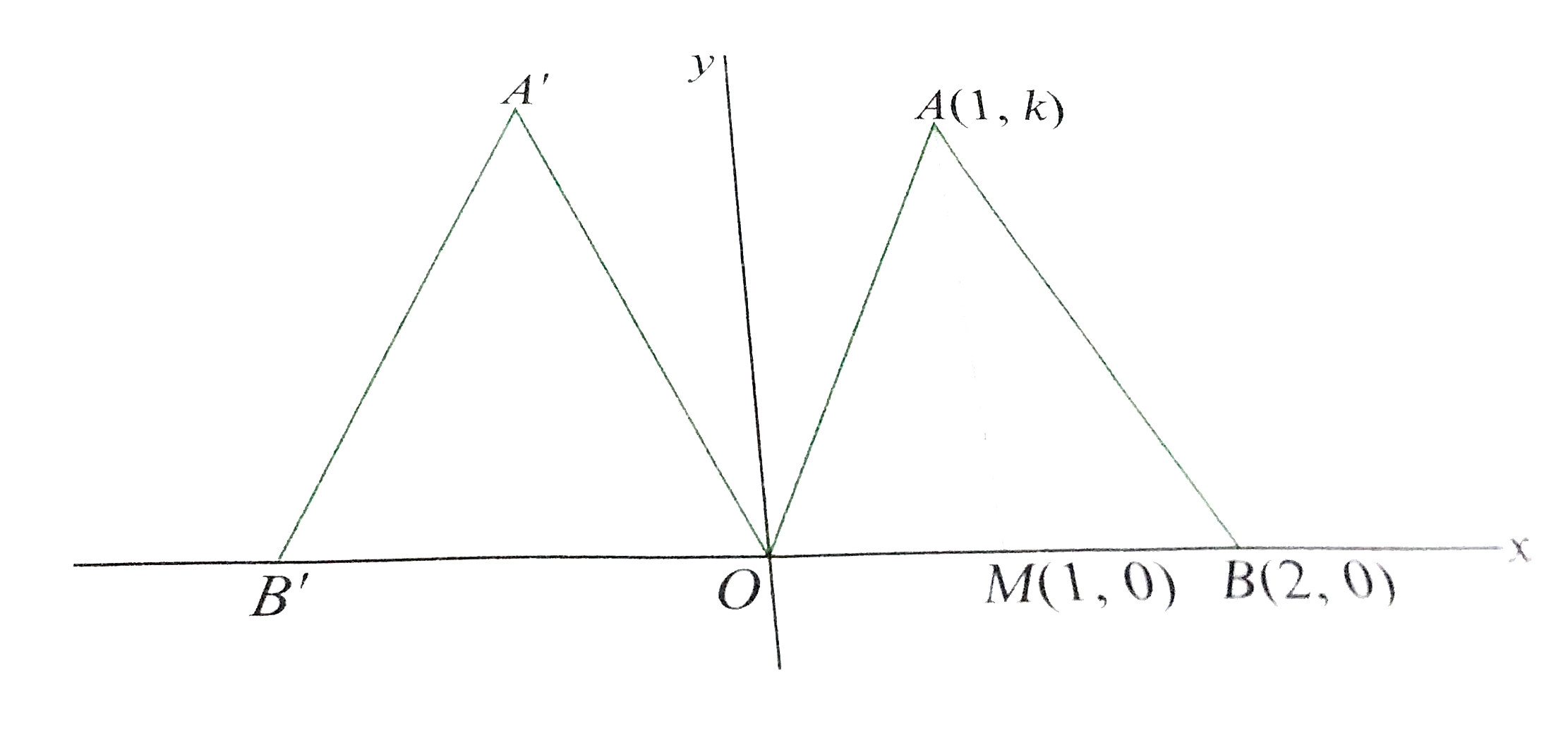 `angle AOB=75^@` `therefore (AM)/(OM)=tan75^(@` `AM=OMtan75^@` `k=1xx(2+sqrt(3))` `therefore k=2+sqrt(3)` Hence, point A is `(1,2+sqrt(3))`. By symmetry, all possible points are `(+-1,+-(2+sqrt(3)))`. Case ii: `AO=OB` `therefore angle AOB=120^@` 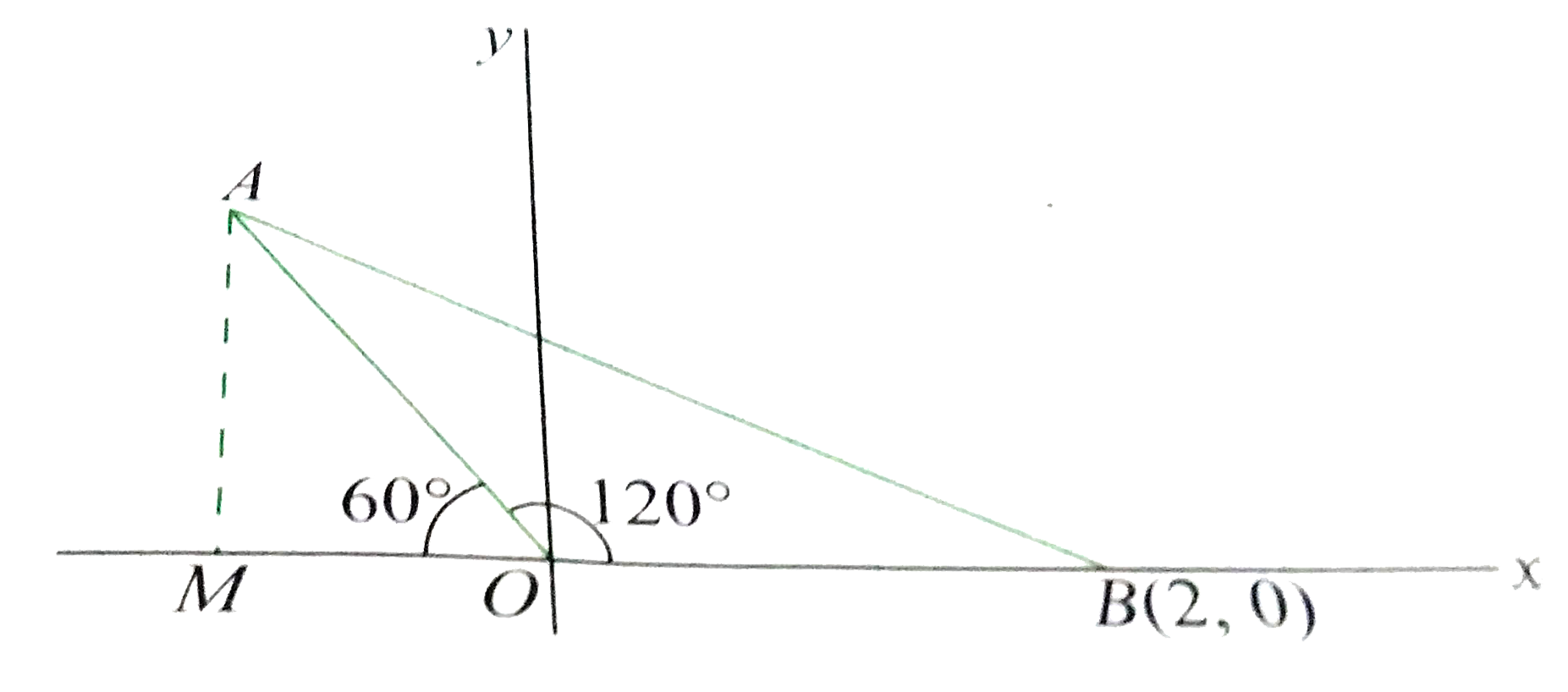 `AM=2 sin 60^@=sqrt(3)` and `OM=2cos60^@=1` Hence, point A is `(-1,-sqrt(3))`, By symmetry, all possible points are `(+-1,+-sqrt(3))`. (C). 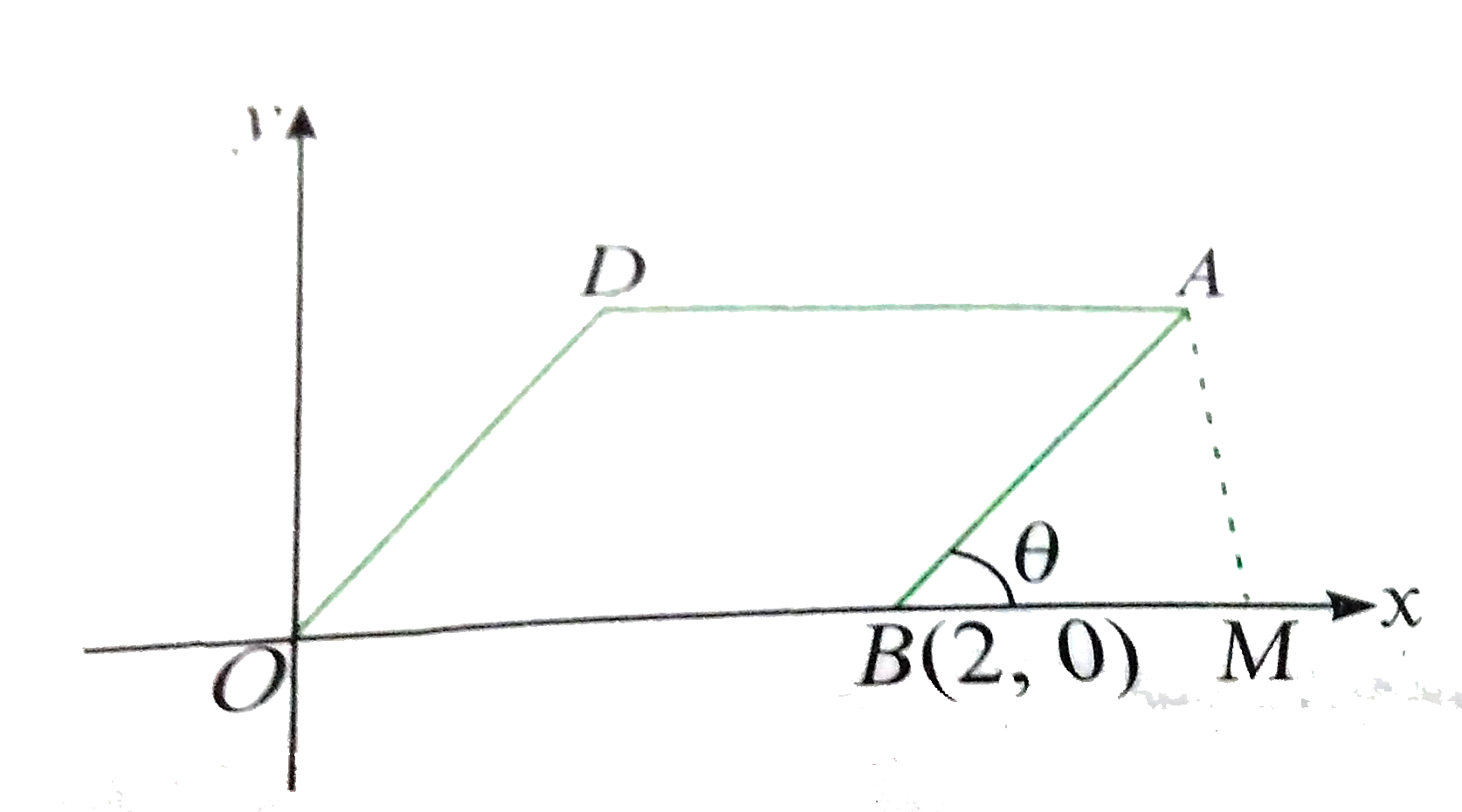 Let `angleDOB =angleABM=theta`. Area of `DeltaOAB =(1)/(2)xxOBxxAM=(1)/(2)xx2sqrt(3)` or `2xx2sintheta=2sqrt(3)` or `sintheta=(sqrt(3))/(2)` or `AM=sqrt(3) and BM=1` Hence, A has coordinates `(3,sqrt(3))`, By symmetry, all the possible coordinates are `(+-3,+-sqrt(3))`. 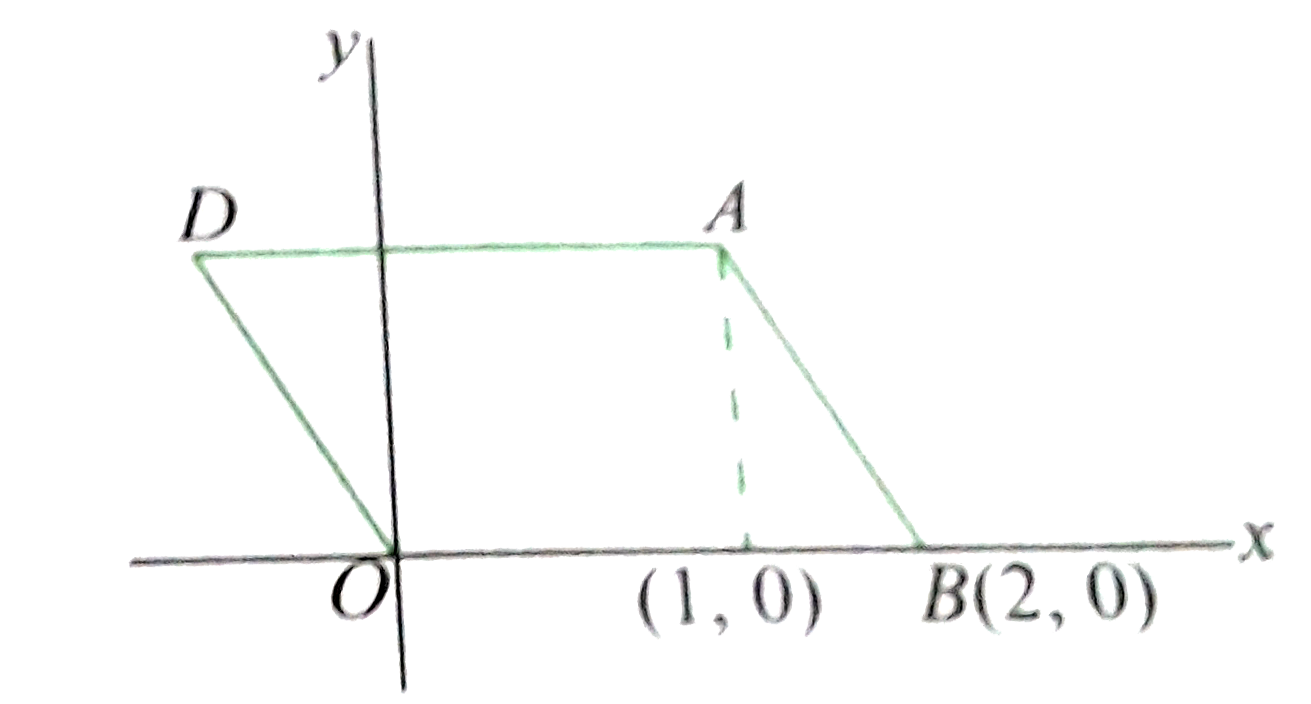 From the figure, A has coordinates `(1,sqrt(3))`. By symmetry, all possible coordinates are `(+-,+-sqrt(3))`. (d) 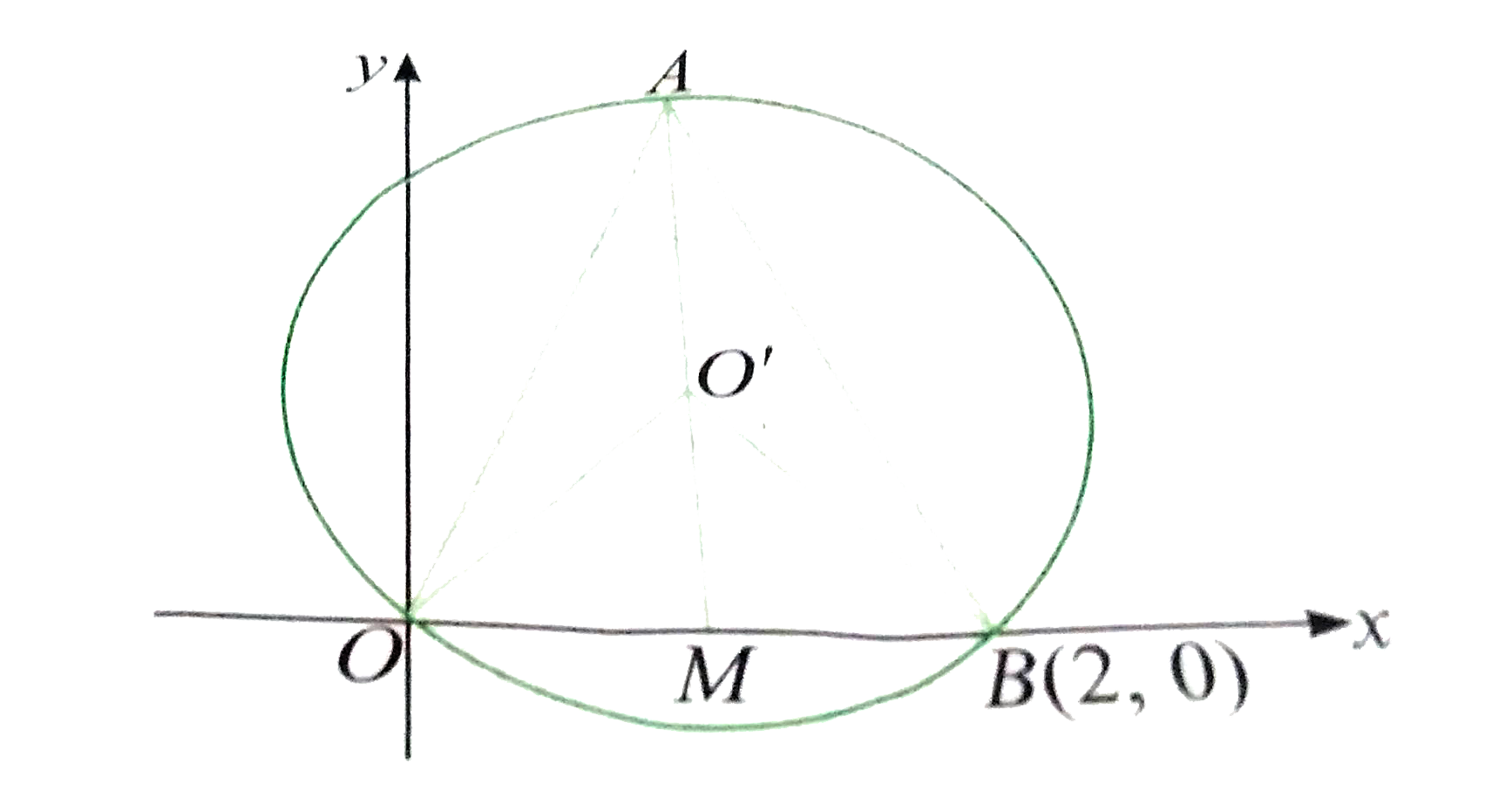 `OB=2units =OO'= "RADIUS"` or `OM=(2)/(2)=1"unit"` In `DeltaOO'M`, `O'M=sqrt(4-1)=sqrt(3)` SINCE `DeltaOAB` is isosceles, point A lies on the perpendicular bisector of OB. Therefore, `AM=sqrt(3)+2=OM+OA` Hence, the coordinates of A will be `(1,2+sqrt(3))` in the first quadrant. By symmetry, all possible coordinates of A are `(+-1,+-(2+sqrt(3))`. |
|