

Saved Bookmarks
| 1. |
One ice skater of mass m moves with speed 2v to the right, while another of the same mass m moves with speed v toward the left, as shown in figure I. Their paths are separated by a distance b. At t = 0, when they are both at x = 0, they grasp a pole of length b and negligible mass. For t gt 0, consider the system as a rigid body of two masses m separated by distance b. as shown in figure II. Which of the following is the correct formula for the motion after t = 0 of the skater initially at y = b//2 ? (I) |
|
Answer» `x = 2vt, y = b//2` `2 m v_(cm) - m (2v) - mv` `v_(cm) = (v)/(2)` towards RIGHT from conservation of angular momentum `J_(F) = J_(i)` `I omega = 2 mv (b)/(2) + mv (b)/(2)` `2 m((b)/(2))^(2) omega = (3)/(2) mvb rArr omega = (3v)/(b)`. it will have TRANSLATION and rotational motion about `C.M` `x = v_(cm) t + (b)/(2) sin omega t rArr x = 0.5 t + 0.5 si n(3vt)/(b)` `y =(b)/(2) cos omega t rArr y = 0.5 b co s (3vt)/(b)`. 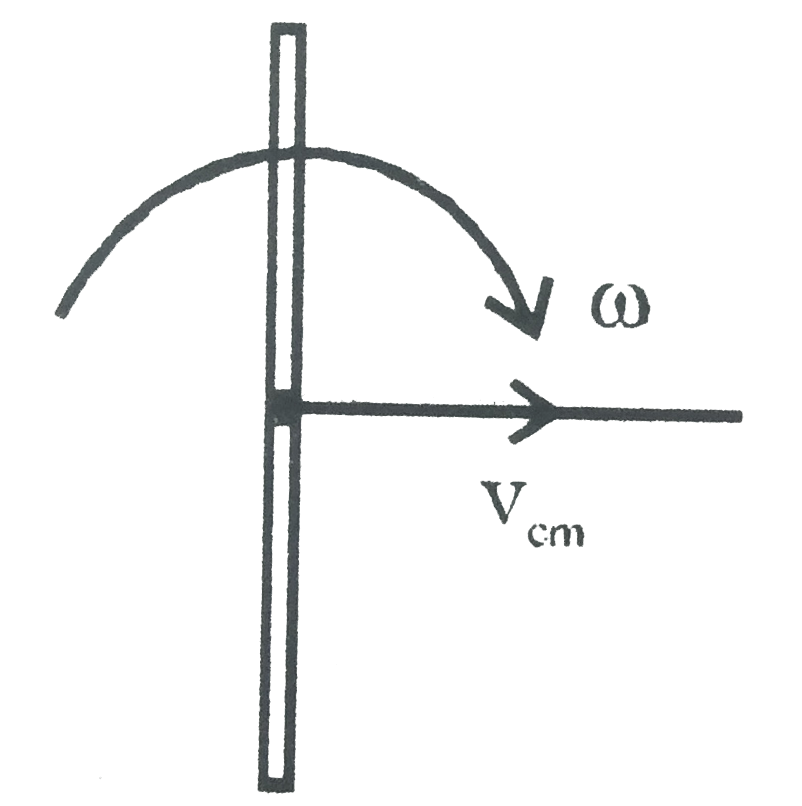 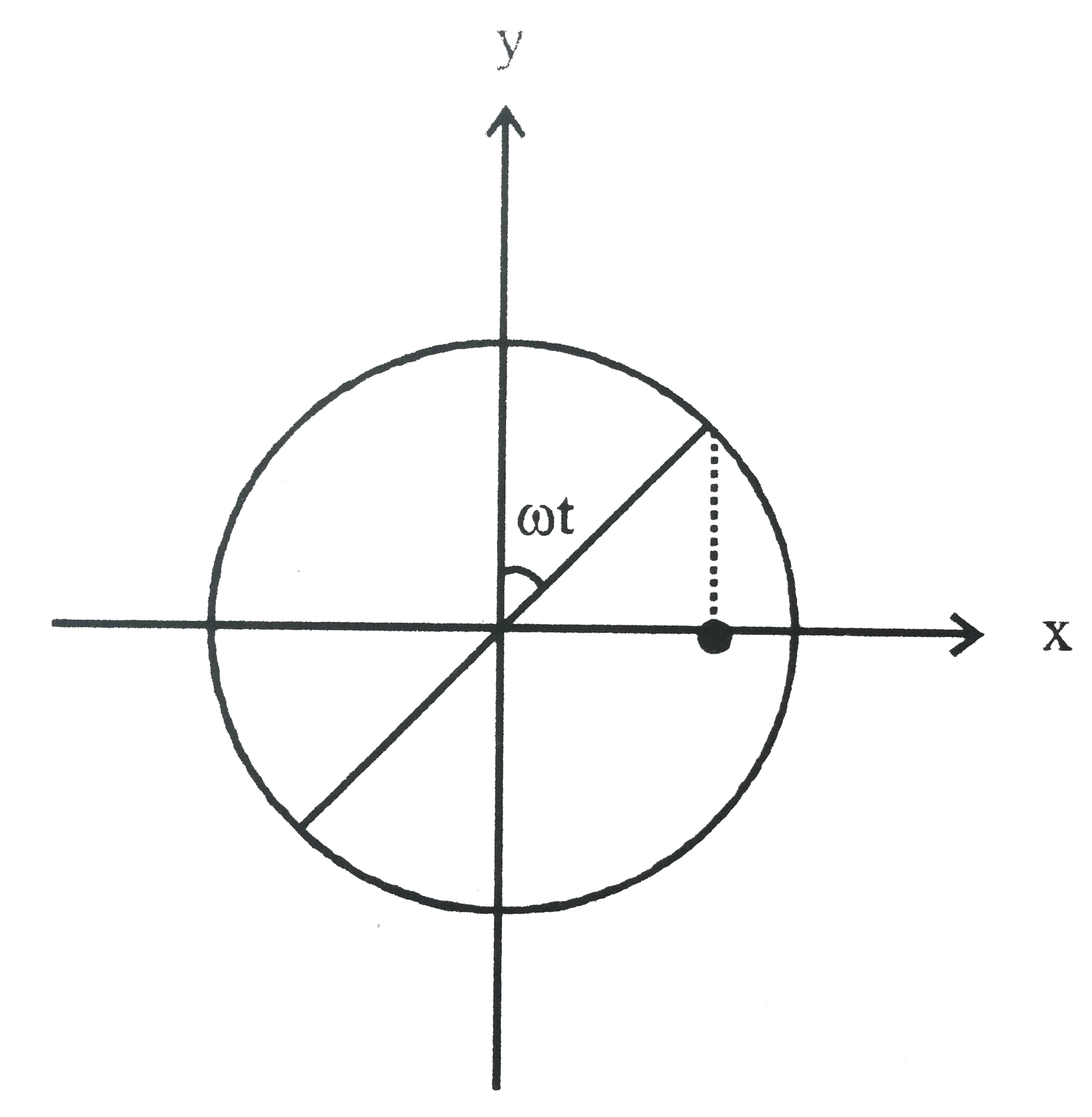 . .
|
|