

Saved Bookmarks
| 1. |
Sketch the origin in which the points satisfying the following inequalities lie. (i)|x+y| lt 2 "(ii) " |2x-y| gt 3 "(iii) "|x| gt|y| |
|
Answer» Solution :`(i) |x+y| lt 2` `therefore -2 lt x+y lt 2` `rArr x+y+2 gt 0 and x+y-2 lt 0` `L_(1)(x,y) = x+y+2 " and " L_(2)(x,y) = x+y-2` `L_(1)(0,0) = 2 gt 0 " and" L_(2)(0,0) = -2 lt 0` `" So ", x+y+2 gt 0` represents the region where origin lies and ` x+y-2 lt 0` also represents the region where origin lies. 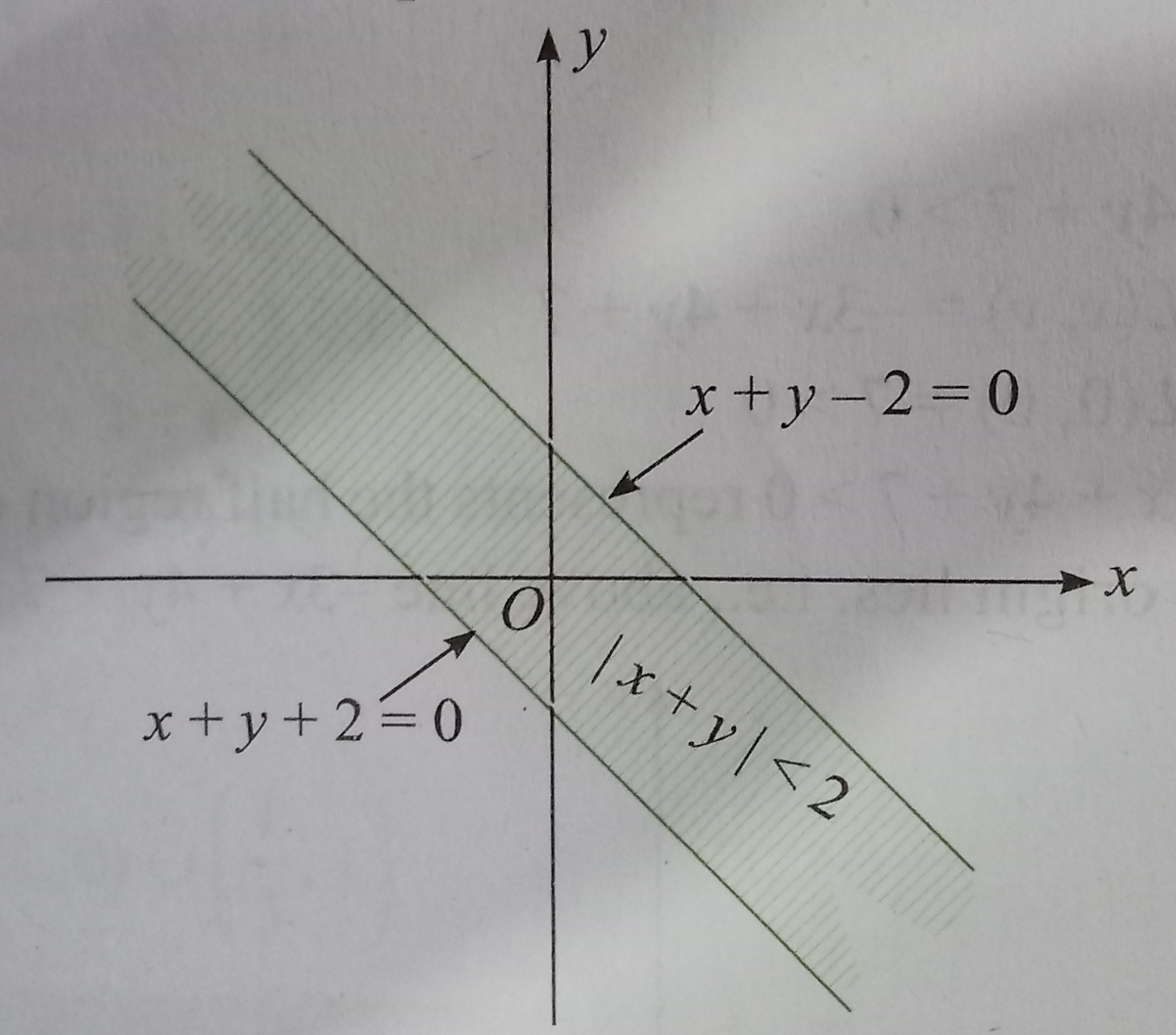 Thus, in general, `|ax + by +c| lt d` is the region of the points between the lines ax+by+c =d and ax+by+c = -d. `(ii) |2x-y| gt 3` `therefore 2x-y lt-3 " and " 2x-y gt 3` `rArr 2x-y+3 lt 0 " and " 2x-y-3 gt 0` `L_(1) (x,y) = 2x-y+3 " and " L_(2) (x,y) = 2x-y-3` `L_(1) (0,0) = 1 gt 0 " and " L_(2) (0,0) = -3 lt 0` `" So, " 2x-y+3 lt 0` represents where origin doest not lie and `2x-y-3 gt 0` also represents the region where origin does not lie. 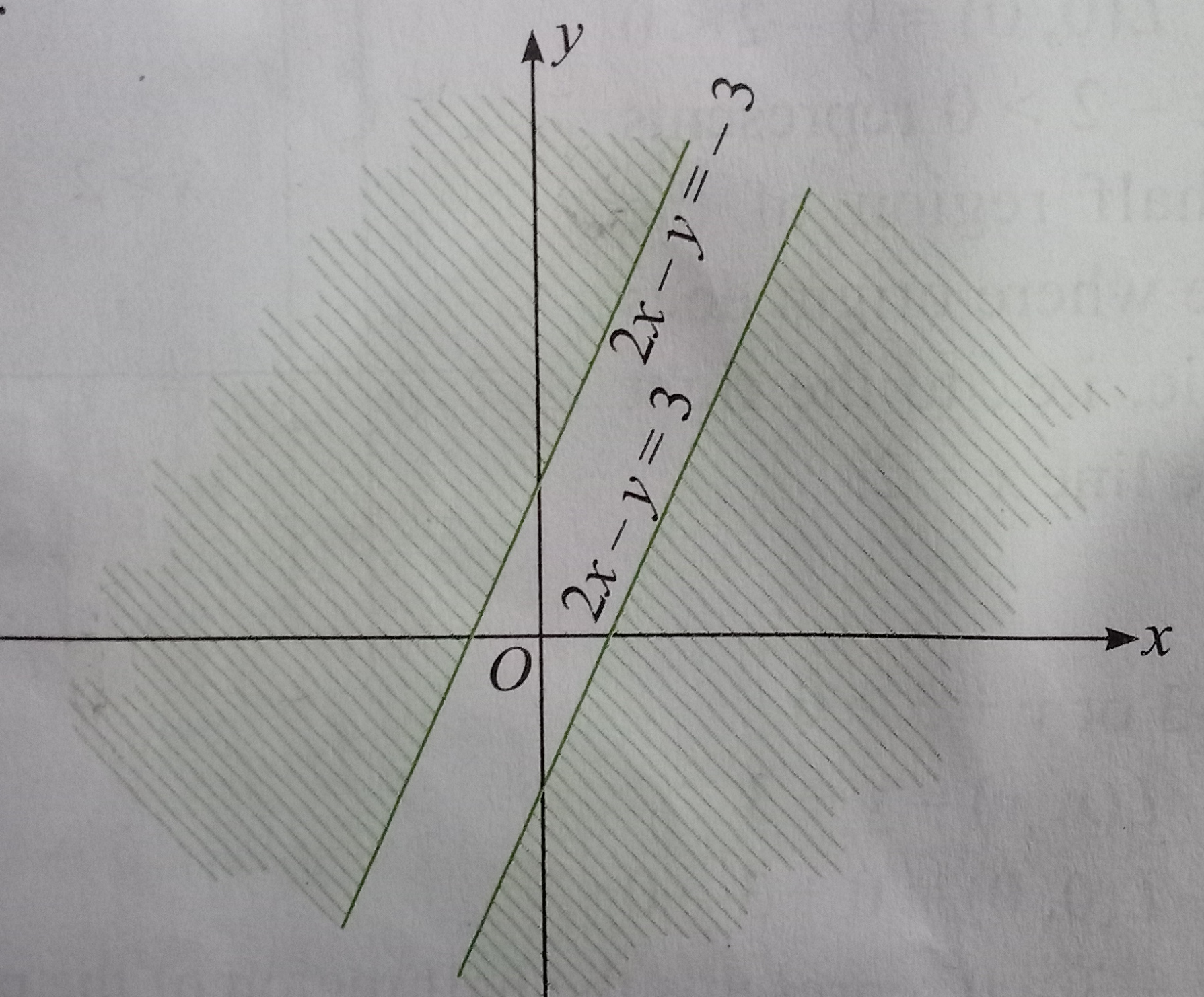 Thus, in general `|ax+by+c| gt d` is the region of the points which does not lie between the lines ax+by+c =d and ax+by+c=-d. `(iii) |x| gt |y|` ` " If " x,y gt 0`, then we have `x gt y " or" x-y gt 0`. Let L(x,y) = x-y. `therefore L(1,0) = 1-0 gt 0.` HENCE, points satisfying this INEQUALITY lie below the line x-y=0 in first QUADRANT. 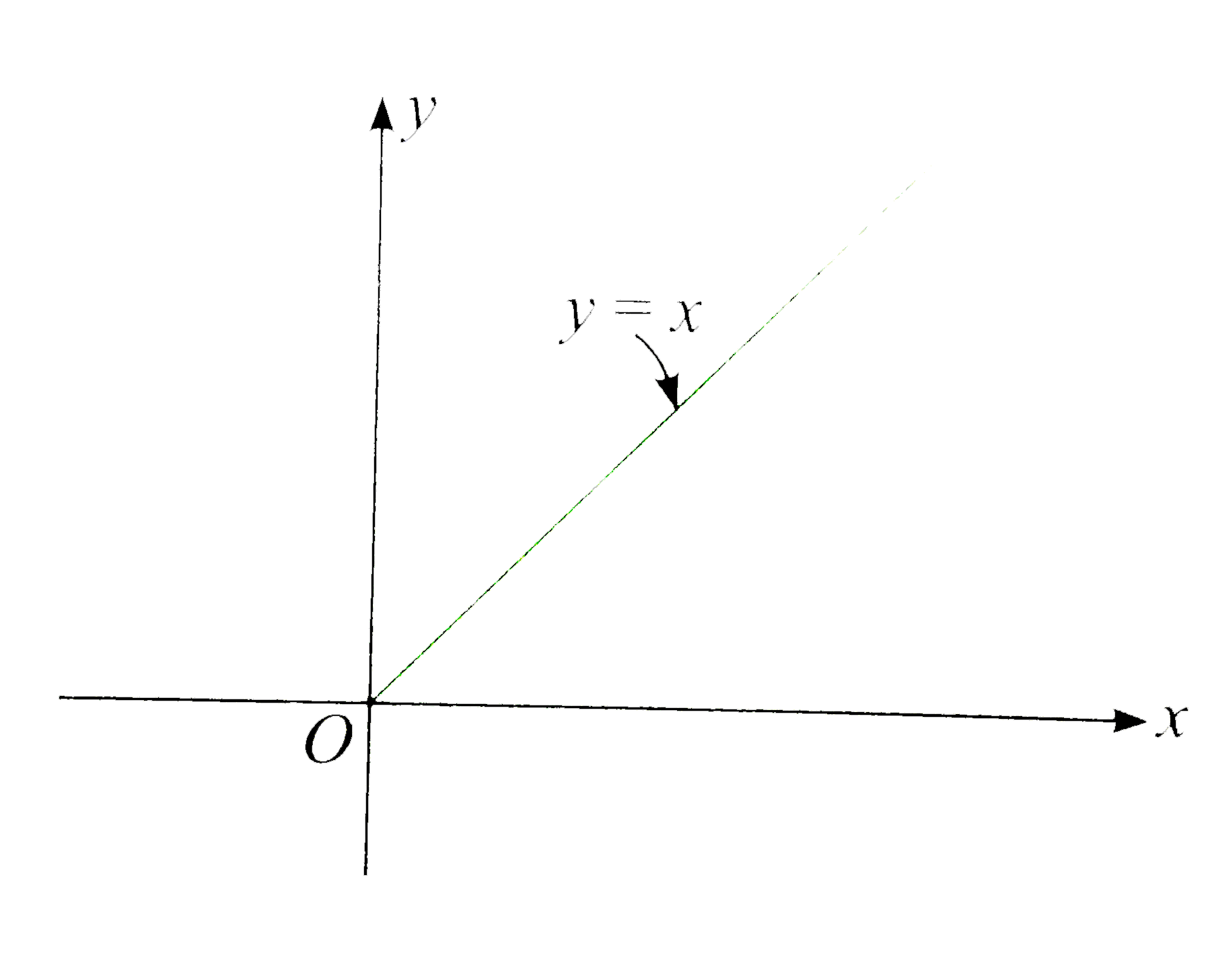 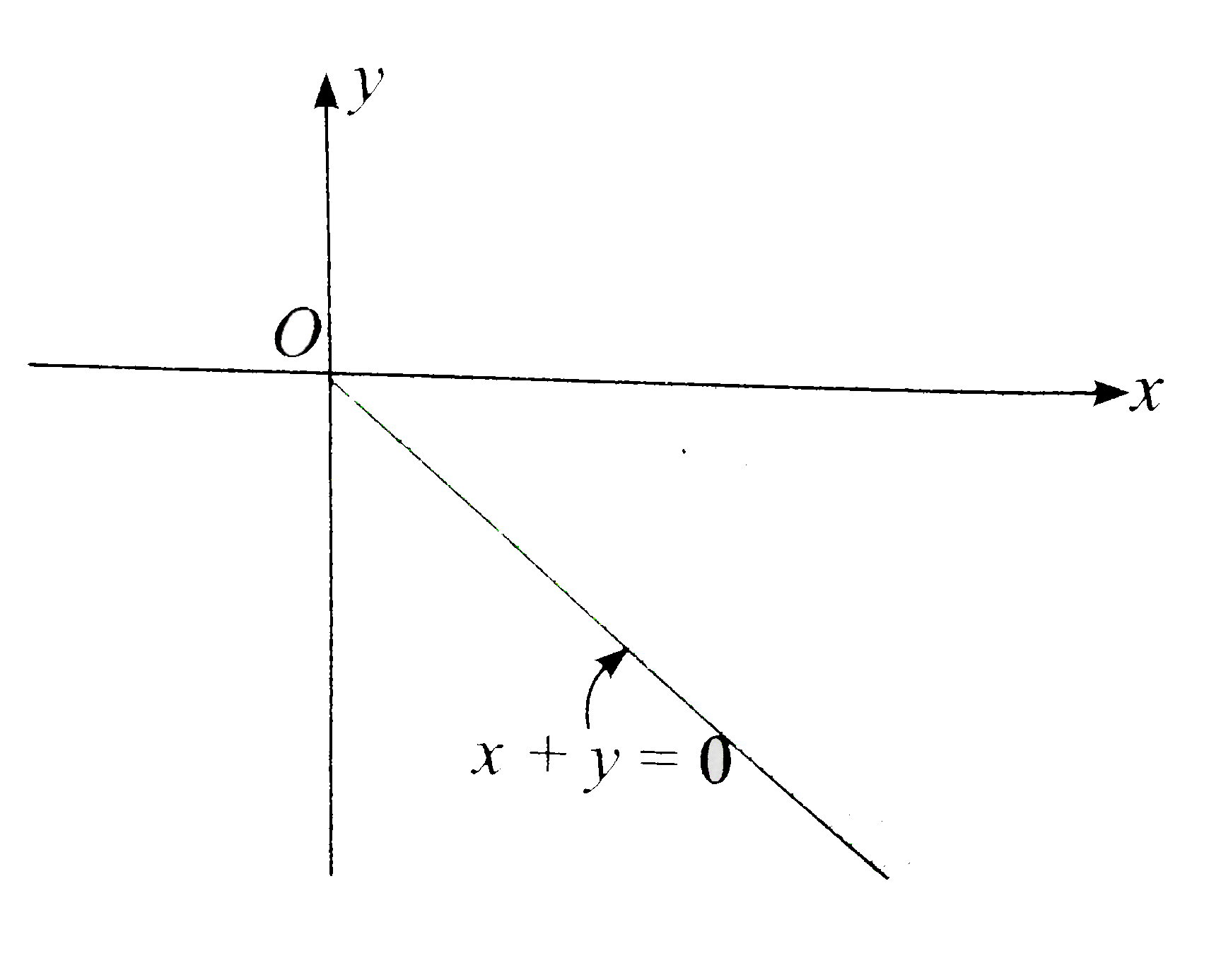 `" If" x gt 0, y gt 0`, then we have `x gt -y " or" x+y gt 0`. Let L(x,y) = x+y. `therefore L(1,0) = 1+0 gt 0` Points satisfying this inequality lie above the line x+y=0 in fourth quadrant. Similarly, we have one region in second quadrant and one in third quadant. Combining all the cases, we have FOLLOWING region. 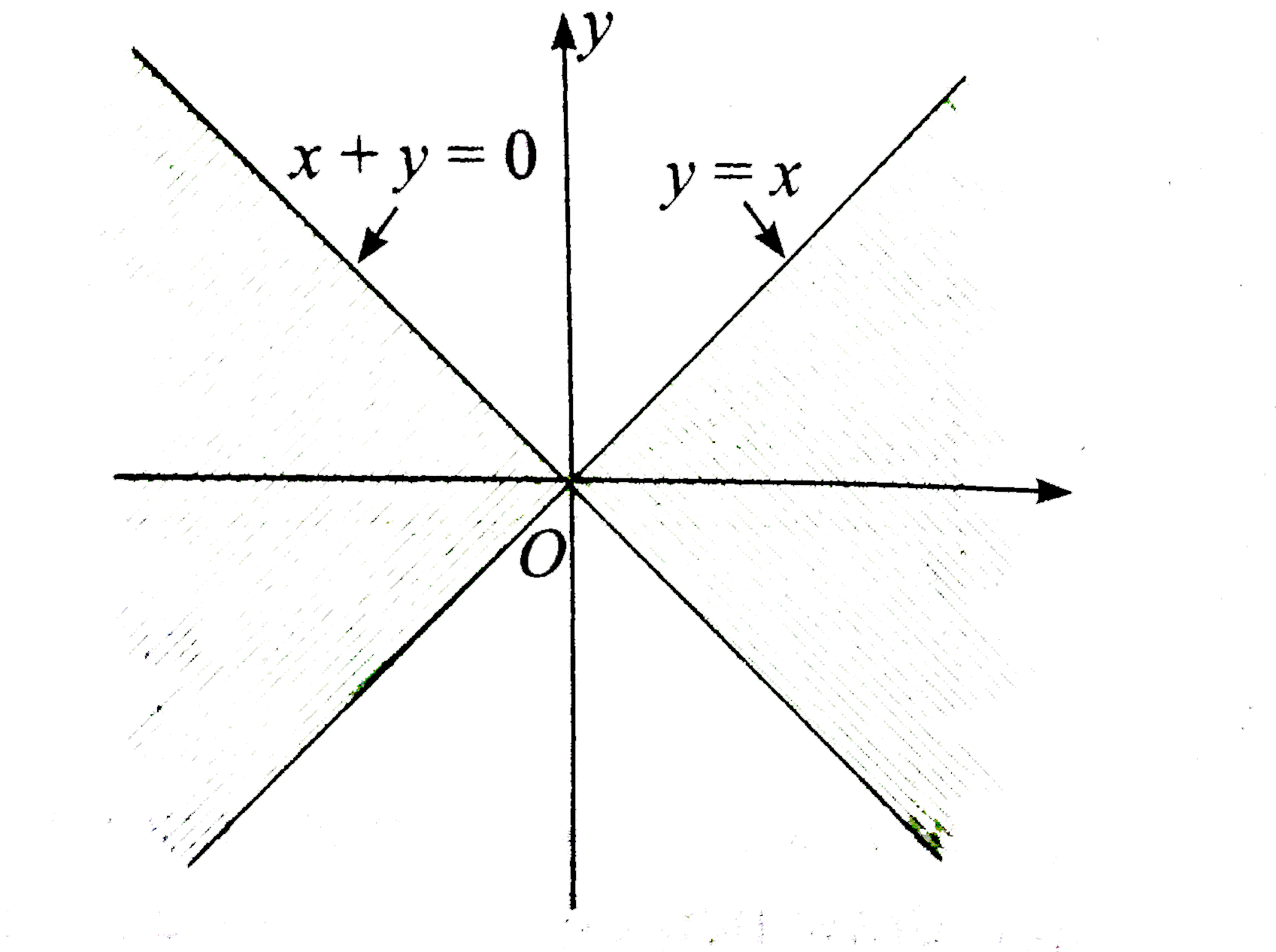
|
|