

Saved Bookmarks
| 1. |
The hyperconjugative stabilities of tert-butyl cation and 2-butene, respectively, are due to |
|
Answer» `SIGMA-p` (empty) and `sigma-pi^(**)` electron delocalisations 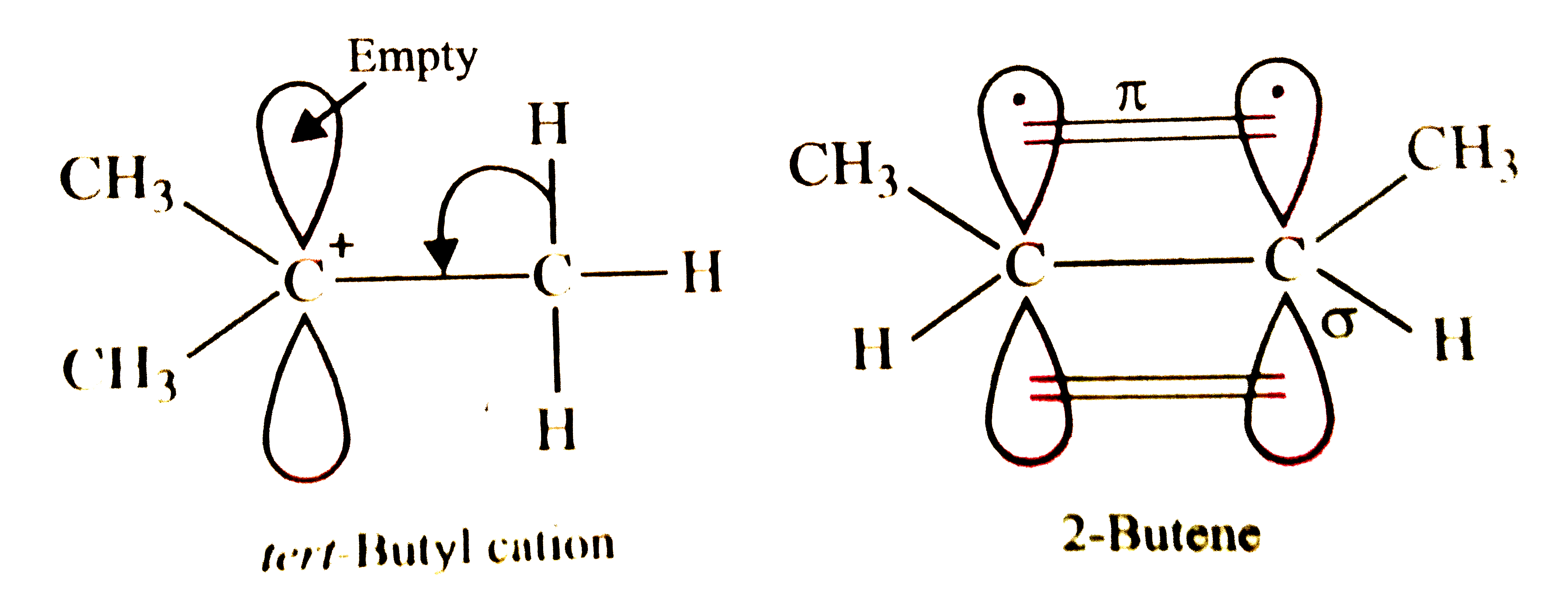 In 2-butene, `pi`-bond contains two electrons, one electron from each of the two carbon atoms, i.e., `pi`-MO contains a PAIR of electrons, but `pi^(**)` MO is empty and hence electrons of the `sigma` C-H bond can move only into the `pi^(**)` orbital. Thus, option (a) is correct. |
|