

Saved Bookmarks
| 1. |
write the structural formula for each of the following a. A 3^(@) amine with the formula C_(3) H_(9) N. b. Three ethers with the formula C_(4) H_(10) O. c. A 3^(@) alcohol with the formula C_(4) H_(8) O. d. Three 2^(@) alky1 halides with the formula C_(5) H_(11) C1. e. Three 1^(@) alcohols with the formula C_(4) H_(8) O. f. A 2^(@) wiht the foumula C_(3) H_(6) O. g. Two esters with the formula C_(3) H_(6) O. g. Two esters with the formula C_(3) H_(6) O_(2). h. Four 1^(@) alky1 halides with the formula C_(5) H_(11) C1. i. A 3^(@) alky1 halide with the formula C_(5) H_(11) CI. j. Three aldehydes with the formula C_(5) H_(10) O. k. Three ketones with the formula C_(5) H_(10) O. l. A 2^(@) amine with the formula C_(3) H_(9) N. m. Two amides with the formula C_(2) H_(5) NO. n. Two 1^(@) amines with the formula C_(3) H_(9) N. |
|
Answer» Solution :a. `(CH_(3))_(3) N` b. 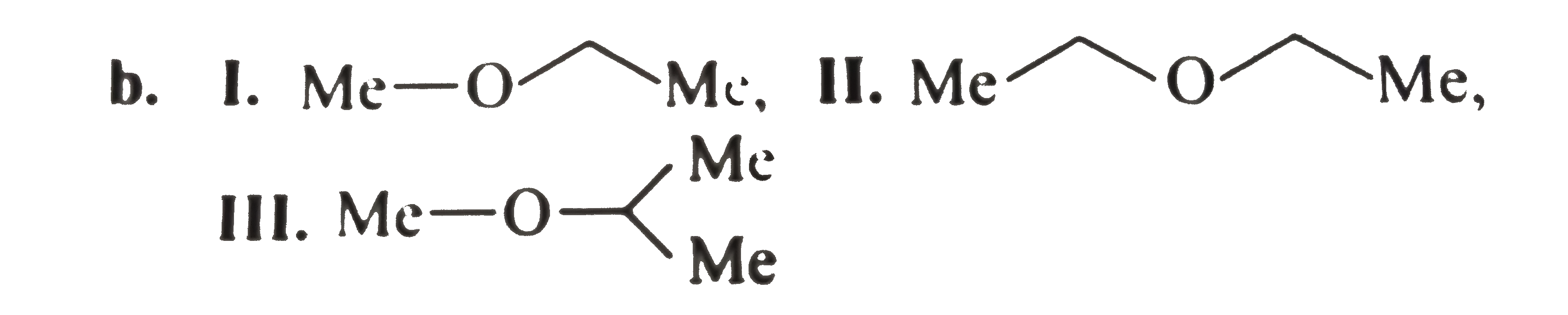 C. Degree unsaturation: `((2 n_(C ) + 2) - n_(H))/(2) = (10 - 8)/(2) = 1^(@)` `1^(@) D.U`. Suggests either unsturated alcohol or cyclic `3^(@)` alcohol four `C` atoms, `3^(@)` alcohol cannot be unsturated, so it is cyclic 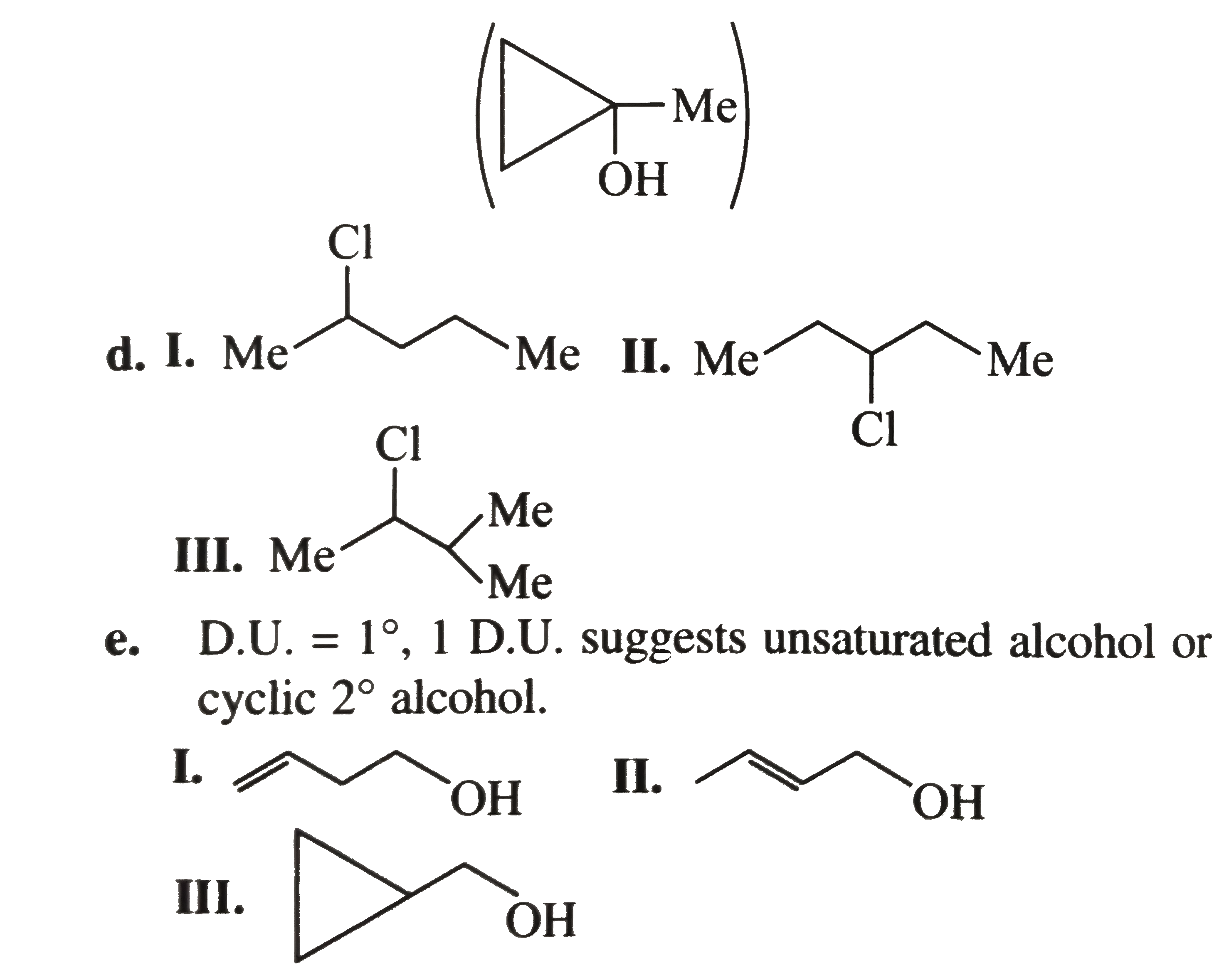 F. `D.U. = 1^(@). 1D.U.` suggests UNSATURATED alcohol or cyclic `2^(@)` alchohol THREE `C` , `2^(@)` alcohol cannot be unsaturated, so ITIS cyclic. 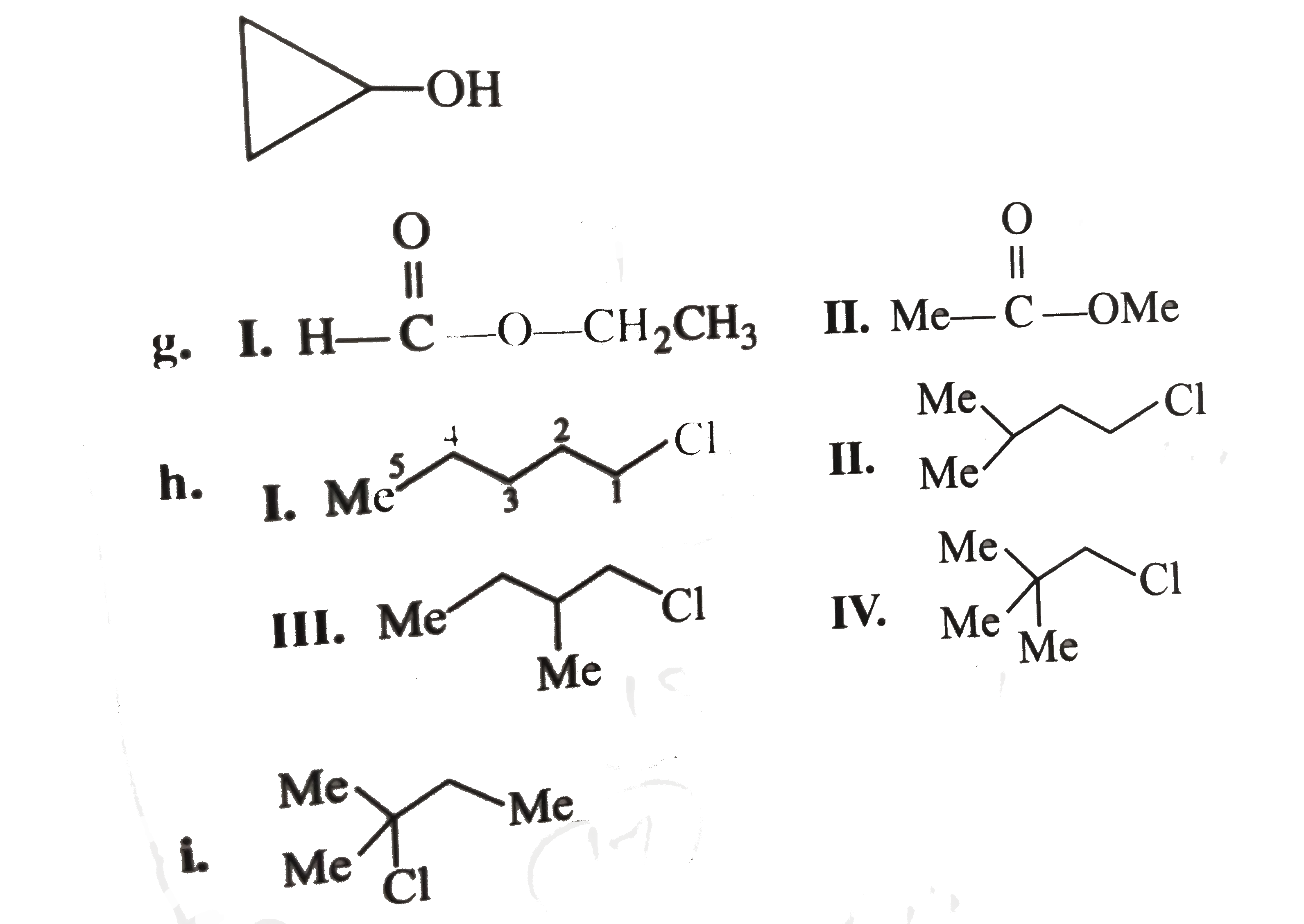 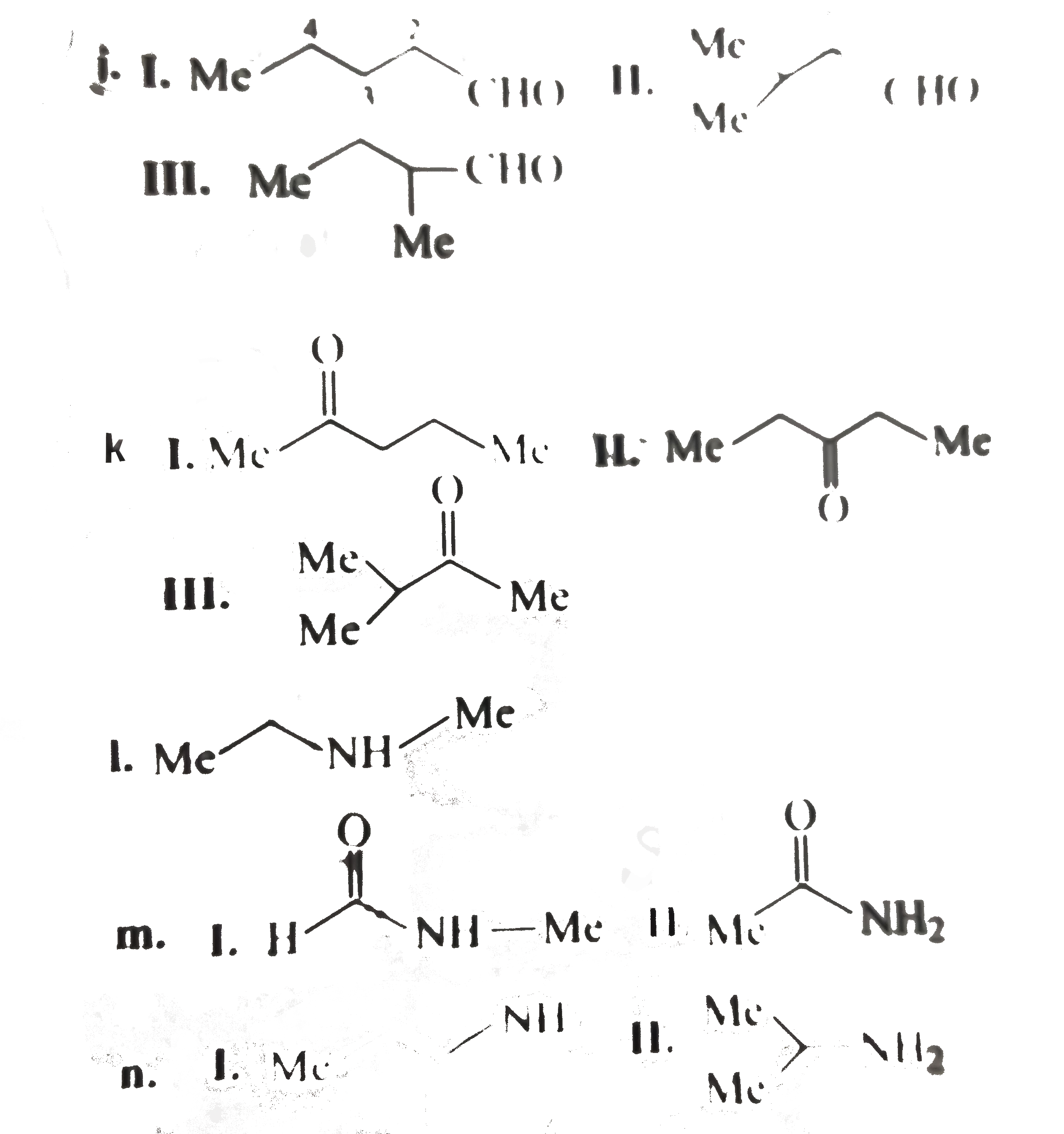
|
|