Saved Bookmarks
This section includes 7 InterviewSolutions, each offering curated multiple-choice questions to sharpen your Current Affairs knowledge and support exam preparation. Choose a topic below to get started.
| 1. |
Question : The plate situated between the eyes and passing below that on the head of cockroach is called : |
|
Answer» VERTEX |
|
| 2. |
Question : The plasmid of A. tumefacien is called ________. |
|
Answer» |
|
| 3. |
Question : The plants which flower every year after attaining certain maturity are called |
|
Answer» monocarpic |
|
| 4. |
Question : The plants which bears two types of spores during Sporophytic stage are known as ………… |
|
Answer» SPORES |
|
| 5. |
Question : The plants which bears only one kind of spores during Sporophytic stage are known as …………… |
|
Answer» SPORES |
|
| 6. |
Question : The plants which are grown in silvopasture system are |
|
Answer» SESBANIA and ACACIA |
|
| 7. |
Question : Theplants thatgrow onsalincsoildwith highconcentrationNaCI_(2) MgSO_(4) andMgCI_(2) arecalled. |
|
Answer» Succulents |
|
| 8. |
Question : The plants in which chromosormal basis of sex determination was seen |
|
Answer» Coccinia |
|
| 9. |
Question : The plants grown in magnesium deficent but urea sprayed soil would show |
|
Answer» deep green foliage Thus a plant growing in magnesium-deficient soil would show chlorosis inspite of being sprayed with urea (nitrogen). |
|
| 10. |
Question : The plants growing in deserts to tolerate water stress, have |
|
Answer» no STOMATA |
|
| 11. |
Question : The plants efficiency of N_2 absorption is promoted when the nitrogen source available in the form of |
|
Answer» `NO^3-` |
|
| 12. |
Question : The plant which produces highly poisonous cardiac glycosides is ? |
|
Answer» CACTUS |
|
| 13. |
Question : The plant which is used for studying hybrid vigour or heterosis is |
|
Answer» Maize |
|
| 14. |
Question : The plant which have this floral diagram possesses A. Papilionaceous corolla B. Swollen placenta C. Epipetalous D. Epiphyllous condition |
|
Answer» A,B,C,D |
|
| 15. |
Question : The plant triticale is a/an |
|
Answer» Allopolyploid |
|
| 16. |
Question : The plant that does not belong to the ecological group ,represented by the other plants is , |
|
Answer» Pistia |
|
| 17. |
Question : The plant that does not have foliar buds is |
|
Answer» dablberigia |
|
| 18. |
Question : The plant source of marijuana is ........................ |
|
Answer» ANDROGRAPHIS paniculata |
|
| 19. |
Question : The plant of Triticum aestivum |
|
Answer» Haploid |
|
| 20. |
Question : The plant of this group are adapted to live partly in water and partly above substratum and free from water |
|
Answer» a) Xerophytes |
|
| 21. |
Question :The plant most commonly used as green manure is |
|
Answer» DALBERGIA sissoo |
|
| 22. |
Question : The plant of Cycas, which belongs to sporophytic generation, is differentiated into : |
|
Answer» ROOT, stem and leaves |
|
| 23. |
Question : The plant in which adventitious buds along the margin of leaves give rise to new plants is.a)Agaveb)Brayophyllumc)Dahliad)Water Hyacinth |
|
Answer» WATER Hyacinth |
|
| 24. |
Question : The plant having monadelphous stamens and axile placentation is |
| Answer» Answer :A | |
| 25. |
Question : The plant growth regulator involved in xylem differentiation is |
|
Answer» gibberllins |
|
| 26. |
Question : The plant group that produces spores and embryo but lacks vasular tissues and seeds is |
|
Answer» Pteridophyta |
|
| 27. |
Question : The plant factor which is inversely proportional to transpiration is |
|
Answer» ROOT SHOOT ratio |
|
| 28. |
Question : The plant extracts are sterilized by passing throughmillipore filter with _______. |
|
Answer» `0.22` MM PORE DIAMETER |
|
| 29. |
Question : The plant developed by parthenogenesis might be(A) only haploid(B) only diploid(C) haploid or diploid(D) triploid |
|
Answer» only haploid |
|
| 30. |
Question : The places where wild animals are kept in protected environment under human care which enable us to learn about their food habits and behaviour is called:- |
|
Answer» Museum |
|
| 31. |
Question : The plains characterised by snow, ice and frozen soil during most of the year are known as |
| Answer» ANSWER :A | |
| 32. |
Question : The placenta of human beings belong to the peripheral layer, are called |
|
Answer» haemochorialis |
|
| 33. |
Question :The place where RNA - polymerase attaches with the DNA is called : |
| Answer» Answer :A | |
| 34. |
Question : The pituitary gland secrets thyroxine hormone. |
|
Answer» True |
|
| 36. |
Question : The piling of RBCs to form an aggregate called_____. |
|
Answer» Haemolysis |
|
| 37. |
Question : The pigment system active in wavelengths lower than 680 nm is_____ |
|
Answer» |
|
| 39. |
Question : The pigment molecules of a chloroplast are located within its thylakoid membranes |
|
Answer» the SPACE between the INNER and otuer membranes |
|
| 40. |
Question : The pigment involved in preception of photoperiodic stimulus in plants is_____ |
|
Answer» |
|
| 41. |
Question : The pigment that helps nitrogen fixation in root nodules of leguminous plants is________. |
|
Answer» |
|
| 42. |
Question :The pigment Chlorophyll-a is absent in |
|
Answer» GYMNOSPERMS |
|
| 43. |
Question : The physiology of excertion involves. |
|
Answer» deamination |
|
| 44. |
Question : The physiographic factor responsible for the initiation of succession to : |
|
Answer» Erosion |
|
| 45. |
Question :The physical properties of water like cohesion, adhesion and surface tension give water which of the following ability that help in ascent of xylem sap? |
|
Answer» Ability to RISE in thin tubes |
|
| 46. |
Question : The phrase " survival fittest " was used by |
|
Answer» Darwin |
|
| 47. |
Question : The photosynthetic unit to trap the light energy is known as |
|
Answer» QUANTASOME |
|
| 48. |
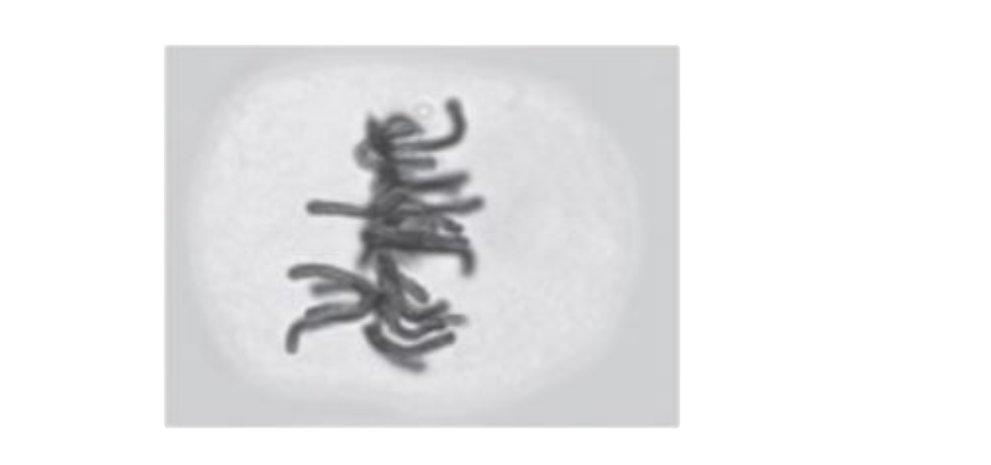
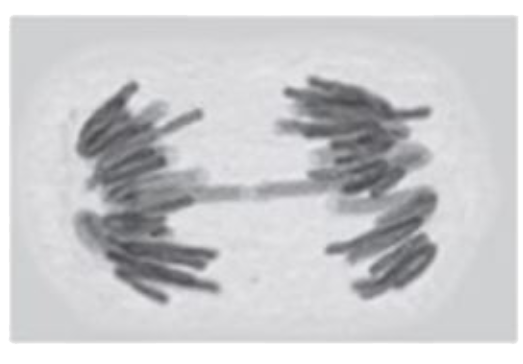
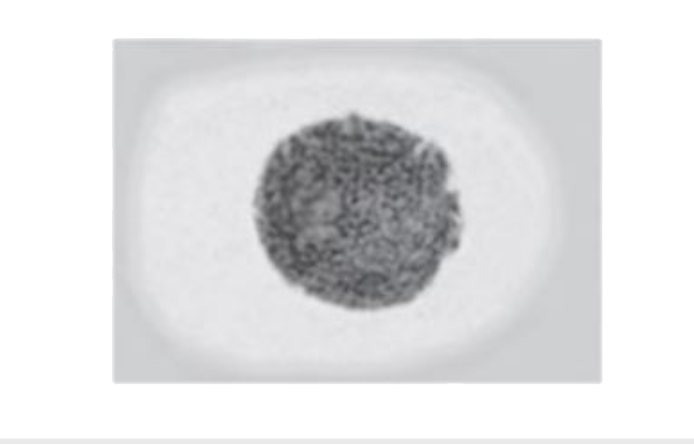
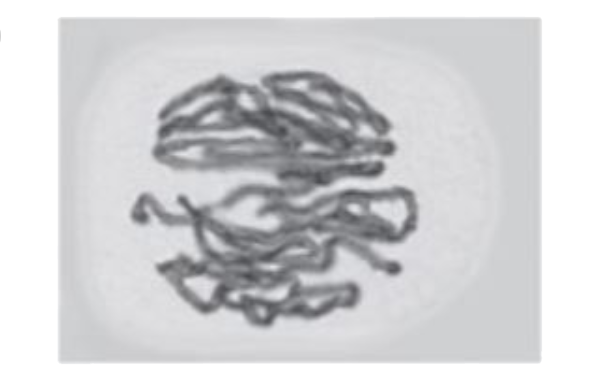
Question : The photomicrographs show cells in various stages of the cell cycle. Identify the stage where semi - conservative replication of DNA take place. |
|
Answer»
|
|
| 49. |
Question : The photochemical phase of photosynthesis includes,(a) water splitting (b) light absorption © oxygen release (d) synthesis of NADPH (e) synthesis of starch |
|
Answer» Only (a) & (B) |
|
| 50. |
Question : The phosphorus cycle is different from the carbon cycle in that :- |
|
Answer» Unlike CARBON cycle, there is respiration release of PHOSPHORUS into atmosphere |
|