

Saved Bookmarks
This section includes 7 InterviewSolutions, each offering curated multiple-choice questions to sharpen your Current Affairs knowledge and support exam preparation. Choose a topic below to get started.
| 1. |
STATEMENT -I :on reduction withNa BH_(4) in ethannol gives cyclopentanolSTATEMENT -2 :Conjugate addition first occurs followed by second direct addition . |
|
Answer» STATEMENT-1is TRUE, Statement -2 is True , STAMENT -2 is a correct explanation for Statement -I. |
|
| 2. |
Statement I: Primary alkyl halides on oxidation with DMSO gives aldehydes. Statement II: DMSO is used as polar aprotic solvent. |
|
Answer» Both statement I and statement II are true INDIVIDUALLY and statement II EXPLAINS statement I. |
|
| 3. |
Statement I : Photochemical smog is also known as oxidizing smog. Statement II : Photochemical smog is chiefly composed of O_(3) , PAN, etc. |
|
Answer» Both STATEMENT I and statement II are TRUE and statement II EXPLAINS statement I |
|
| 4. |
StatementI : Ozone depletion potential is maximum is CFC's Statement II : CFC looses active chloride |
|
Answer» Both STATEMENT I and statement II are true and statement II explains statement I |
|
| 5. |
Statement I: N_(2), CO " and " CN^(-)are having same bond order . Statement II : Isoelectronic species always have samebond order . |
|
Answer» Both statement I and II are TRUE and statement IIexplains statement I. |
|
| 6. |
Statement I : methaneethane propene and butaneare alkane groupcompoundsStatement IIthey are obeying C_(n)H_(2n+2) formula and eachdiffers from its proceeding memberby a CH_(2) group |
|
Answer» STATEMENT -I and IIare CORRECT and statement II is correct explanation of statement -I |
|
| 7. |
Statement -I n - butane and iso butane are isomers Statement -II : because they are havingsame molecular formula but diffes only in the structural formula |
|
Answer» statement -I and IIare CORRECT and statement -II is correctexplanationof statement -I |
|
| 8. |
STATEMENT -I :Low molecualr weight carbonylcompounds aremore soloble in water then the corresponding alkanesSTATEMENT -2 : H- bonding between carbonyl oxygen and water makes carbonyl compounds more water soluble then hydrocarbon . |
|
Answer» STATEMENT-1is True, Statement -2 is True , STAMENT -2 is a correct EXPLANATION for Statement -I. |
|
| 9. |
Statement-I: Lithium hydride is the stablest of all the alkali metal hydrides Statement-II: The lattice energies of alkali metal halides decrease as the size of the halide ion increases |
|
Answer» Both the STATEMENTS are TRUE |
|
| 10. |
Statement - I :- La^(3+), Lu^(3+) ions are colourless Statement - II :- They do not contain unpaired electrons |
|
Answer» STATEMENT I is true, Statement II is true, Statement II is a CORRECT EXPLANATION of Statement I. |
|
| 11. |
Statement-I: Li_(2)CO_(3) decomposes on heating to give CO_(2) gas Statement-II: Carbonated of alkali metals give wakly alkaline solutions due to the hydrolysis of carbonate ion |
|
Answer» Both the STATEMENTS are TRUE |
|
| 12. |
Statement - I: Ionization enthalpy of N is greater than that of O. Statement - II: N has exactly half filled electronic configuration which is more stable than electronic configuration of O. |
|
Answer» Statement - I is wrong but statement - II is CORRECT |
|
| 13. |
Statement I : In sulphur hexafluoride, the central atom has more than eight valence electrons. Statement II: The central atom can accommodate additional electron pairs by using outer vacant d orbitals. |
|
Answer» 1) STATEMENTS I and II are correct and STATEMENT Il is the correct EXPLANATION of statement I. |
|
| 14. |
Statement I . In Haber's process , NH_(3) is liquefied and removed . Statement II . In manufacture of NH_(3) , liquefied and removal of NH_(3) , keeps the reaction moving in forward direction |
|
Answer» Statement I and II are CORRECT and II is the correct explanation of I . |
|
| 15. |
Statement I : In dissociation of PCl_(5) to PCl_(3) and Cl_(2) , K_(P) gt K_(C) Statement II : In dissociation of PCl_5 , Deltan_(g) = -ve and so K_(P) gt K_(C) |
|
Answer» Statement I & II are correct and statement II is the correct EXPLANATION of statement I. |
|
| 16. |
Statement - I : Homolytic cleavage is symmetrical one. Statement-II: A single covalent bond breaks and each of the bonded atoms retains one electron. |
|
Answer» Statement-I and II are CORRECT and statement -II is correct EXPLANATION of statement -I. |
|
| 17. |
Statement - I : Hetrolytic cleavage is unsymmetrical one. Statement-II: Acovalent bond breaks and one of the bonded atom retains the bond pair of electrons. |
|
Answer» Statement-I and II are CORRECT and statement -II is correct EXPLANATION of statement -I. |
|
| 18. |
Statement-I :HCHO and HCOOH can be distingushed by Tollen's testStatement-II : Silver mirror is formed when ammonical AgNO_(3) is reduced. |
|
Answer» Boththestatements are true and statement- II is the correct explanation of statement -I. |
|
| 19. |
Statement I: H_(2) when allowed to expand at room temperature it causes heating effect. Statement II : H_(2) has inversion temperature much below room temperature. |
|
Answer» Both STATEMENT I and statement II are true and statement II explains statement I. |
|
| 20. |
Statement I : Greater is the critical temperature, more difficult is to liquefy the gas. Statement II: Stronger the intermolecular forces, lower would be the critical temperature of that gas. |
|
Answer» Both STATEMENT I and statement II are TRUE and statement II explains statement I. |
|
| 21. |
Statement-I : Fluoro acetic acid is stronger acid than acetic acid Statement - II: Fluorine has high electronegativity and it is facilitate to dissociate the O-H bond easily. |
|
Answer» STATEMENT-I and II are correct and statement -II is correct EXPLANATION of statement -I. |
|
| 22. |
Statement I : Equivalent mass of Mg is determined by Oxide Method. Statement II : Molecular mass is claculated using vapour density. |
|
Answer» Both the statements are individually true |
|
| 23. |
Statement I: CuCl Is more covalent than NaCl. Statement II: CuCl Is more covalent than NaCl, Cu^(+)is Small and have 3s^(2)" "3p^(6)" "3d^(10) configuration and show greater polarisation. |
|
Answer» 1) Statement I & ll are correct and II is the correct EXPLANATION of I. |
|
| 24. |
Statement I: CuCl is more covalent than NaCl. Statement II: As compared to Na^(+), Cu^(+) is small and have 3s^2 ,3p^6 3d^(10) configuration and show greater polarisation. |
|
Answer» STATEMENT I & II are correct and II is the correct explanation of I. |
|
| 25. |
Statement I: Crude common salt is hydrosco pic because of impurities CaSO_(4) and MgSO_(4) Statement II : The increase in solubility of hydroxides down the group 2 elements is due to increase in lattice energy |
|
Answer» Both the STATEMENTS are true |
|
| 26. |
Statement-I: Cesium is considered as the most electropositive element Statement-II: Due to its lowest ionization energy, cesium is considered as the most electropositive element |
|
Answer» Statements-I and II are CORRECT and statement-II is the correct EXPLANATION of statement-I. |
|
| 27. |
Statement I : Bond angle of BF_(3) " and " NF_(3) are different Statement II : Both the molecules are having different shapes . |
|
Answer» Both statement I and II are TRUE and statement II EXPLAINS statement I . |
|
| 28. |
Statement-I: "C" product of above conversion is sodium salt of Pentan-1,5-dioic acid Statement-II: R.D.S of A to C conversion is attack of enolate ion on halogen molecule. |
|
Answer» If both statement-1 & statement-2 are TRUE & the statement-II is a CORRECT explanation of the statement-I |
|
| 29. |
Statement-I: BeCl_(2) is soluble in organic solvent. Statement-II: Since BeCl_(2) is a covalent compound, it is soluble in organic solvent. |
|
Answer» Statements-I and II are CORRECT and statement-II is the correct EXPLANATION of statement-I. |
|
| 30. |
Statement-I Be and Mg elements do not give a coloured flame in flame test. Statement-II Be is not a true element of Group 11 and Mg shows metallic character. Select the correct options : |
|
Answer» Statement-I and II both are CORRECT and Statement-II GIVES the correct understanding of Statement-I. |
|
| 31. |
Statement -I: Azimuthal quantumnumber of the orbital repesented by the given curve may be any whole number. Statement -II : For s-orbital radial probability distribution curve not start from origen. |
|
Answer» If both STATEMENT -I &Statement -II are True & the Statement -II is a CORRECT explanationof the Statement |
|
| 32. |
Statement I: At very high pressures, compressibility factor is greater than 1. Statement II : At very high pressure, 'b' can be neglected in van der Waal's gas equation. |
|
Answer» Both statement I and statement II are true and statement II explains statement I. |
|
| 33. |
Statement-I: All living things are open systems. Statement-II: Because they continuously exchange matter and energy with thr surroundings. |
|
Answer» STATEMENT-I and II are correct and statement-II is correct EXPLANATION of statement-I. |
|
| 34. |
Statement- I: All the organic molecules contain covalent bonds. Statement-II: Organic molecules are formed by the mutual sharing of electrons between atoms. |
|
Answer» Statement-I and II are CORRECT and statement -II is correct EXPLANATION of statement -I. |
|
| 35. |
Statement-I: All living things are open systems. Statement-II: Because they continuously exchange matter and energy with the surroundings |
|
Answer» Statement-I and II are CORRECT and Statement-II is the correct EXPLANATION of Statement-I |
|
| 36. |
Statement -I alkenes shows both structuraland geometrical isomerism Statement -II because of the presence of doublebond |
|
Answer» Statement-I and II are CORRECT but statement-II is not correct EXPLANATION of statement -I |
|
| 37. |
Statement-I alkenes are more reactive than alkanes Statement -II because of the presence of a double bond |
|
Answer» STATEMENT-I and II are correct and statement-II is correct EXPLANATION of statement -I |
|
| 38. |
Statement-I: Alkali metals are very soft metals Statement-II: Since the atoms of alkali metals have bigger kernels and smaller number of valence electrons, the metallic bonds in them are very weak and hence they are soft |
|
Answer» Statements-I and II are CORRECT but statement-II is not the correct EXPLANATION of statement-I |
|
| 39. |
Statement-I : Addition of bromine to trans-2-buten yields meso-2,3-bromo butane. Statement II: Bromine addition to an alkene is an electrophilic addition . |
|
Answer» Statement-I is true , statement-II is true and statement-II is correct EXPLANATION of statement-I |
|
| 40. |
Statement I . Addition of an inert gas at constant volume has no effect on equilibrium . Statement II . When an inert gas is added , the total number of moles of gases present in the container increases and total pressure also increases , the partial pressure of the products and reactants are unchanged . |
|
Answer» STATEMENT I and II are correct but statement II is not the correct explanation of I. |
|
| 41. |
STATEMENT -I :Acetylene on treatment with alkalineKMnO_(4)" product acetaldehyde"STATEMENT -2 : " Alkaline"KMnO_(4) is aoxidising agent. |
|
Answer» STATEMENT-1is True, Statement -2 is True , STAMENT -2 is a correct EXPLANATION for Statement -I. |
|
| 42. |
Statement-I: Acetanilide acts as a negative catalyst for decomposition of H_(2)O_(2). ltbr. Statement-II: In the presence of acetanilide, the stability of H_(2)O_(2) increases. |
|
Answer» If both Statement-1 `&` Statement-II are True `&` the Statement-II is not a CORRECT explanation of the Statement I. |
|
| 43. |
Statement -:I:Acetaldehyde on reaction withH_(2)SO_(4)atroom temp forms a solidfuel(CH_(3)CHO)_(4) actsas a solid fuel |
|
Answer» Boththestatements are TRUE and statement- II is the correct explanation of statement -I. |
|
| 44. |
Statement I : A pure solid in an equilibrium reaction has the same concentration at a given temperature . Statement II : The solid does not expand to fill its container and it has same number of moles of its volume . |
|
Answer» STATEMENT I and II are CORRECT and statement II is the correct explanation of STATEMENTOF I. |
|
| 45. |
Statement I: A solution of potassium chloride in water deviates from ideal behaviour. Statement II: The solute dissociates to give K ^(+) and Cl ^(-) ion which form strong ion dipole interaction with water molecules. |
|
Answer» 1) STATEMENT I & II are CORRECT and II is the correct explanation of I |
|
| 46. |
Statement - I : A pure solid in an equilibrium reaction has the same concentration at a given temperature .Statement II : The solid does not expand to fill its container and it has same number of moles of its volume. |
|
Answer» STATEMENT I and II are CORRECT and statement II is the correct EXPLANATION of statement of I . |
|
| 47. |
Statement : Chloro acetic acid is more acidic than acetic acid Reason : Chloro group has + 1 effect |
|
Answer» Both ASSERTION , REASON are CORRECT |
|
| 48. |
Statement : Concentration of Zn_((aq))^(2+) increases cell potential increases (E_("cell")). Reason : Concentration of Zn_((aq))^(2+) increases with oxidation potential increases (E_(OX)). |
|
Answer» Statement and REASON both are CORRECT and reason GIVES proper explanation of statement. |
|
| 49. |
Statement : Chloro acetic acid is more acidic than acetic acid Reason : Chloro group has +1 effect |
|
Answer» Both ASSERTION, REASON are CORRECT |
|
| 50. |
STATEMENT-2: Structural isomer having same type of carbon chain but different position of functional group are called position isomers. |
|
Answer» Statement-1 is True, Statement-2 is True, Statement-2 is a CORRECT EXPLANATION for Statement-1. 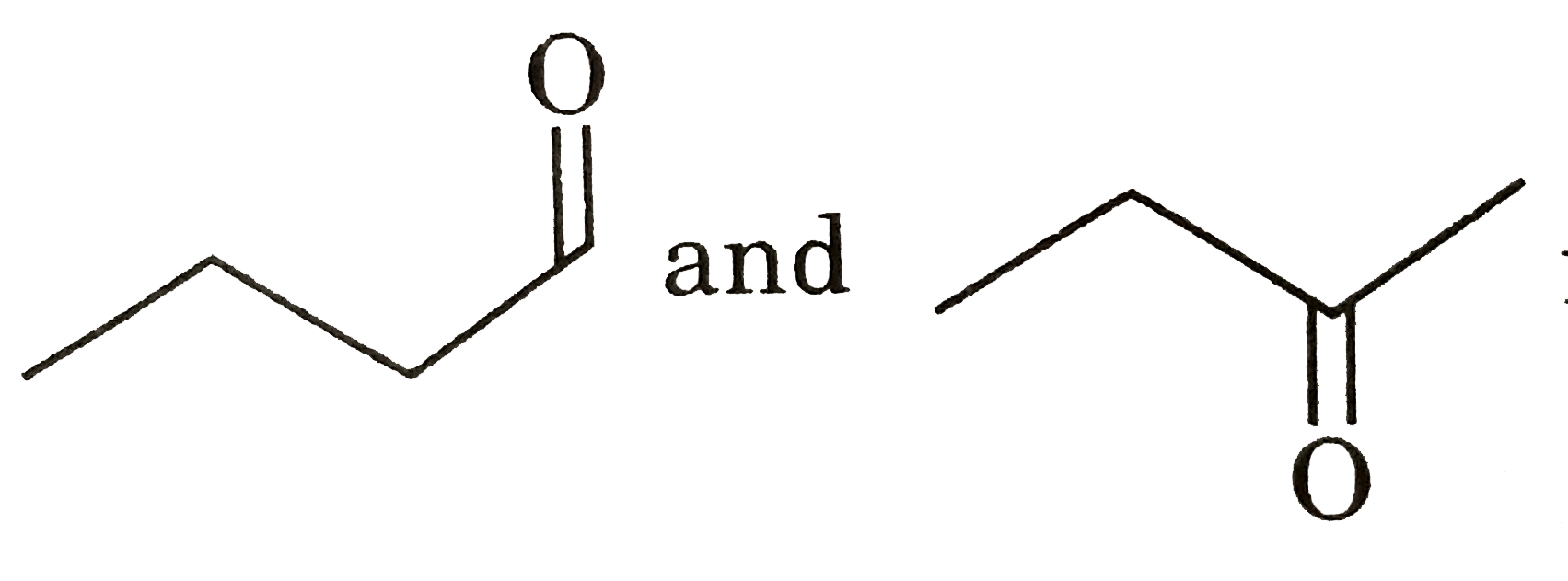 functional isomers. functional isomers.
|
|