Saved Bookmarks
This section includes 7 InterviewSolutions, each offering curated multiple-choice questions to sharpen your Current Affairs knowledge and support exam preparation. Choose a topic below to get started.
| 1. |
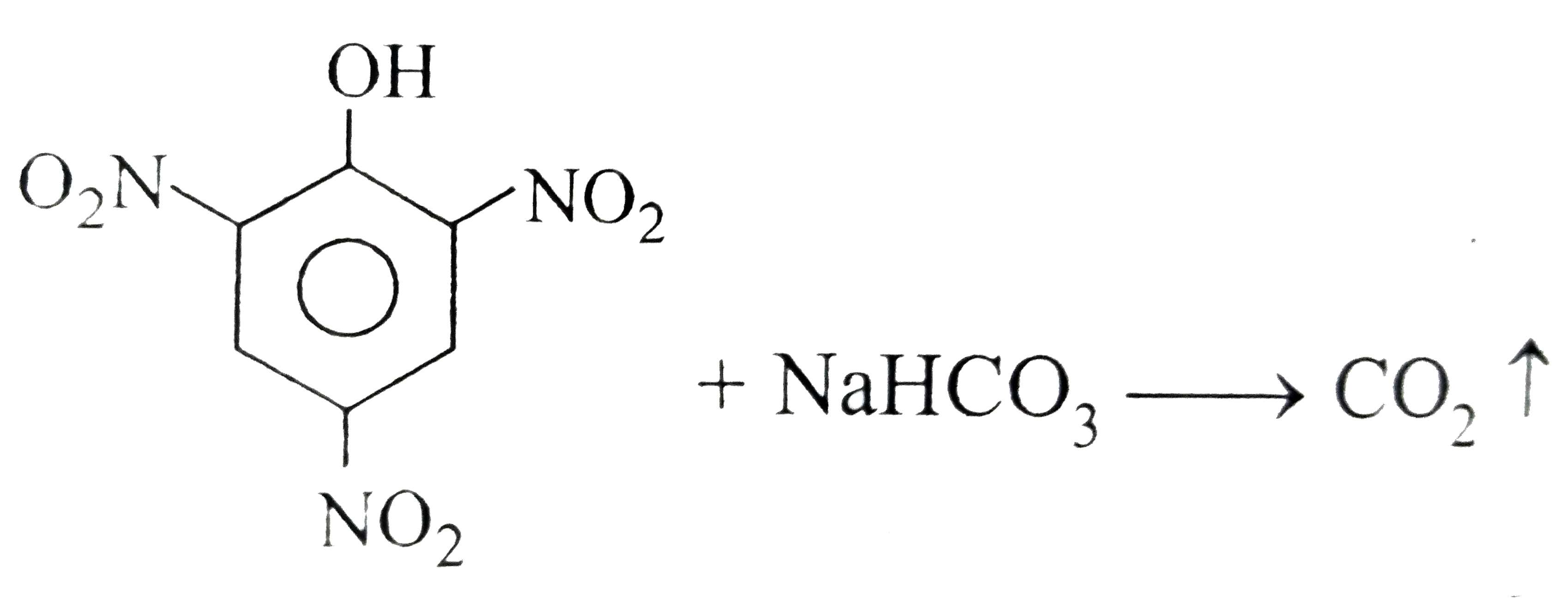
Select reaction in which correct products are given : |
|
Answer» `Ph-CH_(2)-overset(14)(C)"OO"H+NaHCO_(3) to CO_(2) uarr` |
|
| 2. |
Locate the position of the point P with respect to the circle S=0 when (i) P(1,2) and S=x^(2)+y^(2)+6x+8y-96 (ii) P(3,4) and S=x^(2)+y^(2)-4x-6y-12 (iii) P(2,-1) and S=x^(2)+y^(2)-2x-4y+3 (iv) P(1,5) andS=x^(2)+y^(2)-2x-4y+3 |
|
Answer» |
|
| 3. |
By using Gaussian elimination method, balance the chemical reaction equation: C_(2)H_(6)+O_(2)toH_(2)O+CO_(2). |
|
Answer» |
|
| 4. |
A bag contains 5 red and 3 blue balls. If 3 balls are drawn at random without replacement the probability of getting exactly one red ball is …….. |
|
Answer» `(45)/(196)` |
|
| 5. |
If r^(th) term is middleterm in (x^2 - (1)/(2x))^20 then (r+ 3)^(th) term is |
|
Answer» `(""^20C_7 X)/(2^13)` |
|
| 6. |
Solve the following differential equations (1+x^(2))(dy)/(dx) + 2xy - 4x^(2) = 0 |
|
Answer» |
|
| 7. |
If the normal at any point P on ellipse (x^(2))/(a^(2))+(y^(2))/(b^(2)) =1 meets the auxiliary circle at Q and R such that /_QOR = 90^(@) where O is centre of ellipse, then |
|
Answer» `a^(4) +2b^(3) ge 3a^(2)b^(2)` `ax sec theta - by cosec theta = a^(2) -b^(2)` Homogenising with auxilliary circle `x^(2) + y^(2) = a^(2)` `x^(2) + y^(2) = (a)^(2) ((ax sec theta - by cosec theta)^(2))/((a^(2)-b^(2))^(2))` `:.` For `/_QOR = 90^(@)` Coefficient of `x^(2)+` Coefficient of `y^(2) =0` `1- (a^(4)sec^(4)theta)/((a^(2)-b^(2))^(2)) + 1-(a^(2)b^(2)cosec^(2)theta)/((a^(2)-b^(2))^(2)) =0` `a^(4) - 5a^(2)b^(2) + 2b^(4) = a^(4) TAN^(2) theta + a^(2)b^(2) cot^(2) theta` `:. AM ge GM` `a^(4) - 5a^(2)b^(2)+2b^(4) ge 2a^(3)b` |
|
| 8. |
int e^(t) ((t)/(1+t^2))dt= |
|
Answer» `(e^t)/(1+t)` |
|
| 9. |
An ellipse has its centre at origin, whose vertical major axis is 5 and the minor axis is 4. i. Write its equation. ii. What is its eccentricity? |
|
Answer» II. `3/5` |
|
| 10. |
Find the cartesian equation of the plane| through the intersection of the planes vecr.(2hati+6hatj)+12=0 and vecr.(3hati-hatj+4hatk)=0 which are at a unit distance from the origin. |
|
Answer» |
|
| 11. |
Which of the following pails constitute very similar radiations |
|
Answer» HARD ULTRAVIOLET RAYS and solft X-ray |
|
| 12. |
Evaluate the definite integrals int_(2)^(3)1/xdx |
|
Answer» |
|
| 13. |
Express the following relationson A to B in each case in tabular form {1,2,3,4}, B = {1,2,3,4,5} f = {(x,y) : 2 divides 3x+y} |
|
Answer» SOLUTION :A = {1,2,3,4}, B = {12,3,4,5} `therefore` F = {(X,y) : 2 divides 3x + y } = { (1,1), (1,3), (1,5), (2,2), (2,4), (3,1), (3,3),(3,5),(4,2),(4,4)} |
|
| 15. |
int(1)/(cosxsin^(2)x)dx |
|
Answer» |
|
| 16. |
A word consists of 9 letters. 5 consonants and 4 vowels. Three letters are chosen at random. What is the probability that more than one vowel will be selected ? |
|
Answer» |
|
| 18. |
The vector of the plane passing through the intersection of the planes barr.(hati-hatj+2hatk)=3" and "barr.(3hati-hatj-hatk)=4 is |
|
Answer» `BARR.(hati-HATJ+2hatk)=3+4lambda` |
|
| 19. |
The lines : (x-2)/1=(y-3)/1=(z-4)/(-k) and (x-1)/k =(y-4)/2 =(z-5)/1 are co-planar if : |
|
Answer» `K=2` |
|
| 20. |
Solve the differential equation x(dy)/(dx)+2y=xlogx. |
|
Answer» |
|
| 21. |
If x is small so that x^2 and higher powers can be neglected, then the approximately value for ((1-2x)^(-1) (1-3x)^(-2))/((1-4x)^(-3)) is |
|
Answer» 1-2x |
|
| 22. |
Two coins are tossed once, where{:(" E "": ""tail appears on one coin"," F "": ""one coin shows head"):}Find P(E//F) |
|
Answer» |
|
| 23. |
If sides AB, BC and CA of a triangle ABC are represented byx + 2 = 0 , 3x + y = 0 " and " x = 3y + 2 = 0 respectively , then identify the correct statement. |
|
Answer» `Sigma TAN A = 4/3` |
|
| 25. |
Maximizez=6x+4y ,subjecttoxle2,x+yle3,- 2 x+y le1,xge 0 ,yge 0. Also , findmaximumvalue ofz. |
Answer» Solution :Firstwedraw the lines AB, CD and EF whoseequationsarex = 2,`x+y=3 and- 2x+y =1 `respectively. Theverticesofthefeasibleregionare` O(0, 0 ), A (2, 0 ) ,P , QandF (0 , 1 ) `.Pisthe pointof intersectionof the lines. `x+y=3andx=2 ` Substituting`x= 2`in `x+y=3 `,weget, `2 +y=3` `thereforey=1` `thereforeP-=( 2,1) ` Qis the pointof INTERSECTION ofthe lines `x+y=3""`... ( 1 ) and` -2x+y= 1 ` Onsubtracting, weget, `3x= 2""therefore x=(2 ) /(3)` `therefore`from(1) , ` ( 2) /(3)+y=3"" thereforey=(7) /(3) ` ` thereforeQ -= (( 2) /(3),( 7 ) /(3)) ` Thevaluesoftheobjectivefunction `Z =6x+4y`attheseverticesare `z (O ) =6 ( 0)+4(0) = 0 ` ` z (A )=6 ( 2 )+4( 0 )= 12 ` `z (P )=6 ( 2 )+4( 1)= 12 + 4 = 16 ` `z (Q)=6 (( 2 ) /(3))+ 4 ( (7)/(3)) =(12) /(3) +(28) /(3)=(40 ) /(3) = 13.33 ` ` z (F)=6(0) +4 ( 1 )=4` ` therefore` z has maximum value16,whenx =2 andy =1. |
|
| 26. |
Evaluate : (i) int_(1)^(3)(cos(logx))/(x)dx (ii) int_(0)^(pi//2)sqrt(cos theta)sin^(3)theta d theta(iii) int_(0)^(pi//2)(cosx)/((1+sinx)(2+sinx))dx |
|
Answer» Solution :`(i)` Put `logx=t` so that `(1)/(x)dx=dt`. Also, `(x=1impliest=log1=0)` and `(x=3impliest=LOG3)`. `:. Int_(1)^(3)(COS(logx))/(x)dx=int_(0)^(log3)costdt=[sint]_(0)^(log3)=sin(log3)`. `(II)` Put `cos theta=t` so that `sin theta d theta=-dt`. Also, `(theta=0impliest=1)` and `(theta=(pi)/(2)impliest=0)` `:.int_(0)^(pi//2)sqrt(costheta)sin^(3)d theta=int_(0)^(pi//2)sqrt(costheta)*(1-cos^(2)theta)sin theta d theta` `=-int_(1)^(0)sqrt(t)(1-t^(2))dt=int_(0)^(1)(t^(1//2)-t^(5//2))dt` `=[(2)/(3)t^(3//2)-(2)/(7)t^(7//2)]_(0)^(1)=((2)/(3)-(2)/(7))=(8)/(21)`. `(iii)` Put `sinx=t` so that `cosx dx=dt`. Also, `(x=0impliest=0)` and `(x=(pi)/(2)impliest=1)`. `:.int_(0)^(pi//2)(cosx)/((1+sinx)(2+sinx))dx` `=int_(0)^(1)(dt)/((1+t)(2+t))` `=int_(0)^(1)[(1)/((1+t))-(1)/((2+t))]dt` [ by partial FRACTIONS] `=int_(0)^(1)(dt)/((1+t))-int_(0)^(1)(dt)/((2+t))` `=[log|1+t|]_(0)^(1)-[log|2+t|]_(0)^(1)` `=[(log2-log1)-(log3-log2)]=(2log2)-(log3)`. `(IV) int_(0)^(pi//2)(dx)/((1-2sinx))=int_(0)^(pi//2)(dx)/(1-2{(2tan(x//2))/(1+tan^(2)(x//2))})` `=int_(0)^(pi//2)(sec^(2)(x//2))/([1+tan^(2)(x//2)-4tan(x//2)])dx` `=2int_(0)^(1)(dt)/((1+t^(2)-4t))`, where `tan.(x)/(2)=t` `[{:(x=0impliest=0),(x=(pi)/(2)impliest=1):}]` `=2int_(0)^(1)(dt)/((t-2)^(2)-(sqrt(3))^(2))=2*(1)/(2sqrt(3))[log|(t-2sqrt(3))/(t-2+sqrt(3))|]_(0)^(1)` `=(1)/(sqrt(3))[log((sqrt(3)+1)/(sqrt(3)-1))-log((sqrt(3)+2)/(sqrt(3)-2))]`. `(v) int_(0)^(pi//2)(dx)/((3+2cosx))=int_(0)^(pi//2)(dx)/(3+2*[(1-tan^(2)(x//2))/(1+tan^(2)(x//2))])` `=int_(0)^(pi//2)(sec^(2)(x//2))/(tan^(2)(x//2)+5)dx` `=2int_(0)^(1)(dt)/(t^(2)+(sqrt(5))^(2))`, where `tan.(x)/(2)=t` `[{:(x=0impliest=0),(x=(pi)/(2)impliest=1):}]` `=2*(1)/(sqrt(5))[tan^(-1).(t)/(sqrt(5))]_(0)^(1)=(2)/(sqrt(5))tan^(-1).(1)/(sqrt(5))`. `(vi) int_(0)^(pi//2)(dx)/((4sin^(2)x+5cos^(2)x))=int_(0)^(pi//2)(sec^(2)x)/((4tan^(2)x+5))dx`. [dividing num. and denom. by `cos^(2)x`] `=int_(0)^(oo)(dt)/((4t^(2)+5))`, where `tanx=t` `[{:(x=0impliest=0),(x=(pi)/(2)impliest=oo):}]` `=(1)/(4)int_(0)^(oo)(dt)/(t^(2)+((sqrt(5))/(2))^(2))=(1)/(4)*(2)/(sqrt(5))[tan^(-1).(2)/(sqrt(5))]_(0)^(oo)` `=(1)/(2sqrt(5))[tan^(-1)(oo)-tan^(-1)(0)]` `=(1)/(2sqrt(5))((pi)/(2)-0)=(pi)/(4sqrt(5))`. |
|
| 27. |
Find the area of the region bounded by the curve y^(2)=4x and the line x=3. |
|
Answer» |
|
| 28. |
A line makes 90^@, 135^@, 45^@ with x, y and z axes respectively than its direction cosines are |
|
Answer» `lt 1, 0, 2 gt` |
|
| 29. |
If the forcus of a parabola divides a focal chord of the parabola into segments of lengths 5, 3 units, then the length of the latusrectum of that parabola is |
|
Answer» `15/4` |
|
| 30. |
For adiabatic free expansion of a real gas, the correct relation are : |
|
Answer» W=0 For A diabatic free EXPANSION `to` `q=0,W=0,DeltaU=0` `DeltaU=f(T,V)` for a real GAS . hence `DeltaT ne0` |
|
| 31. |
int(x^(5)+x^(4)+4x^(3)+4x^(2)+4x+4)/((x^(2)+2)^(5)) is equal to |
|
Answer» `(4x-3)/((x^(2)+1)^(2))+(3)/(8)(x)/(x^(2)+2)+(1)/(SQRT(2))TAN^(-1)""(x)/(sqrt(2))+C` |
|
| 32. |
If therootsofax^(3)+ bx^2 + cx+ d=0are inG.Pthen therootsofdx^3- cx^2+ bx-a=0 are in |
|
Answer» A.P |
|
| 33. |
Find the square of (a+40i)+sqrt(9-40sqrt(-i)) |
|
Answer» SOLUTION :`=(a+40i+sqrt(9-40i))^2` `=a^2+1600i^2+9-40i+80"AI " +80isqrt(9-40i)+2asqrt(9-40i)` `=a^2-1600+9-40i+80 "ai" +2sqrt(9-40i)(a+40i)` `=a^2-1591-40i+80"ai" +2sqrt(9-40i)(a+40i)` |
|
| 34. |
If A is a symmetric matrix , then A^(3) is a ….. Matrix . |
|
Answer» |
|
| 35. |
The proposition p ~(p ^^ ~q)is a |
|
Answer» contradiction |
|
| 36. |
Prove the A uu B = U"and "A nn B = phi impliesB =A' |
|
Answer» SOLUTION :Let `A UU B =U` and `A nn B = phi` `:. Let x in B |
|
| 37. |
Find outthe quartile deviation of the income of a certain person given in rupees for 12 months in a year. 139, 150 , 151, 151, 157 , 158 , 160 , 161 , 162, 162, 173, 175 |
|
Answer» |
|
| 38. |
The value of int_(0)^(100)[tan^(-1)x]dx is ([.]G.I.G) |
|
Answer» 100 `int_(0)^(100)[tan^(-1)x]dx=int_(0)^(tan1)[tan^(-1)x]dx+int_(tan1)^(100)[tan^(-1)x]dx` `impliesint_(0)^(100)[tan^(-1)x]dx=int_(0)^(tan1) 0 dx+int_(tan1)^(100) dx=100-tan1` |
|
| 39. |
Evaluate the following integrals int(2x-3)/(sqrt(2x^(2)+5x+6))dx |
|
Answer» |
|
| 40. |
By using elementary operations, Find the inverse of the matrix A= [[2,3],[5,7]] |
|
Answer» |
|
| 41. |
bar(x),bar(y),bar(z) are zero vectors. If …………… then bar(x).bar(y)=bar(x).bar(z).(bar(x),bar(y)ne0). |
|
Answer» `BAR(X)` is PERPENDICULAR to `bar(y)`. |
|
| 42. |
Consider equation (x - sin alpha) (x-cos alpha) - 2 = 0 . Which of the followingis /are true? |
|
Answer» If `0lt alpha LT (pi)/(4)`, then the equationhas both ROOTS in `(sin alpha, cos alpha)` Then. ` f(sin alpha) = - 2 lt 0 ` and ` f(cos alpha) = - 2 lt 0 ` and ` f(cos alpha ) = - 2 lt 0 ` So, sin ` ALPHAAND cos alpha ` lie between the roots 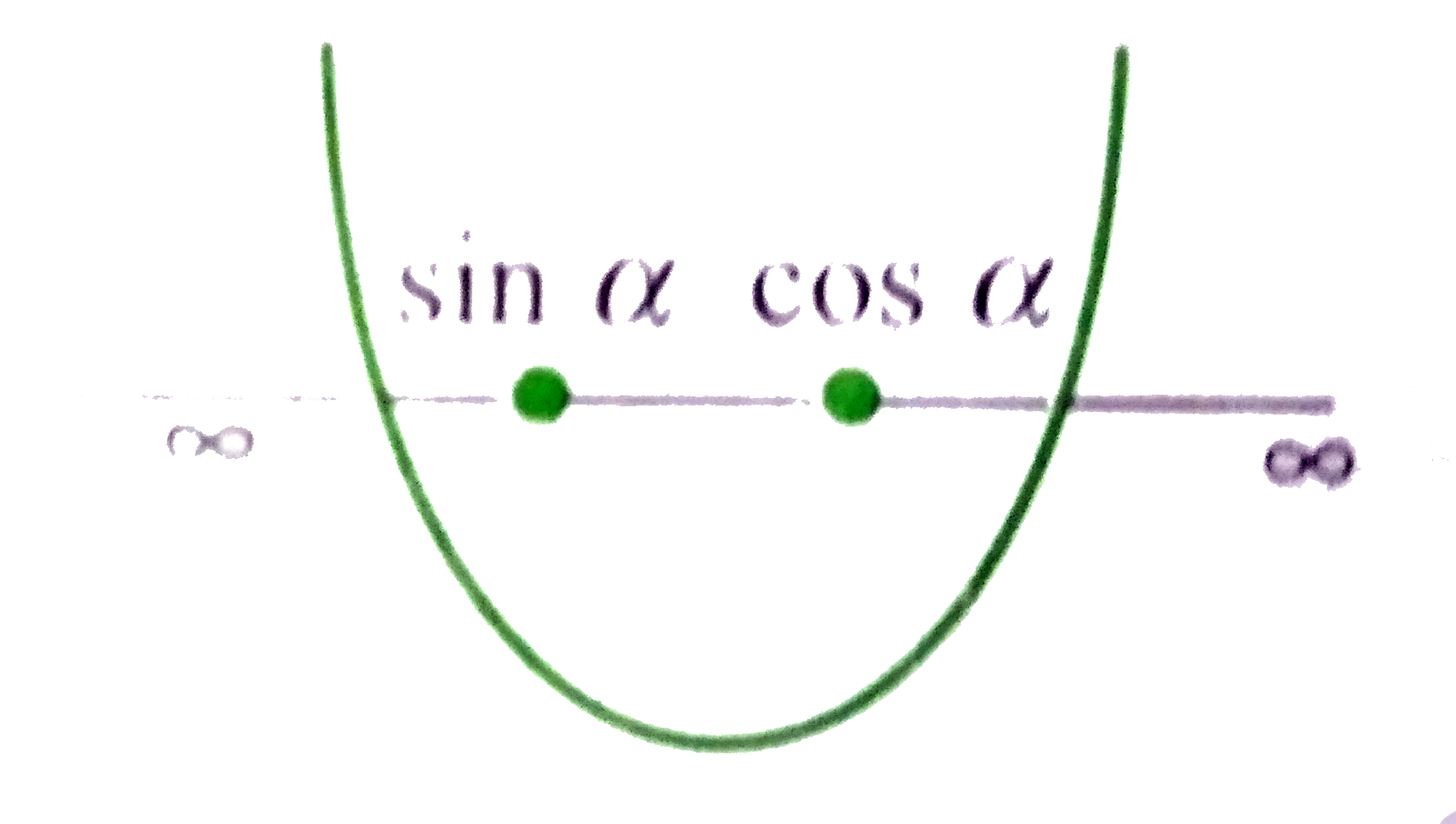 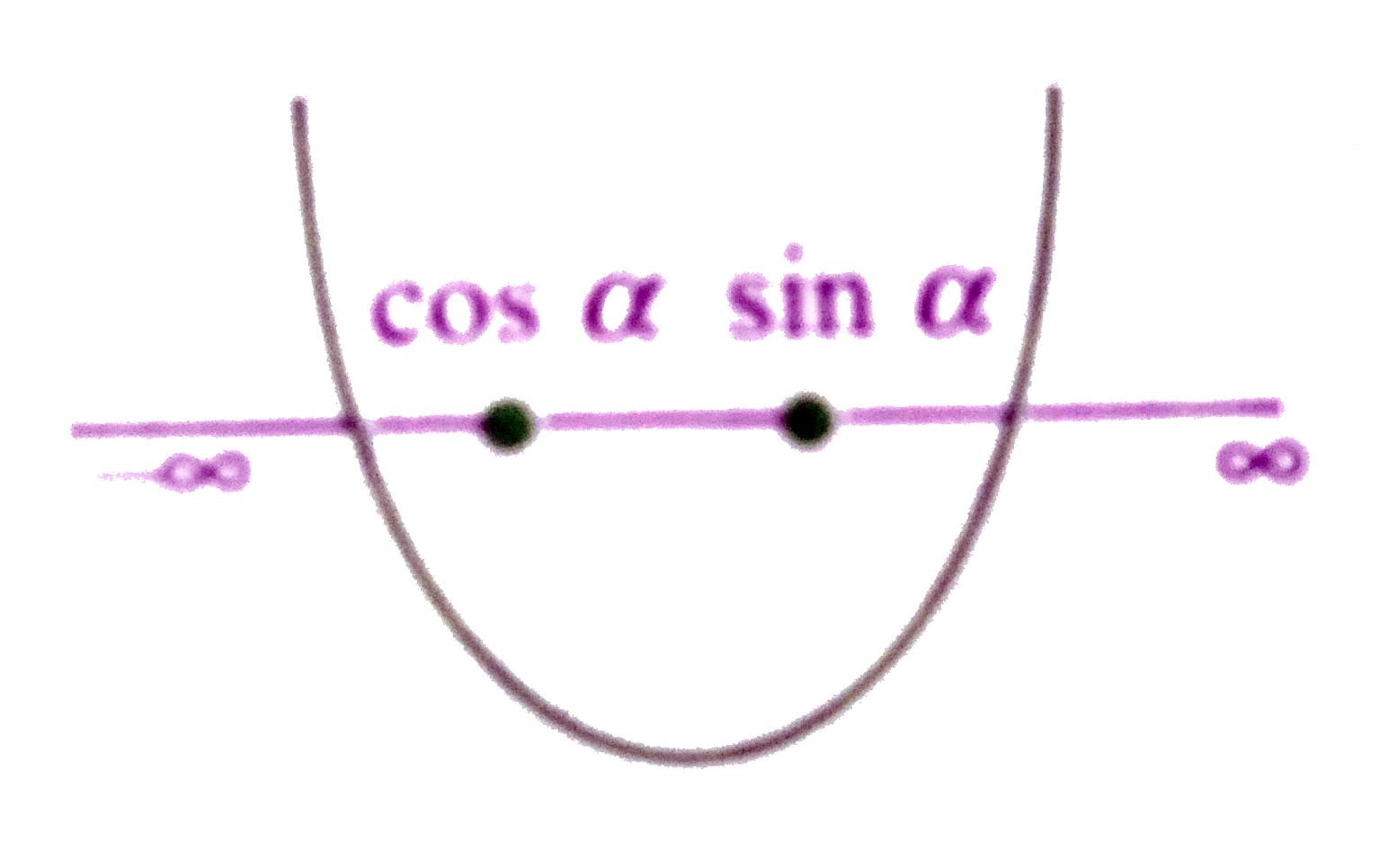
|
|
| 43. |
Mother father and son line up at random for a family picture{:(" E "": ""son on one end"," F "": ""father in middle"):}Find P(E//F) |
|
Answer» |
|
| 44. |
If a (b +c), b (c+a) , c (a +b) are in A.P. , prove that (1)/(a), (a)/(b), (1)/(c ) are also ln A.P. |
|
Answer» |
|
| 45. |
If the normals at the point t_(1) and t_(2) on y^(2)=4axintersect at the point t_(3) on the parabola then t_(1)t_(2) = |
|
Answer» 1 |
|
| 46. |
Determine the area of the figure bounded by two branches of the curve (y-x)^(2) = x^(3) and the straight line x=1 |
|
Answer» |
|
| 47. |
If ABCDEF is a regular hexagon and bar(AB) = bara thenbar(AD) + bar(EB) + bar(FC) = |
|
Answer» `4bara` |
|
| 48. |
Let F denote the set of all onto functions from A = {a_(1), a_(2), …, a_(10)} to B = {x, y}. A function f is chosen at random from F. Find the probabiltiy that the function f is such that f(a_(1)) = x. |
|
Answer» |
|
| 49. |
int (3)/(2x^(2) - x- 1)dx = |
|
Answer» `log |(x- 1)/(x + 1)| + C ` |
|