Saved Bookmarks
This section includes 7 InterviewSolutions, each offering curated multiple-choice questions to sharpen your Current Affairs knowledge and support exam preparation. Choose a topic below to get started.
| 1. |
Evaluate the following determinants. [[1,omega],[-omega,omega]] |
| Answer» SOLUTION :`[[1,OMEGA],[-omega,omega]]=omega+omega^2 =-1` | |
| 2. |
Find the volume of the spherical cap of height h cut of feom a sphere of radius r. |
|
Answer» |
|
| 3. |
Find int(x^(2)+x+1dx)/((x+2)(x^(2)+1)) |
|
Answer» |
|
| 4. |
If lamda be the number of 3-digit numbers are o the form xyz with x lt y, z lt y and x ne0, the value of (lamda)/(30) is |
|
Answer» Solution :Since, `x ge1, ` then `x ge 2""[becausex LTY]` If y=n, then x takes values form 1 to n-1 and zcan TAKE the values from 0 to n-1 (i.e., n values) thus, for each values of `y(2 le y le9), x and z` take `n(n-1)` vlaues. Hence, the 3-digit NUMBERS are of the form xyz `=underset(n=2)overset(9)(sum)n(n-1)=underset(n=1)overset(9)(sum)n(n-1)""[because" at "n=1,n(n-1)=0]` `=underset(n=1)overset(9)(sum)n^(2)-underset(n=1)overset(9)(sum)n` `=(9(9+1)(18+1))/(6)-(9(9+1))/(2)` `=285-45` `=240=LAMDA""[given]` `THEREFORE(lamda)/(30)=8` |
|
| 5. |
For which value of x, function f(x)=(40)/(3x^(4)+8x^(3)-18x^(2)+60) has maximum and minimum ? |
|
Answer» |
|
| 6. |
|(2bc-a^(2),c^(2),b^(2)),(c^(2),2ca-b^(2),a^(2)),(b^(2),a^(2),2abc-c^(2))|= |
|
Answer» `a^(3)+B^(3)+C^(3)-3abc` |
|
| 7. |
Observe the following Lists ul("List - I") A) If (3x)/((x-a)(x-b))=(2)/(x-a)+(1)/(x-b) then a:b is B) If (x+4)/((x^(2)-4)(x+1))=(A)/(x-2)+(B)/(x+2)+(C)/(x+1) then A+B+C is C) If (2x+1)/((x-1)(x^(2)+1))=(A)/(x-1)+(Bx+C)/(x^(2)+1) then C= ul("List - II") 1)Slope of x -axis 2) sin. (3 pi)/(2) 3) {:(" "Lt),(x rarr 0):} (Tan x-Sinx)/(x^(3)) 4) Slope of the line 6x+3y-7=0 The correct match is |
|
Answer» 413 |
|
| 8. |
Minimise Z=3x+2y subject to the constraints, x+yge8 3x+5yle15 xge0, yge0 |
|
Answer» |
|
| 9. |
bar(a)=hati+hatj+hatk,bar(b)=hati+3hatj+5hatk and bar( c )=7hati+9hatj+11hatk are vectors. The area of the parallelogram whose diagonals are bar(a)+bar(b) and bar(b)+bar( c ) is ………….. |
|
Answer» `4sqrt(6)` |
|
| 10. |
State whether the following statements are true or false. Justify For an arbitary binary operation ** on N, a**a=a AA a in N |
|
Answer» Solution :Define a BINARY operation `**` on N by `a**b=ab` For this binary operation `2**2` `=2xx2=4 NE 2` `therefore` The GIVEN STATEMENT is false |
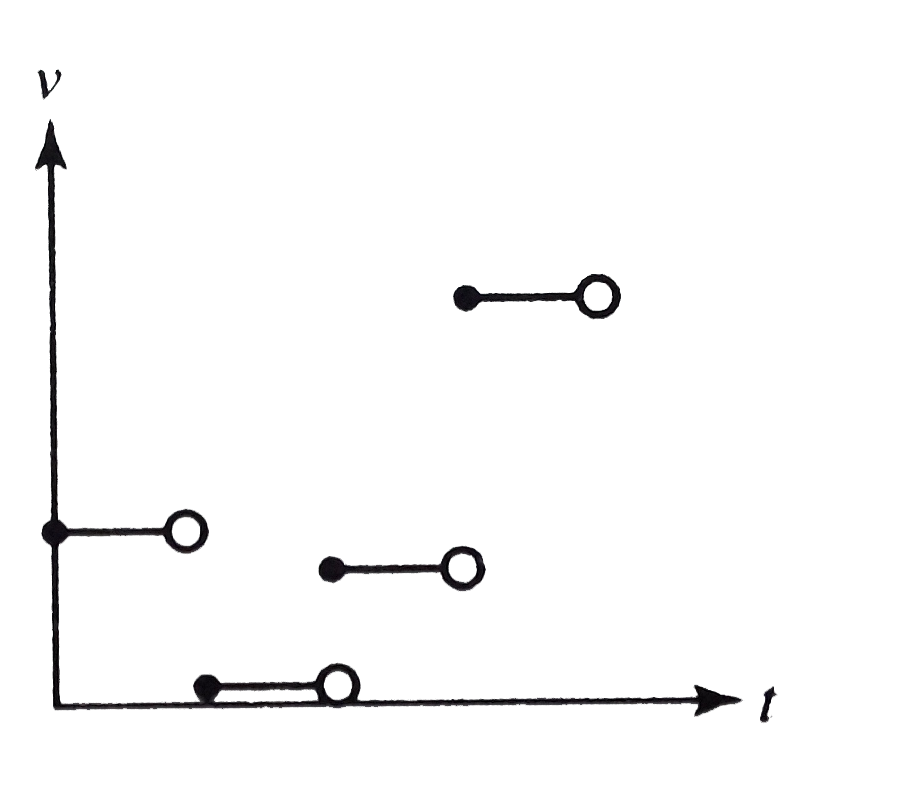
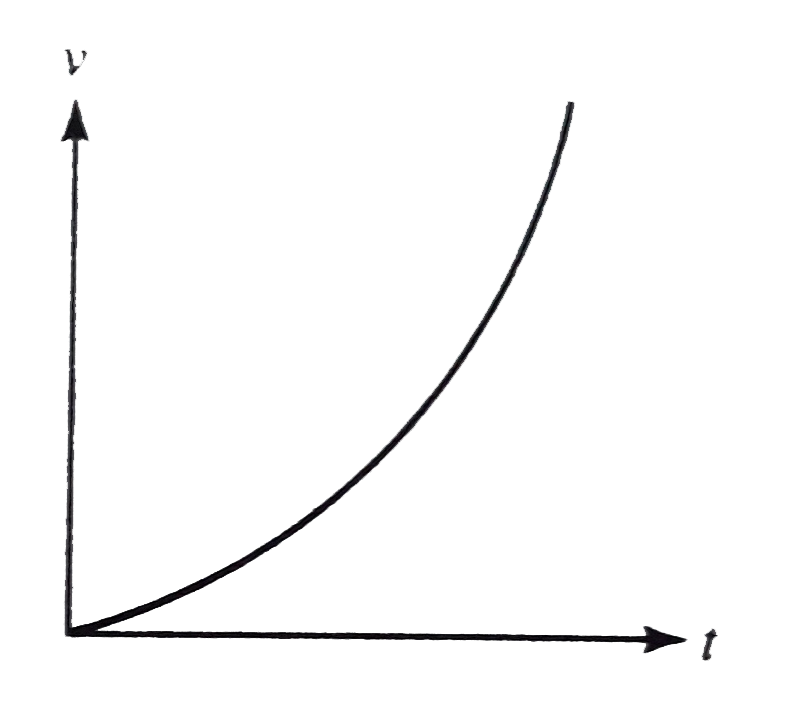
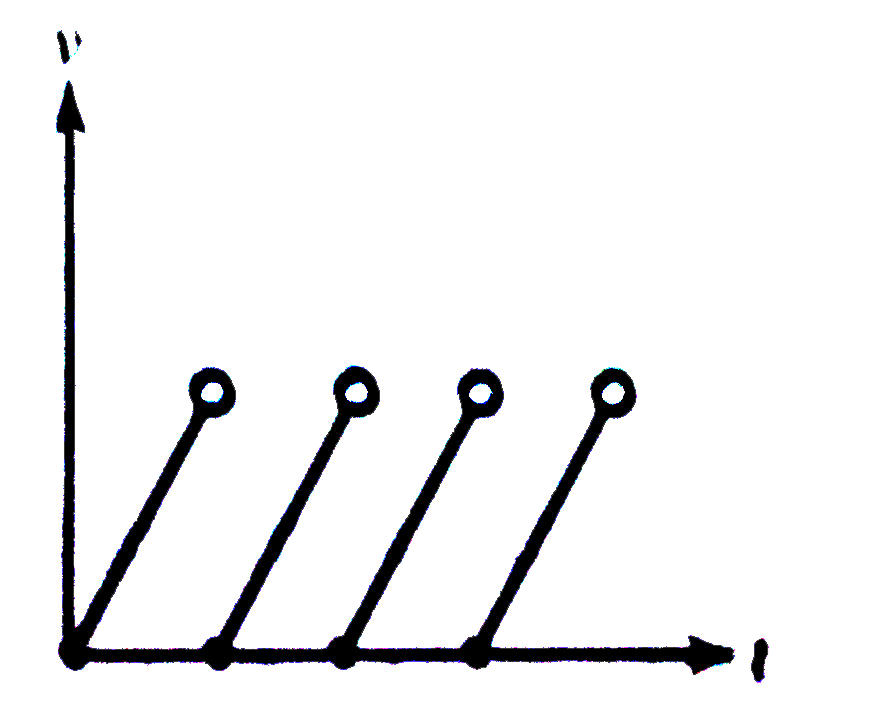
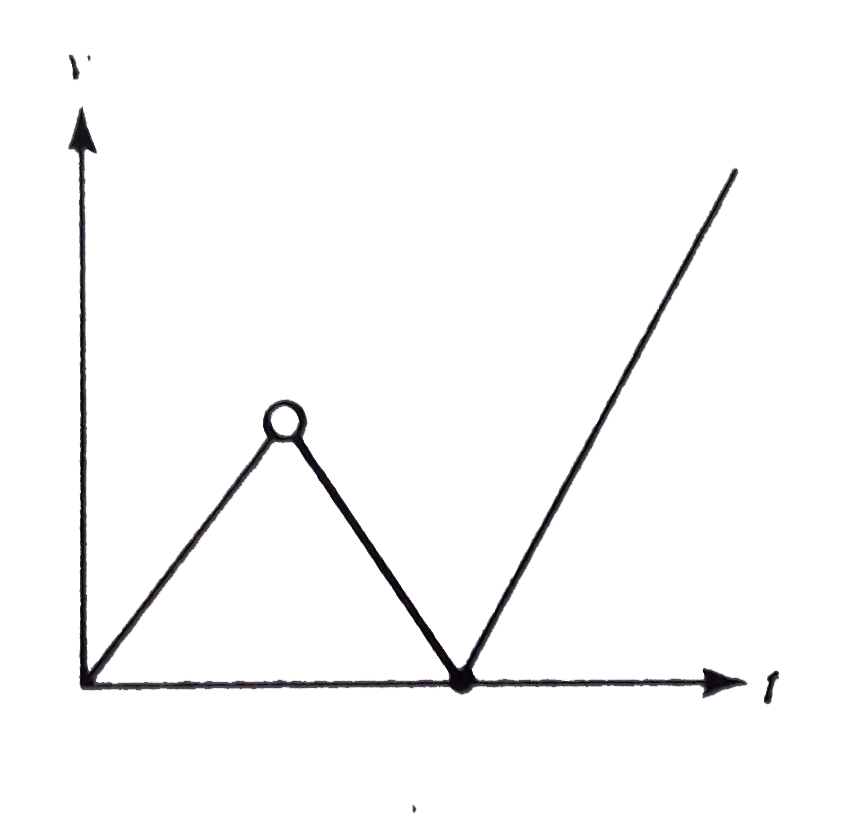
|
| 11. |
The order of the differential equation(d^(2)y)/(dx^(2)) - 5 (dy)/(dx) + 6y = 0 is |
|
Answer» 1 |
|
| 12. |
Matchthefollowing {:(I., "Locus of a point which isequidistant from twofixed points is",, (a), "hyperbola"),(II., "Locus of a point which is a constant distance from a point is",,(b), "pair of straight lines"),(III., "The locusofthe point whose distance from x -axis is twice that offrom the y -axis is",,(c), "Straight line"),(IV., A"," B " are two points. If " PA = k ( gt AB) " then locus of P is",,(d), "circle"),(,,,(e),"an ellipse"):} |
|
Answer» `C, d, B, a ` |
|
| 13. |
The probability that a police inspector Ravi will catch a thief in a day is 1/4 and the probability he will catch a robber in that day is 1/5 and the probability that he will catch both a thief and a robber in a dy is 1/15 then what is the probability that Ravi will catch at least 1 mischief? |
|
Answer» `23//60` |
|
| 14. |
If A,B,C are the maximum heights reched when three stones projected vertically upwards moves according to the law s= 128t -16t^2,s=48t-16t^2,s=80t-16t^2 respectively then the descending order of A,B,C is |
|
Answer» A,C,B |
|
| 15. |
If a leap year is having 53 sundays then find the probability that leap year contains 52 Mondays only. |
|
Answer» |
|
| 16. |
Evaluate : int(x+2)/(sqrt((x-2)(x-3)))dx. |
|
Answer» |
|
| 17. |
Without using graph paper, draw the graph of the function f(x)=sin""(1)/(x) and determine from the graph whether lim_(xto0)f(x) exsits or not. |
|
Answer» |
|
| 18. |
Determine the area of parallelogram whose adjacent sides are the vector 2hati+hatj+3hatk, hati-hatj |
Answer» Solution : =`HATI(0+3)-hatj(0-3)+hatk(-2-1)` =`3hati+3hatj-3hatk` AREA of the PARALLELOGRAM |
|
| 19. |
Reduce the matrix [[2,0,3],[1,-1,-2],[4,1,0]] to the identity matrix by elementary row transformation, show also it is non singular. |
|
Answer» |
|
| 20. |
Assertion (A) : The area bounded by y^(2)=8x and x^(2)=8y is (64)/(3) sq. units. Reason ( R ) : The area bounded by y^(2)=4ax and x^(2)=4by is (16ab)/(3) sq. units. The correct answer is |
|
Answer» Both (A) and ( R ) are true and R is the CORRECT EXPLANATION of A |
|
| 21. |
If the vectors hat(i)+hat(j)+2hat(k),-hat(i)+2hat(k)and2hat(i)+xhat(j)-yhat(k) are mutually orthogonal, then the values of x, y, z are |
|
Answer» `(10,4,1)` |
|
| 22. |
If length ofperpendiculardrawn from points of a curve to a straight line approacheszero along an infinitebranchof the curve, the line is said to be an asymptote to the curve. For example , y-axis is an asymptote to y = lnx& x-axisis an asymptote toy = e^(-x). If lim_(xrarr0) f(x) = e (a finite number) then y = e is an asymptote to y = f(x) . Similarly if lim_(xrarr0) f(x) = alpha, then y = alphais also an asymptote. If lim_(xrarra) f(x) = oo or lim_(xrarra) f(x) = -oo, then x = a is a an asymptote to y = f(x). Area bounded by y = (2x)/(x^(2)+1), it's asymptoteand ordinatesat points of extremum is equal to(in suare unit) |
| Answer» SOLUTION :N//A | |
| 23. |
If length ofperpendiculardrawn from points of a curve to a straight line approacheszero along an infinitebranchof the curve, the line is said to be an asymptote to the curve. For example , y-axis is an asymptote to y = lnx& x-axisis an asymptote toy = e^(-x). If lim_(xrarr0) f(x) = e (a finite number) then y = e is an asymptote to y = f(x) . Similarly if lim_(xrarr0)f(x) = alpha, then y = alphais also an asymptote. If lim_(xrarra)f(x) = oo or lim_(xrarra) f(x) = -oo, then x = a is a an asymptote to y = f(x). Number of asymptotes parallelto co -ordinate aces for the function f(x)= ((x+1)(x+2))/((x-1)(x-2)) is equal to : |
|
Answer» 1 |
|
| 24. |
If length ofperpendiculardrawn from points of a curve to a straight line approacheszero along an infinitebranchof the curve, the line is said to be an asymptote to the curve. For example , y-axis is an asymptote to y = lnx& x-axisis an asymptote toy = e^(-x). If lim_(xrarr0) f(x) = e (a finite number) then y = e is an asymptote to y = f(x) . Similarly if lim_(xrarr0)f(x) = alpha, then y = alphais also an asymptote. If lim_(xrarra) f(x) = oo or lim_(xrarra) f(x) = -oo, then x = a is a an asymptote to y = f(x). Area bounded by y = x^(2)e^(-x) and it's asymptote in first quadrant is equal to (in squareunit) |
|
Answer» 2e |
|
| 25. |
Let f and g be continuous function on alexleb and set p(x)=max{f(x),g(x)} and q(x)="min"{f(x),g(x), then the area bounded by the curves y=p(x),y=q(x) and the ordinates x=a and x=b is given by |
|
Answer» `int_(a)^B|F(x)-g(x)|dx` |
|
| 26. |
A is the orthocentre of DeltaABC and D is reflection point of A w.r.t. perpendicualrbisectorof BC, then orthocenterof DeltaDBC is : |
|
Answer» D |
|
| 27. |
If l, m, n be there real numbers proportional to the direction cosinesof L, then p+m^2+n^2=1. |
|
Answer» |
|
| 28. |
If a hyperbola has one focus at the origin and its eccentricity is sqrt2. One of the directrices is x+y+1=0,Then equation its asymptotes are |
|
Answer» ` x-1=0 ,y-1=0` |
|
| 29. |
Choose the correct answer int(sin^(2)x-cos^(2)x)/(sin^(2)xcos^(2)x)dx is equal to |
|
Answer» `tanx+cotx+c` |
|
| 30. |
Find AB, if A=[(0,-1),(0,2)] and B=[(3,5),(0,0)]. |
|
Answer» |
|
| 31. |
A plane makes 2,1,-2 intercepts on co-ordinate axes. Its distance from the origin is |
| Answer» Answer :C | |
| 32. |
If x+y le 50, 3x+y le 90, x ge 0, y ge 0 then the maximum value of f=4x+y is |
|
Answer» 120 |
|
| 33. |
int(1)/(sqrt(7-6x-x^(2)))dx= |
|
Answer» `SIN^(-1)((x+3)/(4))+C` |
|
| 34. |
If a twice differentiable function f(x) on (a,b) and continuous on [a, b] is such that f''(x)lt0 for all x in (a,b) then for any c in (a,b),(f(c)-f(a))/(f(b)-f(c))gt |
|
Answer» `(B-c)/(c-a)` Then by LMCT on (a, c), (c, b), we have `f'(u)=(f(c)-f(a))/(c-a),f'(v)=(f(b)-f(c))/(b-c)` But `u LT v and f''(x)lt 0, AA x in (a,b)` `"i.e."f'(u)GTF'(v)` `rArr""(f(c)-(a))/(f(b)-f(c))gt(c-a)/(b-c)` |
|
| 35. |
Ifx^(y) * y^(x) = (x + y) ^(5) , " find " (dy)/( dx) |
|
Answer» |
|
| 36. |
The maximum number of normals to hyperbola x^(2)/a^(2)-y^(2)/b^(2)=1 from an external point is |
|
Answer» 2 |
|
| 37. |
If (x + 3i)/(2 + iy) = 1 - i then the value of (5x - 7y)^(2) = |
|
Answer» 4 |
|
| 38. |
If any tangent to the ellipse 25x^(2)+9y^2=225 meets the coordinate axes at A and B such that OA = OB then , the length AB is equal to (where , O is the origin) |
|
Answer» `SQRT17` UNITS |
|
| 39. |
Obtain the general solution of the following differential equations.dy/dx(x^2+1)(y^2+1) |
|
Answer» SOLUTION :`dy/DX=(x^2+1)(y^2+1)` `rArrdy/(1+y^2)=x^2+1` `intdy/(1+y^2)=INT(x^2+1)dx` `TAN^(-1)=x^3/3+x+C` |
|
| 40. |
Prove that the number of selections of n things from two sets of n identical things and n other distinct things is (n+2)2^(n-1) |
|
Answer» |
|
| 41. |
Mean deviation of first three odd numbers from mean is |
|
Answer» 3 |
|
| 42. |
Derive the formula for the shortest distance between skew lines vec(r)=vec(a)+lambdavec(b) " and " vec(r)=vec(a)_(2)+lambdavec(b_(2)) in vector form. |
|
Answer» |
|
| 43. |
Smaller area enclosed by the circlex^(2) + y^(2) = 4 and the line x + y = 2 is |
| Answer» Answer :B | |
| 44. |
Let f(x) be a real valued function not identically zero, which satisfied the following conditions I. f(x + y^(2n + 1)) = f(x) + (f(y))^(2n+1), n in N, x, y are any real numbers. II. f'(0) ge 0 The function f(x) is |
| Answer» Answer :A | |
| 45. |
Let f(x) be a real valued function not identically zero, which satisfied the following conditions I. f(x + y^(2n + 1)) = f(x) + (f(y))^(2n+1), n in N, x, y are any real numbers. II. f'(0) ge 0 The value of f(x), is |
|
Answer» 2x |
|
| 46. |
Let f(x) be a real valued function not identically zero, which satisfied the following conditions I. f(x + y^(2n + 1)) = f(x) + (f(y))^(2n+1), n in N, x, y are any real numbers. II. f'(0) ge 0 The value of f'(10), is |
|
Answer» 10 |
|
| 47. |
Let f(x) be a real valued function not identically zero, which satisfied the following conditions I. f(x + y^(2n + 1)) = f(x) + (f(y))^(2n+1), n in N, x, y are any real numbers. II. f'(0) ge 0 The value of f(1), is |
|
Answer» 0 |
|
| 48. |
The optimal value of the objective function is attained at the points …….. |
|
Answer» GIVEN by intersection of inequations with the axes only |
|
| 49. |
Which of the following graphs best describes the velocity of the woman on her walk ? |
|
Answer»
|
|