

Saved Bookmarks
This section includes 7 InterviewSolutions, each offering curated multiple-choice questions to sharpen your Current Affairs knowledge and support exam preparation. Choose a topic below to get started.
| 1. |
If Delta ABC is an equilateral triangle , then the ratio of the area of the triangle in the area of its pedal triangle is |
|
Answer» `1:2` |
|
| 2. |
Using Gaussian elimination method, balance the chemical reaction equation.C_(3)H_(4)+O to H_(2)O_(2)+CO_(3) |
|
Answer» |
|
| 3. |
If cot A bot B -=2, cosA cos B =2//3, then cos (A + B)= |
|
Answer» `1//3` |
|
| 5. |
One tangent out of the two langents drawn from the centre of the hyperbola 3x ^(2) - 4y ^(2) -5 =0 is rotated about point of intersection with other tangent and made coircident with other. Thenangle with which tangent rotated is |
|
Answer» `tan ^(-1) (4 SQRT3)` |
|
| 6. |
Integrate the function is Exercise. (1)/(sqrt(x+a)+sqrt(x+b)) |
|
Answer» |
|
| 7. |
Find (dy)/(dx) of the functions given in Exercises 12 to 15. (cos x)^(y) = (cos y)^(x). |
|
Answer» |
|
| 8. |
If a line in the space makes anglealpha, beta and gammawith thecoordinate axes , then cos2alpha + cos 2beta + cos 2gamma + sin^(2) alpha + sin^(2)beta +sin^(2) gammaequals |
|
Answer» `-1` |
|
| 11. |
Let L be a line through B(3i+j-k) and parallel 21-j+2k. Suppose A is a point on L such that |BA|=18 If position vector of A is ai+bj+ck where clt0, then |a|+|b|=_______ |
|
Answer» |
|
| 12. |
Resolve (x^(4))/((x^(2)+1)^(2)) into partial fractions. |
|
Answer» |
|
| 13. |
Find the mid point of the chord intercepted by the circle x^(2)+y^(2)-2x-10y+1=0 on the line x-2y+7=0 |
|
Answer» |
|
| 14. |
Find approminate value of (255)^((1)/(4)). |
|
Answer» |
|
| 16. |
Construct a 2xx2 matrix, A=[a_ij], whose elements are given by: a_ij=i/j |
|
Answer» SOLUTION :`a_11=1/1=1, a_12=1/2,` `a_21=2/1=2` and `a_22=2/2=1` HENCE, `A=[[1,1/2],[2,1]]` |
|
| 17. |
Let a line a/x+y/b=1 intersects the x-axis at A and y-axis at B resapectively. A line paralolel to it is drawn to intersect the axes in A and B respectively. The extermities of the lines are joined transversely. If the locus of point of intersection of the line joining them is x/a=cy/b, then c is equal to |
|
Answer» |
|
| 18. |
A person has 2 parents, 4grandparents, 8 great grandparents, and so on, thenthe number of his ancestors during the ten generations preceeding his own is |
|
Answer» 2046 |
|
| 19. |
Find (dy)/(dx) of each of the functions expressed in parametric form:x= e^(theta) (theta + (1)/(theta)), y= e^(-theta) (theta - (1)/(theta)) |
|
Answer» |
|
| 20. |
If the function f defined by f(x)={{:(cosx,if,xlt=0),(3x+alpha,if,0ltxlt2),(betax+3,if,2lt=xlt=4),(11,if,xgt4):} where alpha and beta real constants is continuous on R then alpha^(2)+beta^(2)= |
|
Answer» 3 |
|
| 21. |
Choose the correct answers int(dx)/(e^(x)+e^(-x)) is equal to |
|
Answer» `tan^(-1) (E^(x)) + C` |
|
| 22. |
int_(-1)^(1)log((2+x)/(2-x))dx= |
|
Answer» 1 |
|
| 23. |
Number of ways in which 5 alike red bottles and 6 alike blue bottles can be arranged so that exactly two pairs of blue togther, is |
|
Answer» `6!xx5!xx2!` 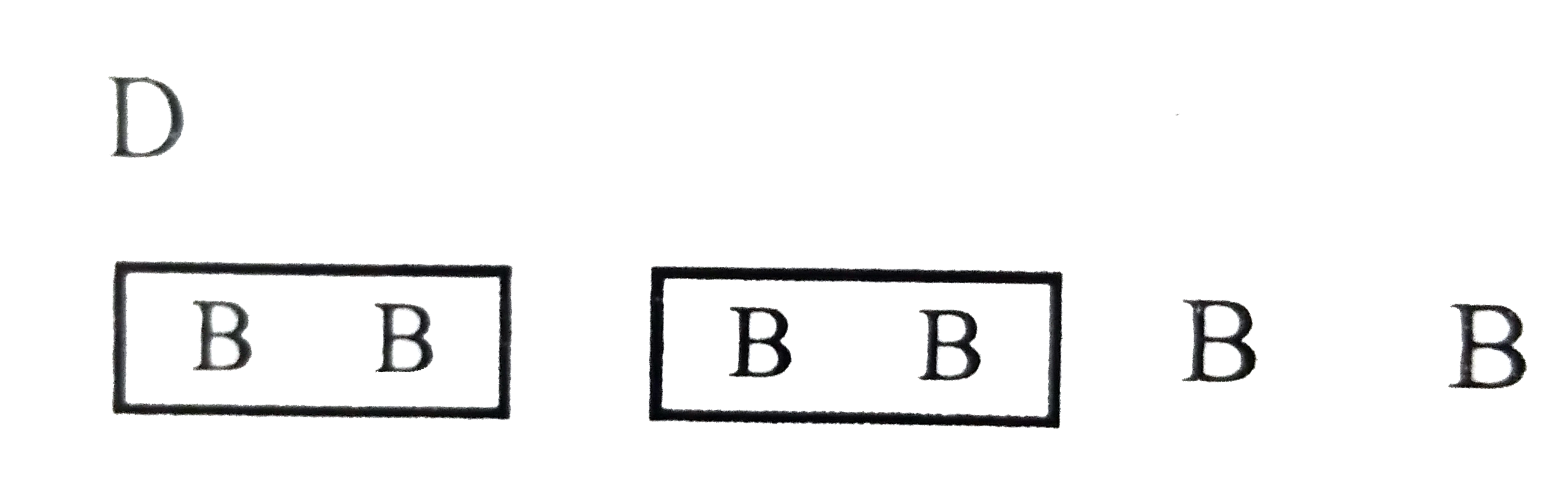 6 GAPS between 5 RED bottles No. of ways `=""^(6)C_(2)xx""^(4)C_(2)=(6!)/(2!2!2!)` |
|
| 24. |
Letf ( x)= x^(2) - 2 ax + a - 2 " and " g (x)= [ 2 + sin ^(-1) ( 2x)/(1 + x^(2))]. If the set of real values of(10 k_(1) - 3k_(2)). |
|
Answer» |
|
| 25. |
From any point P on theline 3x-25=0. Pair of tangents PA and PB are drawn to the ellipse (x^(2))/(a^(2))+(y^(2))/(b^(2))=1. If locus of P about the chord of contanct is ax+by+c=0. Then find the value of a+b+c. |
|
Answer» |
|
| 26. |
If int(1+cos alpha cos x)/(cos alpha+cos x)dx=ax+b log[(cot(alpha//2)+tan(x//2))/(cot (alpha//2)-tan(x//2))]+c then (a,b)-= |
|
Answer» `(SIN alpha, - COSALPHA)` |
|
| 27. |
Let O be a point inside DeltaABC such that angleOAB = angleOBC = angle OCA = theta cot A + cot B + cot C is equal to |
|
Answer» `tan^(2) theta`  Applying sine rule in `DeltaAOB`, we have `(OA)/(sin angleABO) = (AB)/(sin angle AOB)` or `OA = (C sin angleABO)/(sin angleAOB) = (c sin (B - theta))/(sin B)`...(i) `[ :' angle ABO = B - theta, angle AOB = 180^(@) - theta - angleABO = 180^(@) -B]` Again in `DeltaAOC`, we have `(OA)/(sin angleACO) = (AC)/(sin angleAOC)` `rArr OA = (b sin angleACO)/(sin angleAOC) = (b sin theta)/(sin A)` `[ :' angleOAC = A - theta, angleAOC = 180^(@) - theta - angleOAC = 180^(@)]` From Eqs. (i) and (II), we have `(c sin (B - theta))/(sin B) = (b sin theta)/(sin A)` or `c sin A (B - theta) = b sin theta sin B` `= b sin theta sin (A +C)` or `2R sin C sin A (sin B cos theta - cos B sin theta)` `= 2R sin B sin theta (sin A cos C + cos A sin C)` Dividing both sides by `2R sin theta sin A sin B sin C`, we get `cot theta - cot B = cot C + cot A` or `cot theta = cot A + cot B + cot C` Squaring both sides, we have `cot^(2) theta = cot^(2) A + cot^(2) B + cot^(2)C + 2(cotA cot B + cot B cot C + cot C cot A)` or `cosec^(2) theta - 1 = (cosec^(2) A -1) + (cosec^(2) B -1) + (cosec^(2) C -1) + 2` [since in `DeltaABC, cot A cot B + cot B cot C + cot C cot A = 1`] or `cosec^(2) theta = cosec^(2) A + cosec^(2) B + cosec^(2)C` Area of triangle ABC, `DELTA = Delta_(1) + Delta_(2) + Delta_(3)` `=(1)/(2) [a OB + b OC + c OA] sin theta` `=(1)/(4) tan theta [2 a OB cos theta + 2b OC cos theta+ 2c OA cos theta]` `=(1)/(4) tan theta [(a^(2) + X^(2) -y^(2)) + (b^(2) + y^(2) - z^(2)) + (c^(2) + z^(2) - x^(2)]` `= (1)/(4) tan theta [a^(2) + b^(2) + c^(2)]` |
|
| 28. |
State with reason, "All real number with negative square " is set or not ? |
| Answer» SOLUTION :It is a SET, as it is WELL DEFINED. | |
| 29. |
Three urns contain 2 white and 3 black balls, 3 white and 2 black balls, and 4 white and 1 black ball respectively. One ball is drawn from an um chosen at random and it was found to be white. Find the probability that it was drawn from the first um. |
|
Answer» |
|
| 30. |
Verify Rolle's theorem for the function f(x)= x^(2) + 2x-8, x in [-4, 2] |
|
Answer» |
|
| 31. |
p=sum_(n=0)^(oo) (x^(3n))/((3n)!) , q=sum_(n=1)^(oo) (x^(3n-2))/((3n-2)!), r = sum_(n=1)^(oo) (x^(3n-1))/((3n-1)!) then p + q + r = |
| Answer» ANSWER :A | |
| 32. |
Evaluate the following integrals intxtan^(-1)(x^(2))dx |
|
Answer» |
|
| 33. |
A fair die is rolled, consider the events A = {1, 3, 5}, B = {2, 3} and C = {2, 3, 4, 5}. Find (a) P(A/B) (b) P(B/A) (c) P(C/A) |
|
Answer» (B) `(1)/(3)` (C) `(2)/(3)` |
|
| 34. |
If x_(1),x_(2),x_(3)….x_(n) = y^(n) , then show that (1+x_(2)) (1+x_(2)) ge (1+y)^(n) |
|
Answer» |
|
| 35. |
If theinequationsqrt((x+2)(x-5)) gt 8-xthenx liesin |
|
Answer» `((74)/(36) ,OO)` |
|
| 36. |
Two groups are competing for the position on the Board of Directors of a Corporation. The probabilities that the first and the second groups will win are 0.6 and 0.4 respectively. Further, if the first group wins, the probability of introducing a new product is 0.7 and the coresponding probability is 0.3 if the second group wins. Find the probability that the new product introduced was by the second group. |
|
Answer» |
|
| 37. |
Iff(x) = {:{ (( sin (1 + [x]))/[x], " for " [x] ne0), (0 ," for[x] =0) :} when [x]denotesthe greates integer not excedingx,the lim f(x)is equal to |
|
Answer» `-1` |
|
| 38. |
If n is an integergreater than 1,than the value of a-""^(n)C_(1)(a-1)+""^(n)C_(2)(a-2)+……+(-1)^(n).""^(n)C_(n)(a-n) is |
|
Answer» `a^(N)` |
|
| 39. |
Find a vector of magnitude 5 units and parallel to the resultant of the vectors veca=2hati+3hatj-hatkandvecb=hati-2hatj+hatk. |
|
Answer» |
|
| 40. |
If I_(n)=int_(0)^(pi//4) tan^(n)x dx, (ngt1 is an integer ), then |
|
Answer» `I_(n)+I_(n-2)=1/(n+1)` `=int_(0)^(pi//4)tan^(n-2)xtan^(2)xdx` `=int_(0)^(pi//4)sec^(2)X tan^(n-2)x dx-int_(0)^(pi//4) tan^(n-2) xdx` `=int_(0)^(1)t^(n-2)dt=I_(n-2)`, where `t=tanx` `:.I_(n)+I_(n-2)=((t^(n-1))/(n-1))_(0)^(1)=1/(n-1)` Thus `I_(2)+I_(4)+I_(4)+I_(6)..............` are in H.P. For `0lt xlt pi//4` we have `0 lt tan^(n-2)x` So `0ltI_(n)ltI_(n-2)` or `I_(n)+I_(n+2)lt 2I_(n)ltI_(n)+I_(n-2)` or `1/(n+1)lt 2I_(n) lt 1/(n-1)` or `1/(2(n+1)) lt I_(n) lt 1/(2(n-1))` |
|
| 41. |
Integrate the following function : int(2x-3)/(3x^(2)+4x+5)dx |
|
Answer» |
|
| 42. |
A={-2,-1,0,1,2},B={5,7,11} and f:AtoB,where f(x)=x^2-x +5,then find the image of -1. |
| Answer» | |
| 43. |
Find the 2xx2 mtrix X find a matrix which when added to [[2,-3],[-4,7]]"gives"[[4,1],[3,2]] |
|
Answer» SOLUTION : `[[2,-3],[-4,7]]=[[4,1],[3,2]]` `:.A=[[4,1],[3,2]]-[[2,-3],[-4,7]]=[[2,4],[7,-5]]` |
|
| 44. |
Find the equation of tangent and normal to the ellipse x^2+2y^2-4x+12y+14=0 at (2,-1) |
|
Answer» |
|
| 45. |
Consider a,b,c,d,e,f,g,h to be eight distinct alphabets then the number of ways in which they can be dividied in 4- parts is |
|
Answer» `1260` if exactly 2-parts are equal |
|
| 46. |
If x_(1),x_(2) "are two solutions of"X^(lnx^(2) )=e^(18) "then product of"X_(1)X_(2)can be equal to |
|
Answer» `(SEC^(2)theta+co s ec^(2)theta)/(sec^(2)theta.c os ec^(2)theta)`,(wherever defined) |
|
| 47. |
Consider a grid with 8 parallel vertical edges and 9 parallel horizontal edges, consecutive edges being separated by distance unity- (i) Find the number of rectangles in this grid. (ii) Find the number of reactangles whosebothsides are odd. (iii) Find the number of squares with even sides. (iv) Find thenumber of squares in this grid. (v) Number of ways two squares ofsides, 1xx1 can be chosen so that they have a side in common. |
|
Answer» |
|
| 48. |
All thenumbersthat canbe formedusingthe digits1,2,3,4,5are arrangedin theincreasingorderof magnitufe . Therankof 35241 is |
|
Answer» 70 |
|
| 49. |
If p and q are true statement and r, s are false statement, then the truth value of ~[(p^^~r) vv (~qvvs)] is |
|
Answer» <P>TRUE |
|