

Saved Bookmarks
| 1. |
(a) A normal eye has retina 2cm behind the eye lens. What is the power of the eye lens ehen the eye is (i) fully relaxed, (ii) most strained ? (b) The near point and the far point of a hild are at 10cm and 100cm. If the retain is 2.0cm behind the eye lens, what is the range of the power of the eye lens? (c) A young boy can adjust the power of his eye lens between 50D and 60D. His fat point is infinity. (i) what is the distance of his retina from the ye lens? (ii) What is near point? |
Answer» Solution :(a) (i) 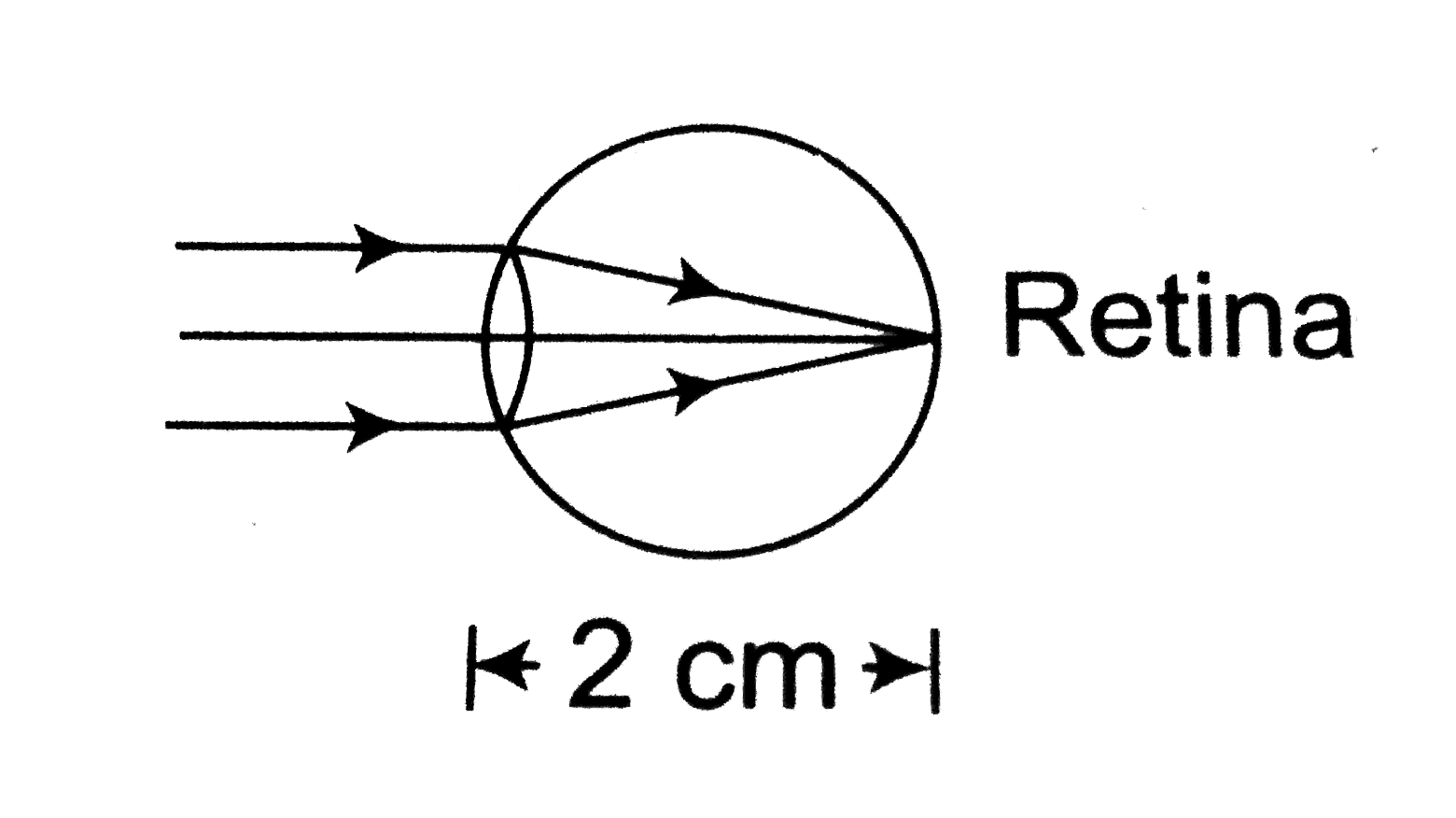 `u = oo, v = 2CM` `(1)/(v)-(1)/(u)=(1)/(f) rArr f = v = 2cm` `P = (100)/(f(cm)) = (100)/(2) = 50D` (ii) 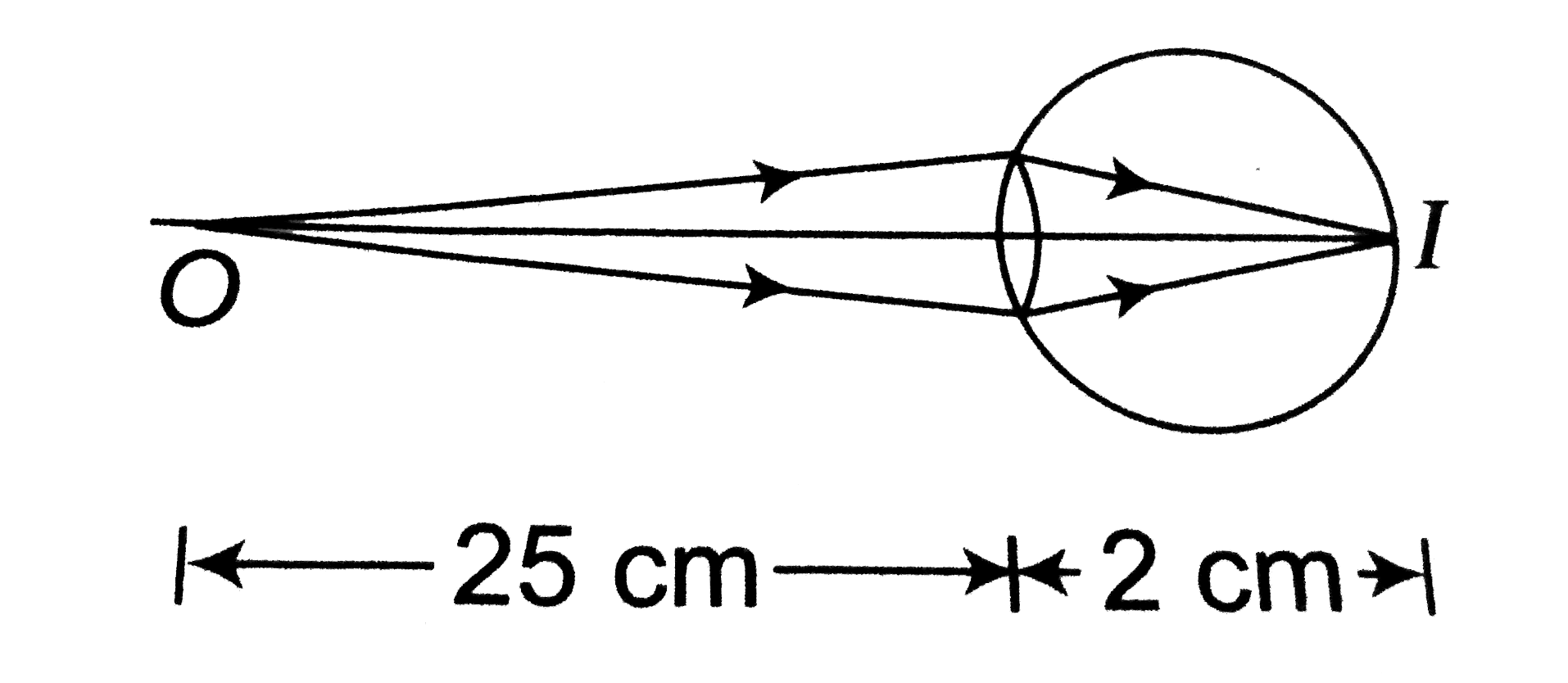 `(1)/(f)=(1)/(v)-(1)/(u)=(1)/(2)-(1)/(-25) = (17)/(50) rArr f = 50//27` `P = (100)/(f(cm)) = (100)/(50//27) = 54D` (B) 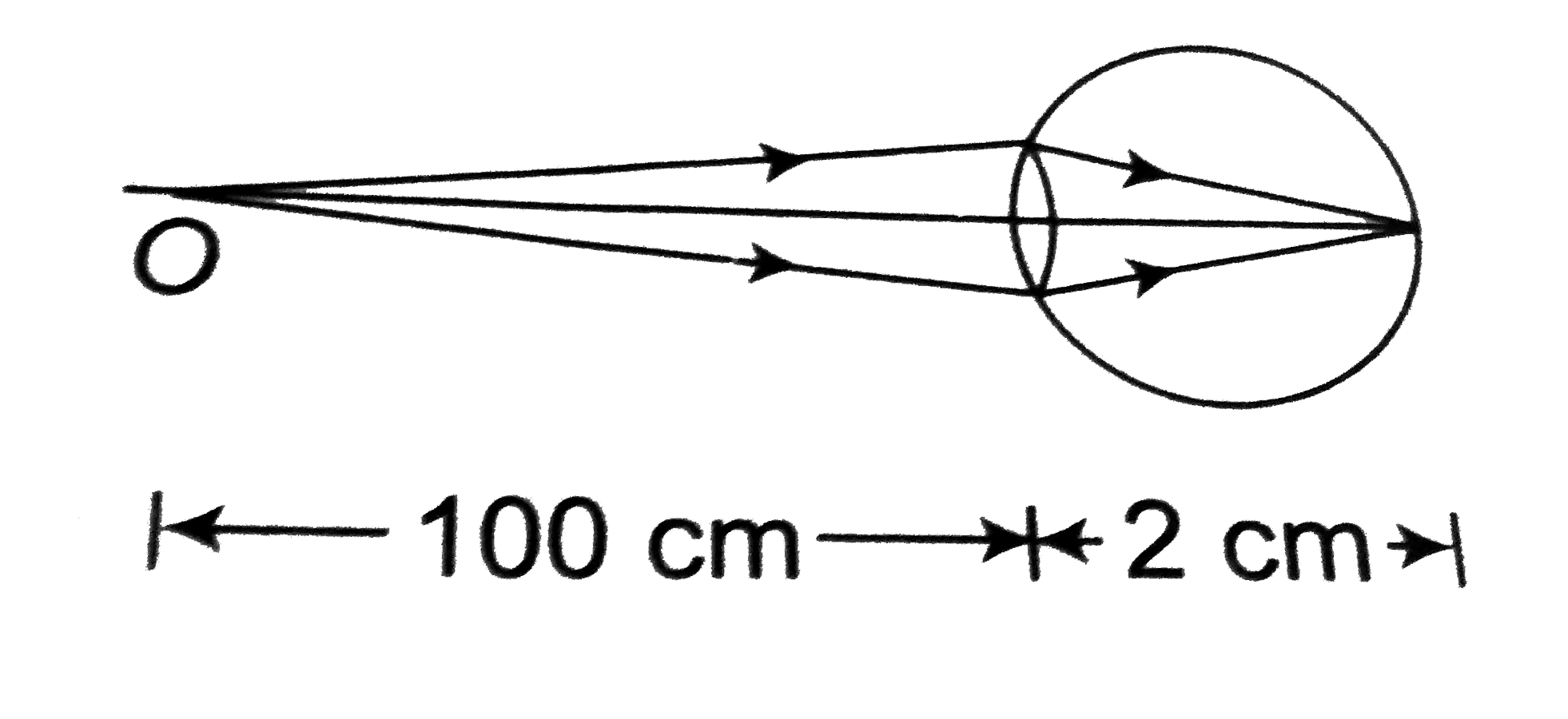 `(1)/(f)=(1)/(v)-(1)/(u)=(1)/(2)-(1)/(-100)=(50+1)/(100)=(51)/(100) rArr f=(100)/(51)cm` `P = (100)/(f(cm))=(100)/(100//51) = 51D` 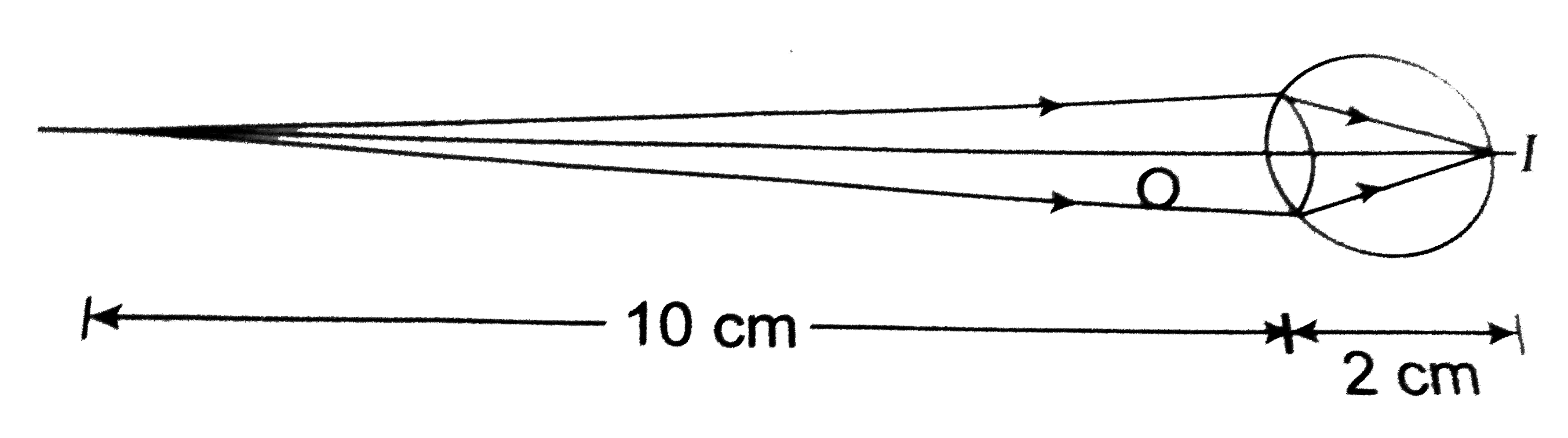 `(1)/(f)=(1)/(v)-(1)/(u)=(1)/(2)-(1)/(-10)=(6)/(10) rArr f = (10)/(6)=(5)/(3)cm` `P = (100)/(f(cm)) = (100)/(5//3) = 60D` Range: `51D` to `60D` (c) when the eye is most relaxed, focal length is maximum or power is minimum HENCE in most relaxed case, `P = 50D`, `f = (100)/(P)=(100)/(50) = 2cm`. The rays coming from infinite are FOCUSED at retina, hence `v = 2 cm = f` 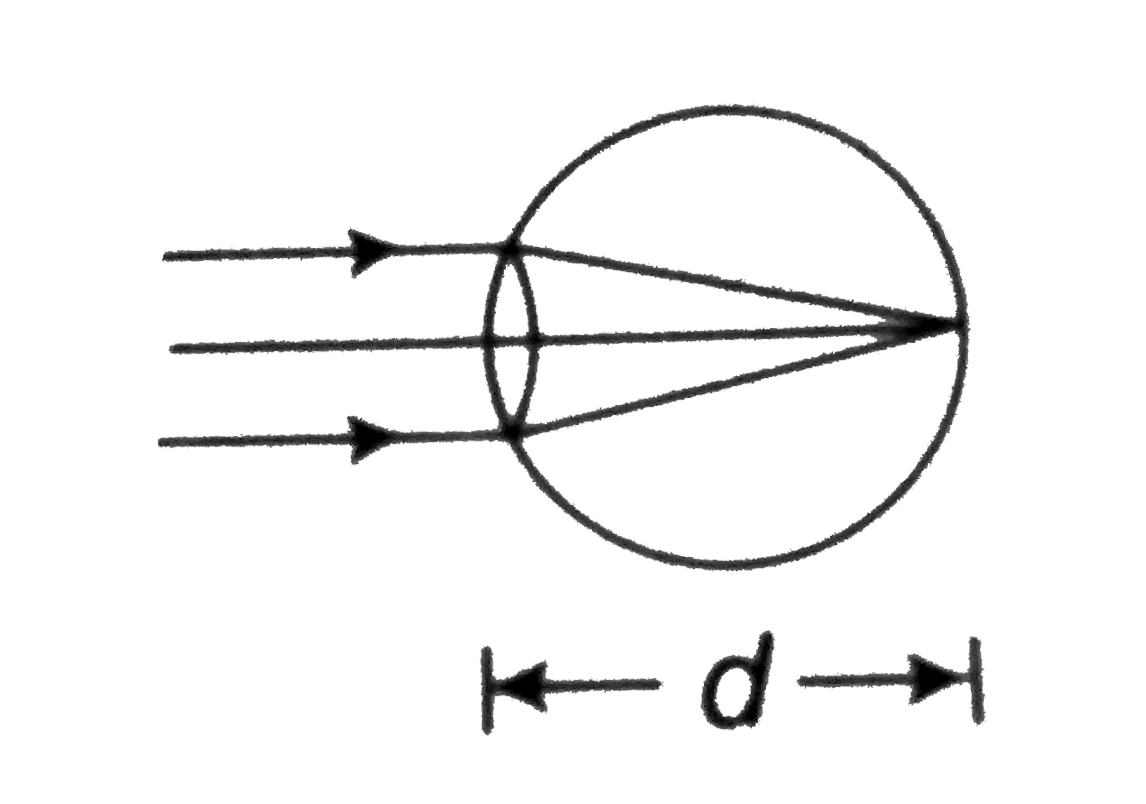 `(1)/(v)-(1)/(u)=(1)/(f) rArr (1)/(v)-(1)/(oo)=(1)/(2) rArr v = 2cm` Distance of retina from lens `d =v=2cm` The eye is most strained when object is at near point. Hence focal length is minimum or power is maximum i.e `60 D`, `f = (100)/(60) = (5)/(3)cm`. The image is formed at retina. 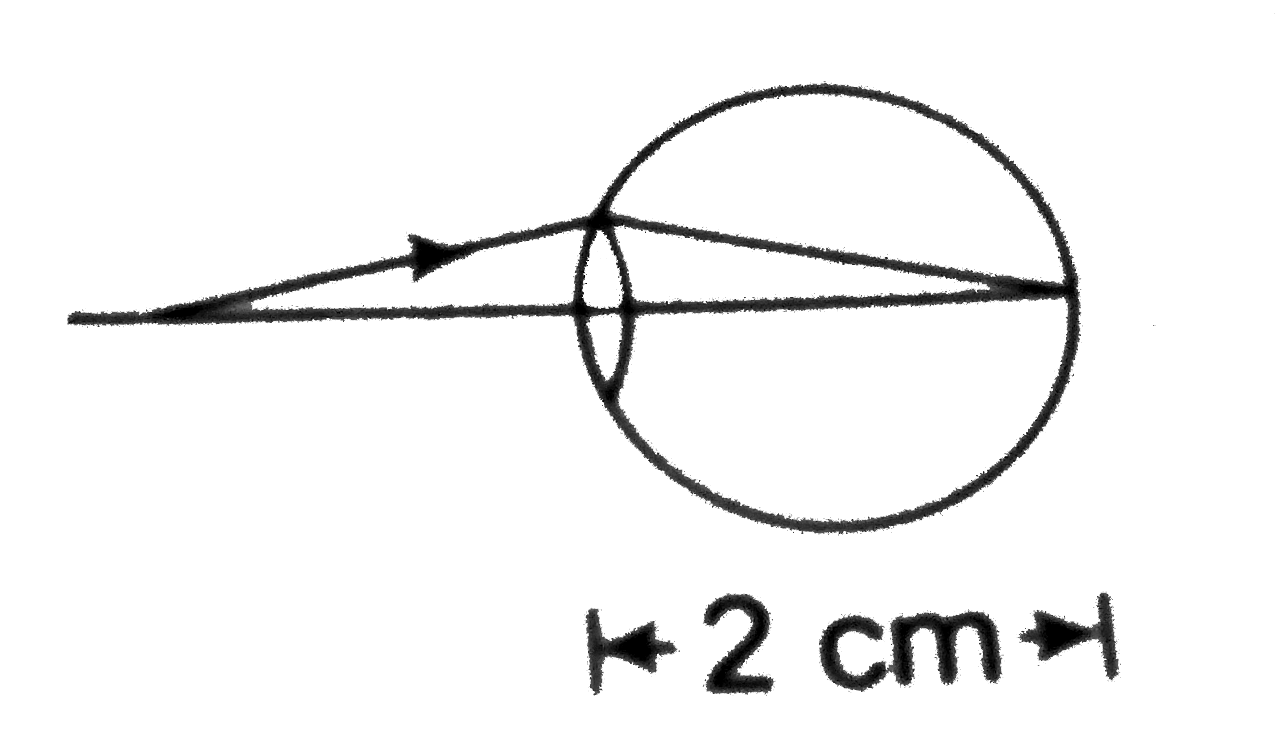 `(1)/(v)-(1)/(u)=(1)/(f)` `(1)/(2)-(1)/(u)=(1)/(5//3) rArr (1)/(u)=(1)/(2)-(3)/(5)=(5-6)/(10) rArr u =- 10cm` `N.P. = 10cm` |
|