

Saved Bookmarks
| 1. |
a. A sample of 0.50g of an organic compound wastreated according to Kjeldahal's method. The ammonia evolved was aboserved in 50 ml of 0.5M H_(2)SO_(4). The residualacid required 60 mL of 0.5M solution of NaOH for neutralisation. Find the percentage composition of hnitrogen in the compound. b. On analysis, 0.2g of a monobasic acid gave 0.505 gm of CO_(2) and 0.0864gm H_(2)O. 0.305 gm of this acid required25 ml of M//10 NaOH solution for neutralisaton. Find the molecular formula of the acid. c. A liquid aromatic organcvi compound (A) conatining carbon (92.3%) and hydrogen (7.7%)decoluidsed KMnO_(4) and on ozonolysis gave methanal and another compound (B). The molecular mass of (A)is 104. On treatmentwith a suitablecatalyisis, (A)gave a high molecularmass solid product (C)havingthe same empirical formula as that of compound(A). Compound (C) is used in making toys and household goods. Identify (A),(B), and (C) and explain the reactions. d. A sample of 0.246 gm of an organic compound gave 0.198 gm fo CO_(2) and 0.104 gm of H_(2)O on completecombusion. .37gm of the compoundgave 0.638 gm of silver bromide in Carius method. What is the molecular formula of the compound if its molecular mass is 109. |
|
Answer» Solution :a. TOTAL acid `= 50xx0.5xx2 = 50 mEq`. Excess acid `= 60xx0.5 = 30 mEq`. Acid used to neutralise `NH_(3) = 50 - 30 = 20 mEq`. Perventage of `N = (1.44xx mEq. "of acid")/("Wt fo compd".)` `= (1.4xx20)/(0.5) = 56%` b. Caculate of emprical formula. MASS of sample `= 0.20gm`, mass of `CO_(2)` formed `= 0.505gm` mass of water formed `= 0.864 gm`. Percentage of carbon `= (12xx0.505xx100)/(44xx0.20) = 69%` Percentage of hydrogen `= (2xx0.086xx100)/(18xx0.20) = 4.8%` Percentage of oxygen `= 100-(69+4.8) = 26.20%` Emprical formula `= C_(7)H_(6)O_(2)` 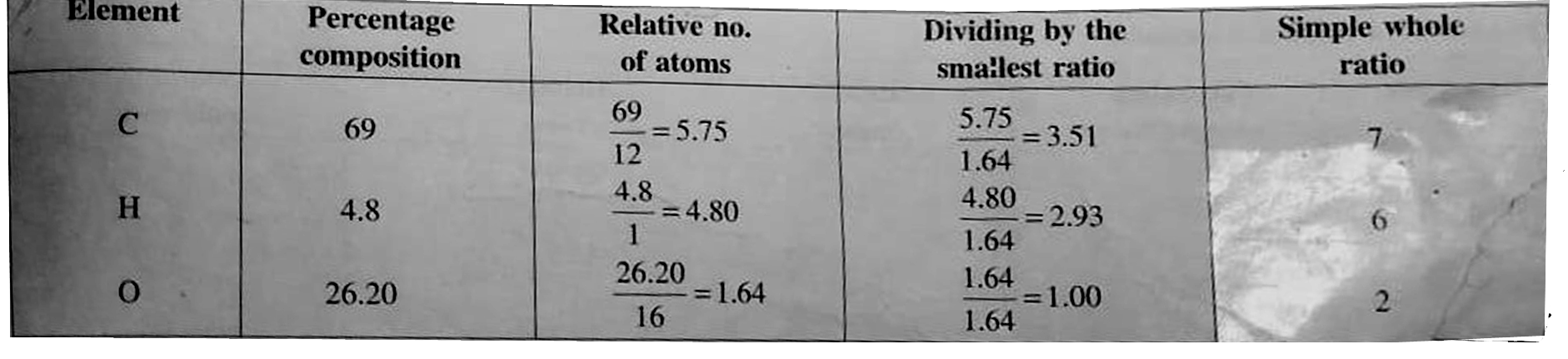 `40 gm` of `NaOH` would meutralise `1 mol` of amononbasic acid `NaOH = 25 xx (1)/(10) = 2.5 mEq. = 2.5xx10^(-3)xx40 = 0.1 gm` `0.1gm` of `NaOH` neuralies `0.305 gm` acid `40gm NaOH` neutralies `(0.305xx40)/(0.1)= 122gm` Molecular mass of acid `= 122 gm mol^(-1)` `n = ("Mol. formula mass")/("EMPIRICAL formula mass") = (122)/(122) = 1` Molecular formula of acid `= (C_(7) H_(6) O_(2))_)1) = C_(7) H_(6) O_(2)` c.  Empirical formula `= CH` Mol mass of `(A) = 2xxV.D. = 2xx52 = 104` `n = (104)/(13) = 8` Molecule formula `= C_(8) H_(8)` Decree of unsaturation `= [(2xx8+2) - 8]//2 = 5^(@)` `5^(@) unsaturation shows that it is can aromatic COMPOUND, `4^(@)` due to BENZENE ring. 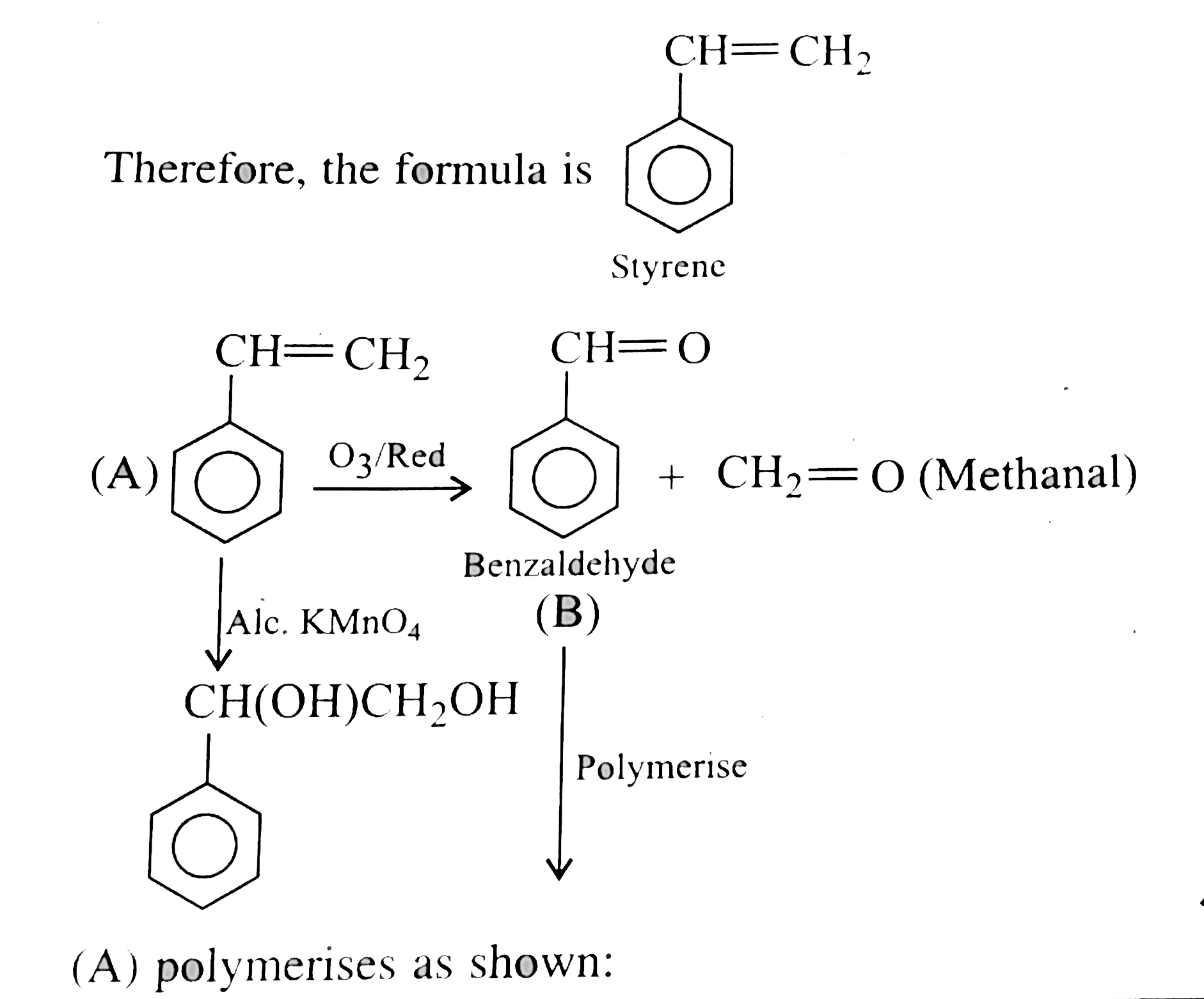 `(A)` plymerises as shwon: `n(overset(Ph)overset(|)(CH)= CH_(2)) rarr - overset(Ph)overset(|)(CH) - CH_(2) - overset(Ph)overset(|)(CH) - CH_(2) -` 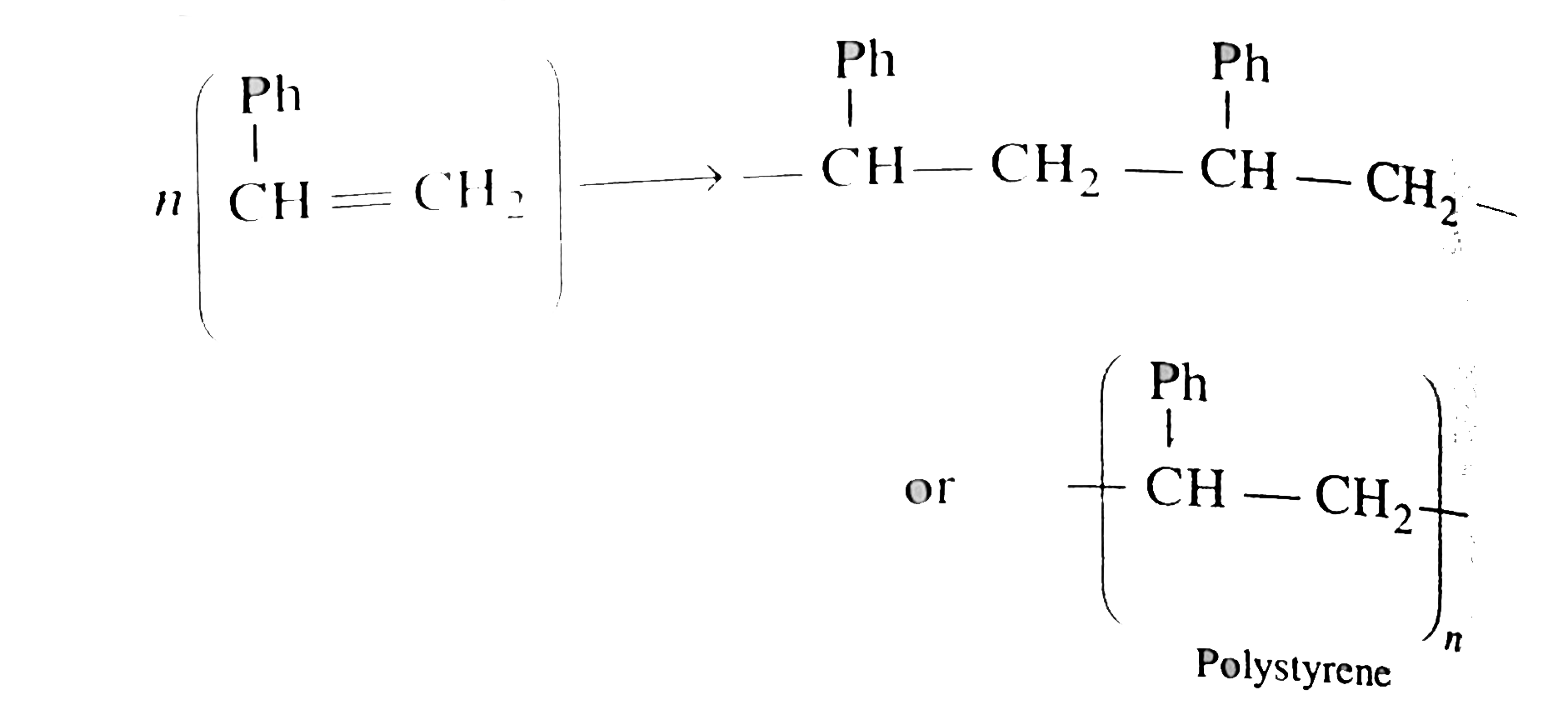 d. Mass of organic compound`= 0.26 gm` Mass of `CO_(2) = 0.198 gm` Mass of `H_(2)O = 0.1014 gm` Percentage of `C = (12xx0.198xx100)/(44xx0.246) = 21.95%` Percentage of `H = (2xx0.1014xx100)/(18xx0.246) = 4.58%` Percentage of bromic `= (80xx0.638xx100)/(188xx037)` `= 73.37%` 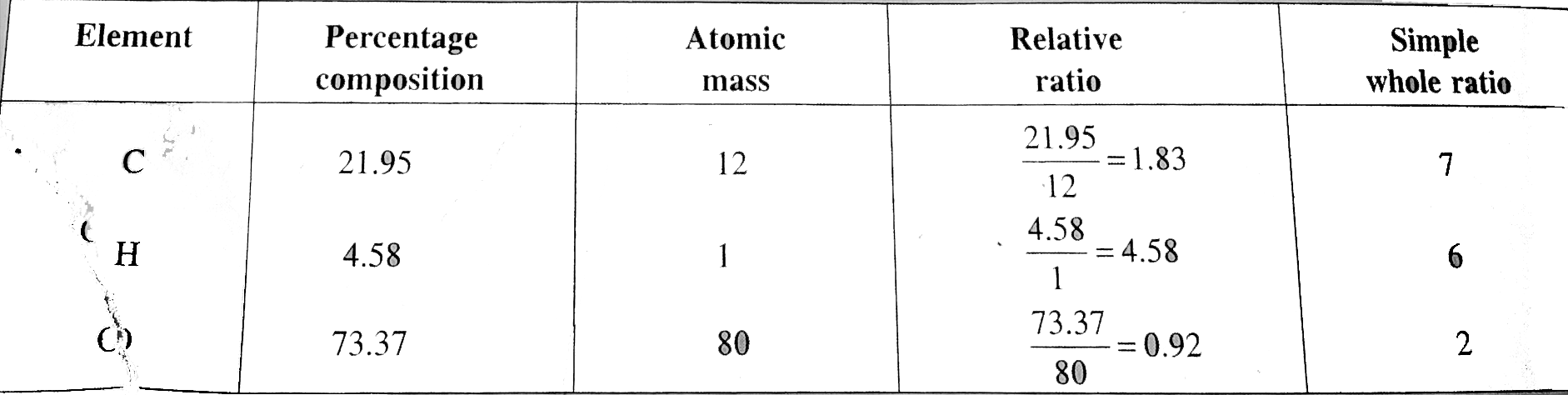 Emprical formula `= C_(2) H_(5) Br`, Molecular mass `= 109` `n = 109//109 = 1` Molecular formula `= (C_(2) H_(5)Br)_(1) = C_(2)H_(5)Br` |
|