

Saved Bookmarks
| 1. |
A convex lens of focal length 15 cm is split into two halves and the two halves are placed at a separation of 120 cm. Between, the two halves of convex lens a plane mirror is placed horizontal and at a distance of 4 mm below the principal axis of the lens halves. An object of length 2 mm is placed at a distance of 20 cm from one half lens as shown in figure. Find the position and size of thefinal image. Trace the path of rays forming the image. |
|
Answer» `1/v-1/(-20)=1/15` `:. V=60 cm` Magnification, `m=v/u=60/(-20)=-3` The image formed by first half lens is shown if figure . `AB=2mm, A_1B_1=6mm, AO_1=20 cm,` `O_1F=15 cm` and `O_1A_1=60 cm` 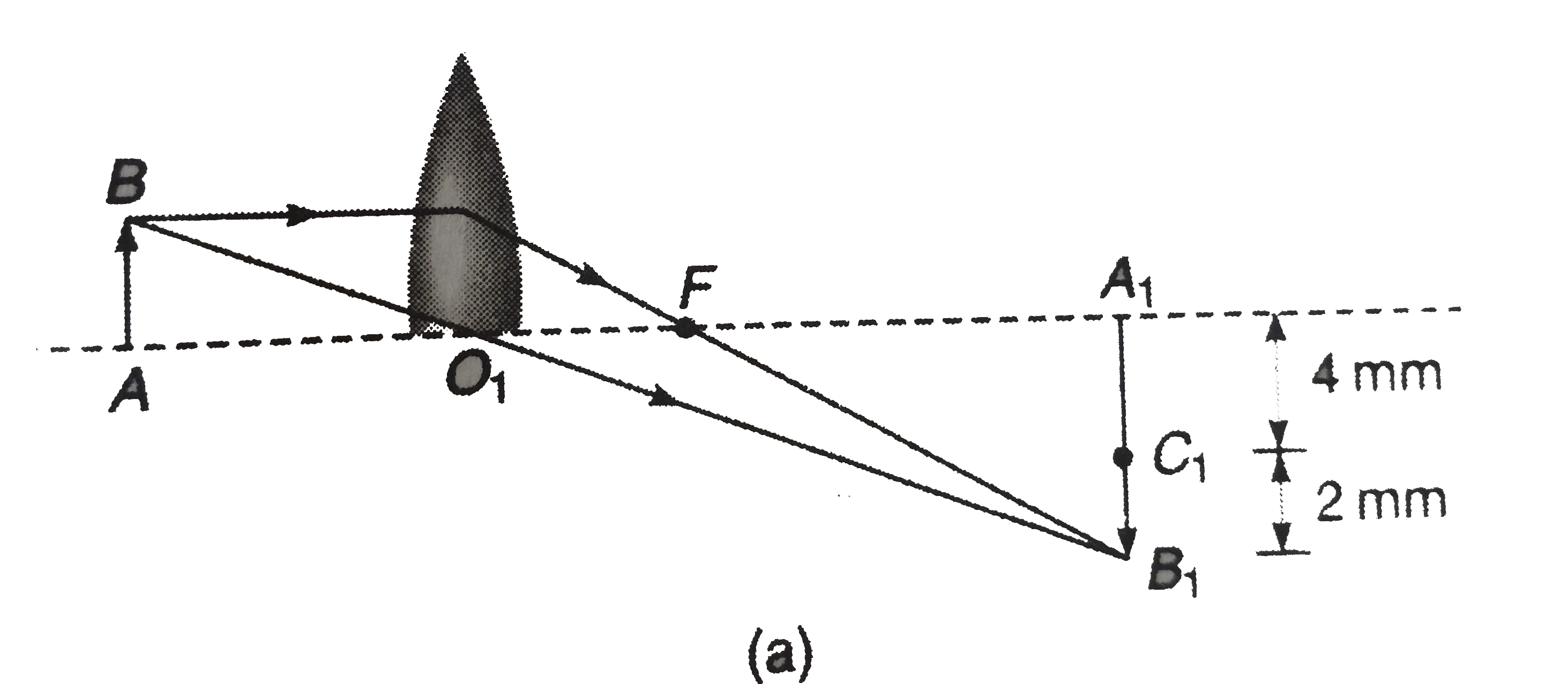 Point `B_1` is `6 mm` below the principal axis of the lenses. Plane mirror is 4mm below it. 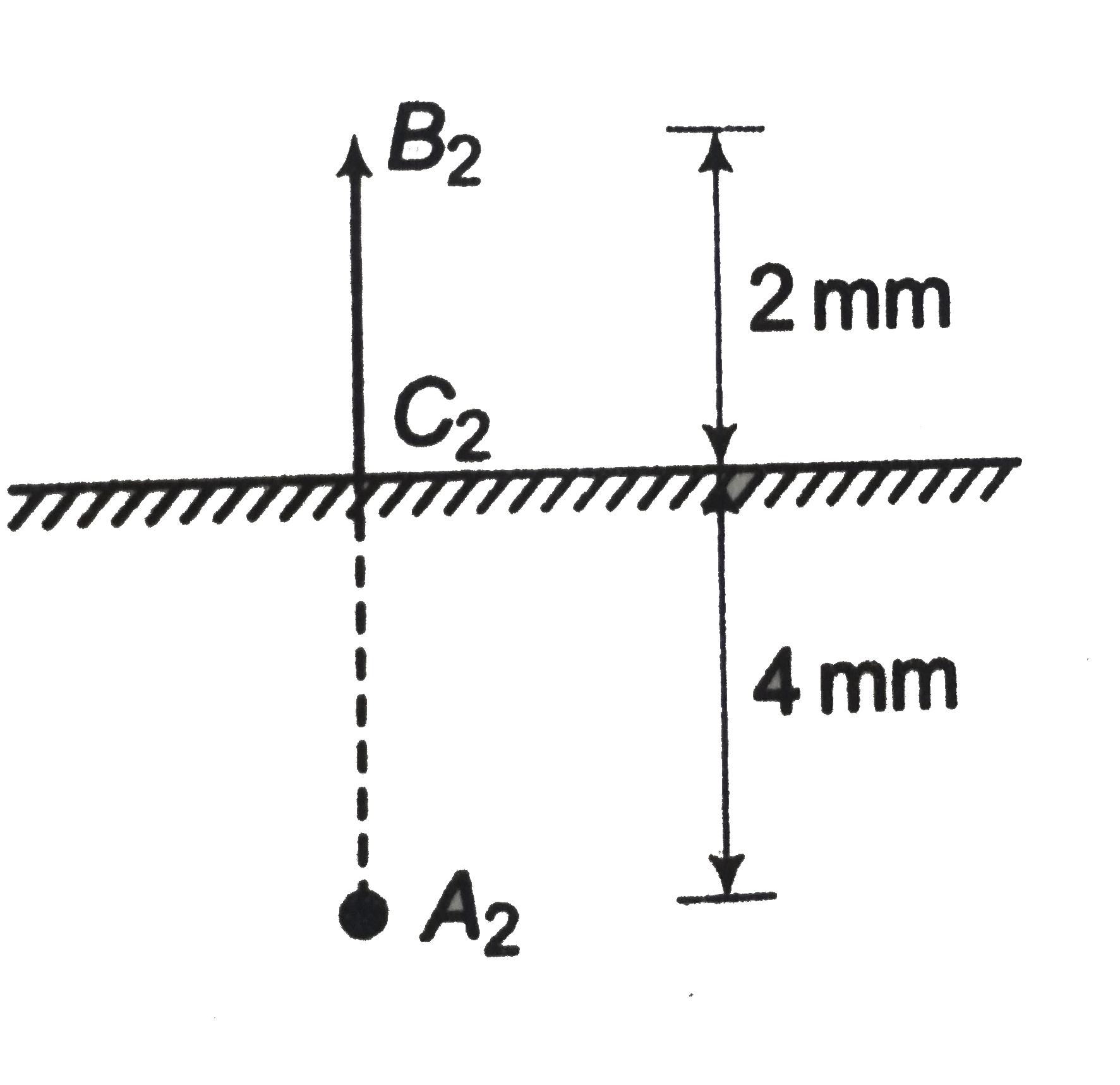 Hence, `4mm` lenght of `A_1B_1(i.e.A_1C_1)` acts as real OBJECT for mirror. Mirror forms its virtual image `A_2C_2. 2mm` length of `A_1B_1 (i.e.C_1B_1)` acts as virtual object for mirror. Real image `C_2B_2` is formed of this PART. Image formed by plane mirror is shown in figure (b) . For the second half lens, `1/v-1/(-60)=1/15` `:. v=+20` `m=v/u=20/(-60)=-1/3` So, length of final image `A_3B_3=1/3A_2B_2=2mm` Point `B_2` is 2mm below the optic axis of second half lens. Hence, its image `B_3` is formed `2//3 mm` above the principal axis. Somilarly, point `A_2` is 8mm below the principal axis. Hence, its image is `8//3 mm` above it. Therefore, image is at a distance of 20 cm behind the second half and at a distance of `2//3 mm` above the principal axis. The size of image is 2 mm and is INVERTED as compared to the given object. Image formed by second half lens is shown in figure 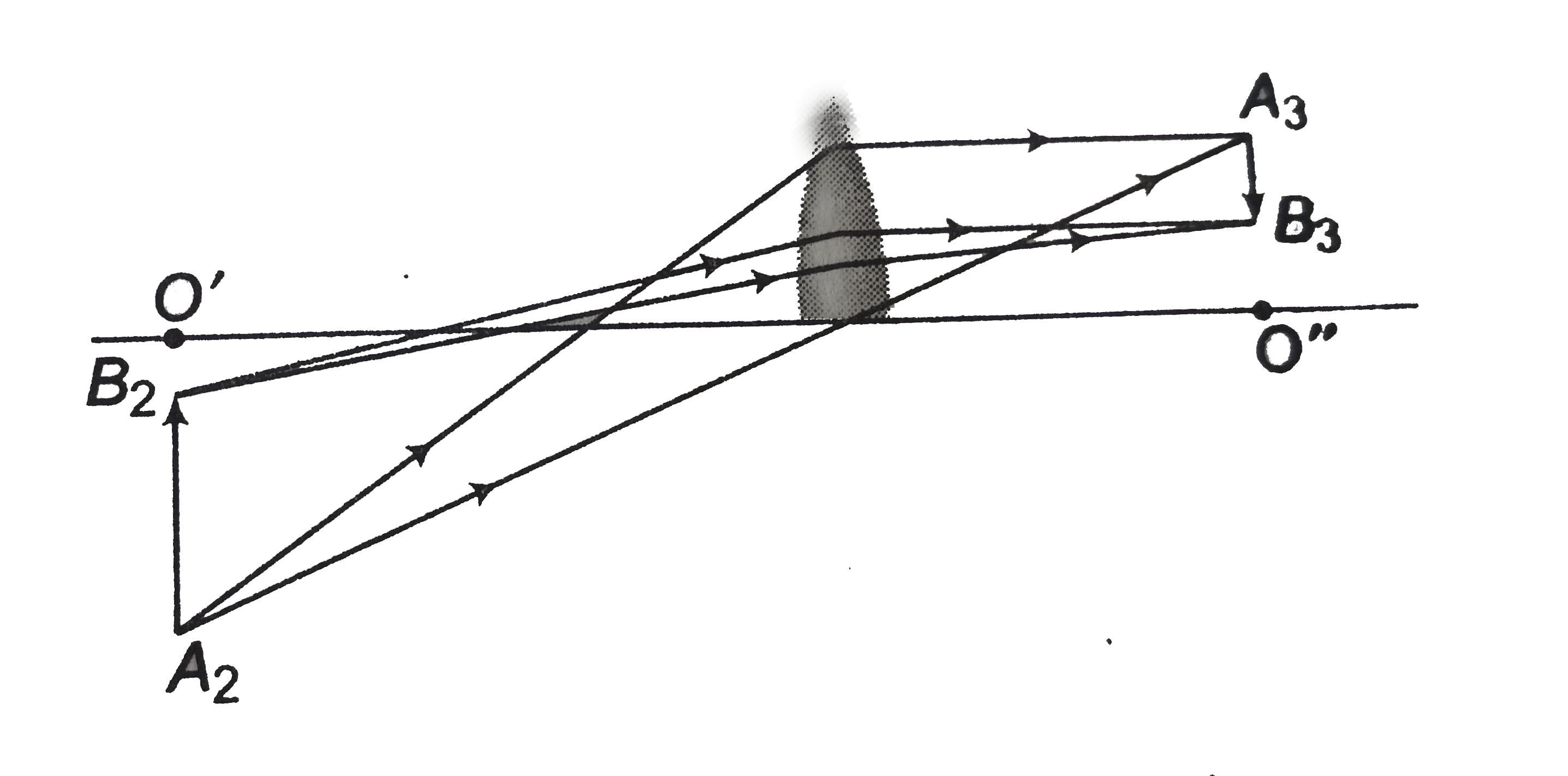 Ray diagram for final image is shown in figure 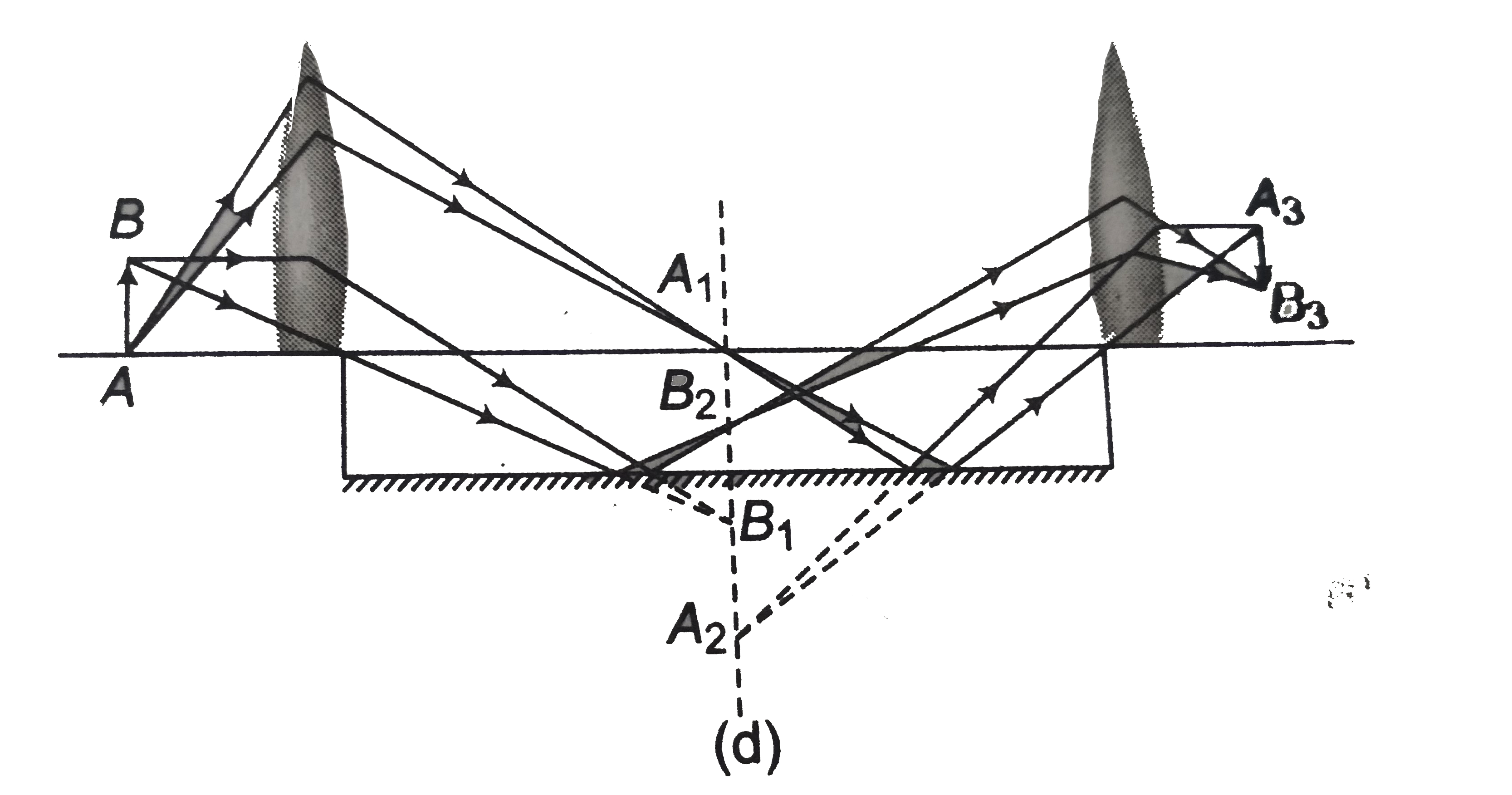
|
|