

Saved Bookmarks
| 1. |
(a) In a photoelectric experiment, the collector plate is at 2.0 V with respect to the emitter plate made of copper (phi =4.5 eV) . The emitter is illuminated by a source of monochromatic light of wavelength 200 nm. Find minimum and maximum kinetic energy of the photoelectrons reaching the collector. (b) A small piece of cesium metal (phi =1.9 eV) is kept a distance of 20 cm from a large metal plate having a charge density of 8.85xx10^(-9) C//m^(2) on the surface facing the cesium piece. A monochromatic light of wavelength 400 nm is incident on the cesium piece. Find minimum and the maximum kinetic energy of the photoelectrons reaching the large metal plate. Neglect any change in the electric field due to the presence of small piece of cesium. |
|
Answer» Solution :(a) Energy of INCIDENT photon `E=(1242)/(lambda(nm))eV =(1242)/(200) =6.21 eV` `E =phi + K_(max)` `6.21 =4.5 + K_(max)` `K_(max) =1.71 eV` 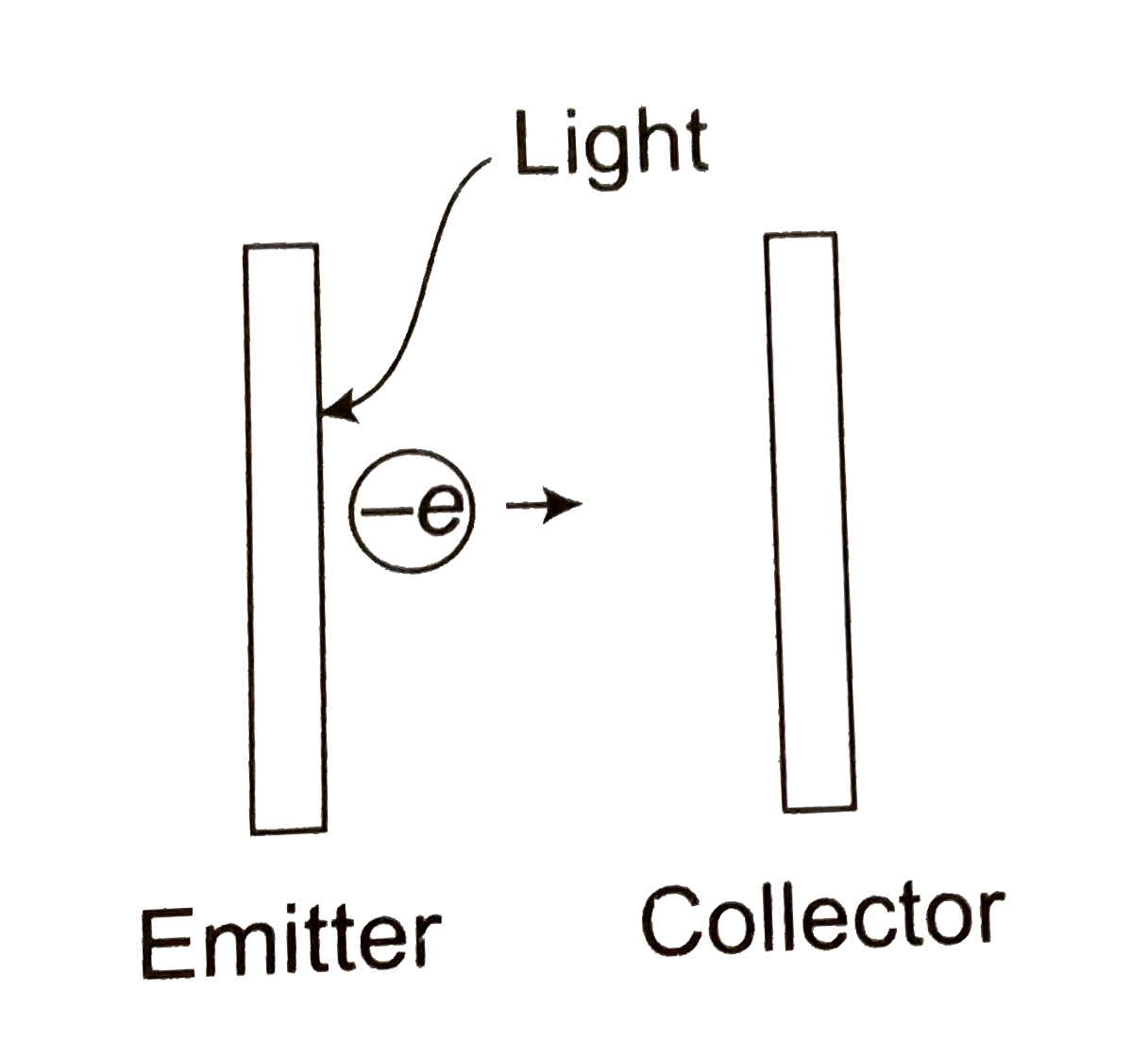 When electron reaches to collector plate, it is accelerated by potential 2 V. Energy of electron emitted by emitter is as FOLLOWS: `K_(min) =0, K_(max) =1.71 eV` When electron reaches to collector its energy. (i) `0+2 =2 eV =K'_(min)` (ii) `1.71 + 2 = 3.71 eV =K'_(max)` (b) 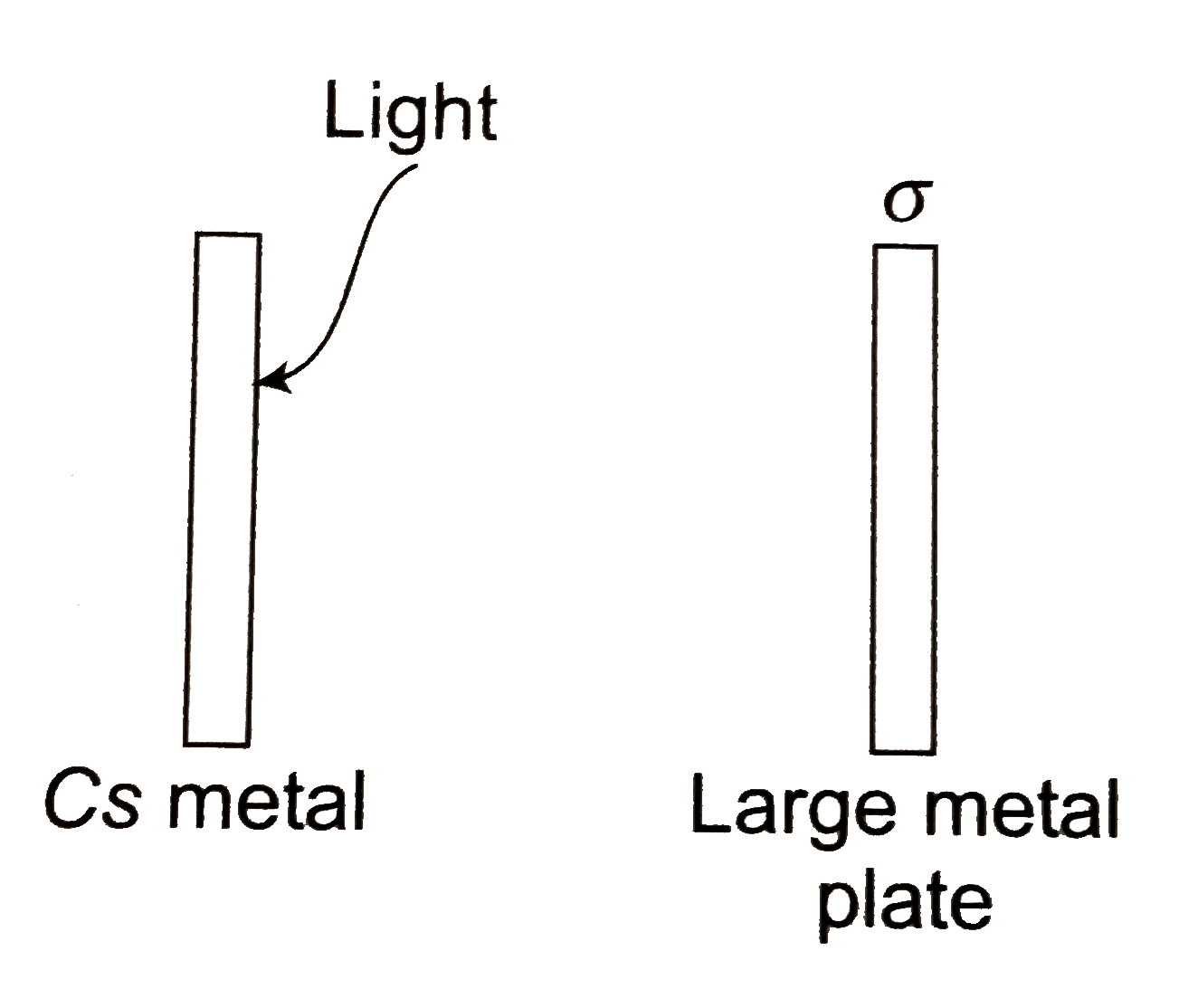 Incident energy of photon `E=(1242)/(lambda(nm))=(1242)/(400) =3.1 eV` `E=phi + K_(max)` `3.1 =1.9 + K_(max) implies K_(max) =1.2 eV` If electrons are emitted with zero VELOCITY, `K_(min) =0` 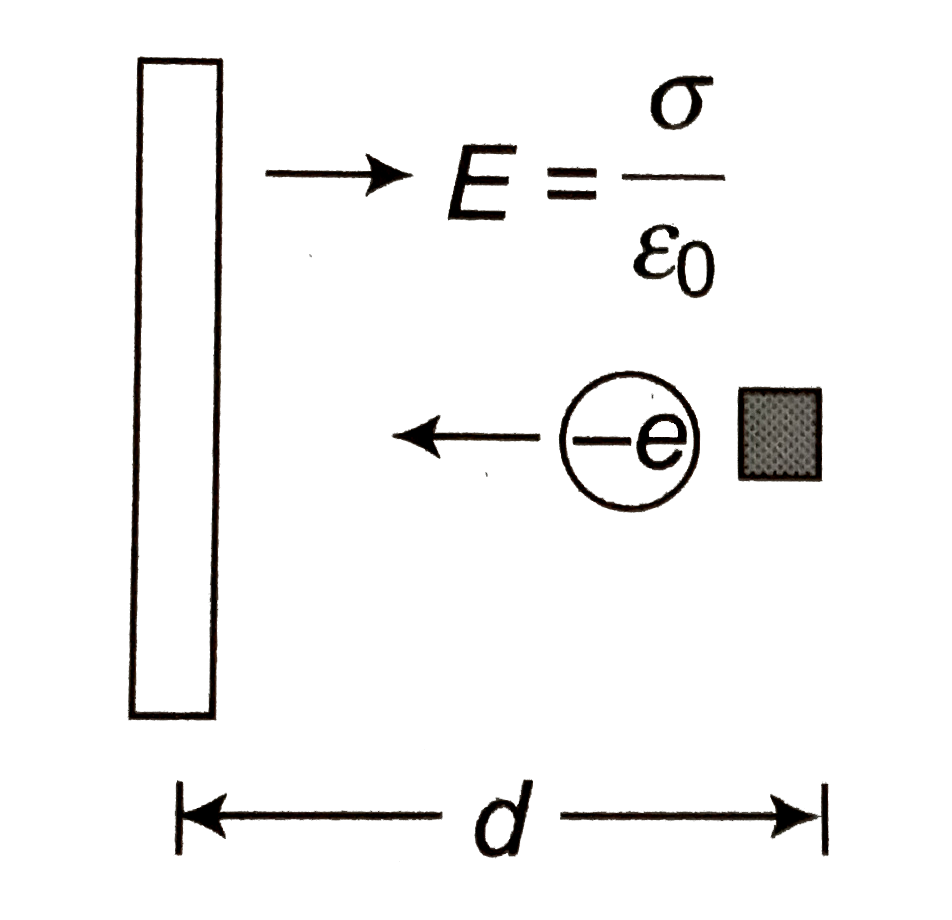 `p.d. V= Ed =(SIGMA)/(in_(0))d` `=(8.85xx10^(-9))/(8.85xx10^(-12))xx0.2=20 V` Due to this potential, electron is accelerated towards large plate, energy GAINED by electron due to this p.d. = 20 eV (i) `0+20 =20 eV =K'_(min)` (ii) `1.2+20 =21.2 eV =K'_(max)` |
|