

Saved Bookmarks
| 1. |
A long solenoid of length l=2.0 m , radius r=0.1 m and total number of turns N=1000 is carrying a current i_(0)=20.0A. The axis of the solenoid conicides with the z-axis. (a) State the expression for the magnetic field of the solenoid and calculate its value ? Magnetic field. (b) Obtain the expression for the self - inductance (L) of the solenoid. Calcuate its value. Value of L . ( c) Calculate the energy stored (D) when the solenoid carries this current ? (d) Let the resistance of the solenoid be R. It is connected to a battery of emf e. Obtain the expression for the current (i) in the solenoid. (e) Let the solenoid with resistance R describe in part (d) be strecthed at a constant speed u ( l is increased but B and gamma are constant ). State kirchhoff's second law for this cases. (Note: Do not solve for the current ) (f) Consider a time varying current i=i_(0) cos (omegat) (where i_(0)=20.0A) flowing in the solenoid. Obtain an expression for the electric field due to the current in the solenoid. (Note: Part(e) is not operative, i.e., the solenoidis not being stretched. ) (g) Consider t=pi//2 omega and omega=200//pi rad-s^(-1) in the previous part. Plot the magnitude of the electric field as a function of the radial distance from the solenoid. Also, sketch the electric lines of force. |
Answer» Solution :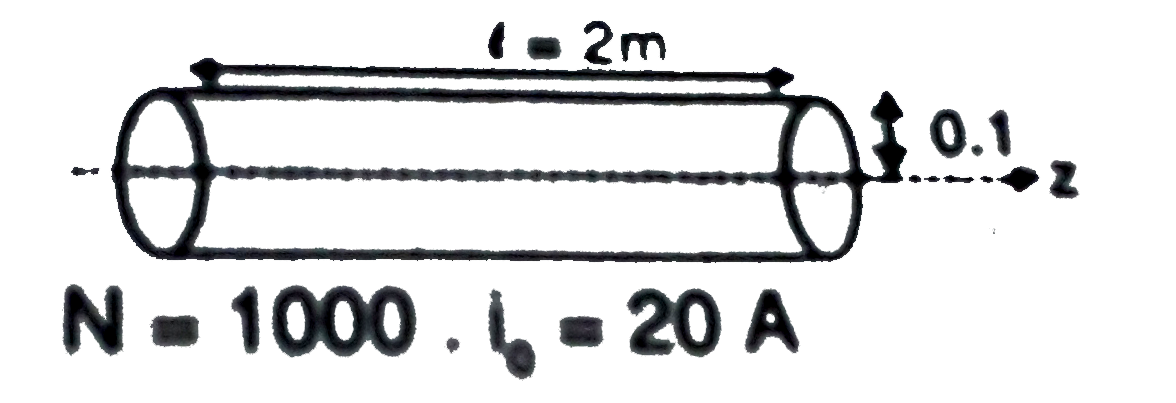 `N=1000,i_(0)=20A` (a) `vecB=mu_(0)(N)/(l)i_(0)(pmhatk)` `|vecB|=4pixx10^(-3)`Telsa (b) `phi=Li_(0)` BNA`=Li_(0)` `L=(BNA)/(i_(0))=(mu_(0)N^(2)pir^(2))/(l)=2pi^(2)xx10^(-3)H`. (C) ` E=(1)/(2)Li_(0)^(2)=(4pi^(2))/(10)` Joules=3.95J (d) `i=i_(0)(1-e^(-t//tau))` where `tau=(L)/(R),i_(0)=(epsi)/( R)` (e) `epsi-iR-(d)/(dt)(Li)=0` ltbtgt `epsi-iR-L(di)/(dt)-i(dL)/(dt)` `epsi-iR+L(di)/(dt)+i(dL)/(dt)` after time t, `L=(mu_(0)N^(2)pir^(2))/((l+vt))to (dL)/(dt)=-(mu_(0)N^(2)pir^(2)v)/((L+vt)^(2))` ` epsi=iR+(LDI)/(dt)-(mu_(0)N^(2)pir^(2)v)/((L+vt)^(2))` (F) `E_("induced")=intvecE.vec(dl)=-(dphi)/(dt)` `intvecE.vec(dl)=-(dphi)/(dt)` (d `to` Radial distance from axis of solenoid : `r to ` Radius of solenoid ) For `(d lt r)` `E.2pid=-pid^(2)(DB)/(dt)` `=pid^(2) mu_(0)(N)/(l)(di)/(dt)` `E.2pid=pid^(2) mu_(0) (N)/(l)i_(0)omega sin(omegat)` `E=(mu_(0)Ni_(0)omegad sin(omegat))/(2l)` For `d ge r ` `E. 2pid=-pi^(2)(dB)/(dt)` `E=(mu_(0)Ni_(0)omegar^(2))/(2dl) sin(omegat)` (g) 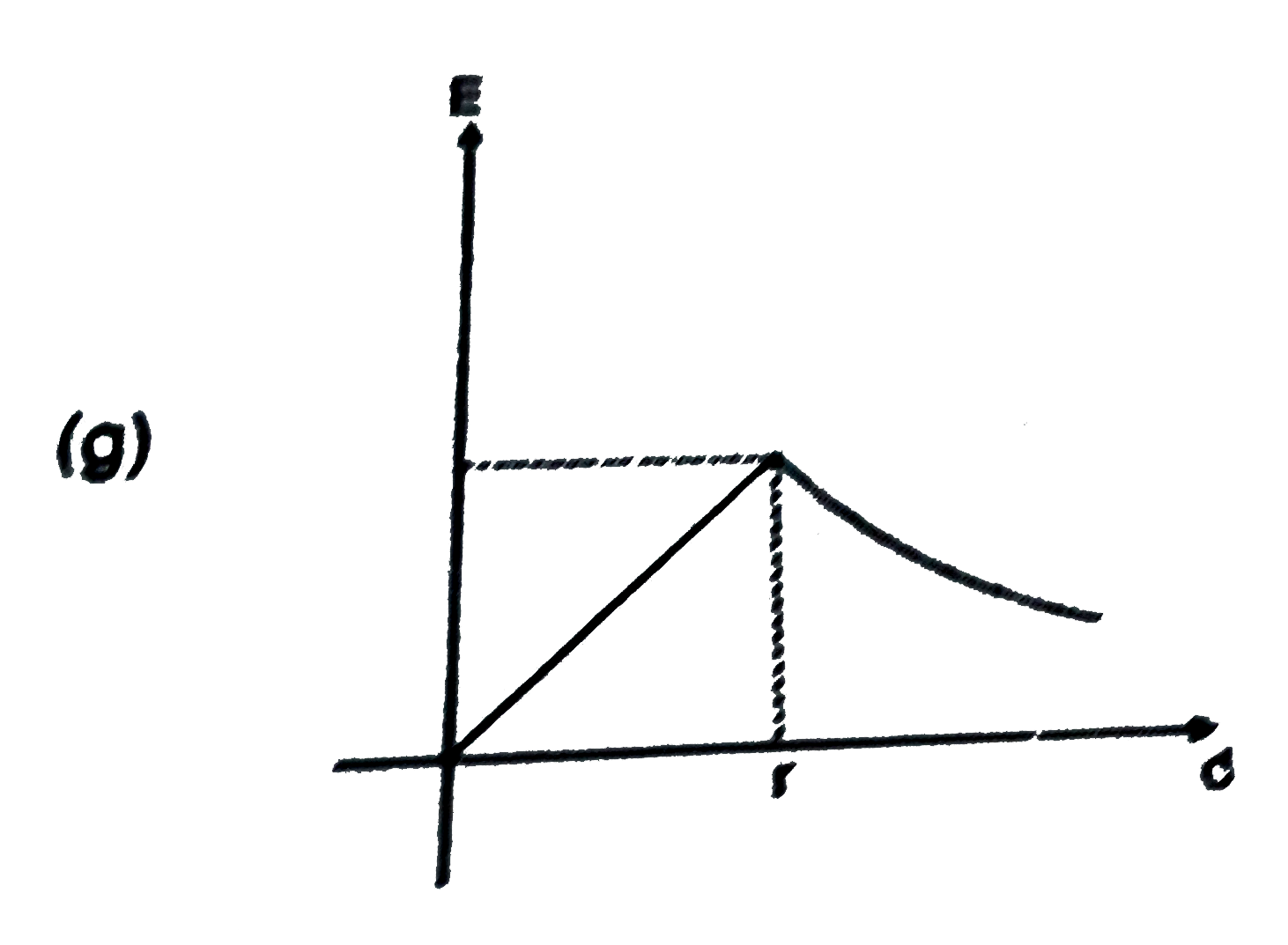 `t=(pi)/(2W)` `E=(mu_(0)Ni_(0)omegad)/(2l)d lt r` `E=(mu_(0)Ni_(0)omegar^(2))/(2dl) d ge r ` Lines of force 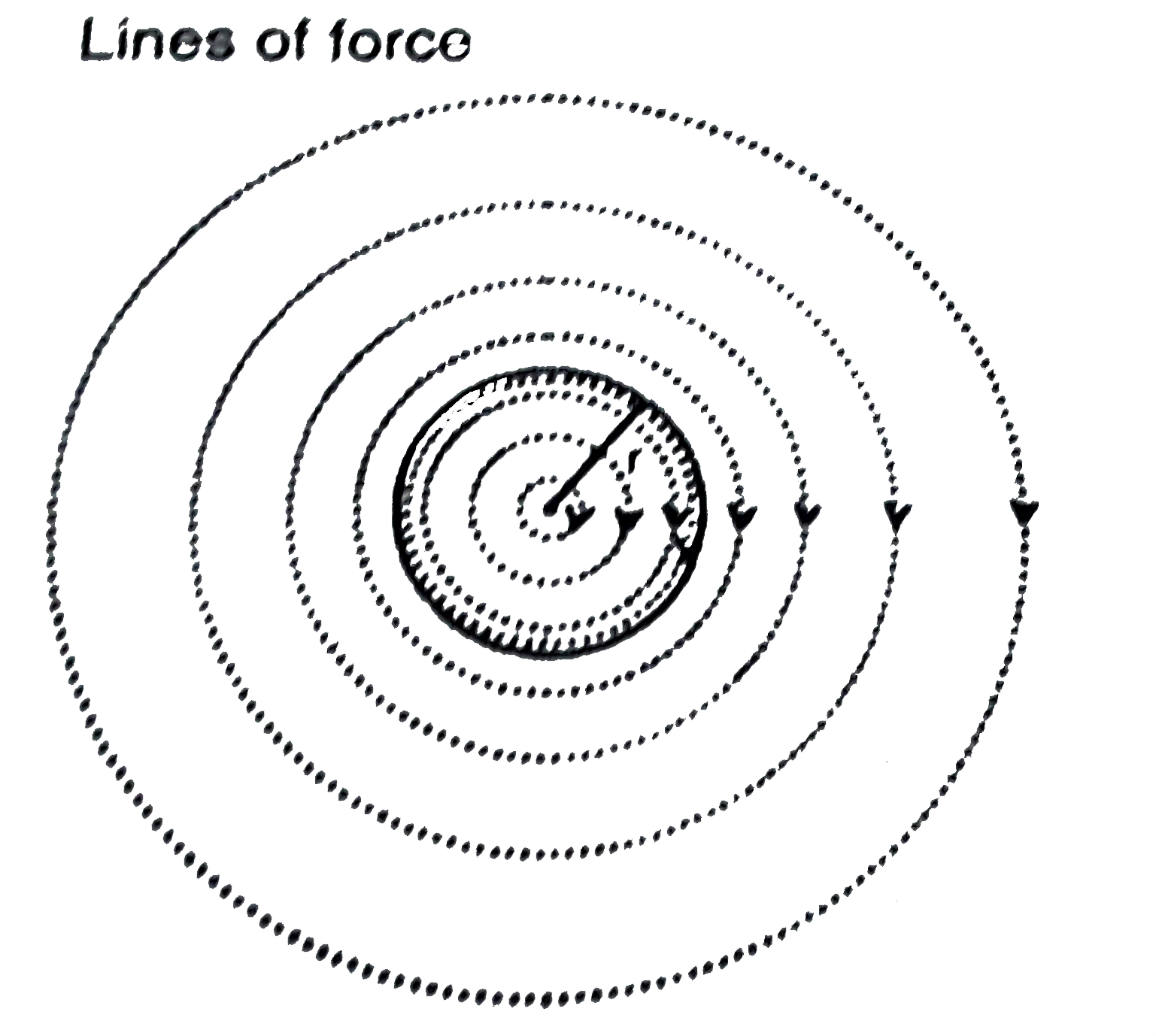
|
|