

Saved Bookmarks
| 1. |
(a) The mass of a nucleus in its ground state is always less than total mass of its constituents - neutrons and protons. Explain. (b) Plot a graph showing the variation of potential energy of a pair of nucleons as a function of their separation. |
|
Answer» Solution :(a) Protons and neutrons have to come TOGETHER within a very small space of the order of `10^(-14)` to MAKE a nucleus. The energy required to do so is provided by the nucleons at the expenses of their masses. DUE to this, the mass of the nucleus formed is always less than the sum of the masses of the constituent nucleons. (b) Graph : The graph showing potential energy of a pair of nucleons as a function of their separation is shown in given FIGURE. 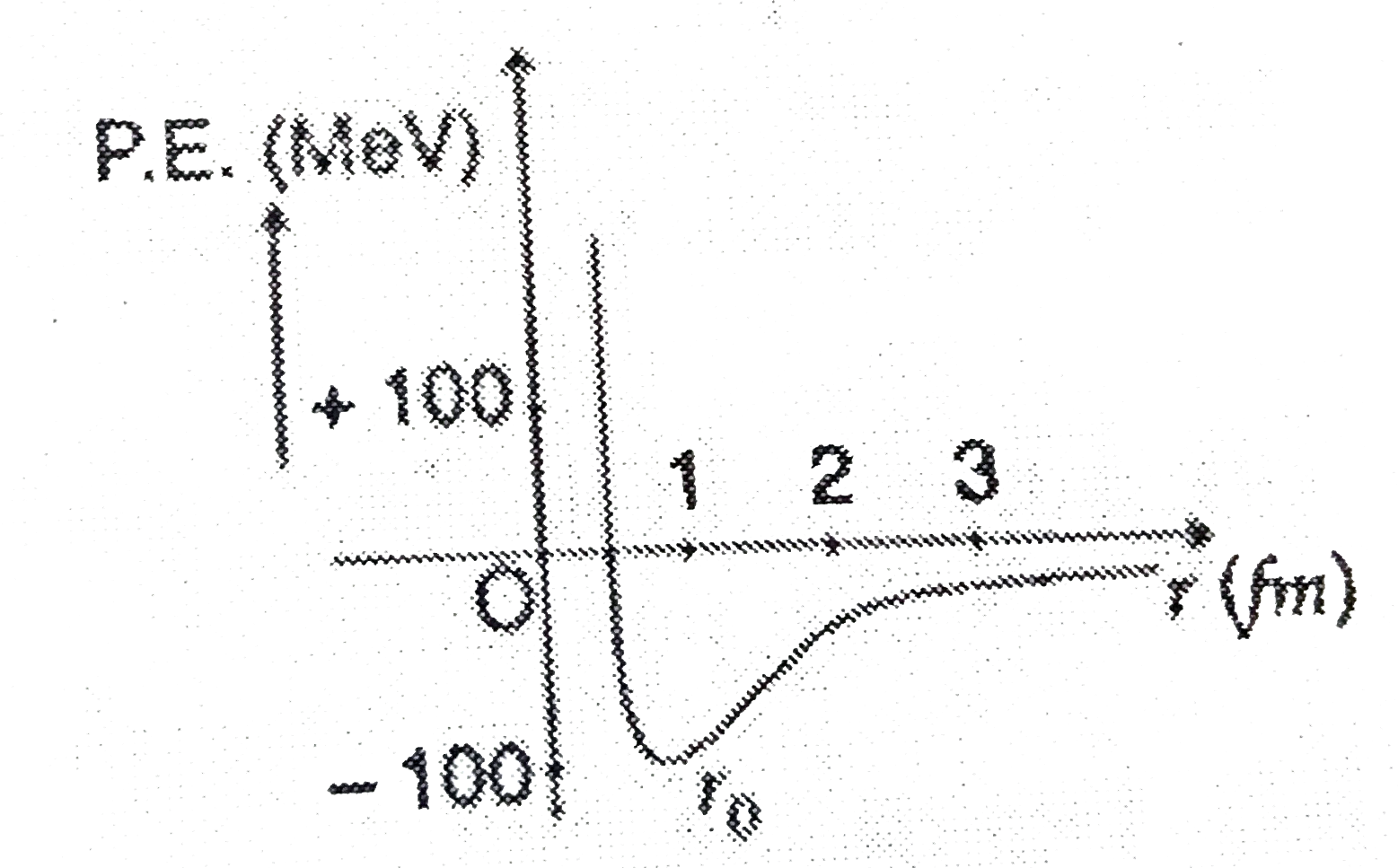
|
|