

Saved Bookmarks
| 1. |
a. Why are overline(e) donating groups, such as (-NH_(2)) (-OR), (-R) o- and p- directingtowards SE reaction? Explain by an example. b. Why are overline(e) withdrawing groups, [such as (-NO_(2), (-SO_(3)H),(-CN),(-COOH), etc].m- direection towards SE reaction? explain by example. c. Although halogens are overline(e) withdrawing yet they are o- and p- directing towards SE reaction. Why? |
Answer» Solution :a. Due to `+M` effect (or `oveline(e)` donating effect) of `(-NH_(2))` group, aniline is resonance stablised as shown: 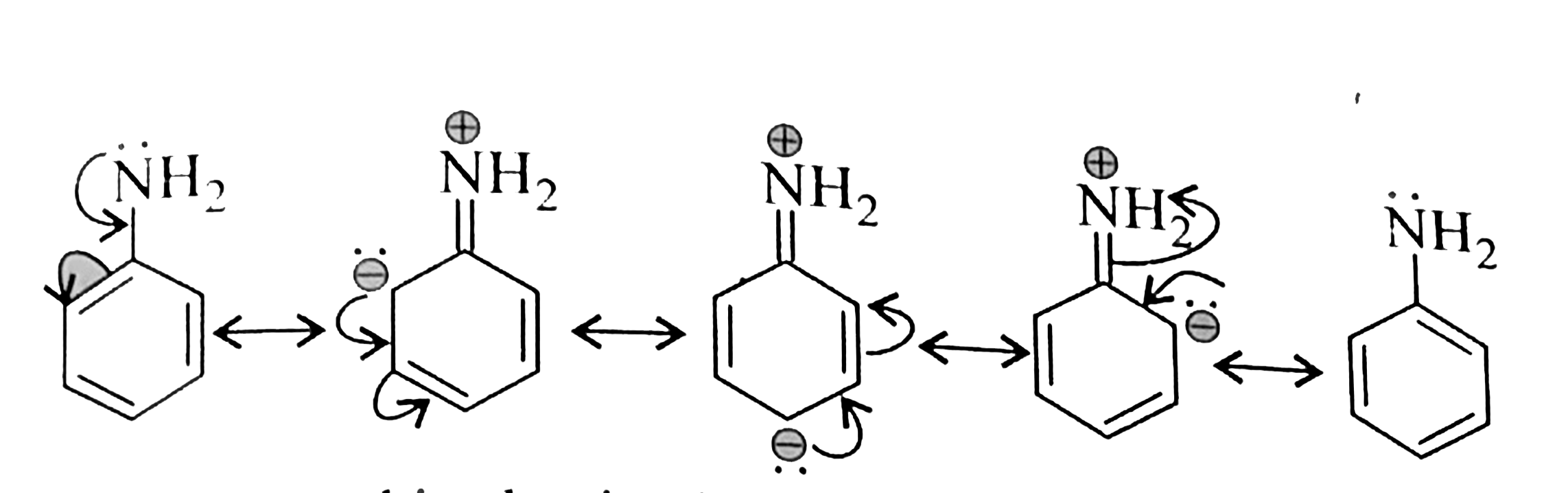 Due to this, the ring is ACTIVATED at `o-` and `p-` positions. Thus, `OVERLINE(e)` density is increased at these positions. HENCE, the incomingelectrophile attacks at these positions giving `o-` and `p-` products. b. Due to `overline(e-)` WITHDRAWING effect of the `(-COOH)` group, benozoic acid is resonance stablised as shown: 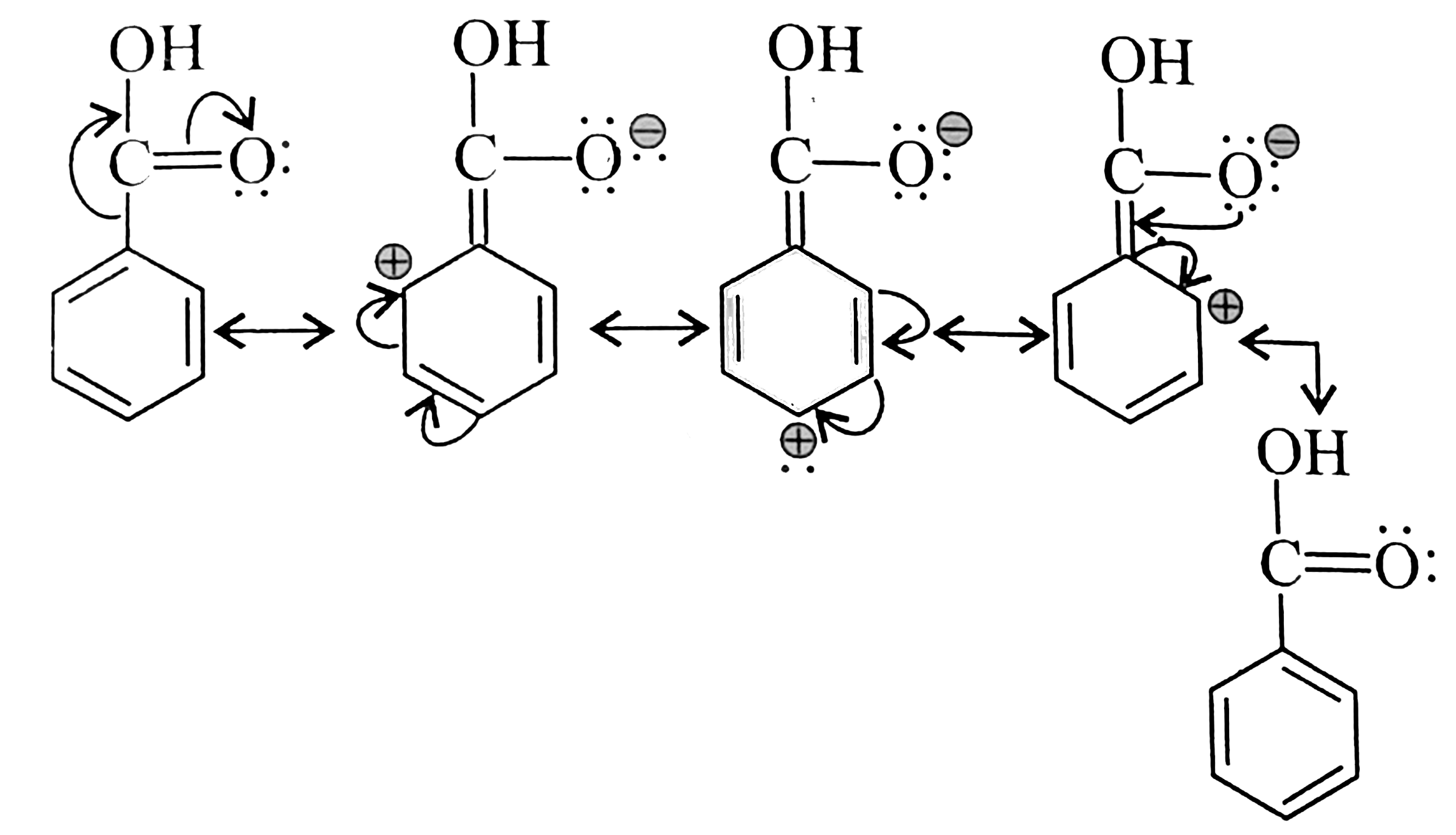 due to this, the benzene ring is deactived at `o-` and `p-` positons, thus `overline(e)` density is decreased at these positon. So, comparatively `overline(e)` density at `m-` position is increased, and hence the incomingelectrophileattacks at `m`-postion giving `m-` products, C. Halogens are said to be `pi` donating but `sigma` with-drawing, i.e., they withdraw `overline(e)s` thorugh resonance. The intermediate carbocationformed during `SE` reaction is destablised by the `-1` effect of the halogens. 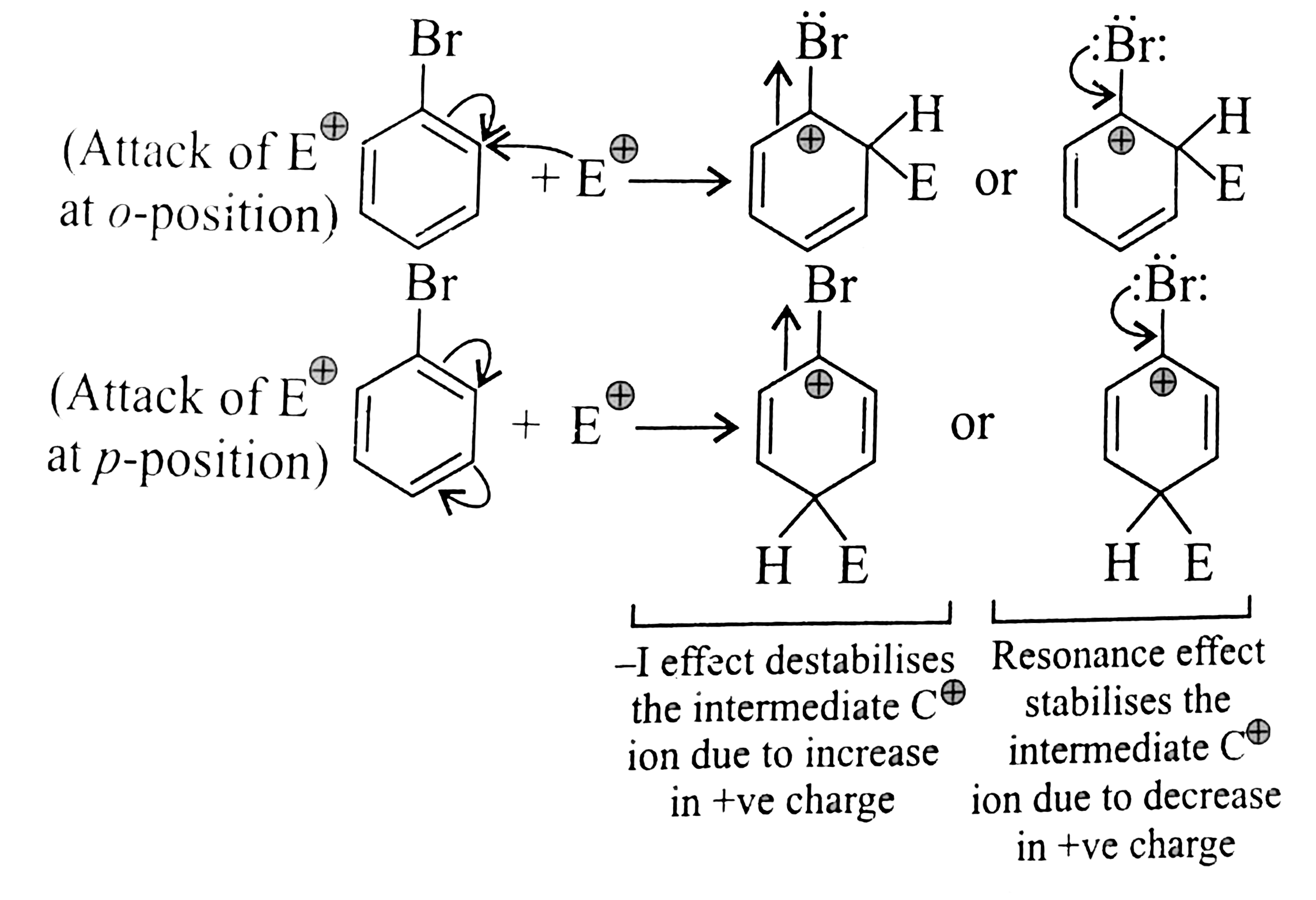 Resonane stablises the intermediate carbocation and this effect is more prominent at `o-` and `p-` positons, `-I` effect is stronger (due to high `EN` of halogens ) than resonance and causes net `overline(e)`withdrawal, and thus causingnet deactivation. The resonance effect for the attack at `o-` and `p-` positons and hence MAKES thedeactivation lesss for `o-` and `p-` subsitution. |
|