

Saved Bookmarks
| 1. |
An electronfalls through a distanceof 1.5 cm in a uniformelectricfield of value 2xx10^(4) N//C. Whenthe directionof electricfield is reversed, a protonfalls throughthe samedistance, Comparethe situation with thatof 'free fall under gravity'. |
Answer» Solution :(a) For electron, REFER to Fig. 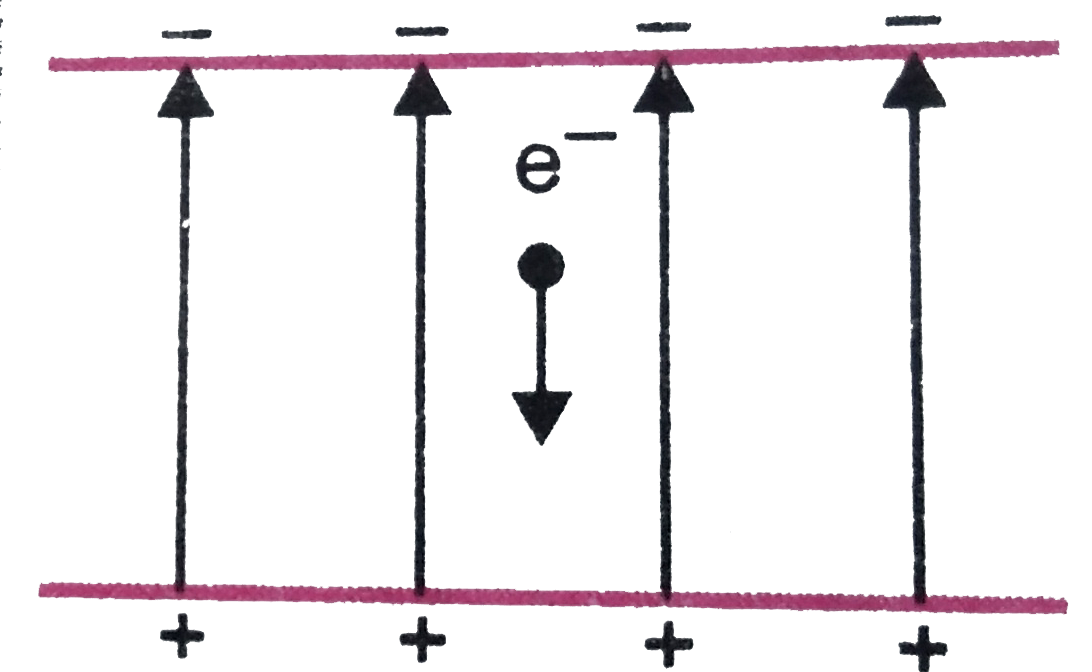 `y_(1) = 1.5 cm = 1.5 xx10^(-2) m, E_(1) = 2xx10^(4) N//C` `q_(0) =1.6xx10^(-19)` coulomb, `m_(1) = 9xx10^(-31) kg`. Acceleratin, `a_(1) = (F_(1))/(m_(1)) = (q_(0) E_(1))/(m_(1)) ` `= (1.6xx10^(-19)xx2xx10^(4))/(9xx10^(-31)) = 3.55xx10^(15) m//s^(2)` From `1 y_(1) = u_(1) t_(1) + (1)/(2) a_(1) t_(1)^(2)` `y_(1) = 0 + (1)/(2) a_(1) t_(1)^(2)` or `t_(1) = sqrt(2 (y_(1))/(a_(1))) = sqrt((2xx1.5xx10^(-2))/(3.55xx10^(15)))= 2.9xx10^(-9) sec.` (b) For proton, Refer to Figurewhenelectricfield is reversed. 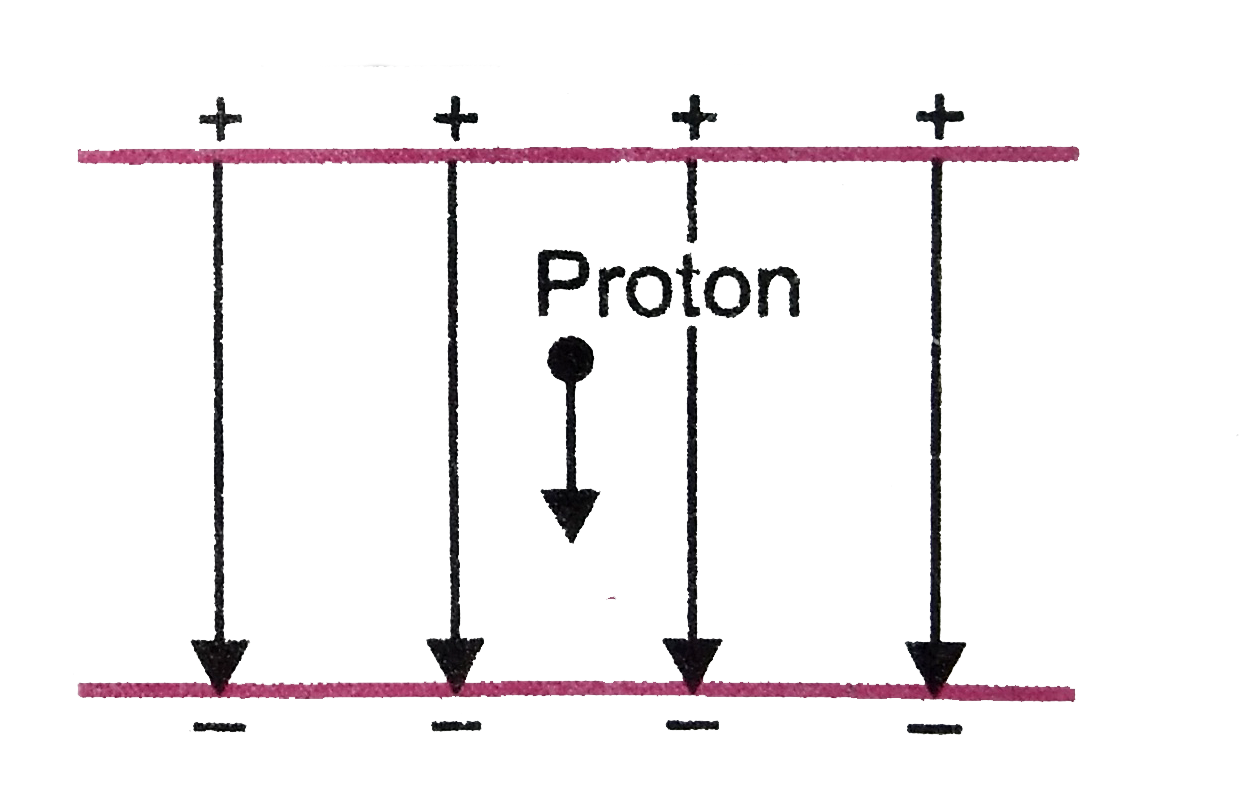 charge `q_(0) = +1.6xx10^(-19) C`, `m_(2) = 1.67xx10^(-27)kg`. `:.` Acceleration, `a_(2) = (F_(2))/(m_(2)) = (q_(0) E_(2))/(m_(2))` `a_(2) = (1.6xx10^(-19)xx2xx10^(4))/(1.67xx10^(-27)) = 1.92xx10^(12) m//s^(2)` Similarly `t_(2) = sqrt((2 y_(2))/(a_(2))) = sqrt((2xx1.5xx10^(-2))/(1.92xx10^(12)))` `=1.25xx10^(-7) s` and `(t_(1))/(t_(2)) = (2.9xx10^(-9))/(1.25xx10^(-7)) = 2.3xx10^(-2)` We observethat acceleration of electron `= 10^(15)m//s^(2)` amd accelerationof proton`= 10^(12) m//s^(2).` The value of 'G' in freefall in only`9.8 m//s^(2) = 10^(1) m//s^(2),` whichis NEGLIGIBLE. Therefore, effectof acc. due to gravitycan be ignored. |
|