

Saved Bookmarks
| 1. |
Determine electric field at point P or O in the following cases , take (1)/( 4 pi in_(0)). (Q)/(d^(2)) = E_(0). (a) (b) |
|
Answer» Solution :(a)Electric field at `P` : Due to `9 Q , E_(1) = (1)/( 4 pi in_(0)) .(9 Q)/((3d)^(2)) = (1)/( 4 pi in_(0)) (Q)/(d^(2)) = E_(0)`, towards right Due to `4 Q , E_(2) = (1)/( 4 pi in_(0)) . (4 Q)/((2d)^(2)) = E_(0)`, towards right Due to `-Q , E_(3) = (1)/( 4 pi in_(0)) . (Q)/(d^(2)) = E_(0)` , towards left Resultant field at `P`: `E_(p) = E_(1) + E_(2) - E_(3) = E_(0)` , towards right (b) Electric field at `P` : Due to `3 Q , E_(1) = (1)/(4 pi in_(0)) . (3 Q)/(d^(2)) = 3 E_(0)`, downward Due to `- 4 Q , E_(2) = (1)/( 4 pi in_(0)) .( 4 Q)/(d^(2)) = 4 E_(0)`, towards right `E_(p) = sqrt(E_(1)^(2) + E_(2)^(2)) = 5 E_(0)` `tan alpha = (3 E_(0))/( 4 E_(0)) = (3)/(4) rArr alpha = tan^(-1) (3//4)` (c ) Electric field at `P`: `Q at A , E_(1) = (1)/( 4 pi in_(0)) . (Q)/( d^(2)) = E_(0)` , ALONG `AP` `Q at B , E_(2) = E_(0)` , along `BP` `E_(p) = E_(0) cos 30^(@) xx 2 = sqrt(3) E_(0)` (d) At `P`: `4 Q , E_(1) = (1)/(4 pi in_(0)) . ( 4 Q)/((2 d)^(2)) = E_(0)` , along `BP` `-2 Q` at left TOP , `E_(2) = (1)/( 4 pi in_(0)) . (2 Q)/((sqrt(2) d)^(2)) = E_(0)` , along `PA` `- 2Q` at right bottom , `E_(3) = (1)/( 4 pi in_(0)) . (2 Q)/((sqrt(2) d)^(2)) = E_(0)` , along `PC` The resultant of `E_(2)` and `E_(3)` is `sqrt(2) E_(0)` at angle `45^(@)` with either `E_(2) or E_(3)`. Net electric field at `P , (sqrt(2) - 1) E_(0)` , at angle `45^(@)` (e) Electric field at `O`: `9 Q` at `A , E_(1) = (1)/( 4 pi in_(0)) .(9 Q)/((5d)^(2)) = (9E_(0))/(25)` , along `AO` `-9 Q` at B , `E_(2) = (9E_(0))/(25)`, along `OB` `-16 Q` at `C , E_(3) = (1)/(4 pi in_(0)).(16 Q)/((5d)^(2)) = (16 E_(0))/(25)` , along `OC` `16 Q at D , E_(4) = (16 E_(0))/(25)` , along `DO` `cos alpha = (8 d)/(10 d) = (4)/(5)` `E_(p) = E_(0) cos alpha xx 2 = E_(0) xx (4)/(5) xx 2 = (8 E_(0))/(5)` Alternatively : The direction of electric fields due to `16 Q` and `- 9 Q` is same and these charges are placed at same separation from `O` , so we can combine these charges as `(16 Q + 9 Q)` or `(-9Q - 16Q)`. (f) The electric fields at `O` by pairs `(Q ,Q) ,(-Q , -Q)` is zero `E_(0) = (1)/(4 pi in_(0)) . (5 Q)/(d^(2)) = 5 E_(0)` , towards left 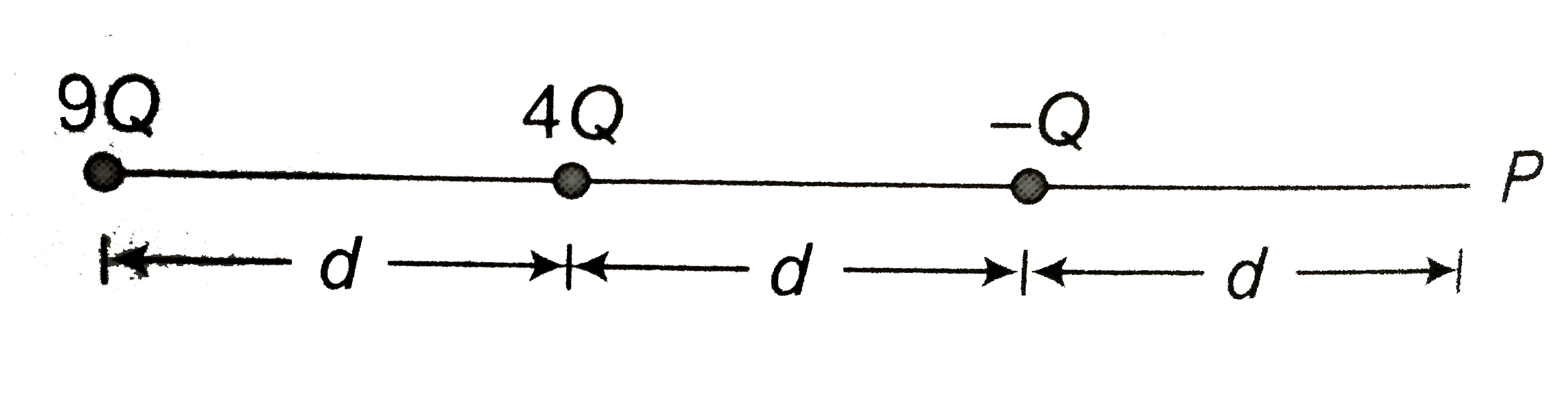 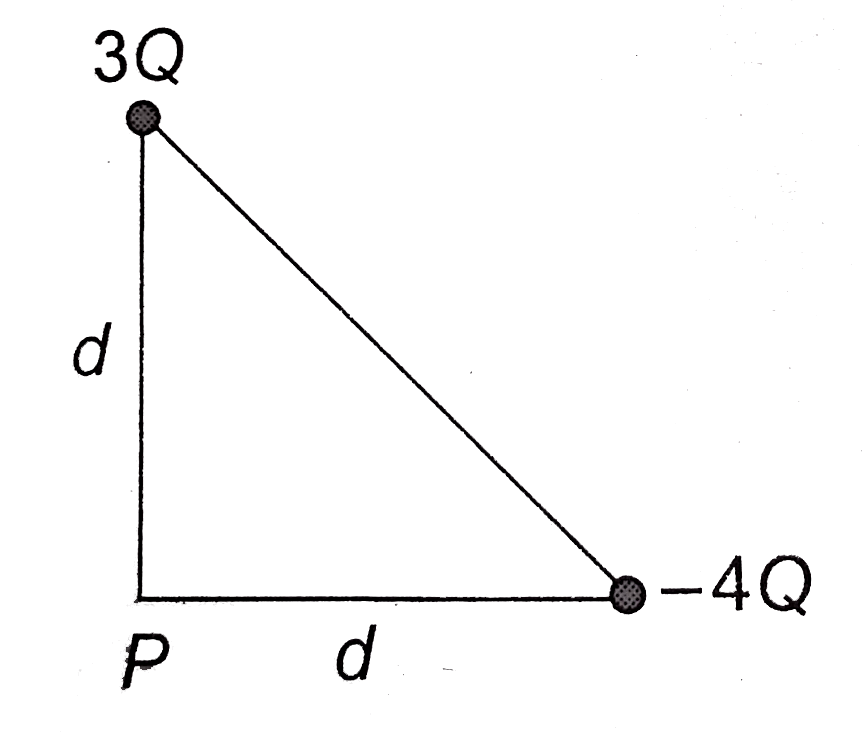 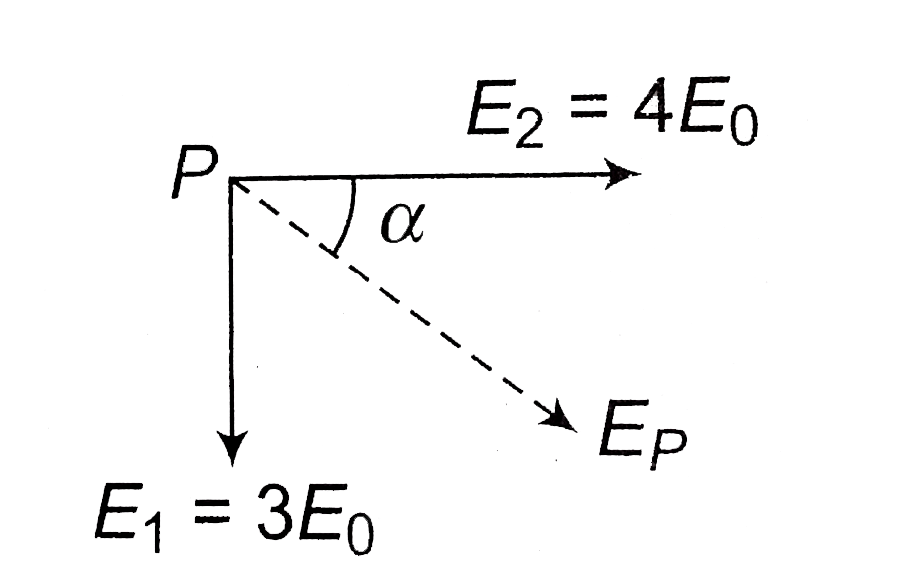 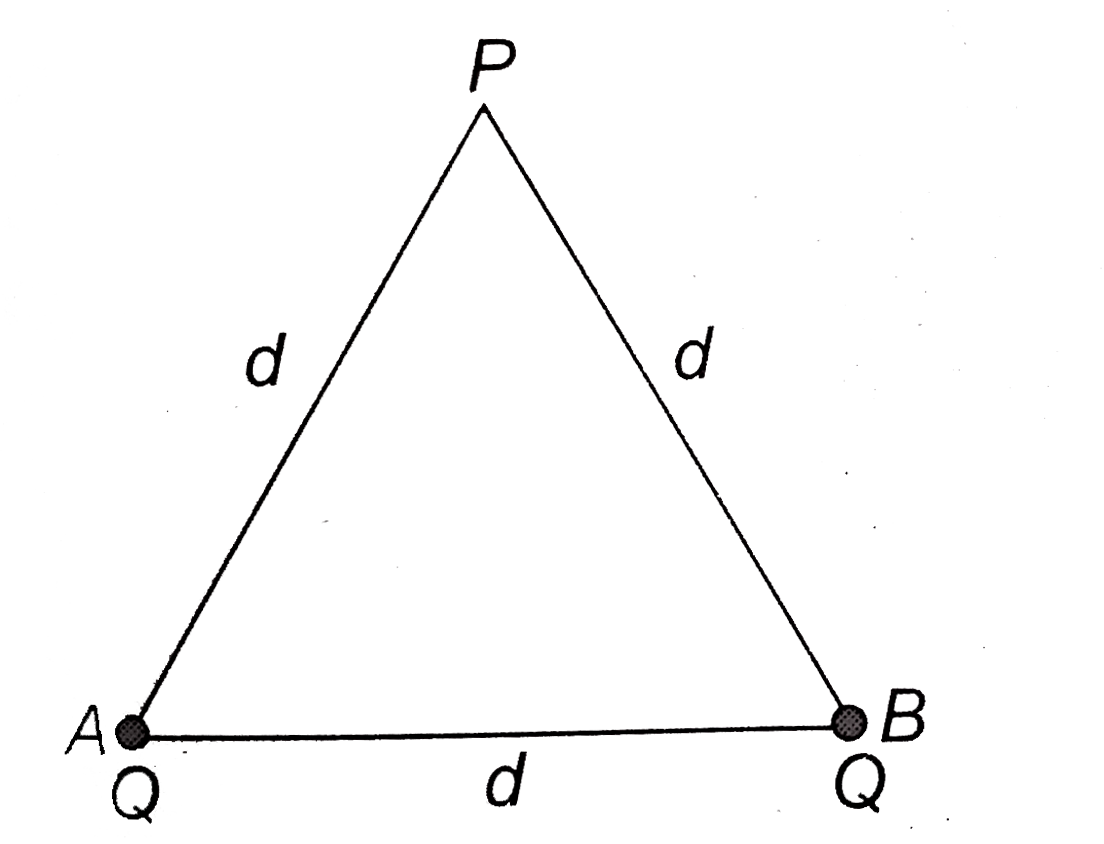 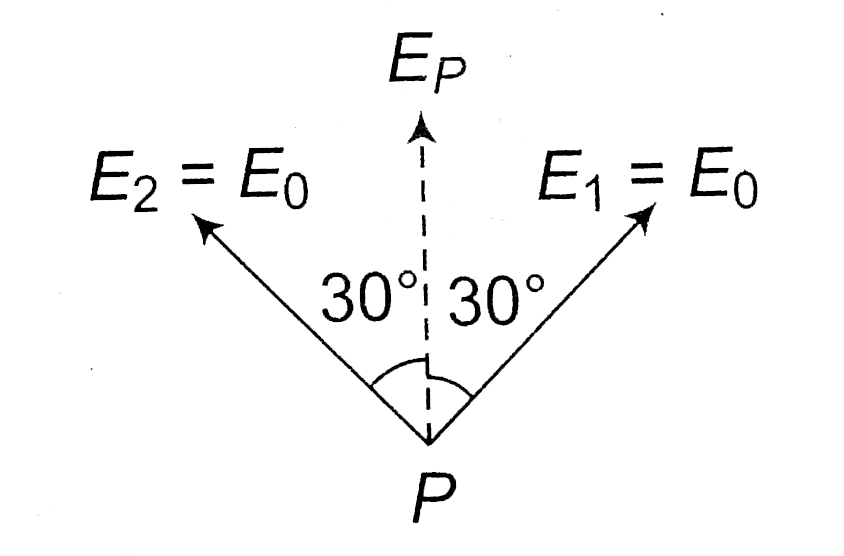 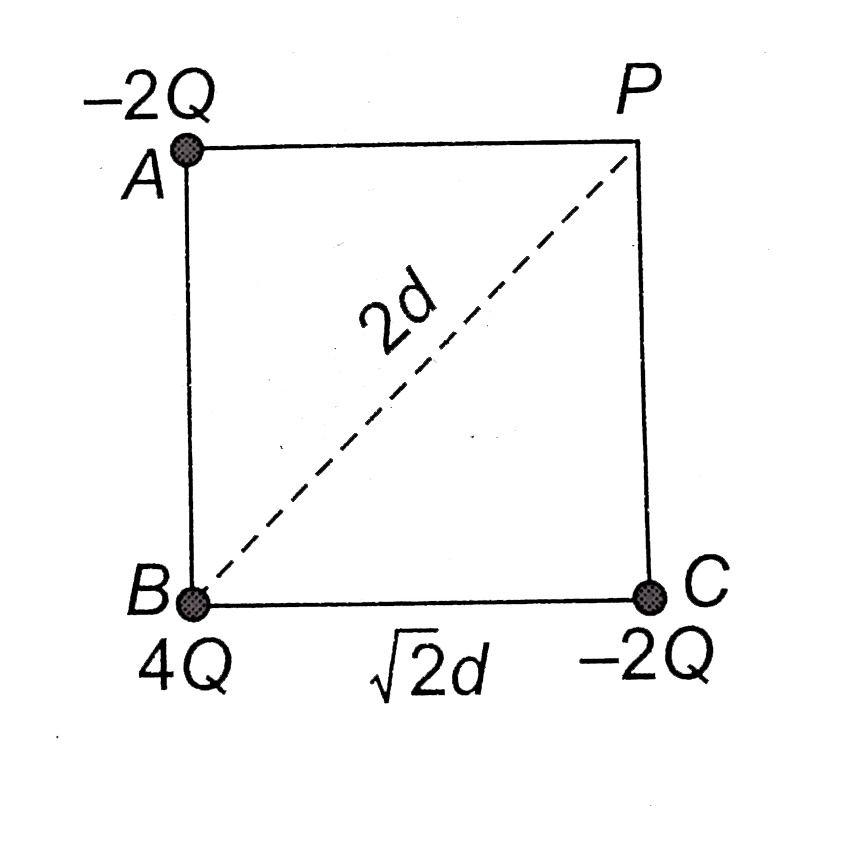 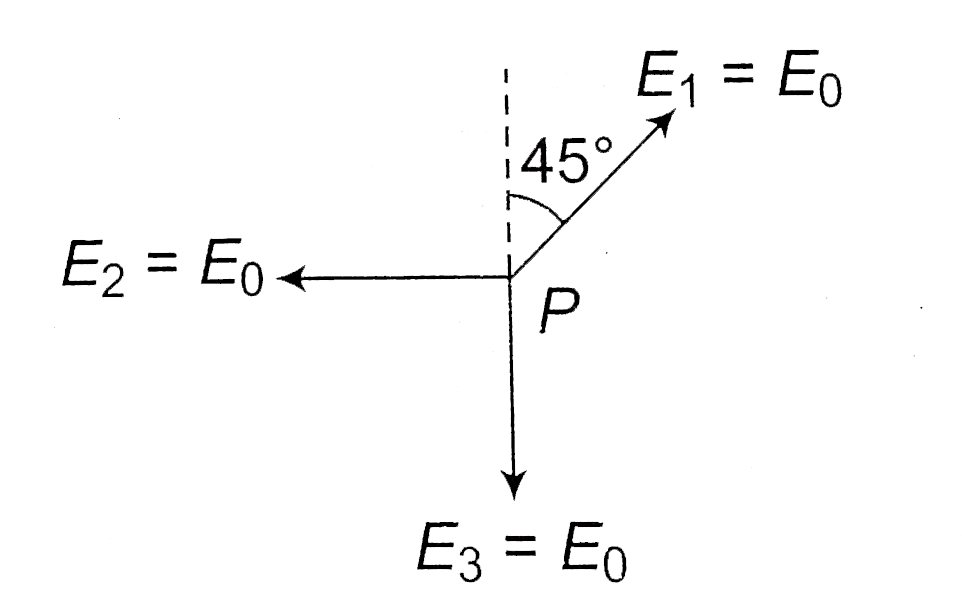 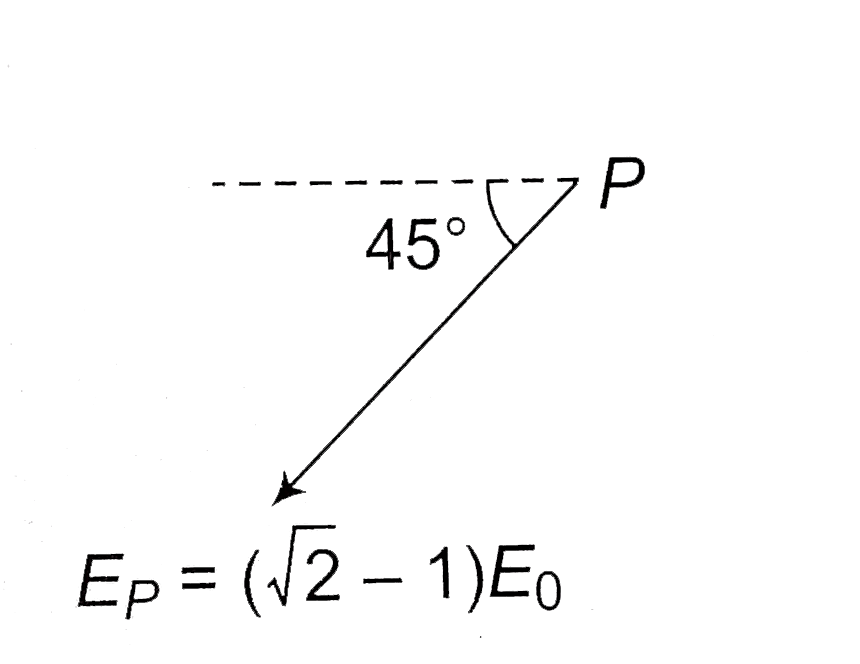 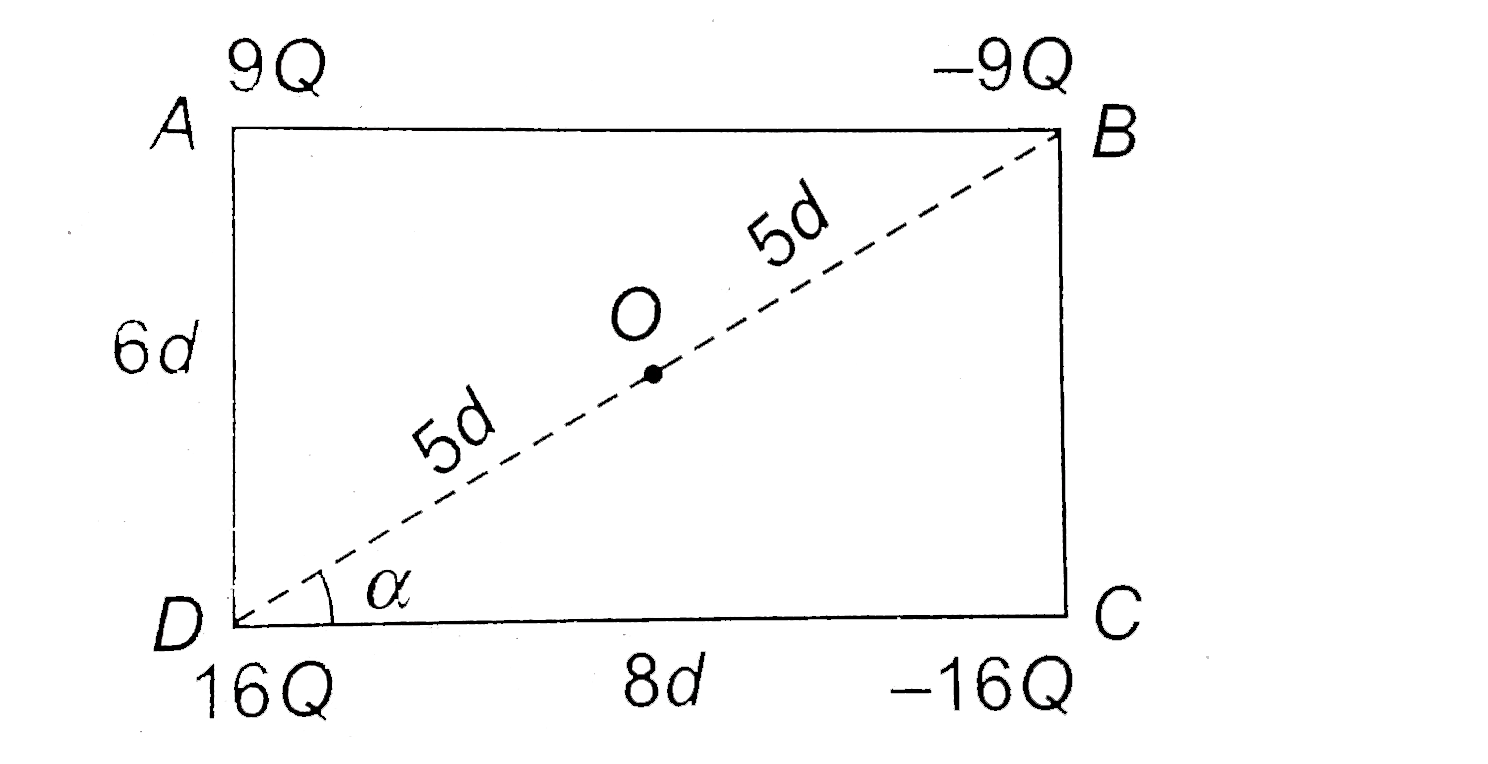  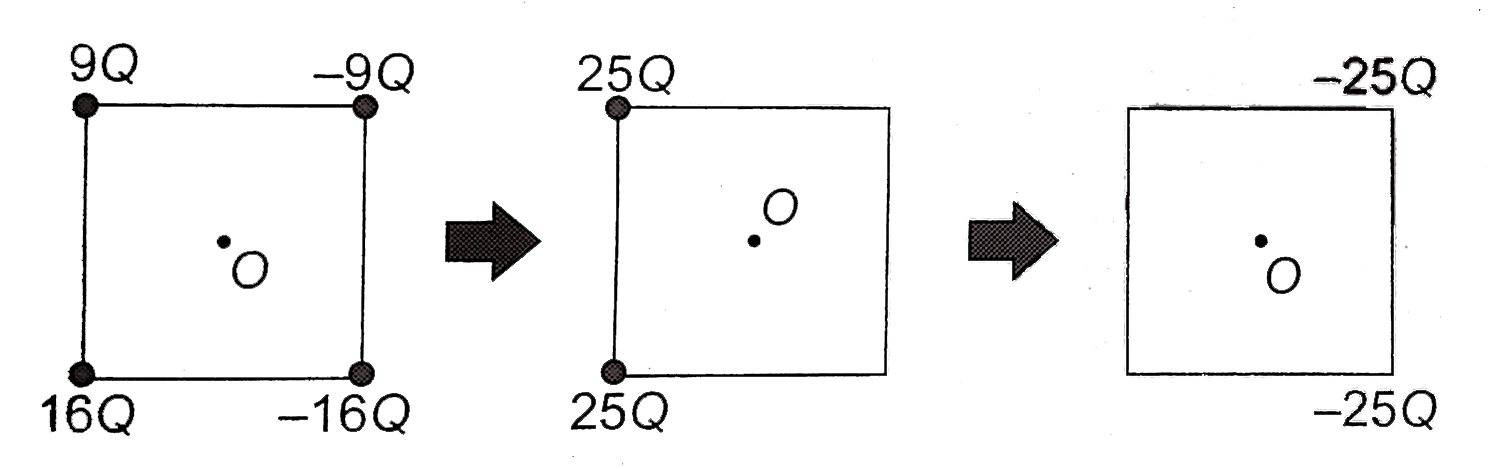 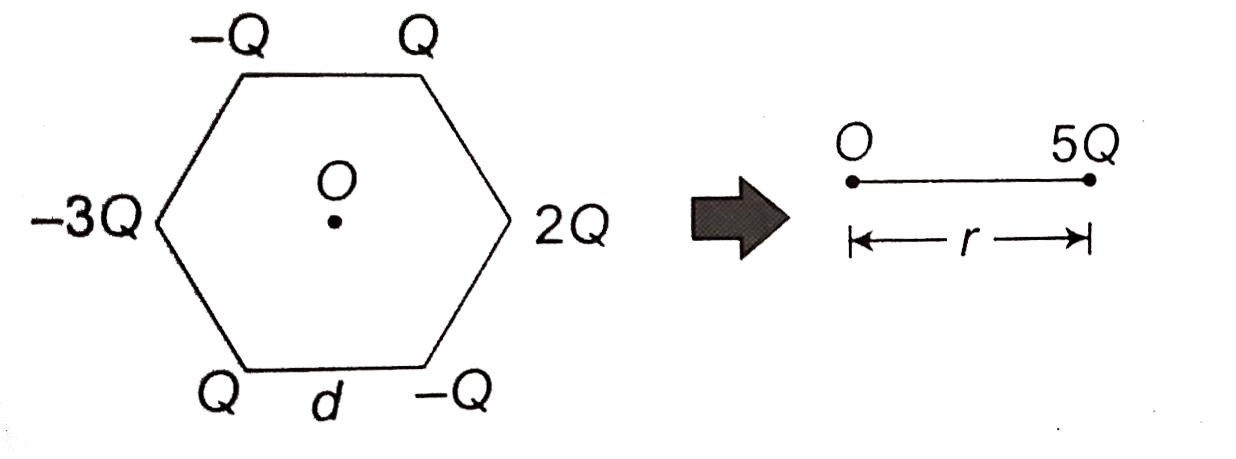
|
|