

Saved Bookmarks
| 1. |
Ethylene glycol, glycol (ethane-1,2-diol), the simplest glycol may be prepared by |
|
Answer» `(i),(ii)` (ii) `CH_(2)=CH_(2)+HOClrarrClCH_(2)CH_(2)OHoverset(aq.NaHCO_(3))(rarr)HOCH_(2)CH_(2)OH+NaCl+CO_(2)`We can ALSO boil ethlene chlorohydrin with milk of lime: 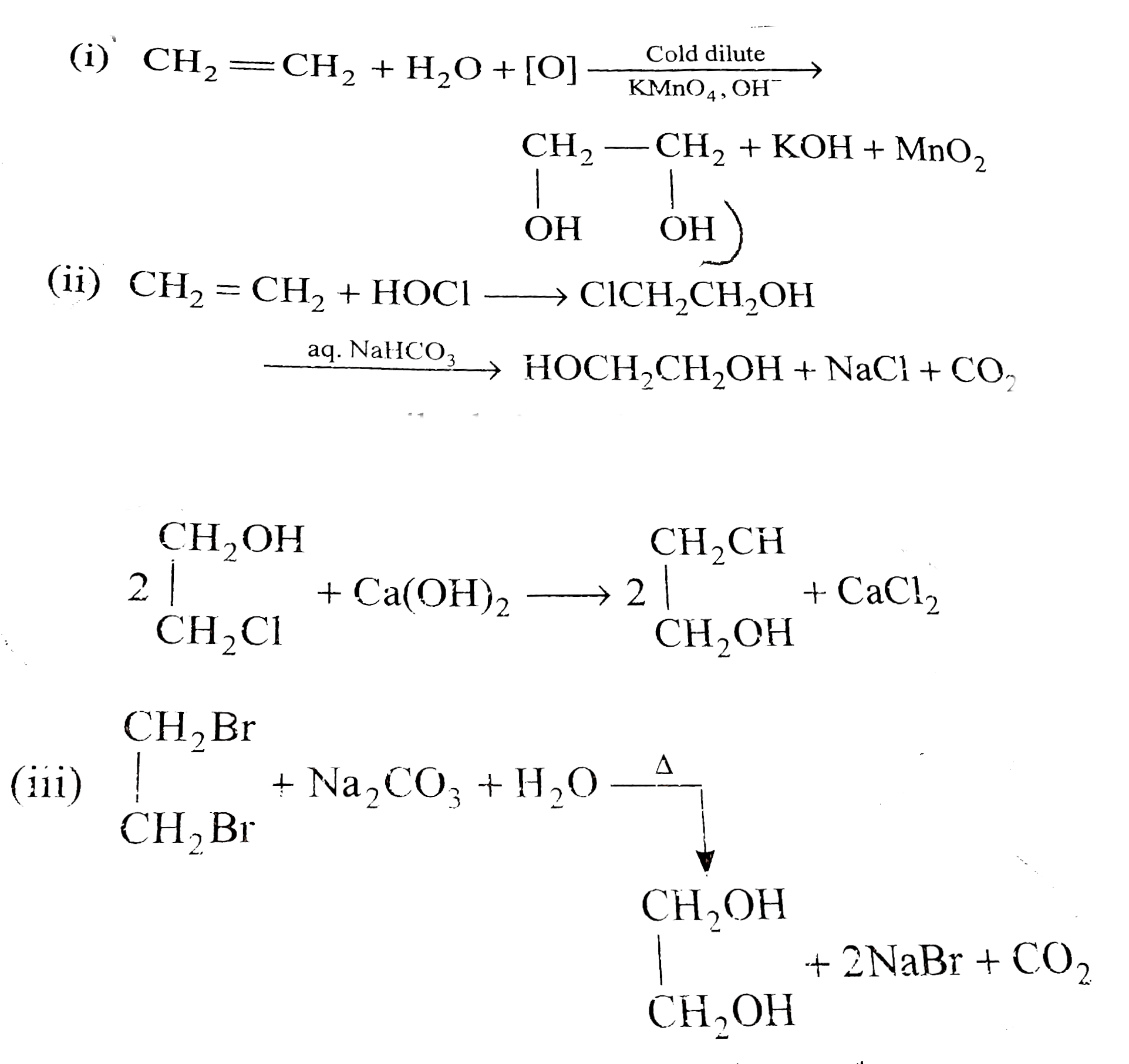 The low yield in this reaction is due to the conversion of some ethylene dibromide into vinyl BROMIDE: `BrCH_(2)CH_(2)Br+Na_(2)CO_(3)rarrCH_(2)=CHBr+NaBr+NaHCO_(3)` If aqueous sodium hydroxide is used instead of sodium carbonate, vinyl bromide is again obtained as a byproduct. the best yield of glycol is obtained by heating ethylene dibromide with potassium acetate in glacial acetic acid and subsequently hydrolysing the glycol diacetate with hydrogen chloride in methanolic solution `BrCH_(2)CH_(2)Br+2CH_(3)COOKrarrCH_(2)(OCOCH_(3))CH_(2)(OCOCH_(3))+2KBroverset(HCl)(rarr)HOCH_(2)CH_(2)OH` (iv) 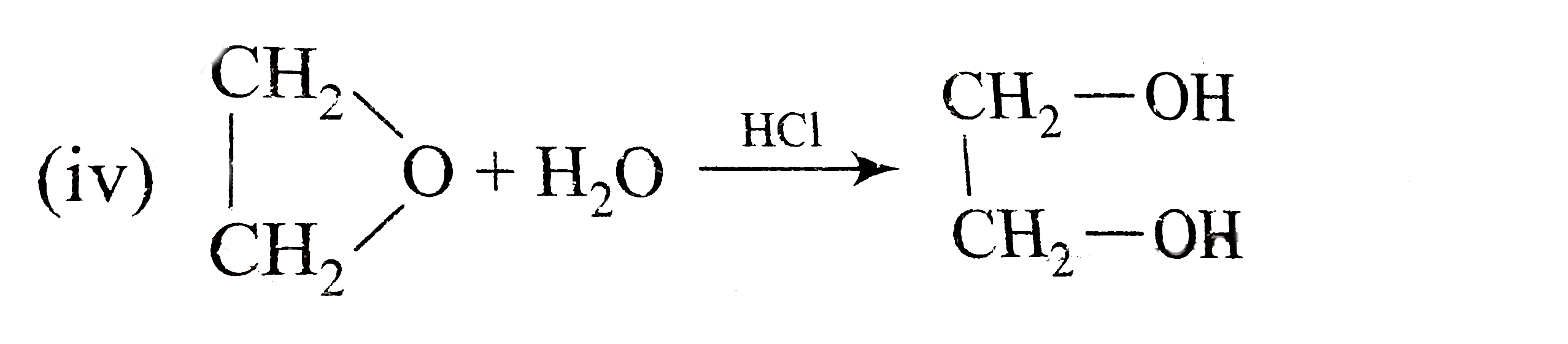 Ethylene oxide is made by passing ethylene andair over a silver catalyst at `300^(@)C`. Notice that glycol is prepared INDUSTRIALLY by this method and also by the CATALYTIC reduction of methyl glycollate: 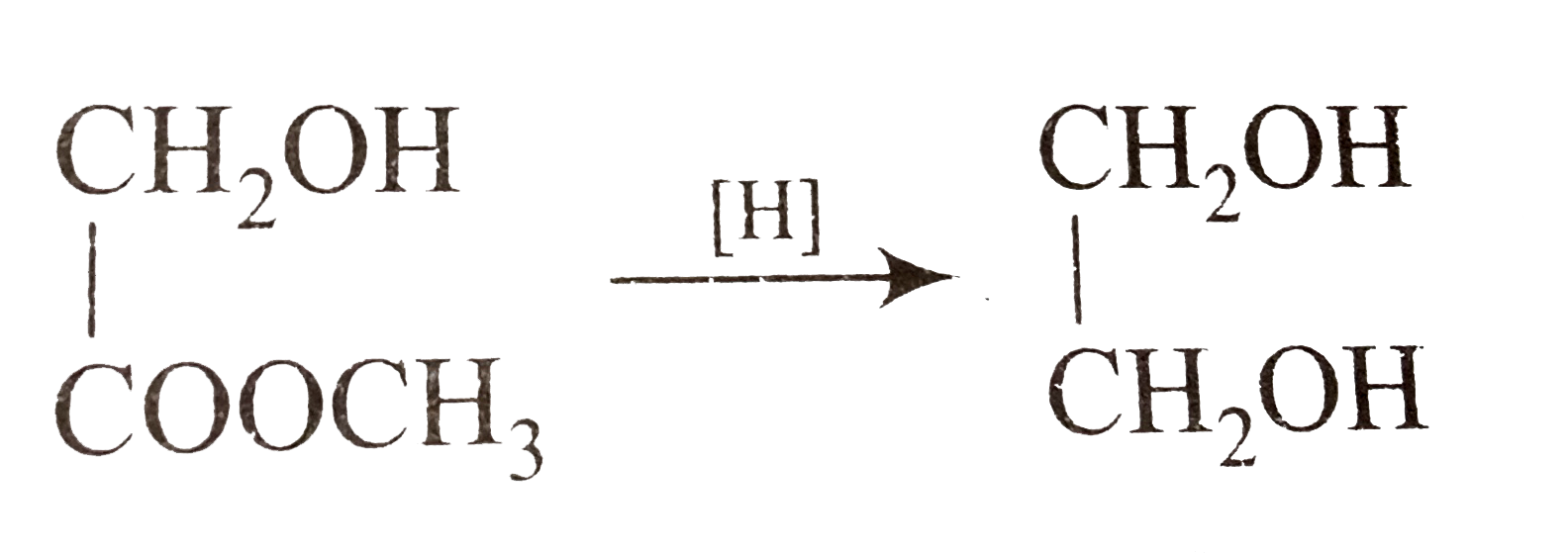 The first three methods are used for the laboratory preparation of glycol |
|