

Saved Bookmarks
| 1. |
Explain : a. Vinyl chloride is unreactive in nucliphillic 4- subsitution reactions. b. Neopenthyl bromideundergoes nucliphillic substituion reactionsvery slowly. c. 3- Bromocyclohexane is more reactive than 4- bromovyclohexane in hydrolysis with aqueous NaOH. d. ter- Butyl chloride reacts with aqueous sodium hydroxide by SN^(1) mechanishm while n- butuyl chloride reacts by SN^(2) medchanism. |
Answer» Solution :a. Vinylic and aryl halides are unreactive towards `SN` reactions due to the resonance EFFECTS. Resonanace gives rise to partial doublebondcharacterto the `(C-X)` bond, making stongerand, thereforemore diffcult to cleave than the`(c-X)` bondin `RX (R_(sp^(3))- X)` bond. It also reduces te polarity of the `(c_X)` bond and, therefore, the heterolytic cleavage of `(C-X)` bond is DIFFICULT. 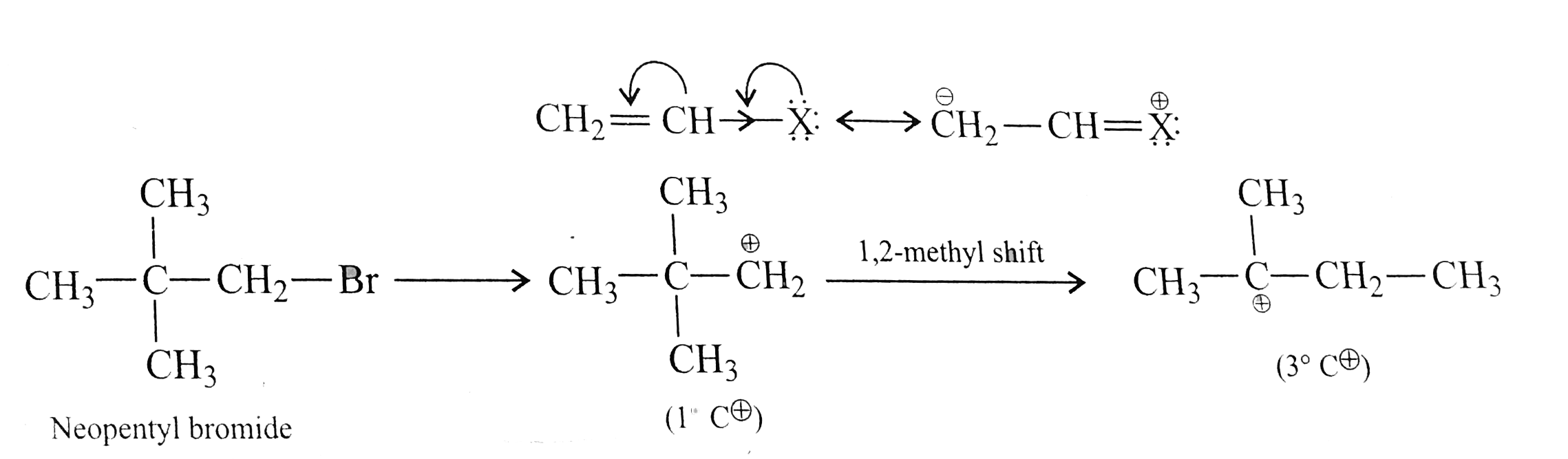 Neopentyl bromide gies `(1^(@) C^(o+))` which can rearrangeto `3^(@) C^(o+)` by `1.2`, methyl shift, but is sterically hindered and so `SN` reaction TAKES placeslowly. C. 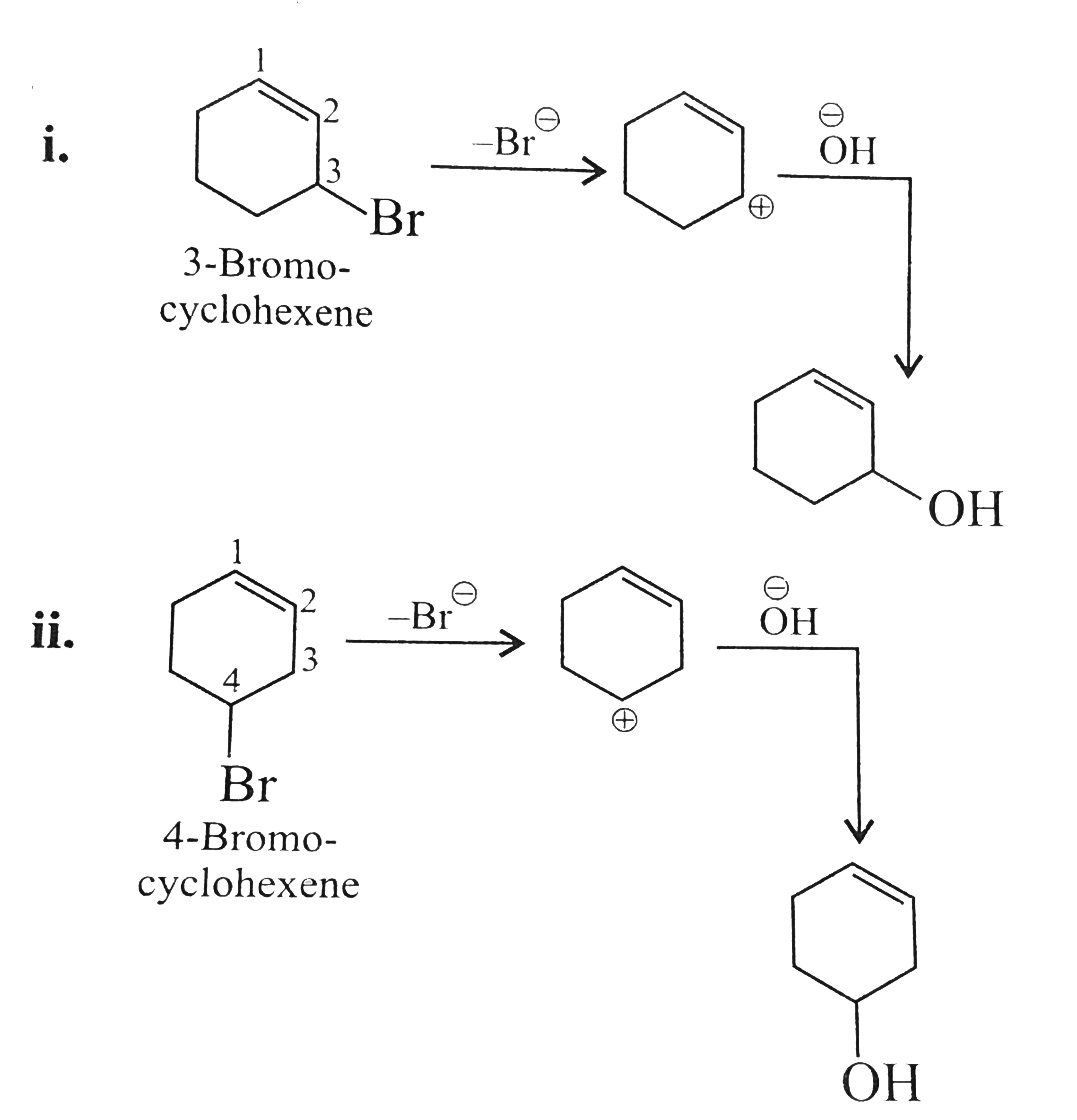 (i) gives allylic carbocation, while (ii) gives `2^(@)C^(o+)` and allylic `C^(o+)` is more stable than `2^(@) C^(o+)`. So (i) more reactive than (ii) in hydrolysis with aq. `NAOH`. 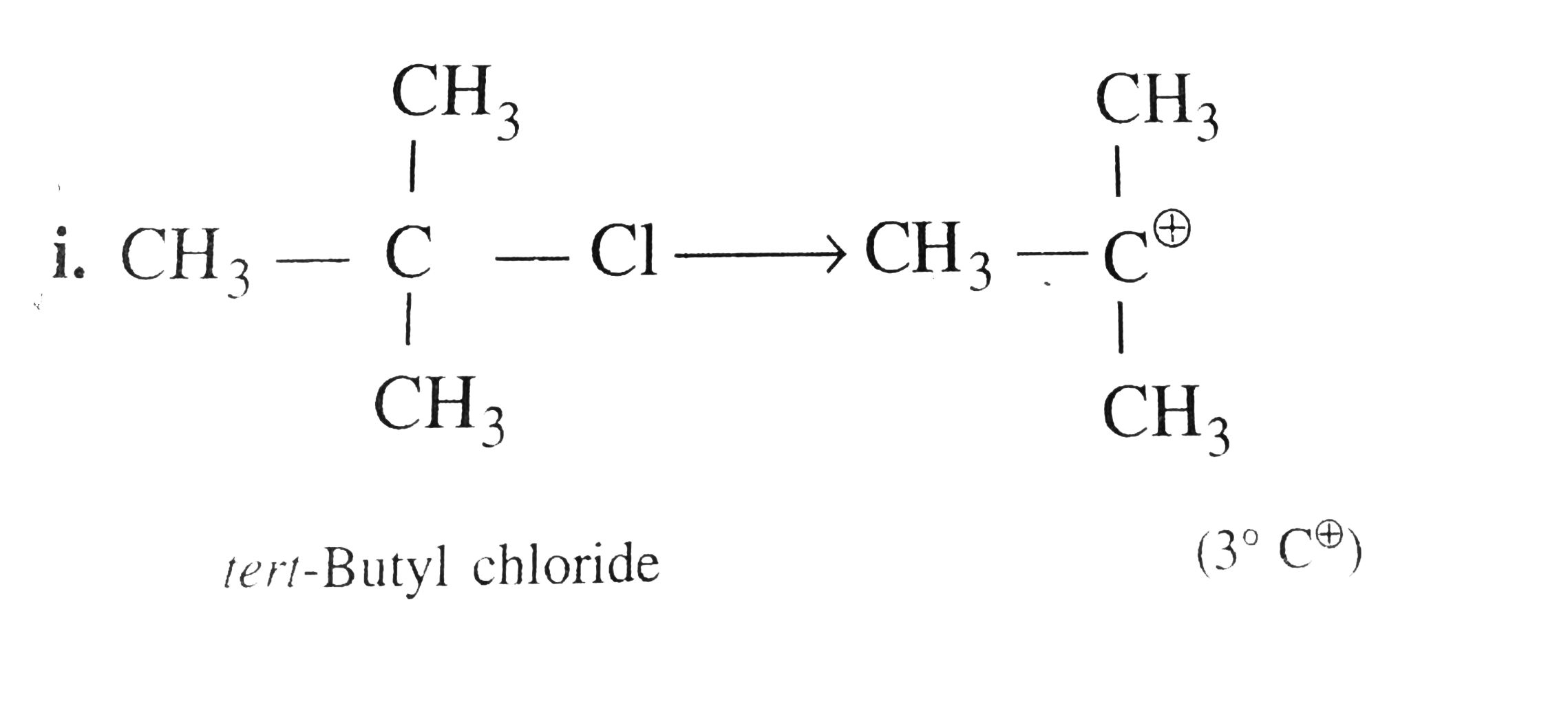 ii. `CH_(3) CH_(2) CH_(2) CH_(2) Cl rarrCH_(3) underset((1^(@) C^(o+)))(CH_(2) CH_(2)) overset(o+)(CH_(2))` Reactivity of `SN^(1)` reaction is `3^(@)C^(o+) gt 2^(@) C^(o+) gt 1^(@) C^(o+)` and reactivity of `SN^(2)` reaction is `1^(@)C^(o+) gt 2^(@)C^(o+) gt 3^(@)C^(o+)` . So (i) reacts with aq. `NaOH` by `SN^(1)` mechanism because it gives `3^(@) C^(o+)`, while (ii) undergoesby `SN^(2)` reaction becuase it gives`1^(@)C^(o+)`, ions. |
|