

Saved Bookmarks
| 1. |
Explain, using suitable digrams, the formation of standingwaves in a closed pipe.How may this be used to determine the frequency of a source of sound ? |
|
Answer» Solution :Formation of standing waves in a closed pipe `:` (1) In closed pipe one and the other end is open.So antinode is formed atopen end and antinode is formedat closed end. (2) The possible HARMONICS in vibrating air column in a closedpipe `v = (( 2n+a)upsilon)/(4l)`where v = 0,1,2,3,....... (3) In first normalmode of vibrating aircolumn in a closed pipe , `v_(1) =(v)/(4l)` [ first harmonic ( or )fundamental frequency ] (4)In a second normal mode of vibrating air column in a closed pipe, `v_(3) = ( 3v)/( 4l) ` [ Third harmonic (or) first overtone ] (5) In thrid normal mode ofvibrating air column in a closed pipe, `v_(5)=( 5v)/(4l) ` [ FIfth harmonic( or ) second overtone ] 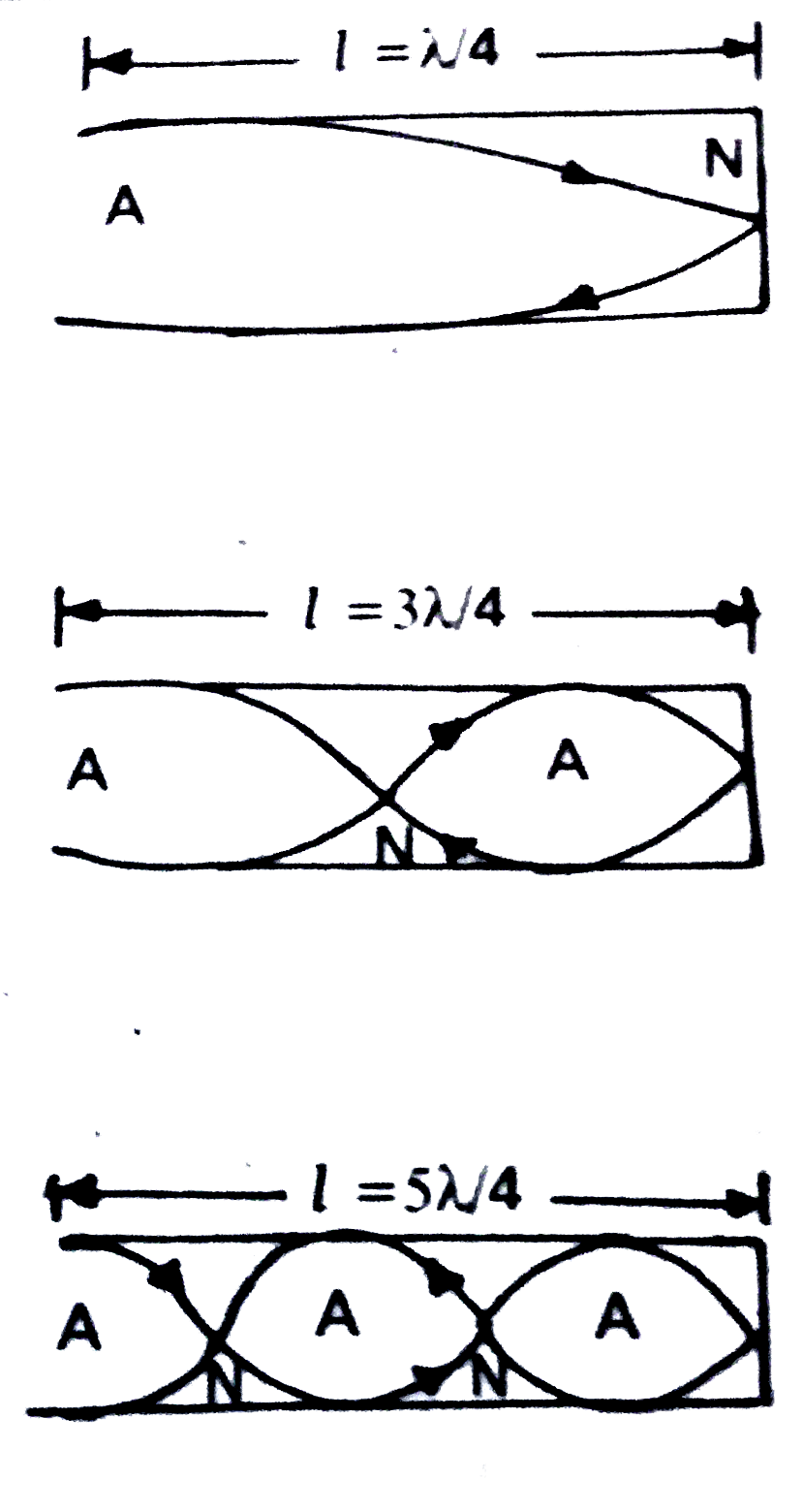 Determination of frequency of a SOURCE of sound `:` (1) The vibrating fork ofunknown frequency (v) is placed above theopen end of the tube. 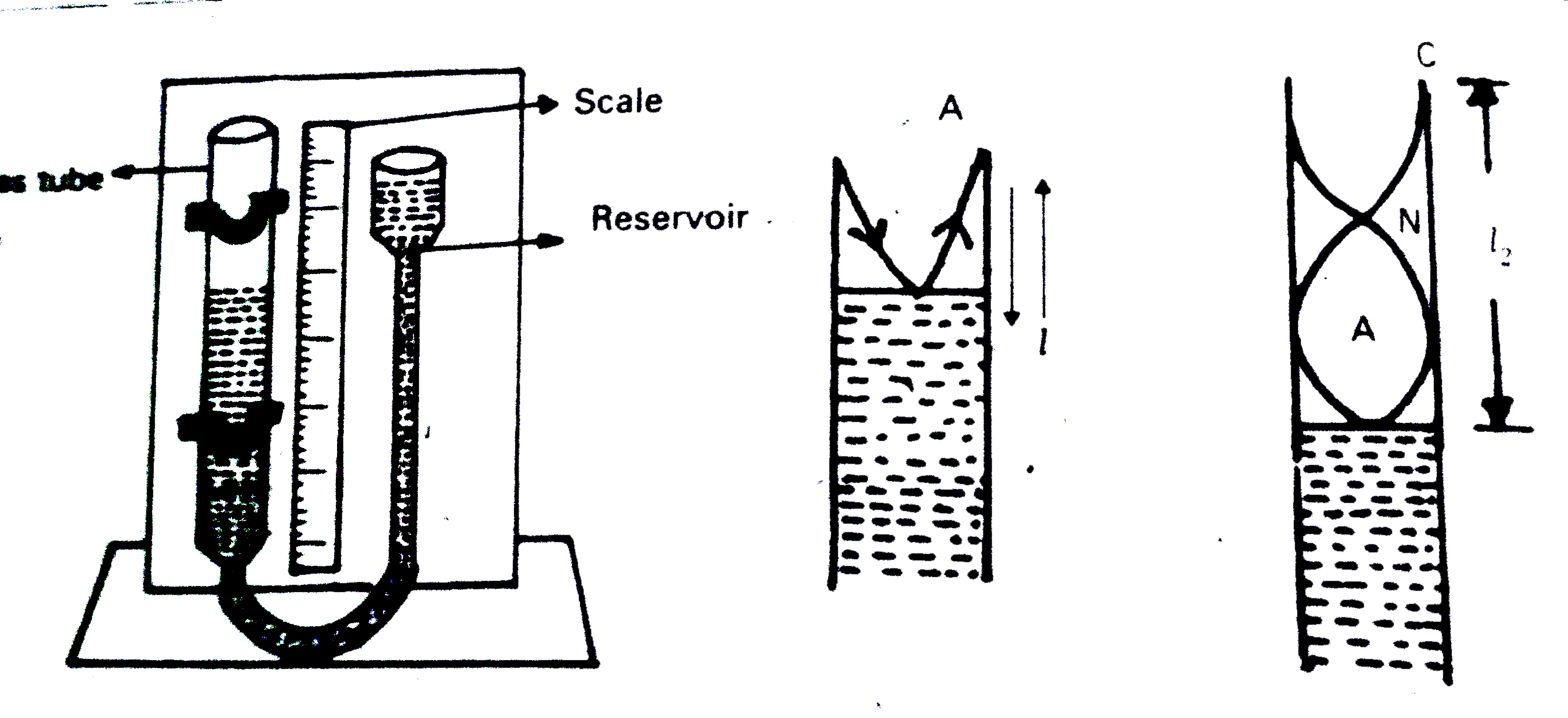 (2) Reservoir is slowly lowered, until a large booming sound is heard.Measure 1st resonating air column length `l_(1)`. (3) Further lower the reservoir, untl second timer a large booming sound s heard. Measure`2^(nd)` resonating air column length `l_(2)`. (4) VELOCITY of a waveat `0^(@) C `is `v =331m//s`. (5) By KNOWING `v, l_(1)` and `l_(2)` we can find unknown frequency of a tunning fork using `v=(v)/(2 ( l_(2) - l_(1)))` |
|