

Saved Bookmarks
| 1. |
Give the decreasing order of therelative reactivity towards SE reaction of the following compounds. a. I. Benzene, II. Phenol, III. Aniline, IV. Chlorobenzene b. I. Acetannilide, II. Aniline, III. Acetep[jempme, IV. Benzene. c. I. 1,3- Dimryhyl benzene, II. 1,4- Dimenthyl-benzene, III. Tolune, IV. Trimehtyl benzene, V. 1,3,5- Trimethtyl benzene d. I. p- Mehtyl benzoic acid, II. Terephtalic acid, III. p- Xylene, IV. Toluene. e. I. Benzene, II. Toulene, III. p-Nitrotoulene, IV. m- Nitroluence, V. Benzence g. I. Flurobenzene, II. Chlorobenzene, III. Bromobenzene, IV. Iodobenzene h. I. p- Nitrochlorobenze II. Chlorobenzene, III. 2.4- Dintrochlorobenzene |
|
Answer» Solution :a. `(III) gt (II) gt (I) gt (IV) (PhNH_(2) gt PhOH gt PHH gt Ph-Cl)` Reactiving of `- NH_(2) gt -OH gt -H gt -C,` b. `(II) gt (I) gt (IV) gt (III)` 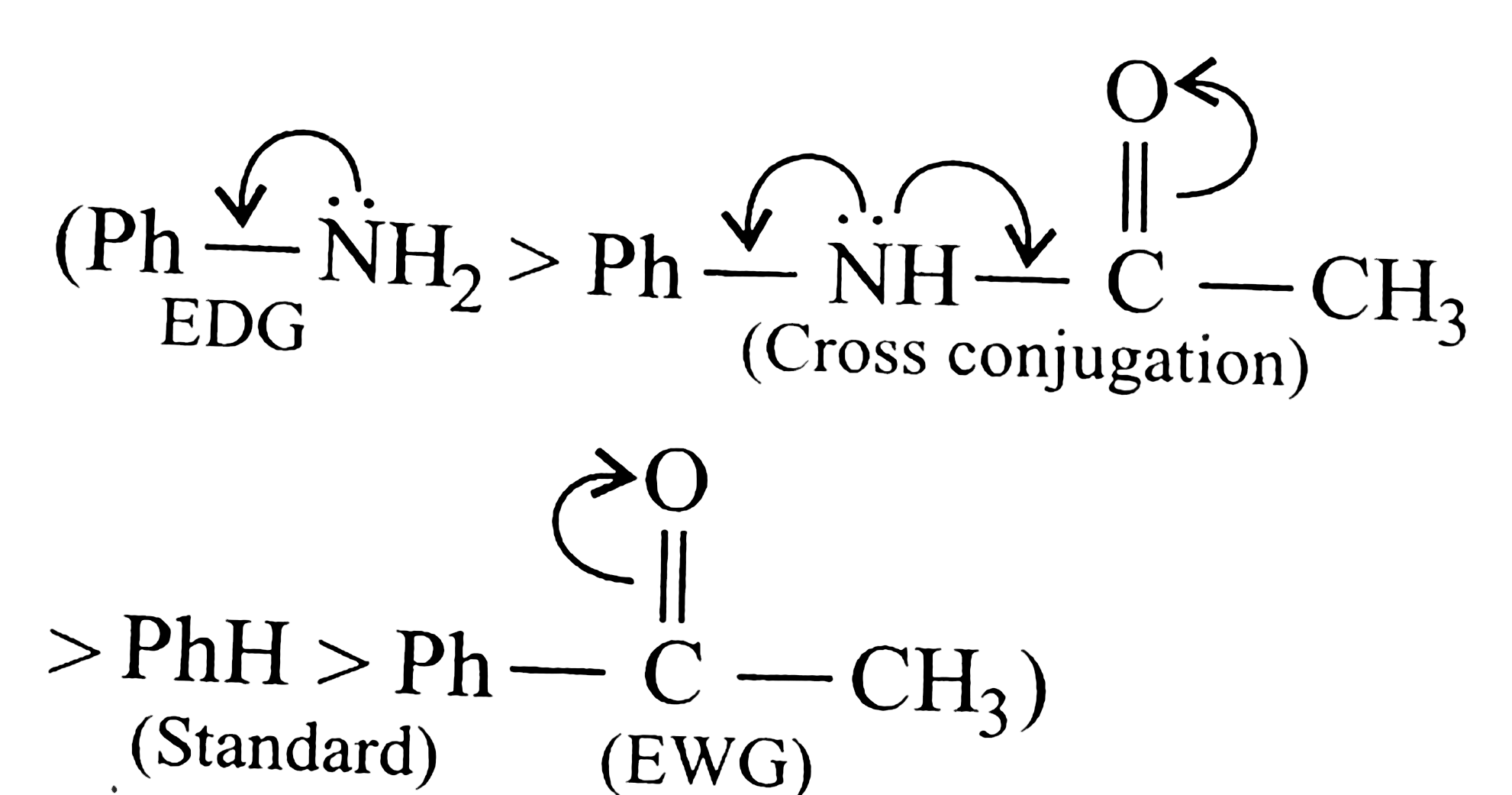 c. `(V) gt (II) gt (I) gt (III) gt (IV)` c. `(V) gt (II) gt (I) gt (III) gt (IV)` 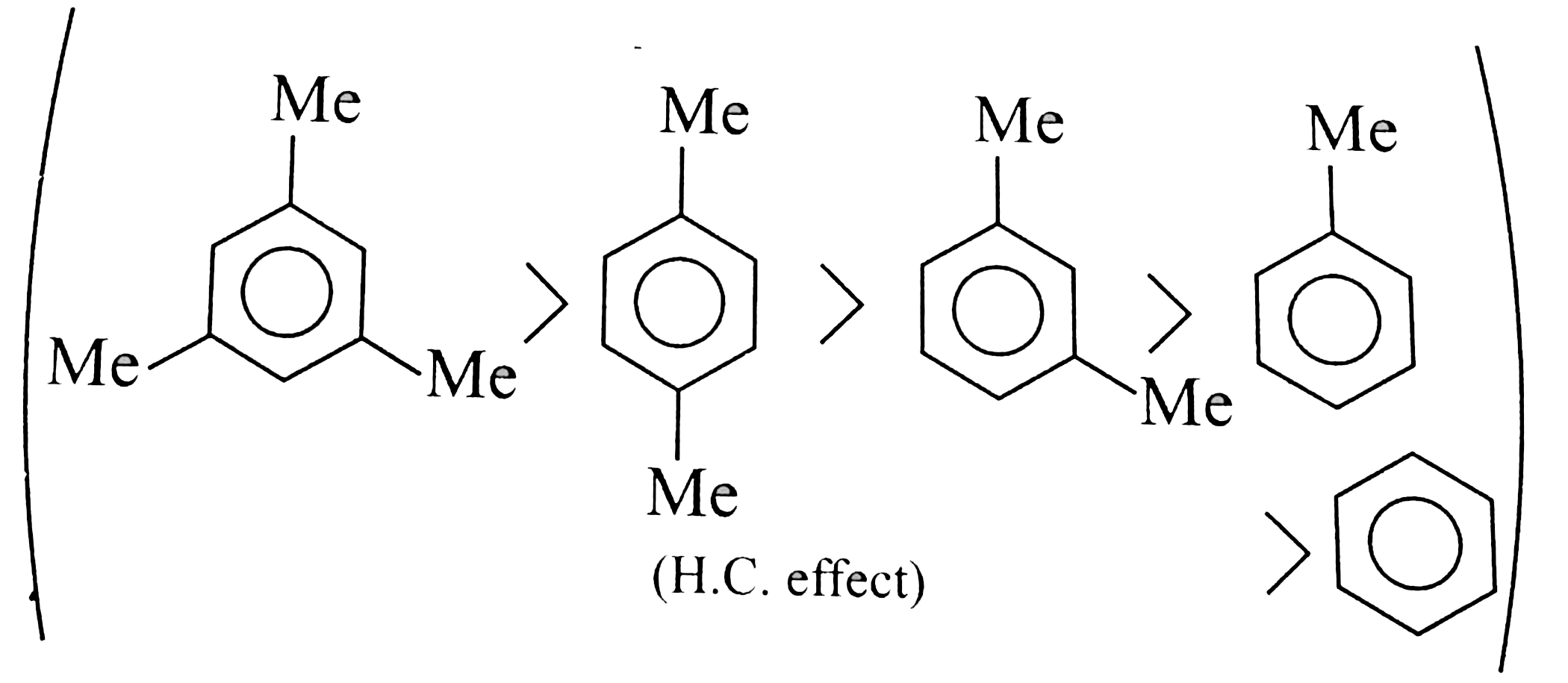 d. `(III) gt (IV) gt (I) gt (II)` 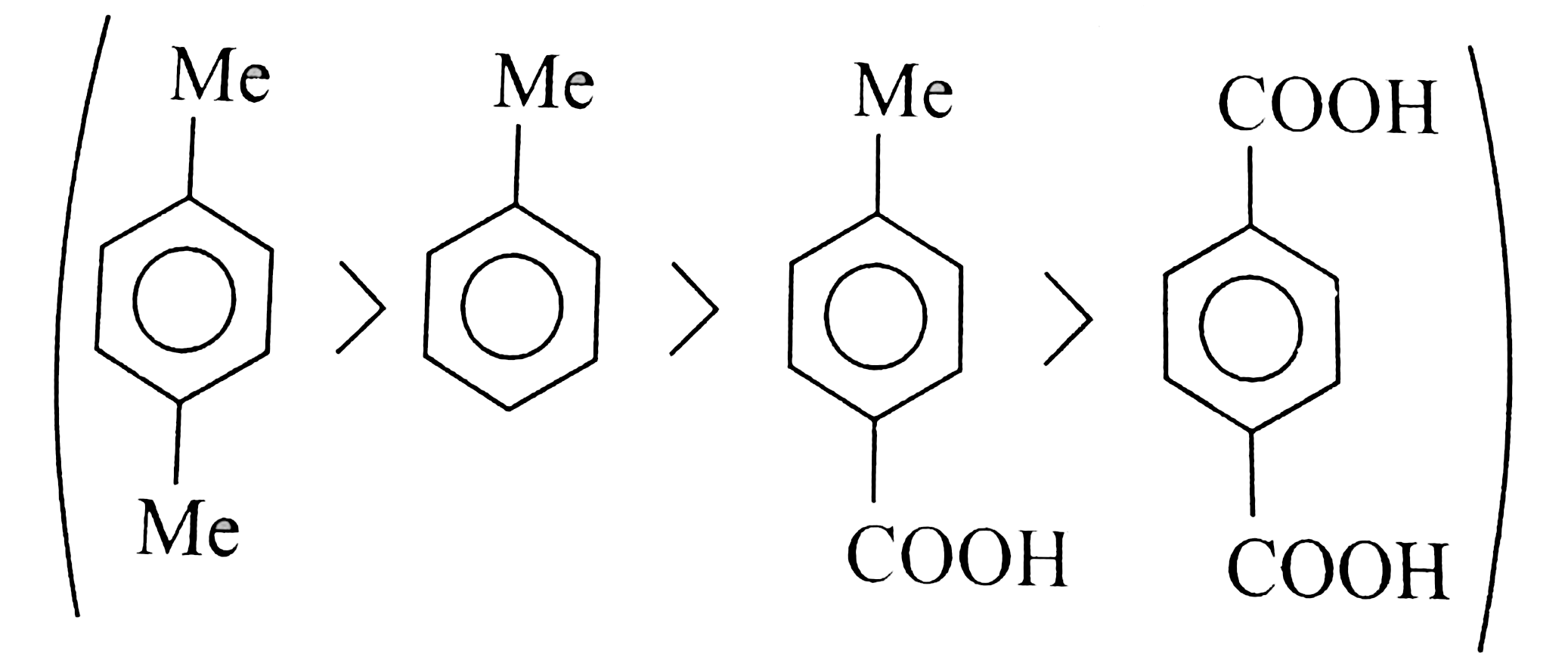 e. `(II) gt (III) gt (IV) gt (V) gt (I)` 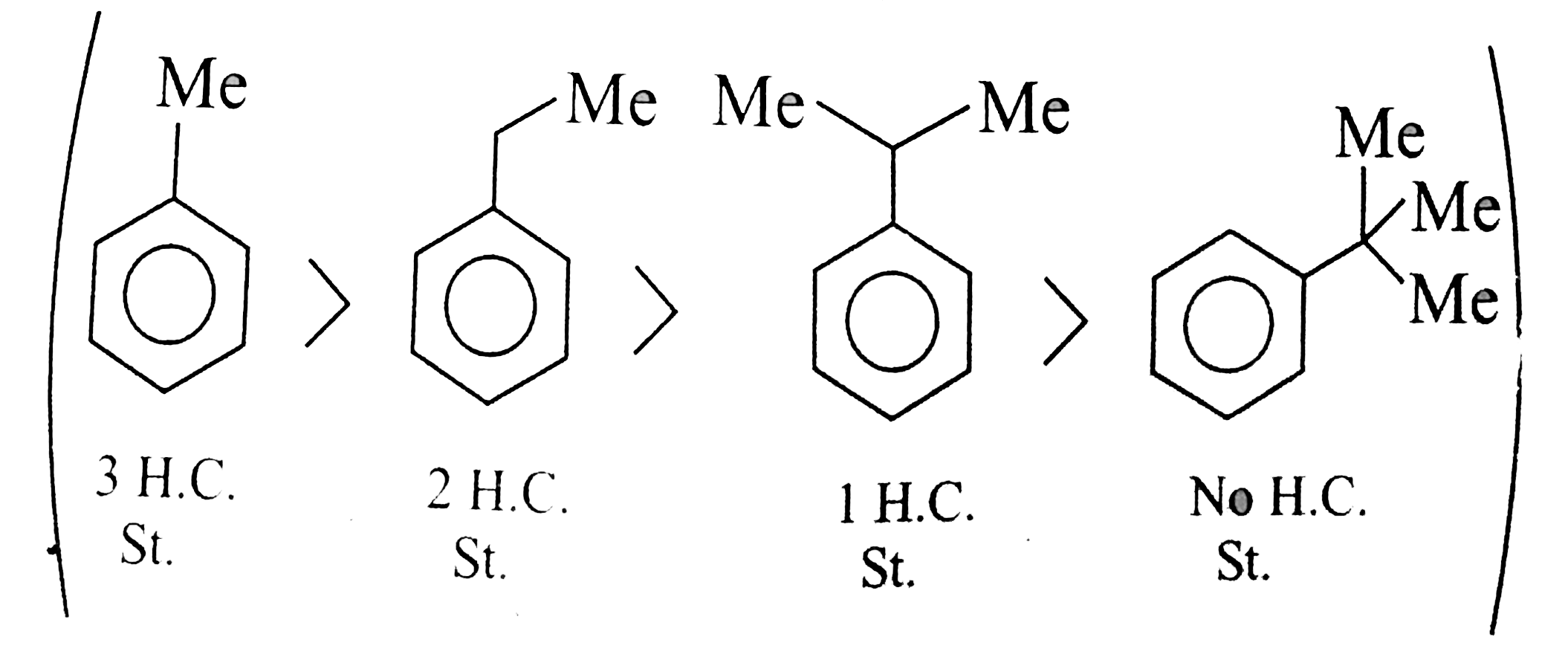 f. `(I) gt (II) gt (V) gt (IV) gt (III)` 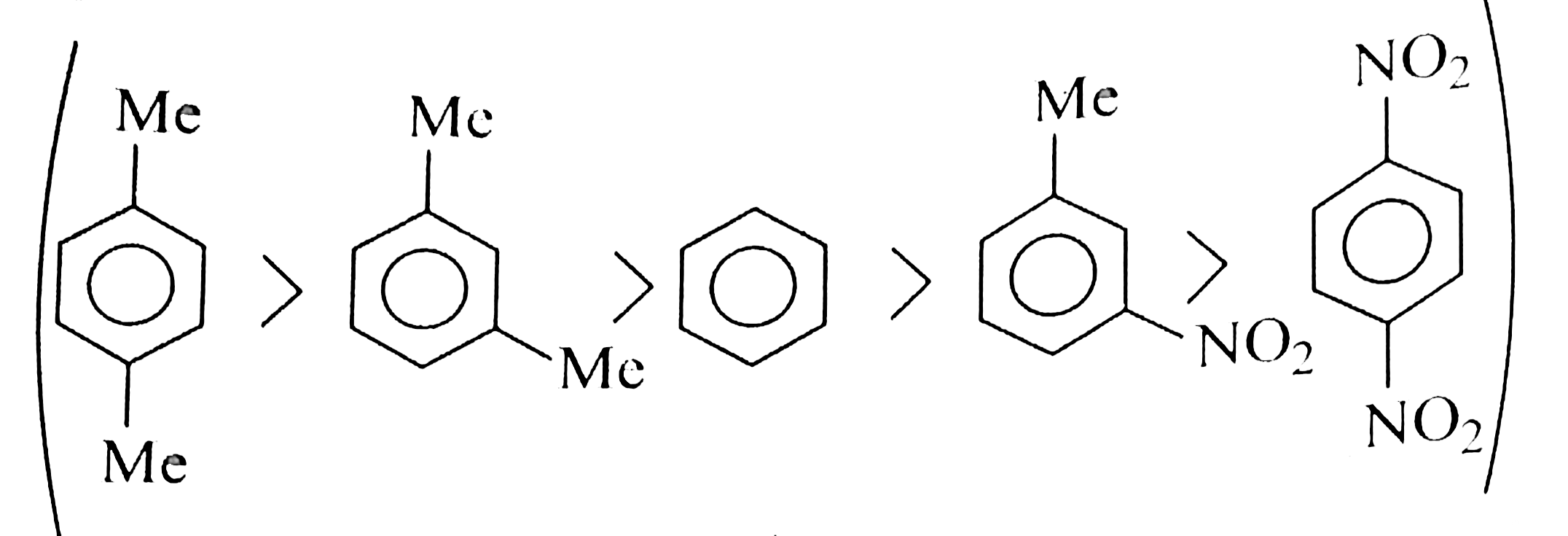 Explanation: Hyperconjugative effect is stronger at `o-` adnd p-` positions than at `m-` position. So, the reactivity of ``(I) gt (II). overline(e)` withdrawingby resonance of `(-NO_(2))` is stronger at `o-` and `p-` positons than at `m-` positon. The deactivating effect is more at `o-` and `p-` positons, so the reactivity of `(IV) gt (III). Explanation: Hyperconjugative effect is stronger at `o-` adnd p-` positions than at `m-` position. So, the reactivity of ``(I) gt (II). overline(e)` withdrawingby resonance of `(-NO_(2))` is stronger at `o-` and `p-` positons than at `m-` positon. The deactivating effect is more at `o-` and `p-` positons, so the reactivity of `(IV) gt (III). g. `(IV) gt (III) gt (II) gt (I) (ph - Br gt PhCl gt Phf)` Reactivity at `I gt Br gt Cl gt F` (both `-I` and `+R` EFFECTS) [ILLUSTRATION `11.18 (f)`]. h.`(II) gt (I) gt (III)` 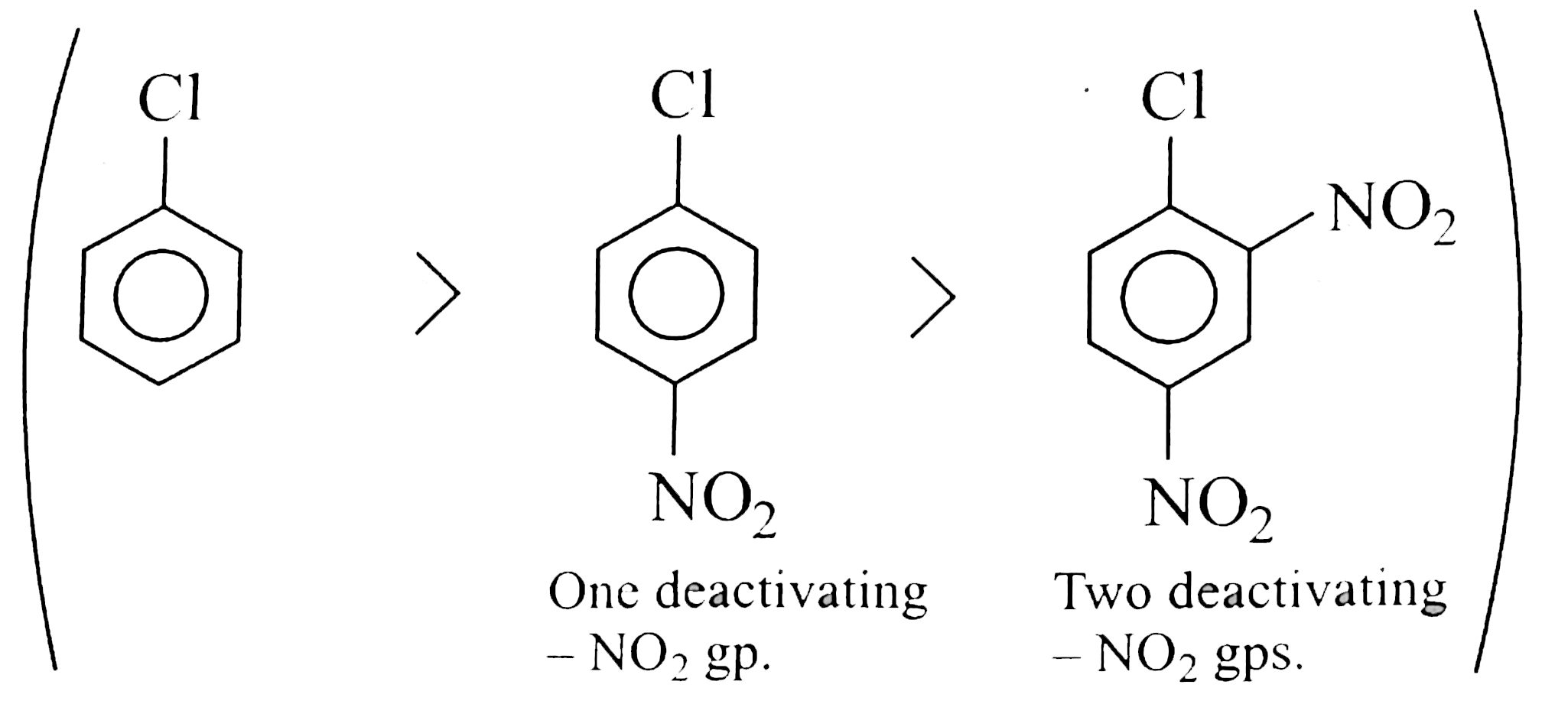
|
|