

Saved Bookmarks
| 1. |
Give the products of the following: i. Benzene + Cylohexanol (BF_(3), 60^(@)C) ii. Benzene + CH_(2) = CHCH_(2)Cl (ZnCl_(2)) and H_(2)SO_(4) iii. Benzene + Ethylene oxide + AlCk_(3) iv. Benzene + CH_(2)Cl_(2) + alCl_(3) rarr (A) (B) overset(C_(6)H_(6) + AlCl_(3)|)(larr) v. Benzene + ClCH_(2)CH_(2)Cl + AlCl_(3) rarr (C) (D) overset(C_(6)H_(6)+ AlCl_(3)|)(larr) vi. Benzene + Phosgene (COCl_(2)) overset(AlCl_(3))(rarr) (E) overset(H_(3)O^(o+))(rarr) (F) vii. Toulene + Maloncianthydride overset(AlCL_(5)(rarr) (A) underset(H_(3)PO_(4))(rarr) (B) underset(HCl) overset(Zn-Hg)(rarr) (C) viii. Explain how alkyl benzene naphalene, anthracene and phenanthrene can bedistinguished form one another F.C. reaction ? |
Answer» Solution :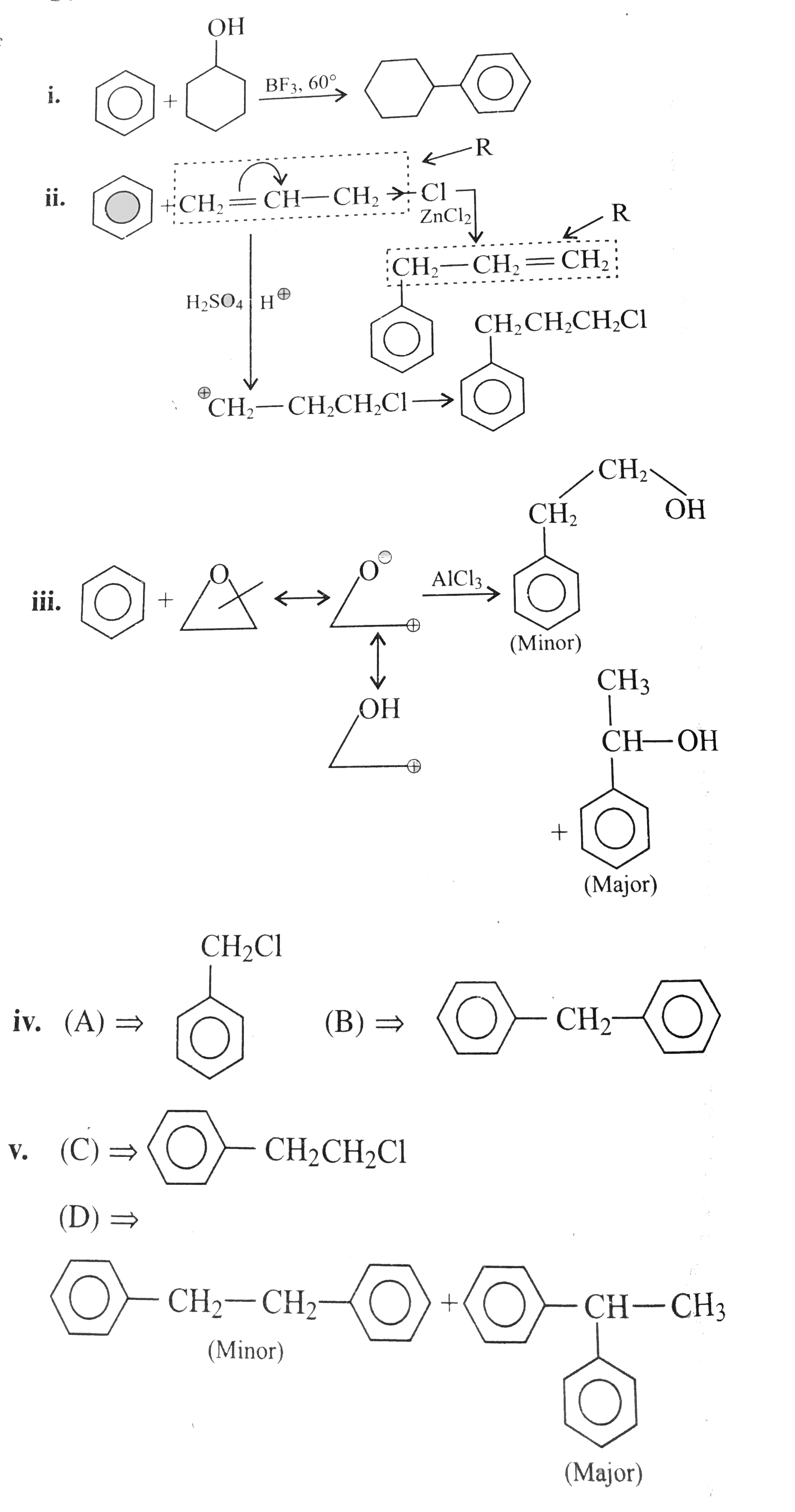 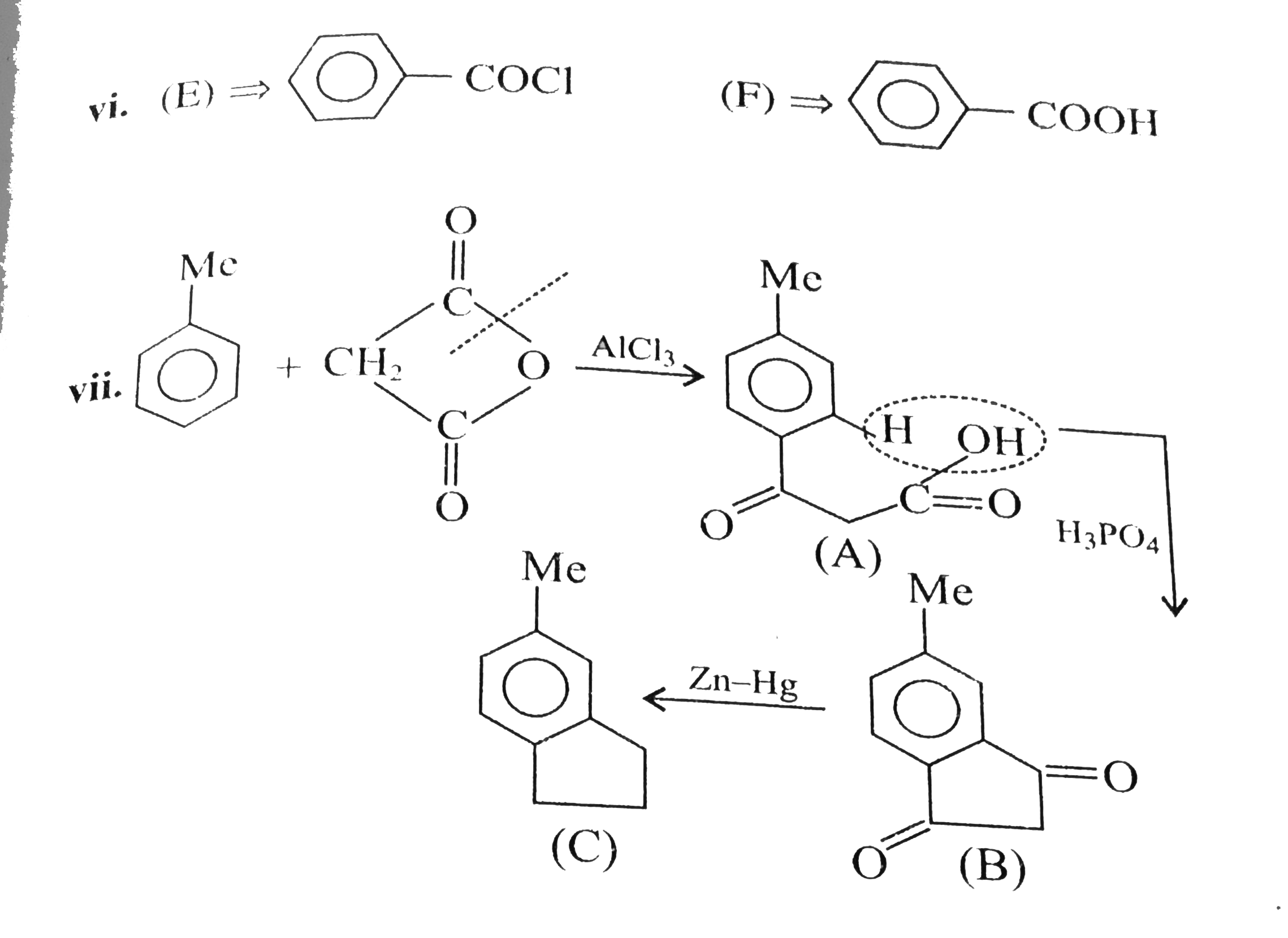 VIII. Any aromatic compound that can be alkylated in `F.C`. Reaction gives a DISTINCTIVE colour when treated with `CHCl_(3) + AlCl_(3)`. The colouris due to the formation of `Ar_(3)C^(o+)AlCl_(4)^(o+)`. as sjpwm. 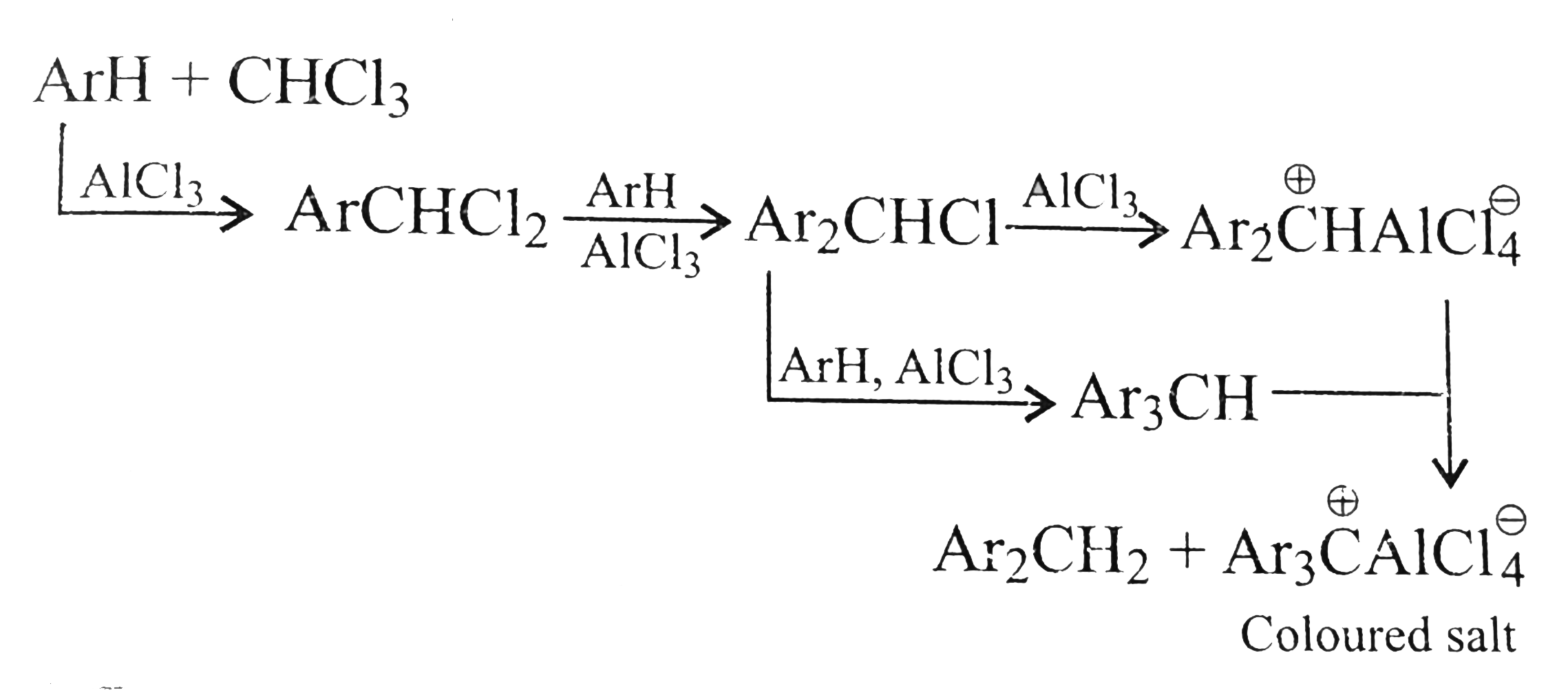 Benzene derivaties give an orange to RED colour, naphalenes give bluwe anthrancenes givegreen, and phenantheres give PURPLE. |
|