

Saved Bookmarks
| 1. |
How did Einstein'sphotoelectric equationexplain the effect of intensity and potentialincidenton photoelectric current ? Howdid thiseqaution accountfor the effectof frequencyof incident light on stopping potential? |
|
Answer» Solution :(1) Einstein postulated that a beam of light consists of small energy packets called PHOTONS or quanta. (2 ) The energy of photon is E = hv . Where ' h 'is PLANCK's constant , v is frequency of incident light ( or RADIATION ). (3 ) If the absorbed energy of photon is greaterthan the work function `(phi_(0) = hv_(0))` , the electron is emitted with maximum kinetic energy i.e,` K_("max") = 1/2 mv_("max")^(2) = eV_(0) = hv - phi _(0)`. Thisequationis KNOWN as Einstein's photoelectric equation . (4) Effect of intensity of light on photoelectric current : When the intensity (I) of incident light , with frequencygreaterthan the threshold frequency`(v_(0)gt v_(0))` is increased then the number of photoelectrons emitted decreases i.e the value ofphotoelectric current (i) increases ie. `i prop I`. , (5 ) On increasing the positive potential on collectingelectrode , the photoelectric current increases. At a particular positive potential , the photocurrentbecomes maximum which is known as saturated current . (ii) On increasing the value of negative potentialthe value of photoelectric current becomes zero. This is known as stopping potential `(v_(0))` (iii) Stopping potentialdoes not depend on the intensity of incident light . On increasing intensity ,the value of saturated current increases, whereas the stopping potential remains unchanged. (6) The effect of frequency of incident radiation on stopping potential : On increasing the frequency of incidentlight, the value of stopping potential goes on increasinggradually as shown in fig . That means `k_("max")` increases `eV_(0)`also increases . (7) From the graph , we note that (i) For a given photosensitive metal , the cut off potential `(v_(0))`varies linearly with the frequency of the incident rediation . (ii) For a given photosensitive metal, there is a certain minimum cut off frequency `v_(0)` (called threshold frequency ) for which the stopping potential is zero . (8)From the graph we note that , (i) The value of cut - off potential is different for radiation of different frequency . The value of stopping potentialis more negative for radiationof higherincident frequency . ( 9) From above experiments , it is found that , if the incident radiation is of higher frequency than THATOF threshold frequency , the photoelectric emission is possible . 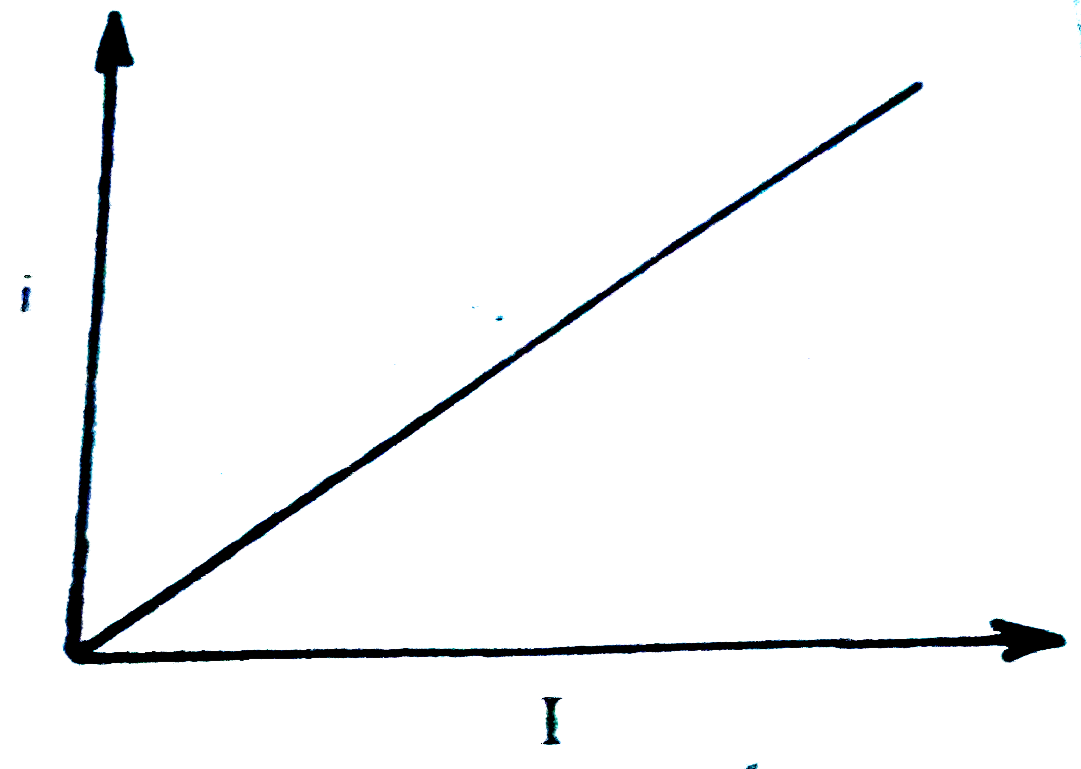 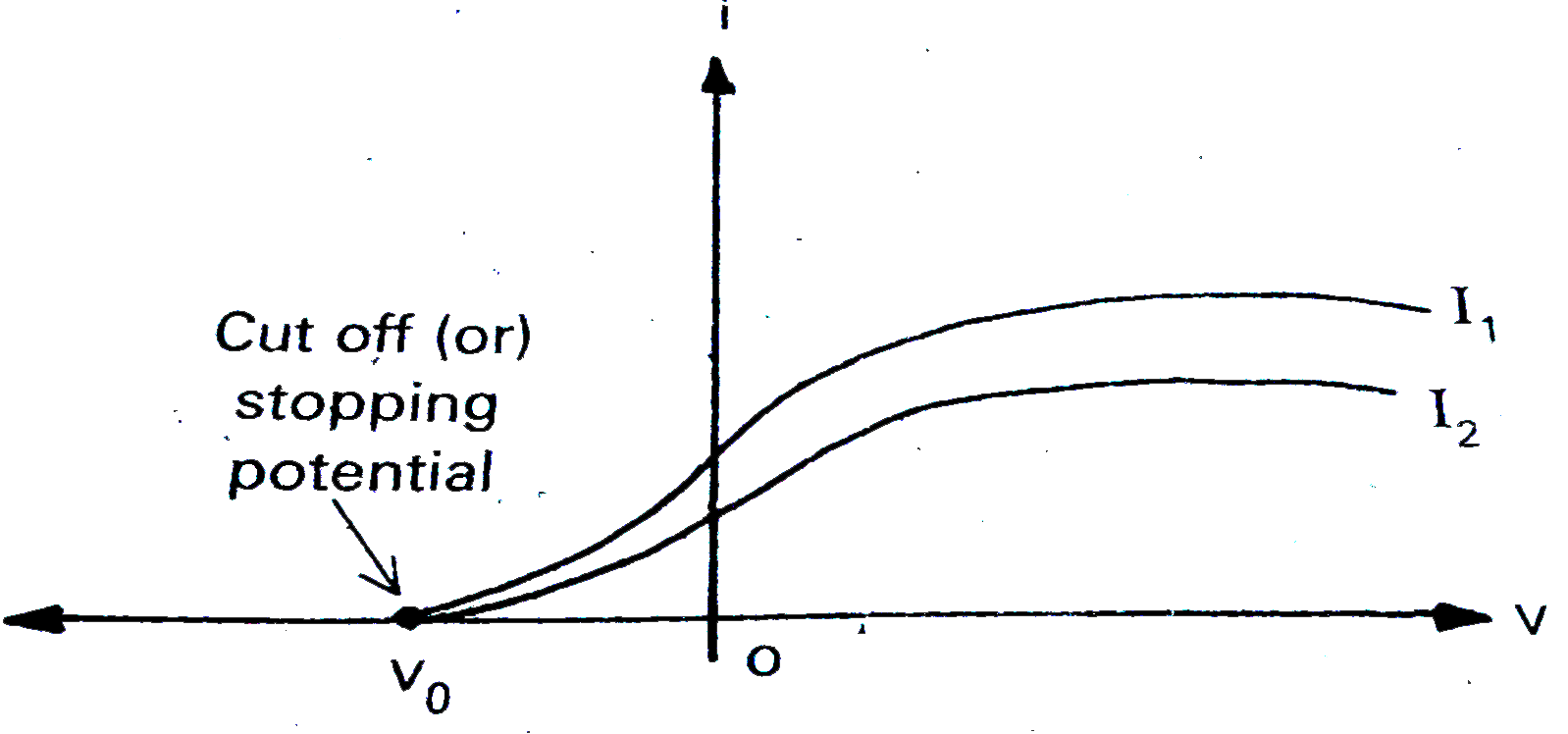 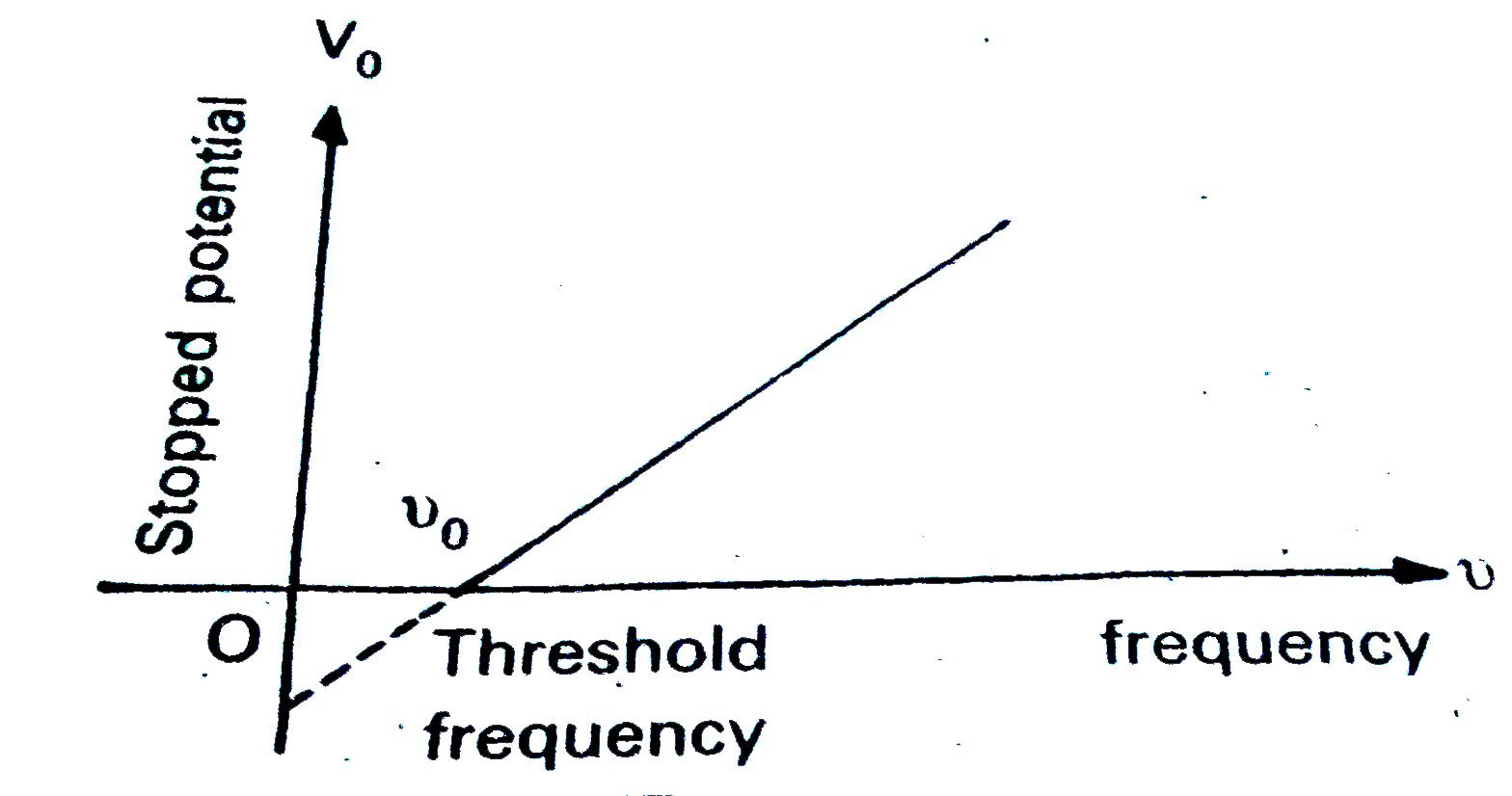 
|
|