Saved Bookmarks
| 1. |
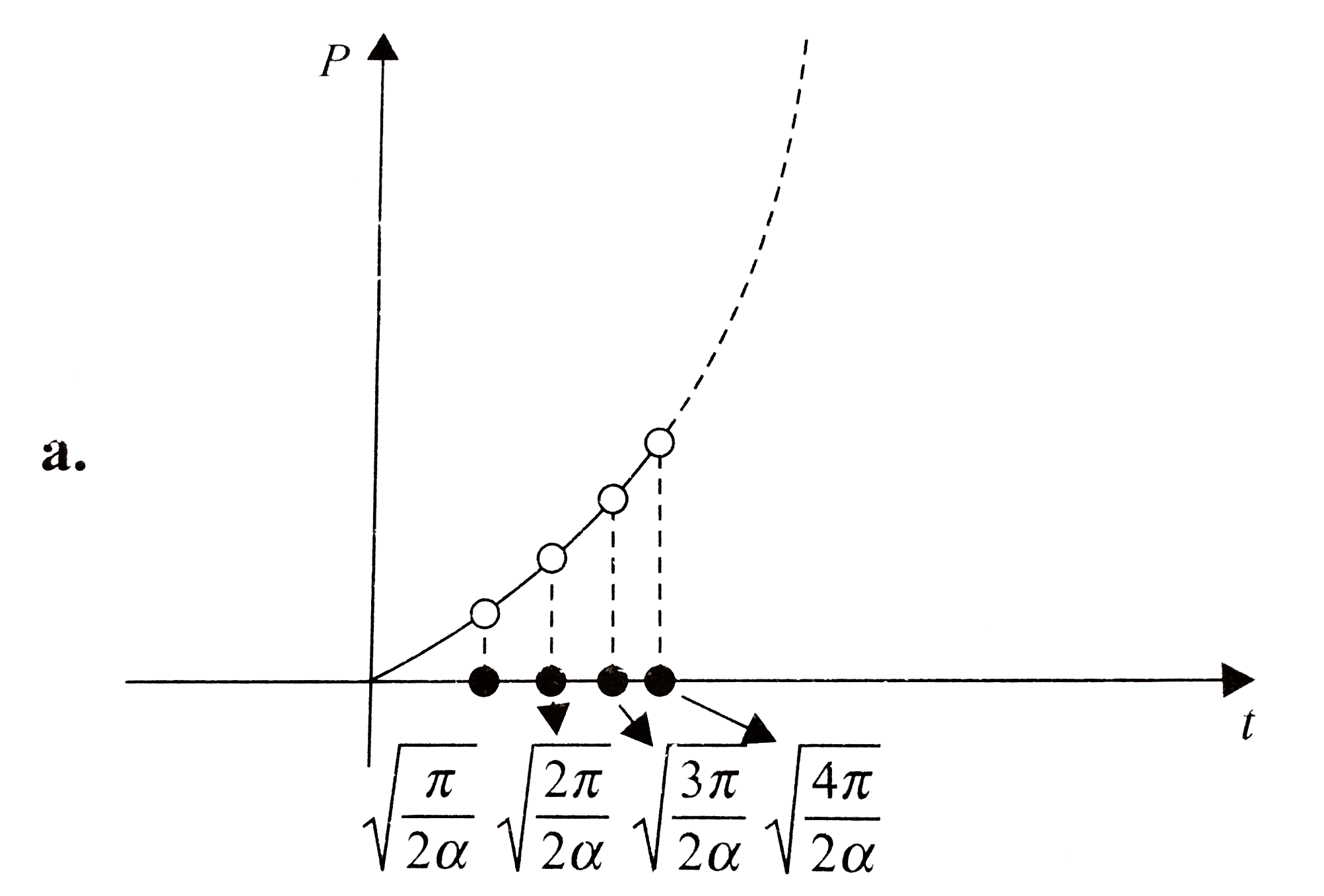
In a cylindrical region of radius a, magnetic field exists along its axis but the direction of magnetic field is opposite in the four quadrants of the region as shown in Fig. A or AB rotates with its end A at the centre of magnetic field and other end B slides on a smooth wire at the periphery of the region of magnetic field. At t = 0 the rod was situated along the +X direction. Find and plot the time dependence of the thermal power in the resistance R when rod rotates with a constant angular acceleration (alpha) |
|
Answer»
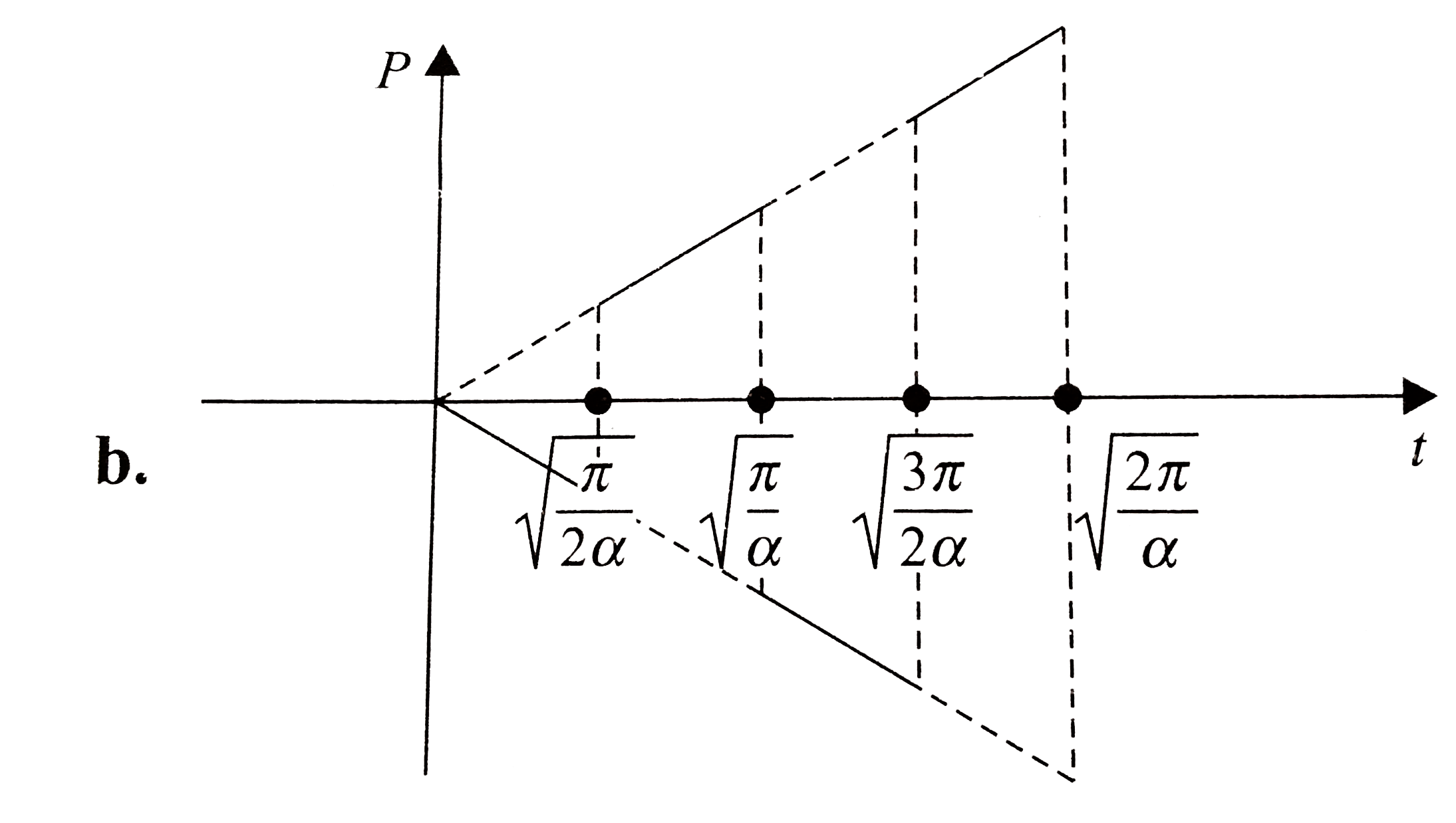
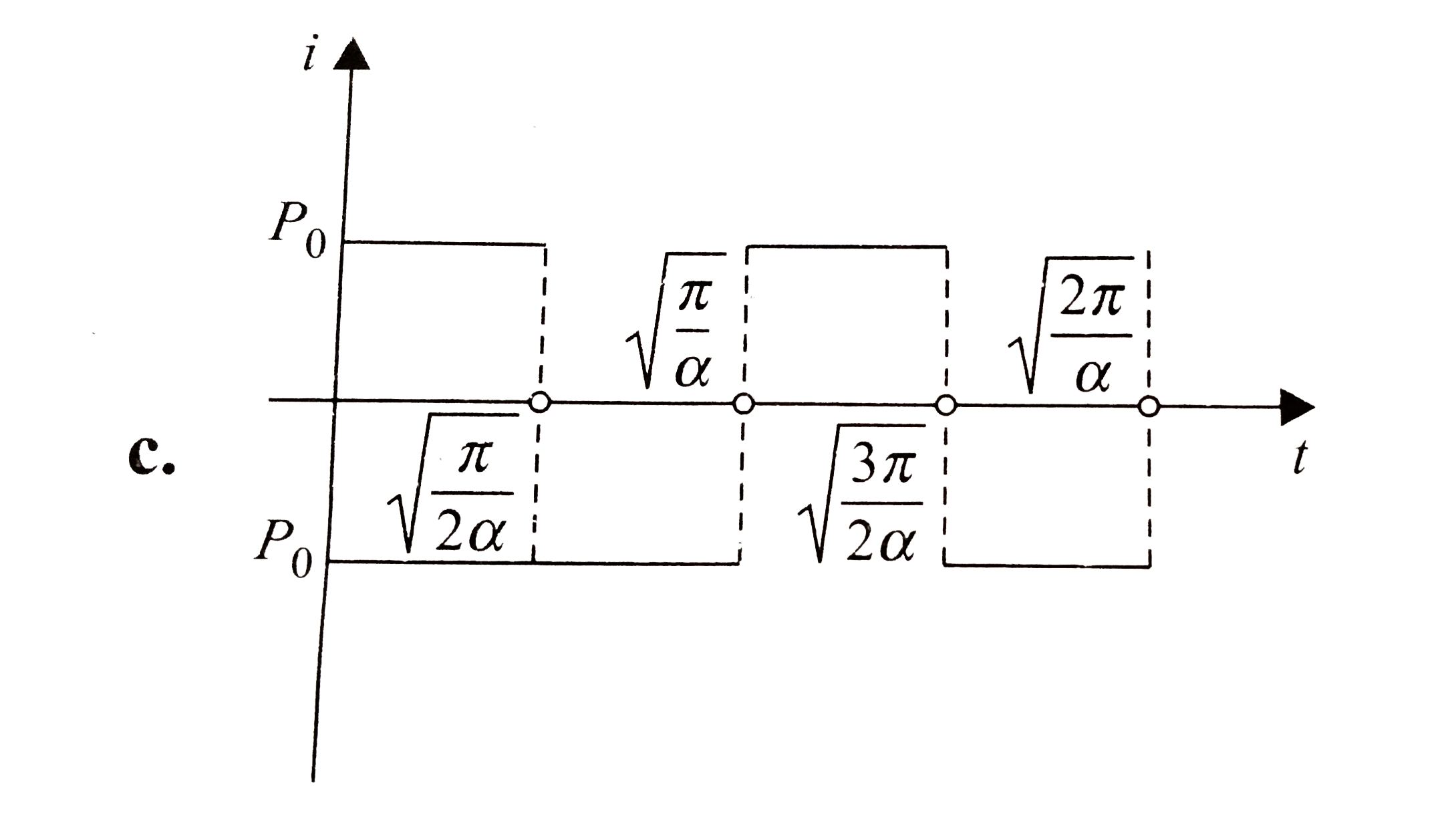
`e= +- 1/2 B(a)(aomega)= +- 1/2 Ba^(2)omega` `:. i=(e)/(R)=+- (Ba^(2)omega)/(2R)` so, for `t=0 to T/4, T/2 to (3T)/(4)` and so on, `i=-(Ba^(2)omega)/(2R)` The i-t graph is as shown in FIG. the i-t equation can be written as, `i=1/(2R) (-1)^(n+1) Ba^(2)omega` where `n=1,2,3 ... and t_(n) =(n pi)/(2 omega)` Here positive current means current from left to right through the resistance and vice-versa. 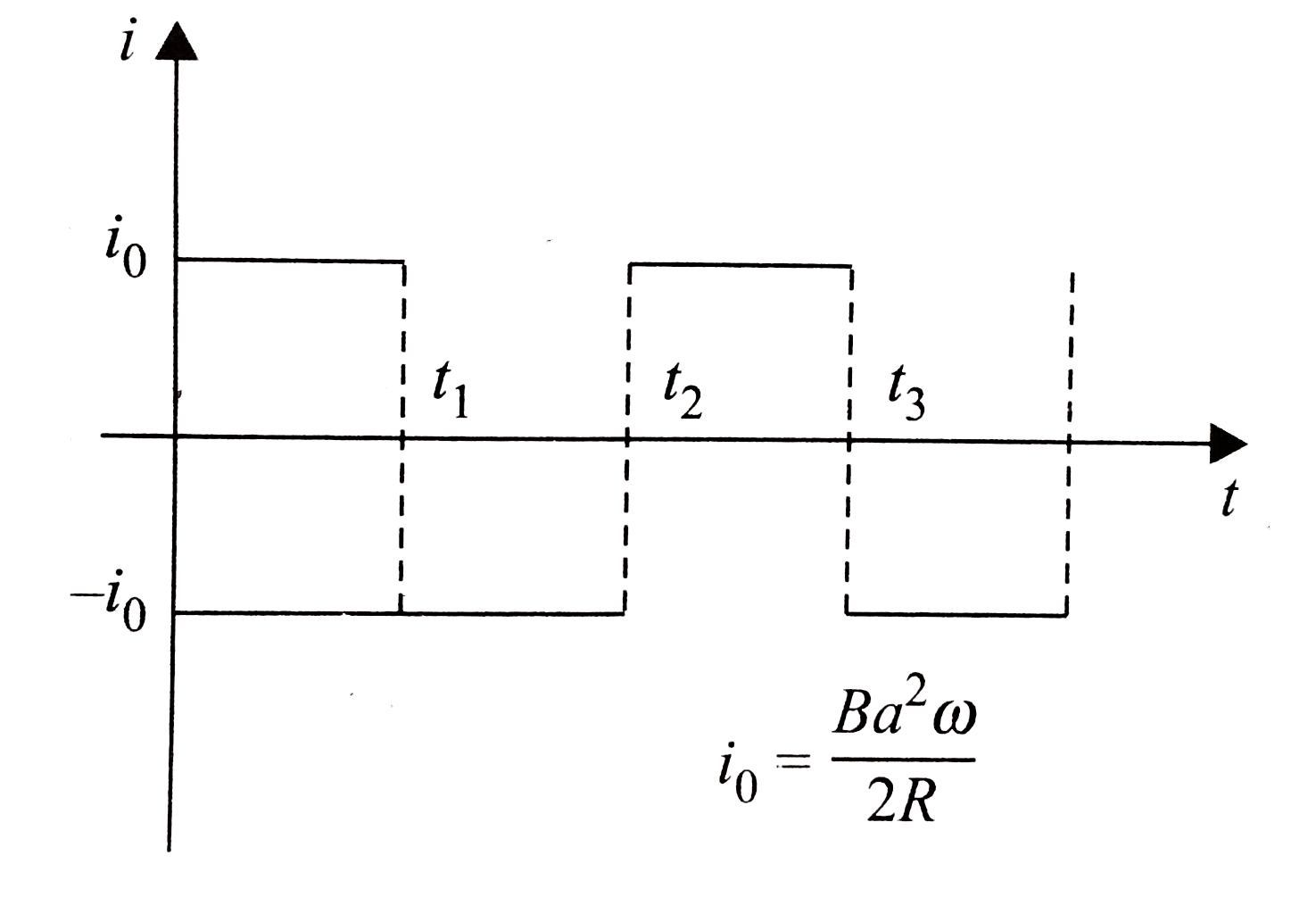 (b) `ALPHA` = constant. `omega=alpha t` `epsilon = (bomegal^(2))/(2) = ((Bl^2)/(2)) alpha*t, I=E/R = [(Bl^(2)alpha)/(2R)]*t` I is negative in quardrant I I is positive in quadrant II I is negative in quadrant III I is positive in quadrant IV 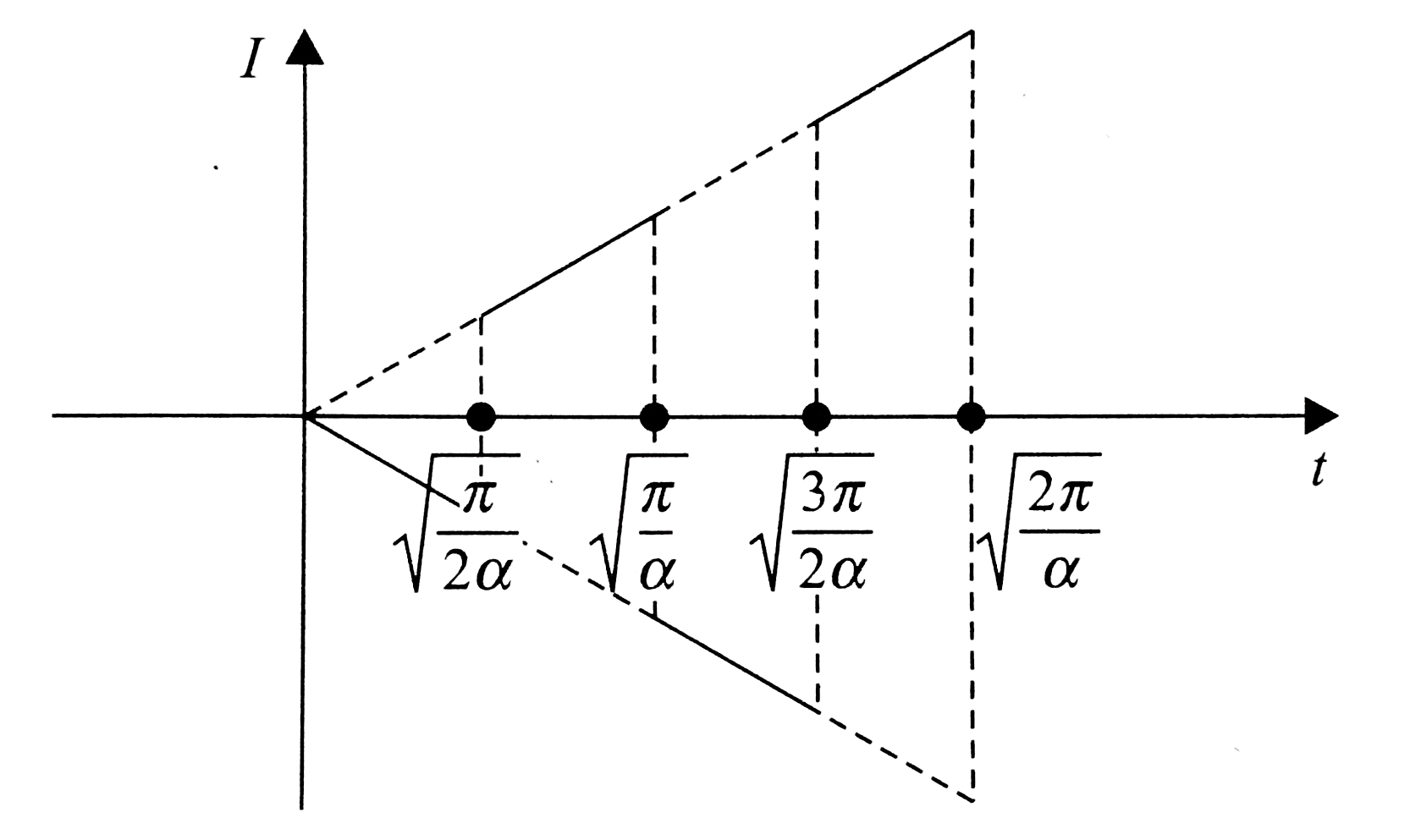 also, `t_(1)//4, t_(1)` `1/2 alpha (t_(1)^(2))/(4), t_(1//4) = sqrt((pi)/(2 alpha))` `t_(1//2) = sqrt((2 pi)/(2alpha)), t_(3//4)=sqrt((3pi)/(4alpha) xx 2)= sqrt((3 pi)/(2alpha))` `sqrt(3)-sqrt(2)-sqrt(1)` `PR=I^(2)R = [(Bl^(2)alpha)/(2R)]^(2) * R*t^(2) P prop t^(2) , y = AX^(2)` EXCEPT at`sqrt((pi)/(2 alpha)), sqrt((2PI)/(2 alpha)), ... sqrt((n pi)/(2 alpha)) (nepsilon N)` where `P=0` 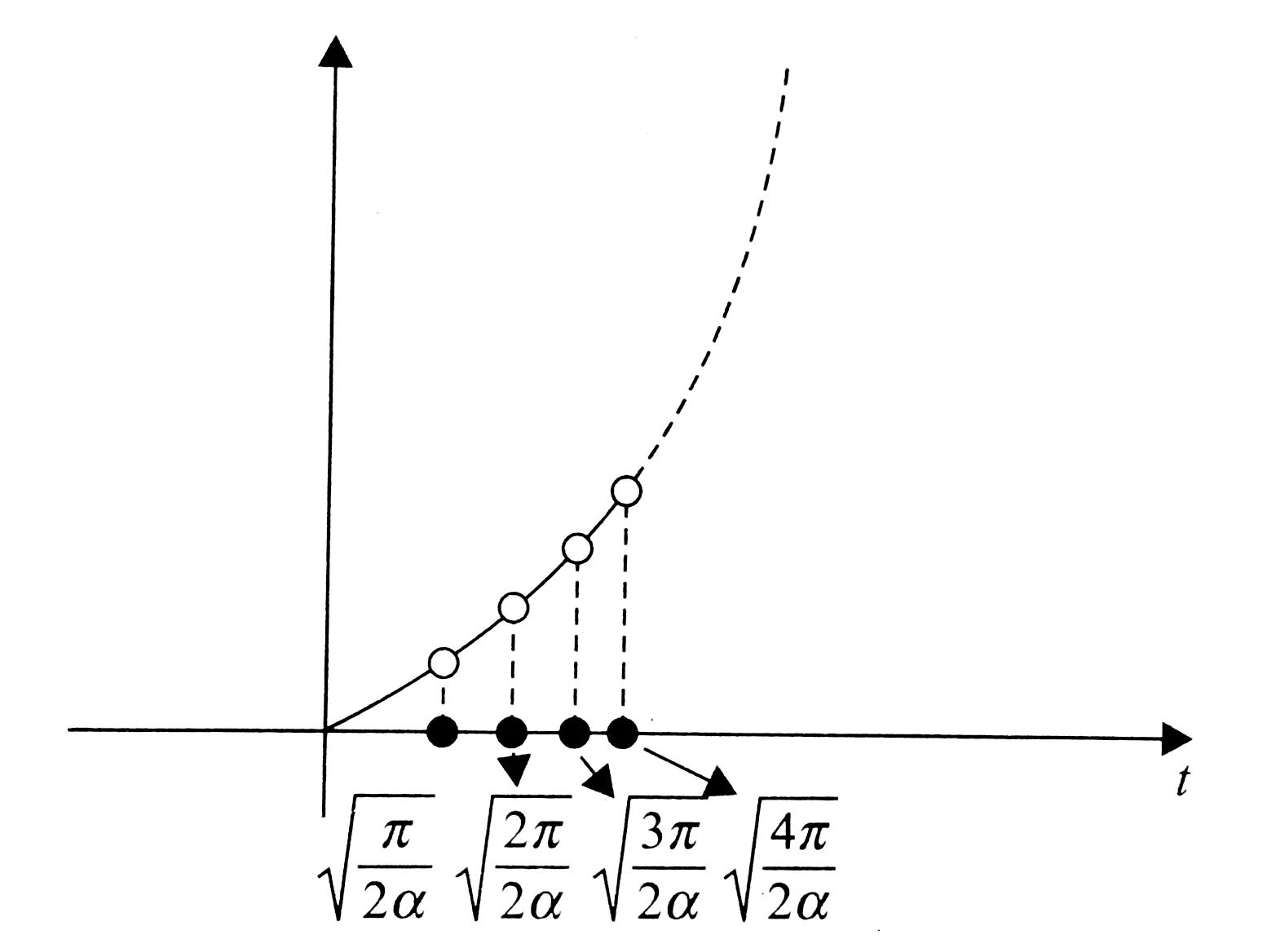 . .
|
|