

Saved Bookmarks
| 1. |
In the following problems, assume that the resistance of each diode is zero in forward bias and infinity in reverse bias . (a) Find the current supplied by the battery in the following cases. (b) Find the currents through the resistance in the circuits shown in the figures. (c ) Find the current through the battery in each of the circuits shown in the figures. (d) Find the equivalent resistance of the network shown in the figure between the points A and B. |
Answer» Solution :(a) 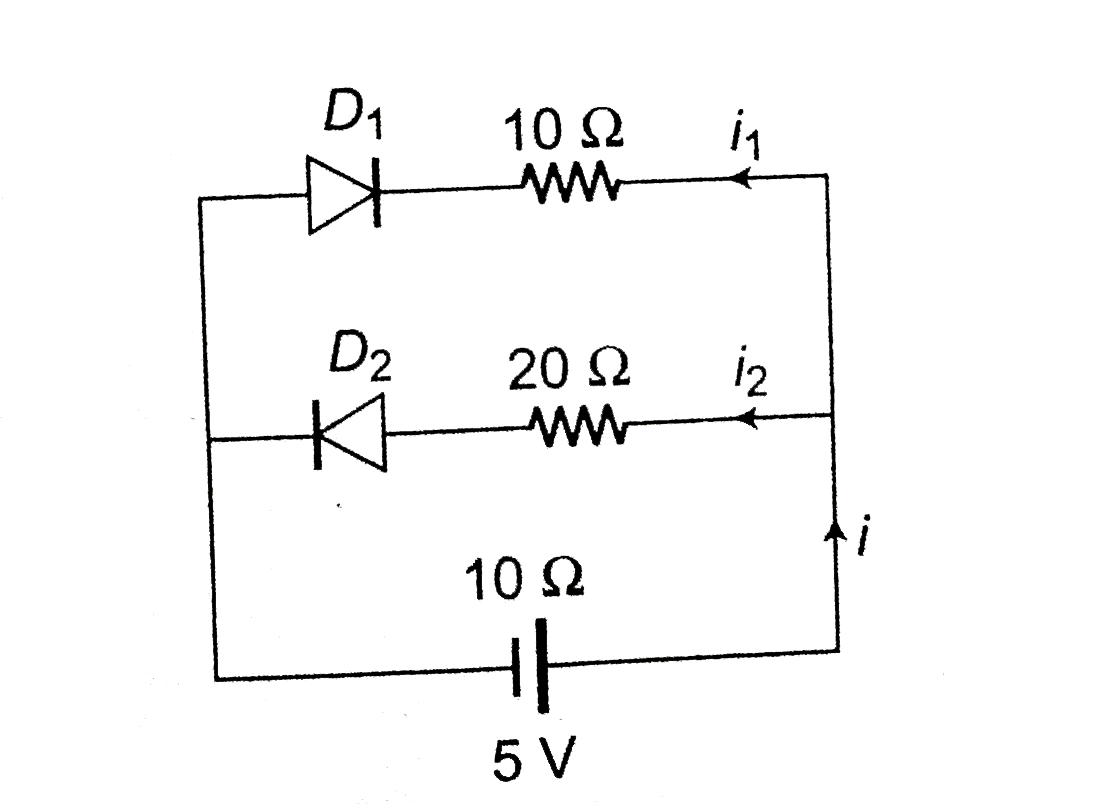 `D_(1)` is in forward BIAS, `i_(1)=(5)/(10)=0.5A` `D_(2)` is in reverse bias, `i_(2)=0` `i=i_(1)+i_(2)=0.5A` (ii) 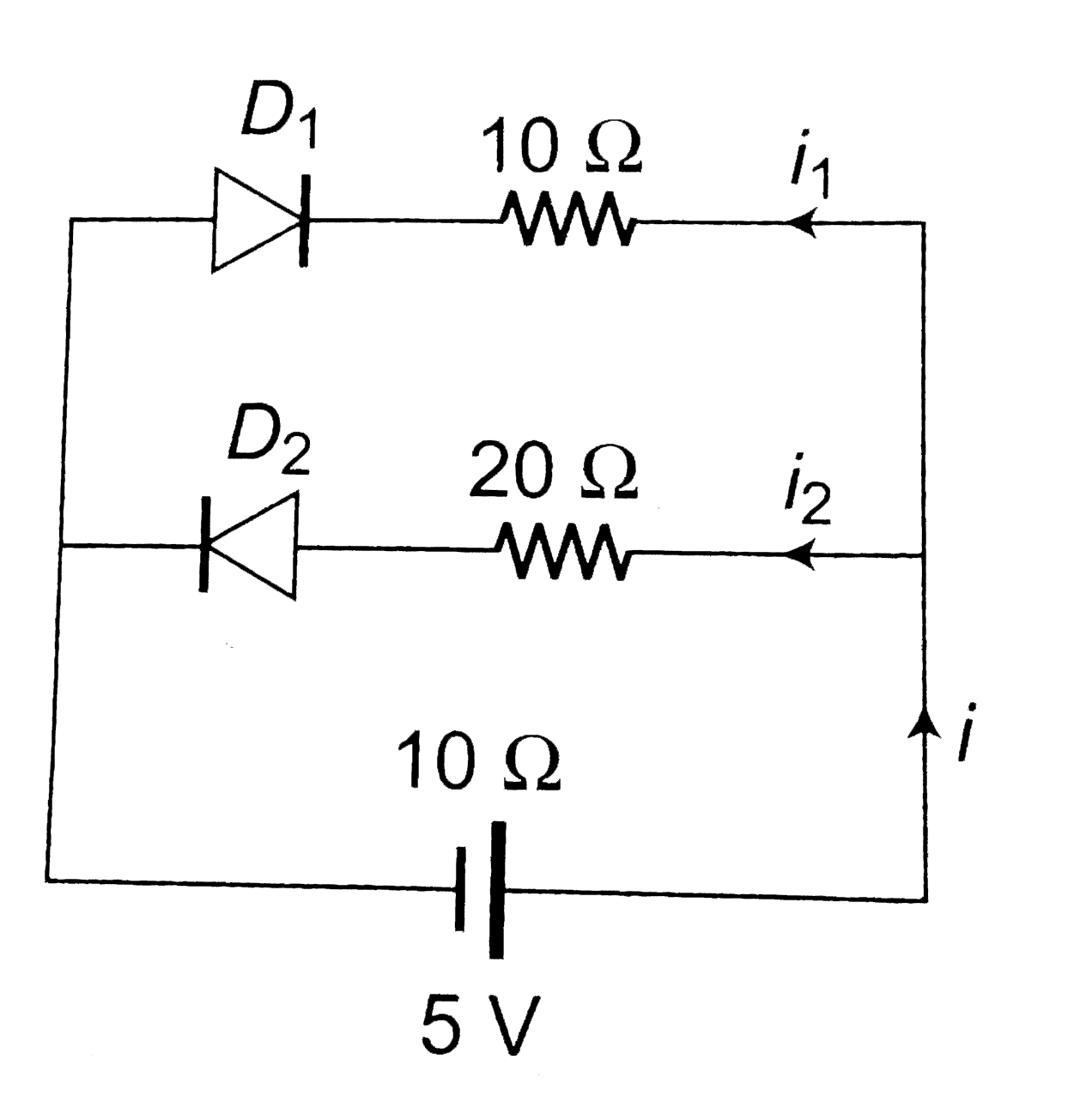 `D_(1)` is in reversible bias, `i_(1)=0` `D_(1)` is in reversible bias, `i_(1)=0``D_(2)` is forward bias, `i_(2)=(5)/(20)=0.25A` `i=i_(1)+i_(2)=0.25A` (b) (i) 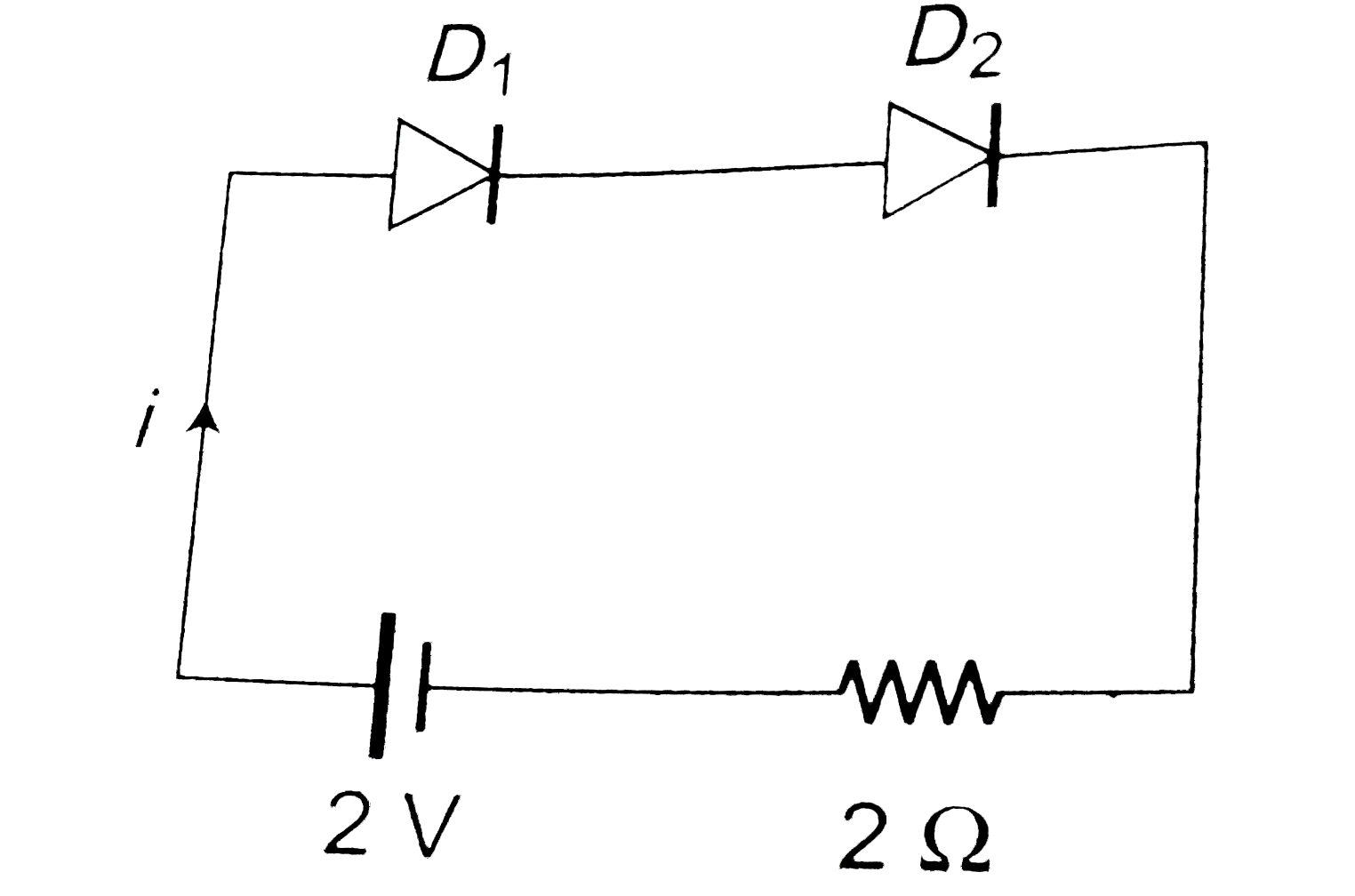 Both diodes are in forward bias, `i=(2)/(2)=1A` (ii)  `D_(1)` is in forward bias, `D_(2)` is in reverse bias `i=0` (iii) 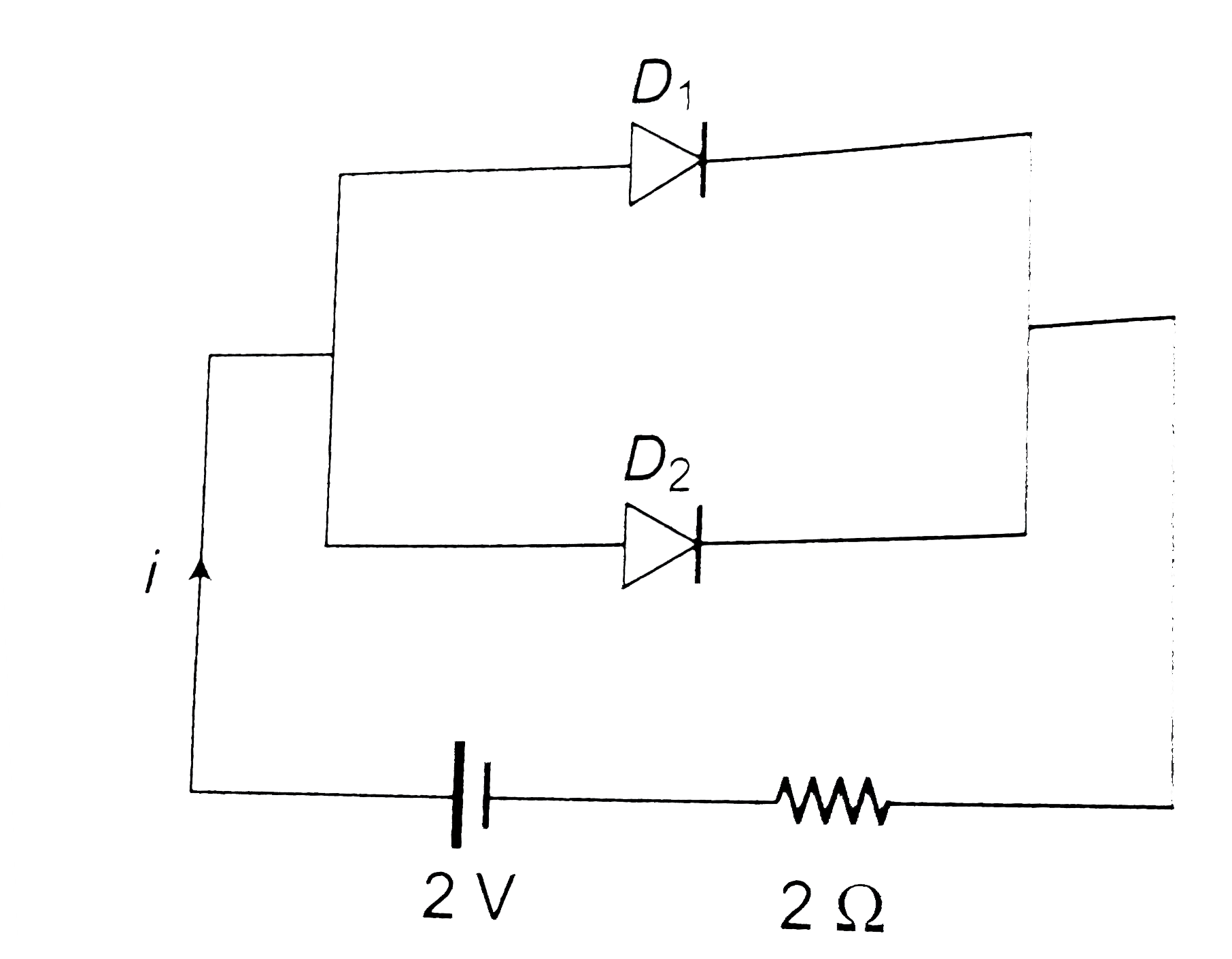 Both diodes are in forward bias `i=(2)/(2)=1A` (iv) 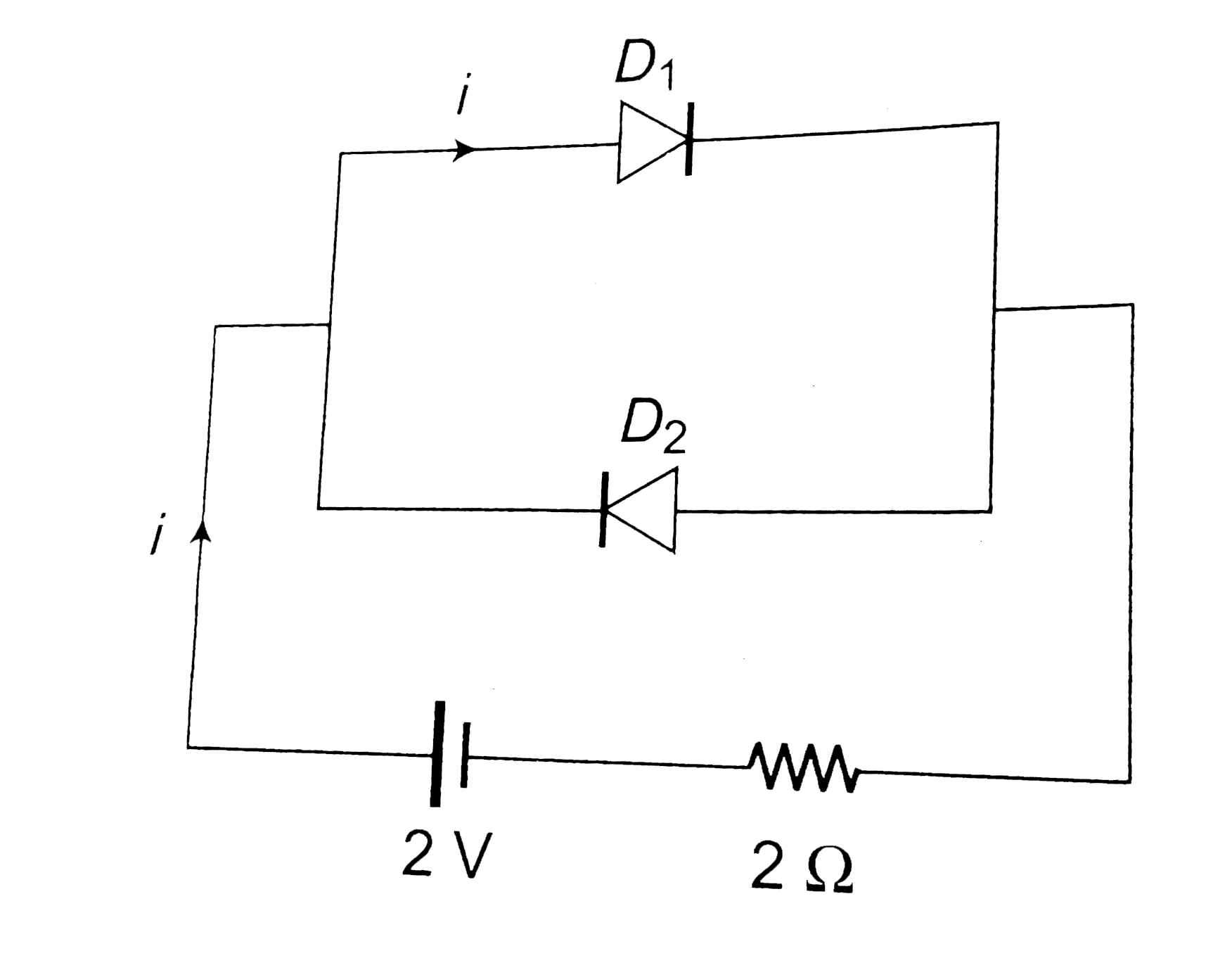 `D_(1)` is in forward bias, `D_(2)` is in reverse bias `i=(2)/(2)=1A` (c ) (i) 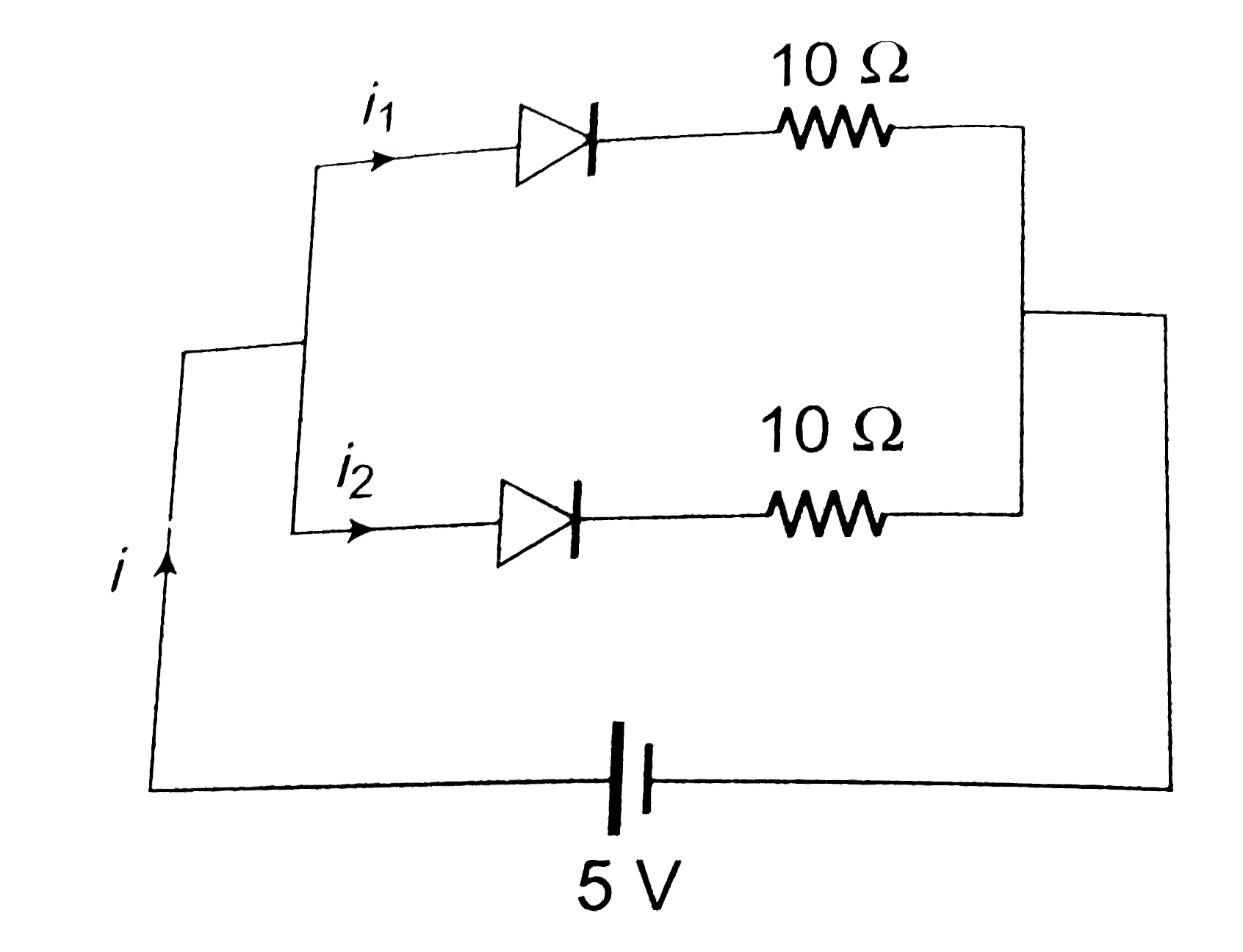 Both diodes are in forward bias, `i_(1)=5//10=0.5A,i_(2)=(5)/(10)=0.5A` `i=i_(1)+i_(2)=1A` (ii) 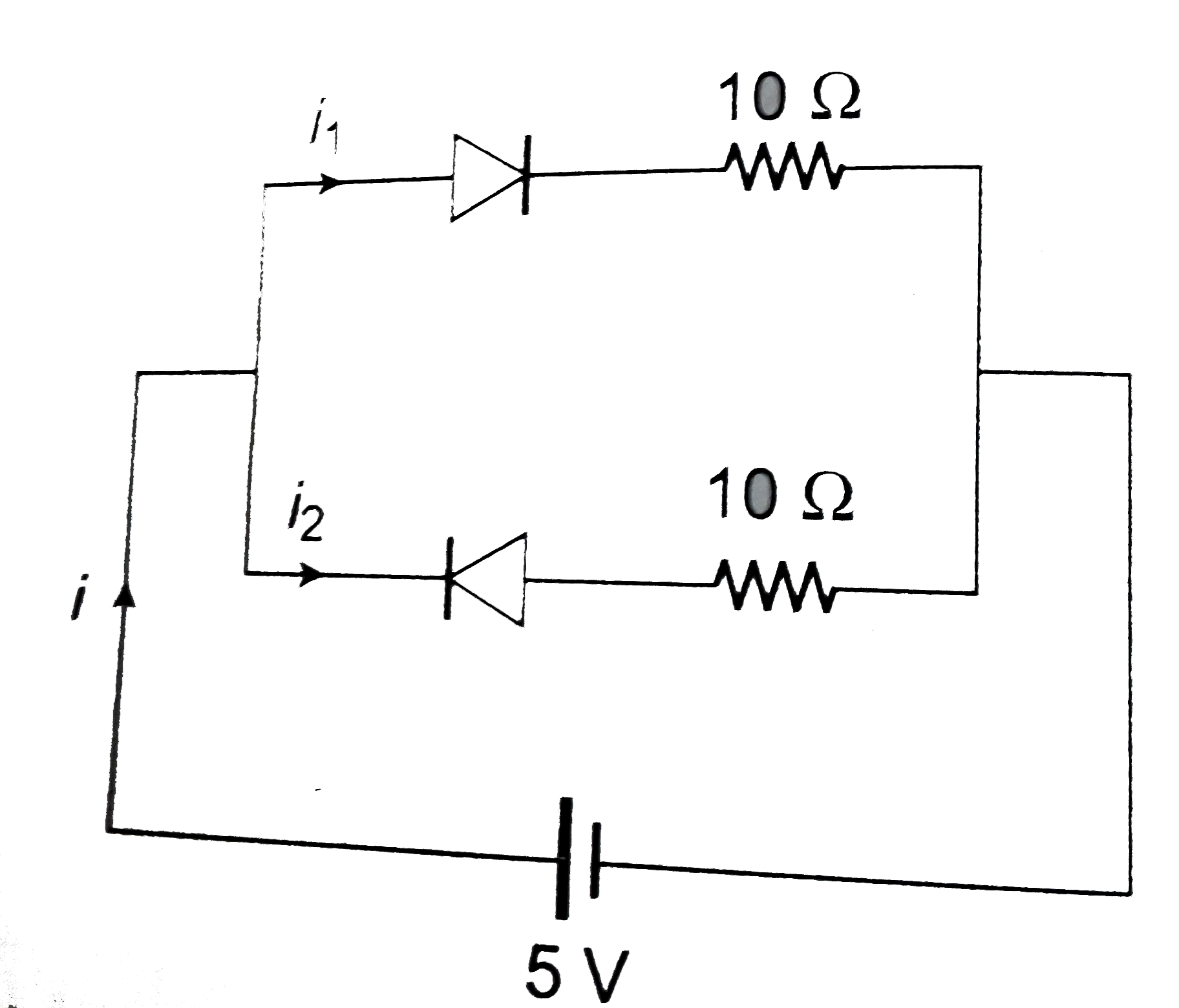 Upper diode is in forward bias `i_(1)=(5)/(10)=0.5A` Lower diode is in reverse bias `i_(2)=0` `i=i_(1)+i_(2)=0.5A` (d) 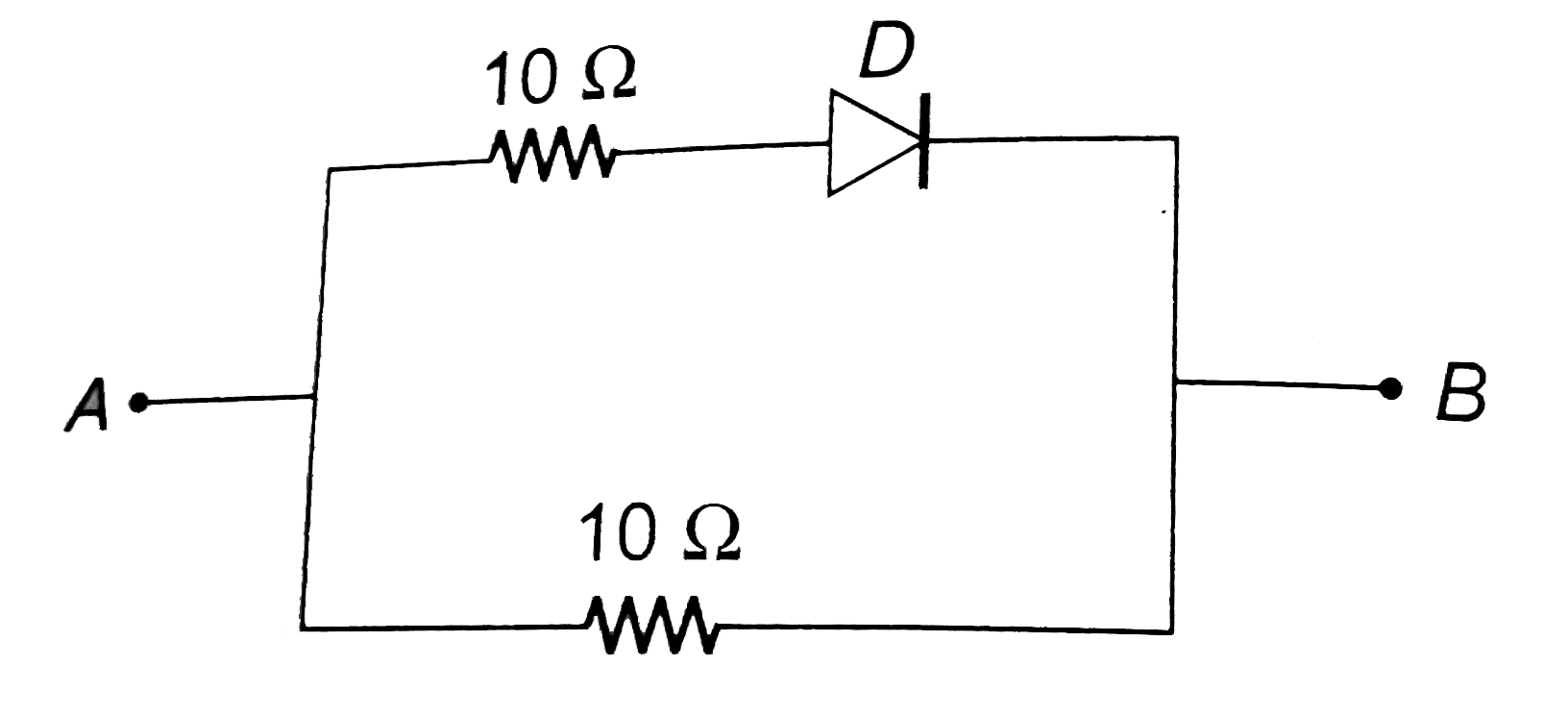 If`V_(A)gtV_(B)` If`V_(A)gtV_(B)` Diode is in forward bias, it offers zero RESISTANCE. `R_(eq)=(10)/(2)=5OMEGA` If `V_(A) lt V_(B)`, Diode is in reverse bias, it offers infinite resistance. `R_(eq)=10OMEGA` |
|