

Saved Bookmarks
| 1. |
In the, Ohm's law experiment to find resistance of unknown resistor R, following two arrangement (a) and (b) are possible. The resistance measured is given by R_(measured)=(V)/(i) V= voltage reading of voltmeter, i= current Reading of ammeter. But unfortunately the ammeters and voltmeter used are not ideal, but having resistance R_(A) and R_(V) respectively. You are given two resistor X and Y. Whose resistance is to be determined , using an ammeter of R_(A)=0.5Omega and a voltmeter of R_(V)=20 KOmega. It is known that X is in range of a few Ohm and Y is in range of several kilo ohm. Which of the circuit is preferable to measure X and Y-Resistor Circute |
|
Answer» `x to (a)`, `y to (b)` 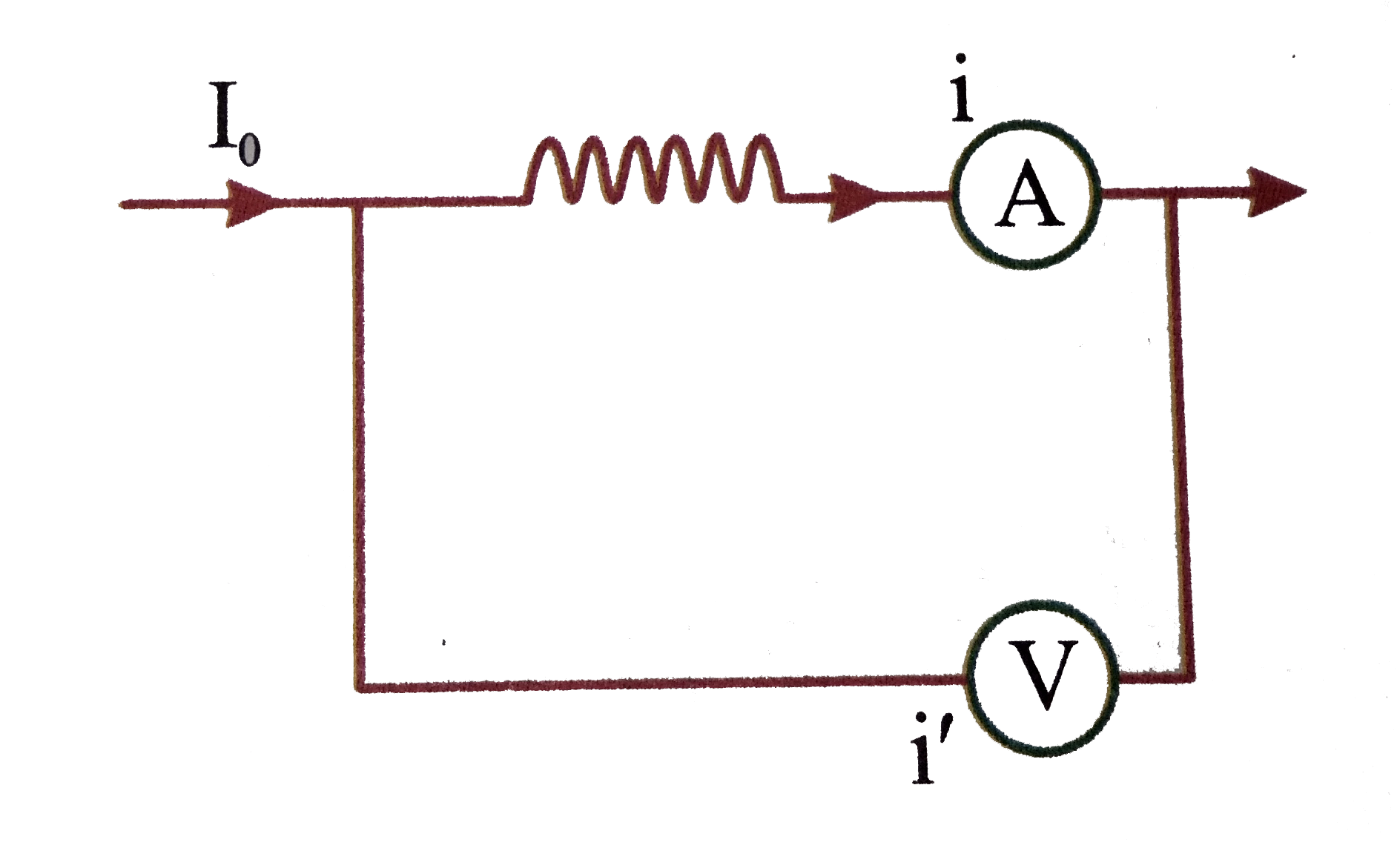 `i=(R_(V))/(R+R_(A)+R_(V))xxI_(0)` So `(V)/(I)=R+R_(A)=R_(measured)` in circuit (`b`) 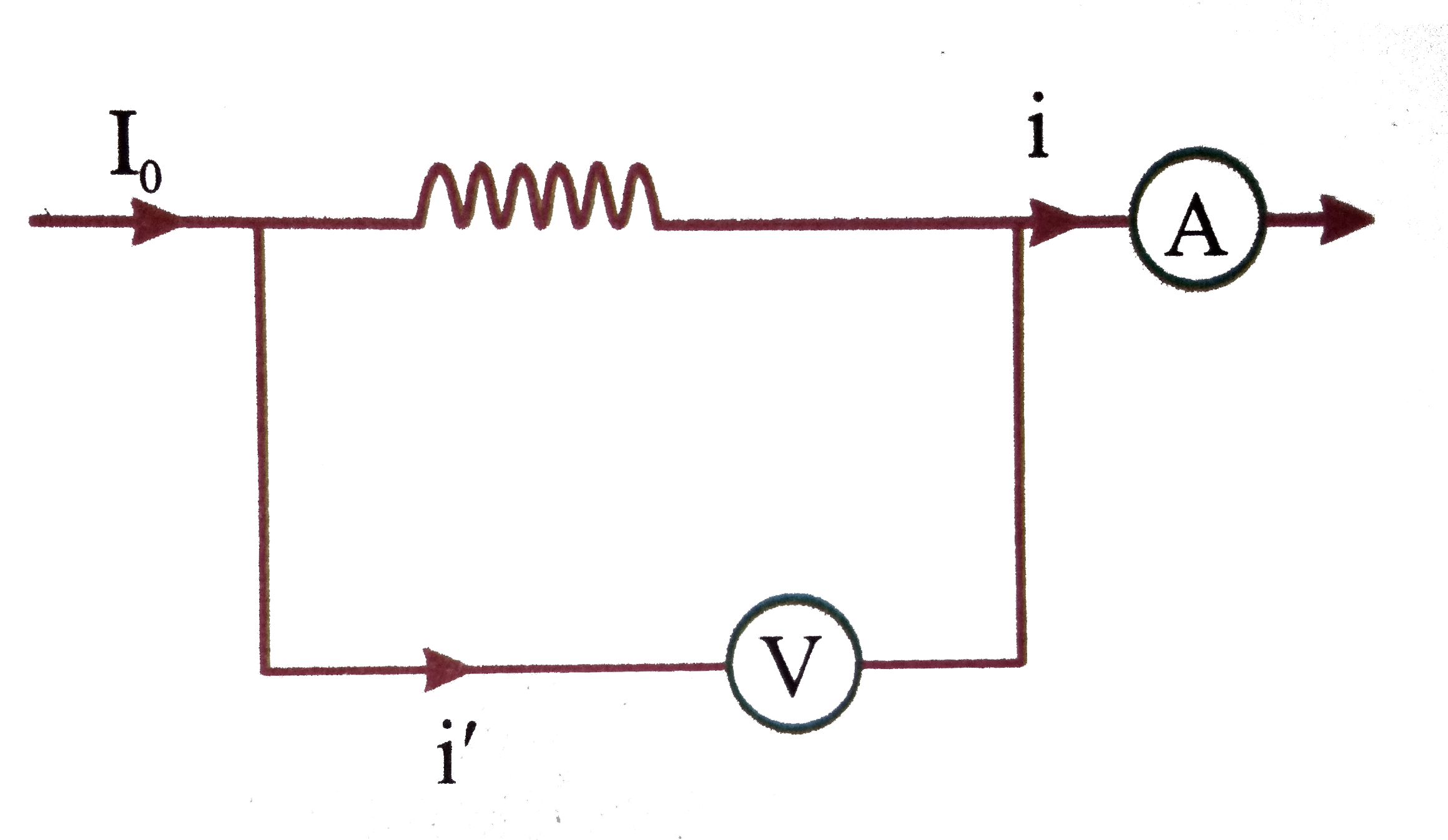 `V=I'xxR_(V)=(RR_(V))/(R+R_(V))xxi` So `R_(measured)=(RR_(V))/(R+R_(V))` To measure `x`, circuit (`b`) should be USED, as `R_(measured)=(R R_(V))/(R+R_(V)) gt gtR` as `R gt gt R_(A)` |
|