

Saved Bookmarks
| 1. |
In which of the following pairs of carbocations, the first carbocation is more stable than the second ? (i) CH_(2) = CH - CH_(2) and CH_(2) = CH - CH_(2) - overset(+)(CH_(2)) (ii) CH_(3) - NH - overset(+)(CH_(2)) and overset(+)(CH_(2)) - OH (iii) CH_(3) - O - CH_(2) - overset(+)CH_(2) and CH_(3) - O - overset(+)(CH_(2)) (IV) CH_(3) overset(+)(CH) - CH_(2) CH_(2) CH_(3) and CH_(3) CH_(2) - overset(+)(CH) - CH_(2) CH_(3) |
|
Answer» (i),(II) and (iii) THEREFORE, first carbocation is more stable than the second 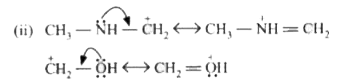 In both the cases, +ve charge is dispersed due to resonance but in the second carbocation +ve charge is located on a more electronegative O-atom. Therefore, first carbocation is more stable than second. (iii) Second carbocation 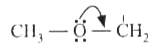 is stabilized by resonance but first `(CH_(3) - O - CH_(2) - overset(+)(CH_(2)))` is not. Therefore, carbocation second is more stable than the frst. (iv) First carbocation `(CH_(3) overset(+)("CHCH"_(2)) CH_(2) CH_(3))`has FIVE a-hydrogen atoms and hence five hyperconjugation structures are possible while the second carbocation `(CH_(3) CH_(2) overset(+)("CHCH"_(2)) CH_(3))` has only four `alpha`-hydrogen atoms and hence has four hyperconjugative structures. Therefore, first carbocation is little more stable than the second. Thus, the correct answer is option (B). |
|