

Saved Bookmarks
| 1. |
Match the entries listed in Column I with appropriate entries listed in Column II {:(A,K_(3)[Fe(CN)_(5)(CO)],p,"Complex having lowest bond length of CO ligand"),(B,K[PtCl_(3)(C_(2)H_(4))],q,"Follow rule of EAN"),(C,Na[Co(CO)_(4)],r,"Complex involvedin synergic bonding"),(D,V(CO)_(6),s,"Complex having highest bond length of Co ligand"):} |
|
Answer» `rarr` DUETO `+2` oxidation state of Fe extent of `d PI (Fe^(II)) rarr pi^(**) (CO)` is poor , hence C-O bondlength is not increased considerably as in `[Co(CO)_(4)]^(-)` and `[V(CO)_(6)]` `rarr `EAN of `Fe=26-2+5 xx2+2= 36 (KR)` `overset(II) (Fe)underset(sigma)overset(pi)hArrCO`, hence synergicbonding is present. (B) `K[PtCl_(3)(CH_(2) = CH_(2))]` EAN of `Pt=78-2+3xx2+2=84`, (At. no. of `Rn=86)` `overset(II) (Pt) underset(pi) overset(pi) hArr (CH_(2)=CH_(2))`, SYNERGIC bonding is present `Pt overset(pi)(larr) (CH_(2)=CH_(2))` 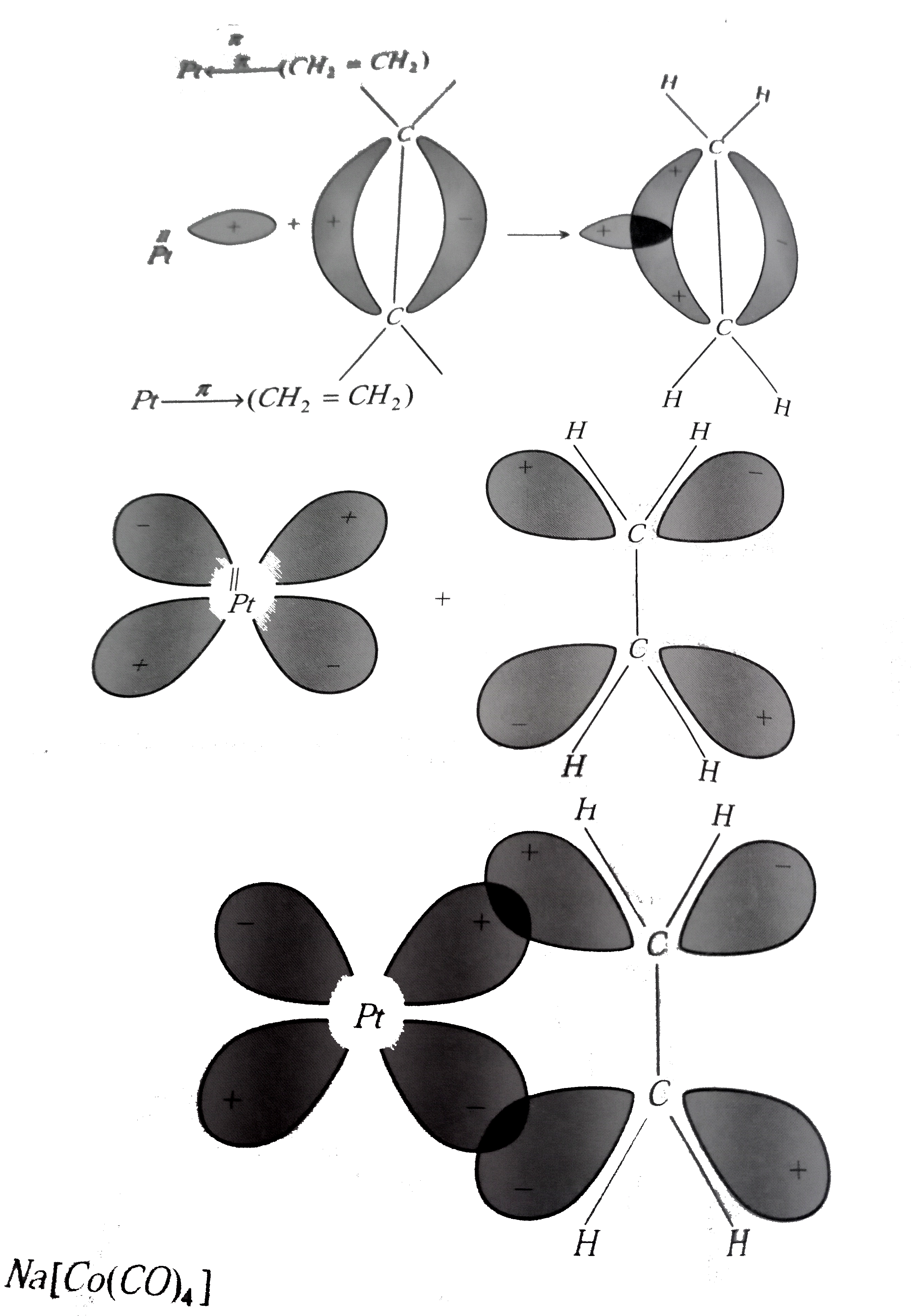 (C ) `Na[Co(CO)_(4)]` EAN of `Co=27+1+4 xx 2 = 36 (Kr)` `Counderset(sigma) overset(pi) hArr CO`, synergic bonding takes place `Co overset(sigma)(larr) CO` 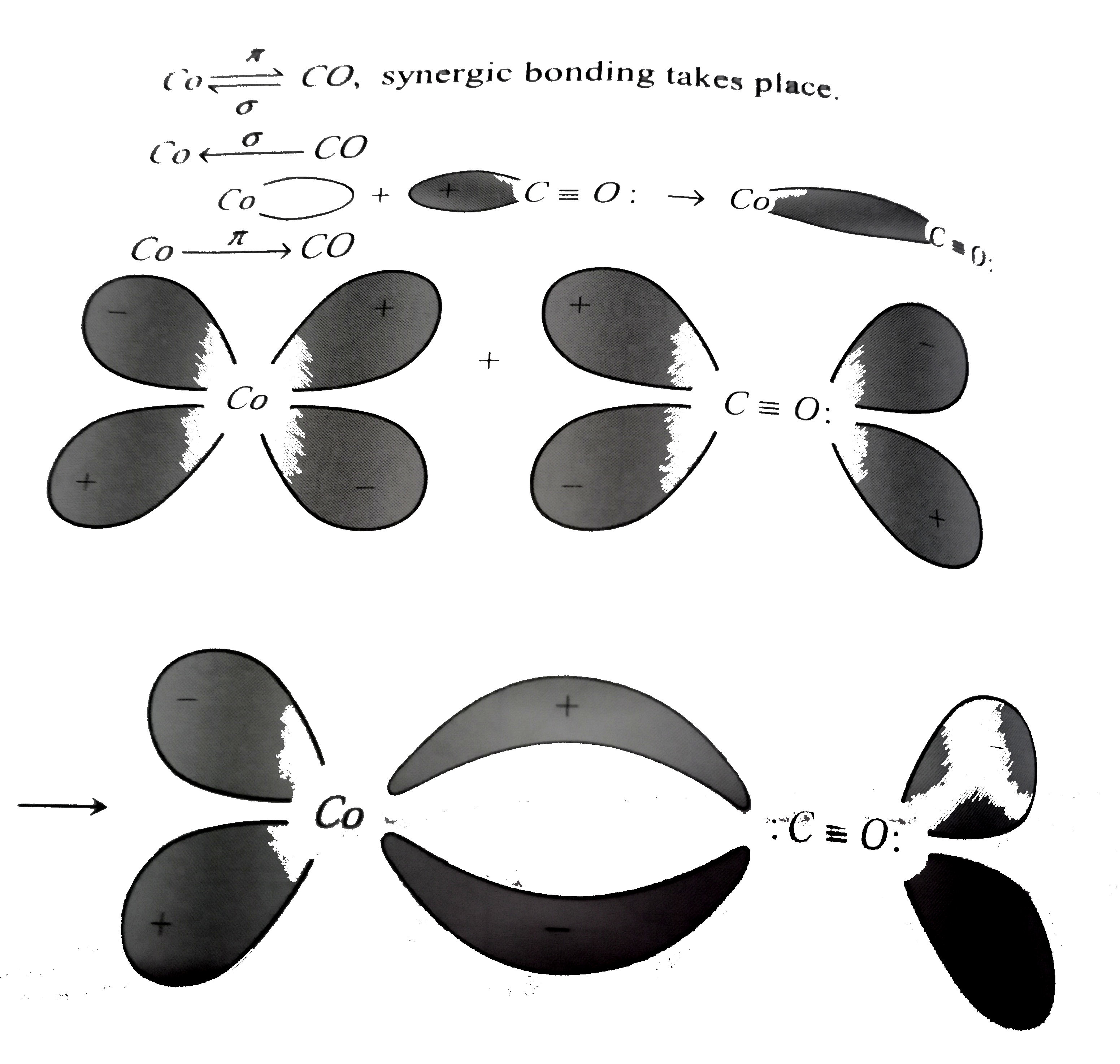
|
|