

Saved Bookmarks
| 1. |
Predict al the alkenes that would be formed by dehyddrohalogenation of the following halides with sodium ethoxide in ethanol and identify the major alkene. (i) 1-Bromo-1-methylcyclohexane (ii) 2-Chloro-2-methylbutane (iii) 3-Bromo-2,2,3-trimethylpentane. |
Answer» SOLUTION :(i) In 1-bromo-1-methylcyclohexane, the `beta`-hydrogens on either side of the Br atom are equivalent, THEREFORE, only 1-alkene is formed. 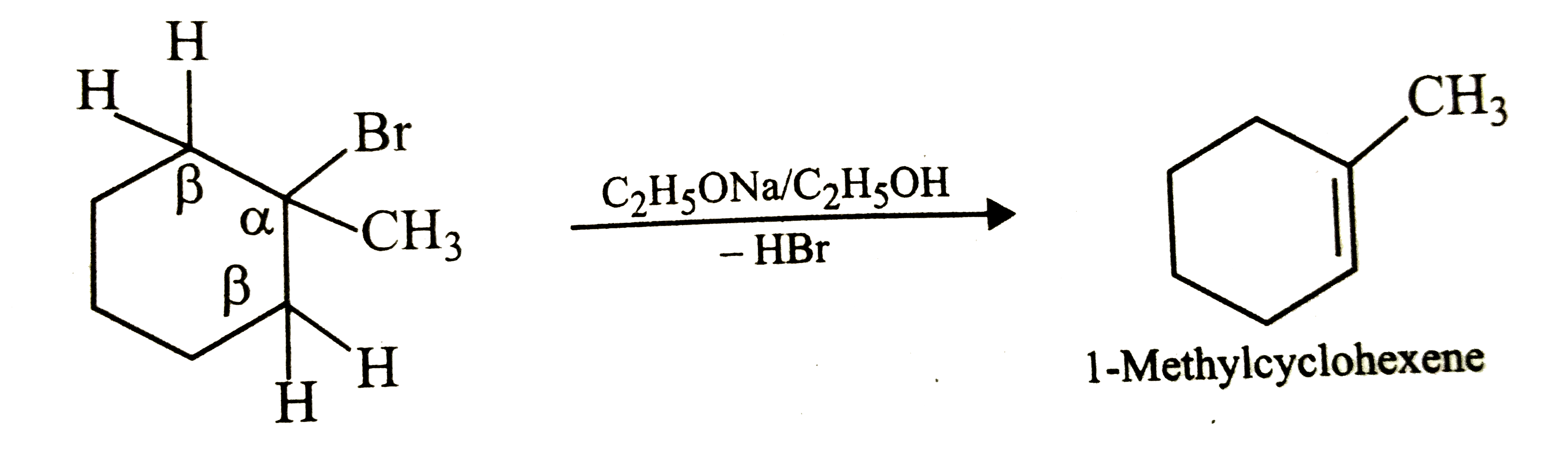 (ii) 2-Chloro-2-methylbutane has two different sets of equivalent `beta`-hydrogens and hence, in PRINCIPLE, can GIVE two alkenes (I and II). but according to Sayzeff rule, more highly substituted alknene (II), being more stable, is the major product. `underset("2-Chloro-2-methylbutane")(overset(beta)(C)H_(3)-underset(Cl)underset(|)overset(overset(beta)(C)H_(3))overset(|)(C)-overset(beta)(C)H_(2)CH_(3)) underset(-(HCl))overset(C_(2)H_(5)ON a//C_(2)H_(5)OH)to underset("2-Methylbut-1-ene (I) (Less stable, minor product)")(CH_(2)=overset(CH_(3))overset(|)(C)-CH_(2)CH_(3))+underset("2-Methylbut-2-ene (II) (More stable, major product)")(CH_(3)-overset(CH_(3))overset(|)(C)=CHCH_(3))` (iii) 3-Bromo-2,2,3-trimethylpentane has two different sets of `beta`-hydrogens and hence, in principle, can give two alkenes (I and II)). but according to Saytzeff rule, more highly substituted alkene (II), being more stable, is the major product. 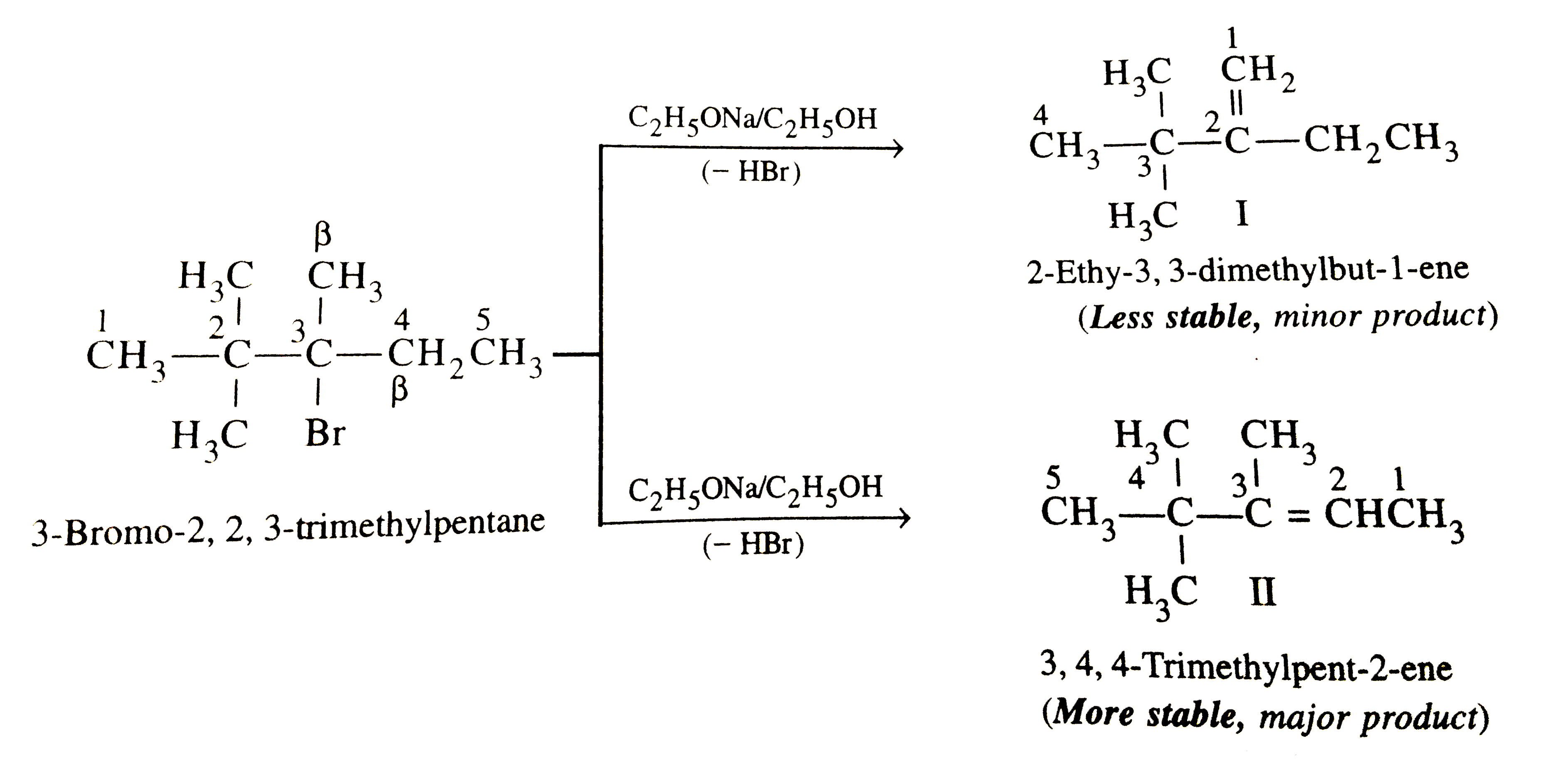
|
|