

Saved Bookmarks
| 1. |
Rosstingofsulphidesgivesthe gas X as a byproduct .The is a colourless gaswithchoking small of burnt sulphurand cause great damage to respectively ornge as a result of acid rain its aquneous solutionis acidic , acts as a reducing agent and its acid has neverisolated .The gas X is |
|
Answer» `CO_(2)` i. Sulphideson reastingnecverform `SO_(3)` since in is PRODUCED byreacting `SO_(2)` with `O_(2)` in prenceof a catalyat`(PT , or V_(2)O_(3))` and atoptimumtemperature `(720K)` andhighpresence `(2 bar)` 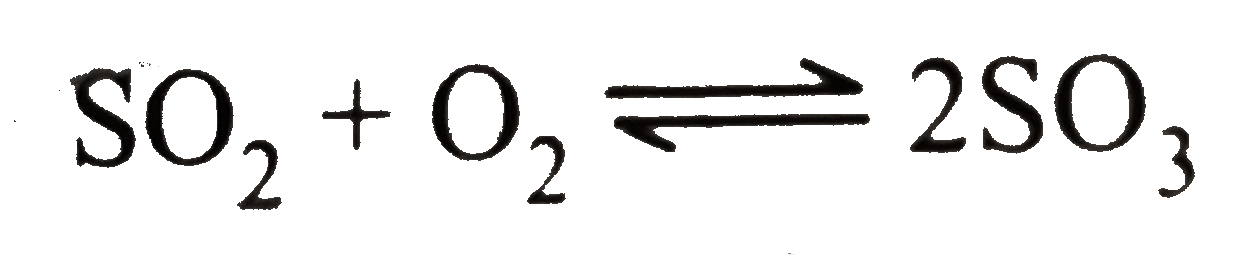 ii. `SO_(2)` and `SO_(2)` bothare COLOURLESS gas but `SO_(2)` has achoking smell of `SO_(2),NO_(2)` and `SO_(2)`from atmosphareafteroxidation and reactionwithwater aremajorcontributor to acid rain `2SO_(2(G)) + O_(2(g)) + 2H_(2)O_((1)) rarr2H_(2)SO_(4(Aq))` `2NO_(2(g)) +_O_(2(g)) + 2H_(2)O_((1))RARR 2HNO_(3(aq))` So `X` bo `SO_(2)` not `SO_(3)` iii. Aqueoussolution of both `SO_(2)` and `SO_(3)` are acidic `SO_(2)` acts as reducingagent (undergo) oxidationfrom `+4 to +6`oxidation sate) but `SO_(4)` does acts as readicingagent (i.e. it has maximum oxidation sate of `+6)` So `X` can be `SO_(2)` bot `SO_(2)` iv `SO_(2)` reacts with `H_(2)O` as given below and `H_(2)SO_(3)` isneverisolated  Hence the anwer is (d), i.e. `SO_(2)` |
|