Saved Bookmarks
| 1. |
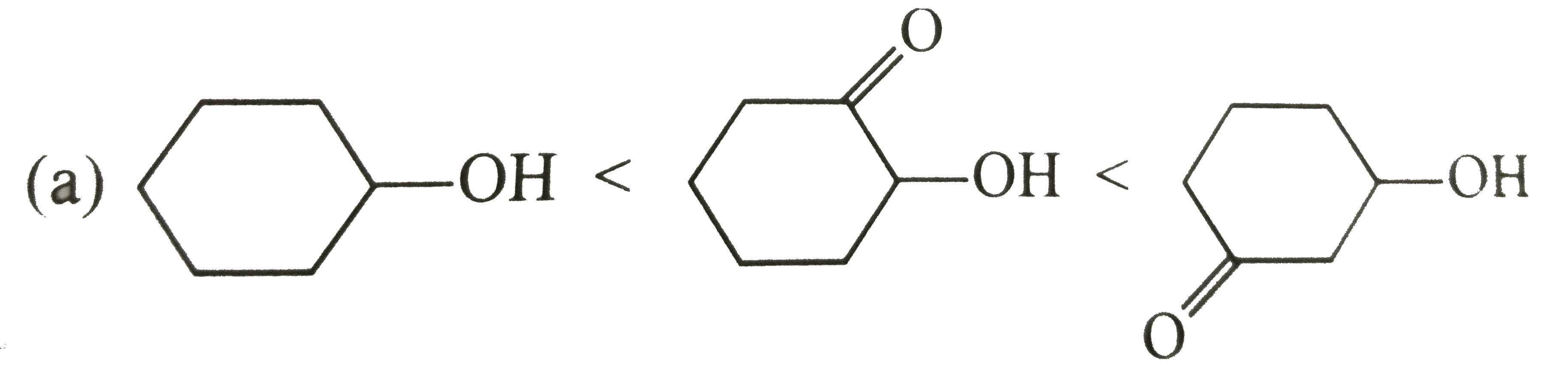
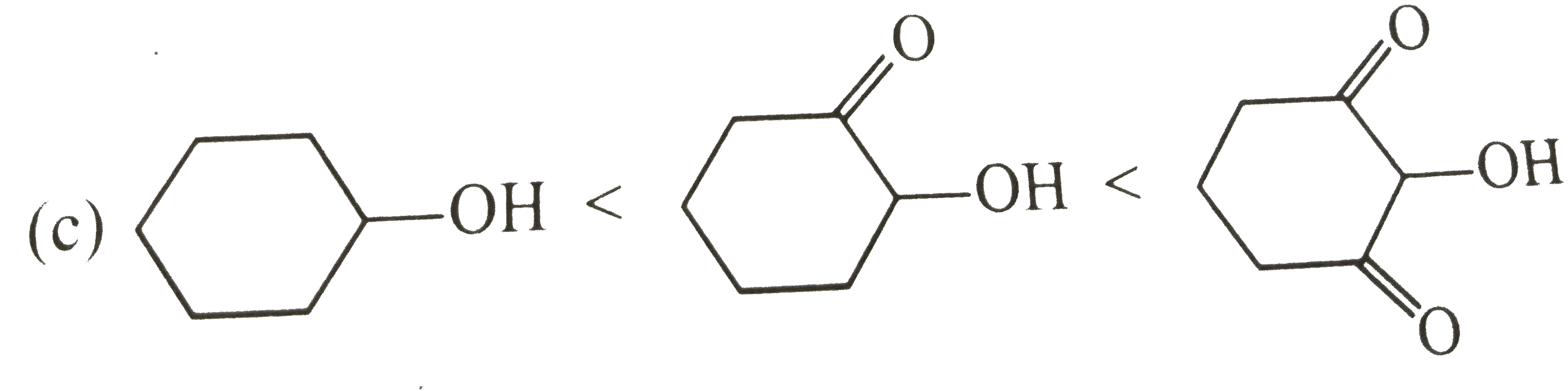
Secondary and tertiary alcohols always give E_(1) reaction indehydration. Primary alcohols whose beta- carbon is 3^(@)or 4^(@) also give E_(1) reaction. However, the primary alcohols whose beta-carbon is 1^(@) or 2^(@) give E_(2) reaction. Dehydrating agents like conc. H_(2)SO_(4), Al_(2)O_(3), anhydrous ZnCl_(2) are used. The reactivity of alcohols for elimination reaction lies in following sequence : Tertiary alcohol gt secondary alcohol gt primary alcohol Electron attracting group present in alcohols increase the reactivity for dehydration. Greater is the -I effect of the group present in alcohol, more will be its reactivity. Both E_(1) and E_(2) mechanism give the product according to Satzeff's rule, i.e., major product is the most substituted alkene. underset("3-Methylbutan-2-ol")(CH_(3)-underset(CH_(3))underset(|)(C)H-overset(OH)overset(|)(C)H-CH_(3)underset("above 413K")overset("conc." H_(2)SO_(4))(rarr)) underset("2-Methylbut-2-ene(major product)")(CH_(3)-underset(CH_(3))underset(|)(C)=CH-CH_(3))+underset("3-Methylbut-1-ene(minor product)")(CH_(3)-underset(CH_(3))underset(|)(C)H-CH=CH_(2)) Which among the following sequences of reactivity for dehydration is incorrect ? |
|
Answer»
|
|