

Saved Bookmarks
| 1. |
Some alkyl halides undergo substitution whereas some undergo elimination reaction on treatment with bases. Discuss the structural features of alkyl halides with the help of examples which are responsible for this difference. |
Answer» Solution :Primary alkyl halides follow `S_(N)2` mechanism in which a NUCLEOPHILE attacks at `180^(@)` to the halogen atom. A transition state is formed in which carbon is bonded to two NUCLEOPHILES and finally halogen atom is pushed out. In `S_(N)2` mechanism, substitution of nucleophile takes place as FOLLOWS  THUS, in `S_(N)2` mechanism, substitution takes place. Tertiary alkyl halides follow `S_(N)1` mechanism. In this case, tert alkyl halides form `3^(@)` carbocations. Now, if the reagent used is a weak base then substitution occur while if it is a strong base than instead of substitution elimination occur. 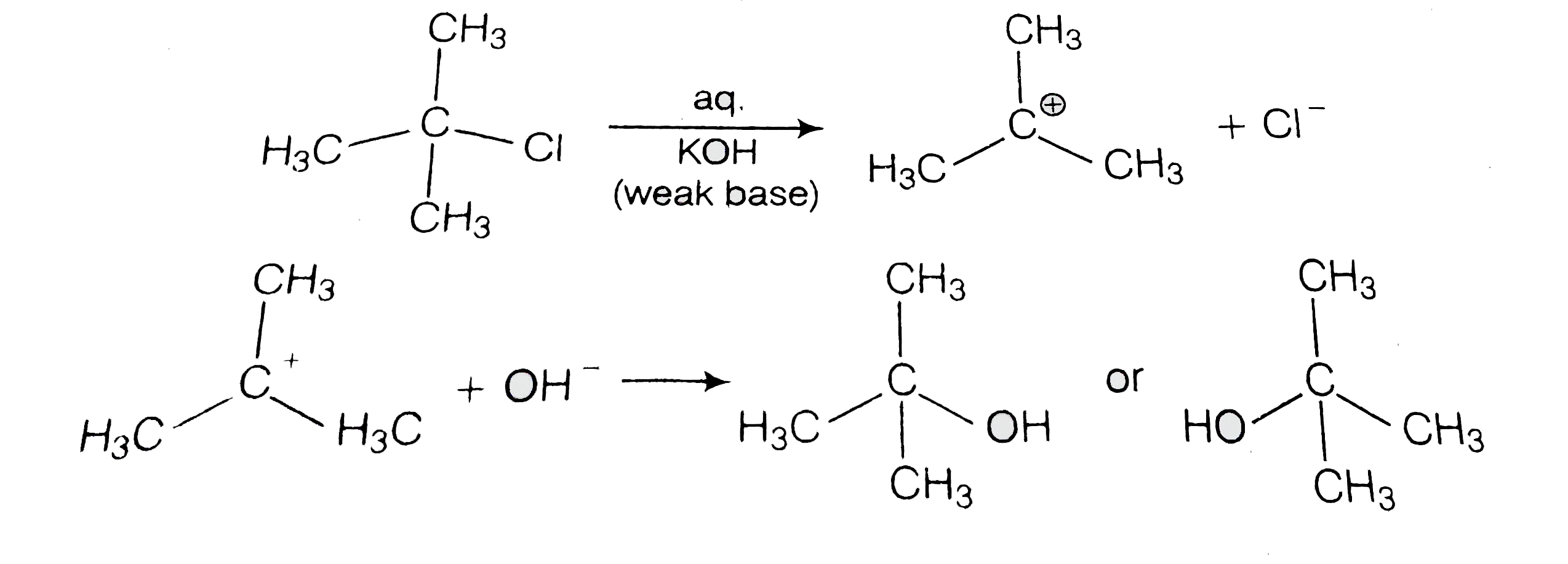 here the reagent used is aq. KOH. It is a weak base so, substitution takes place. 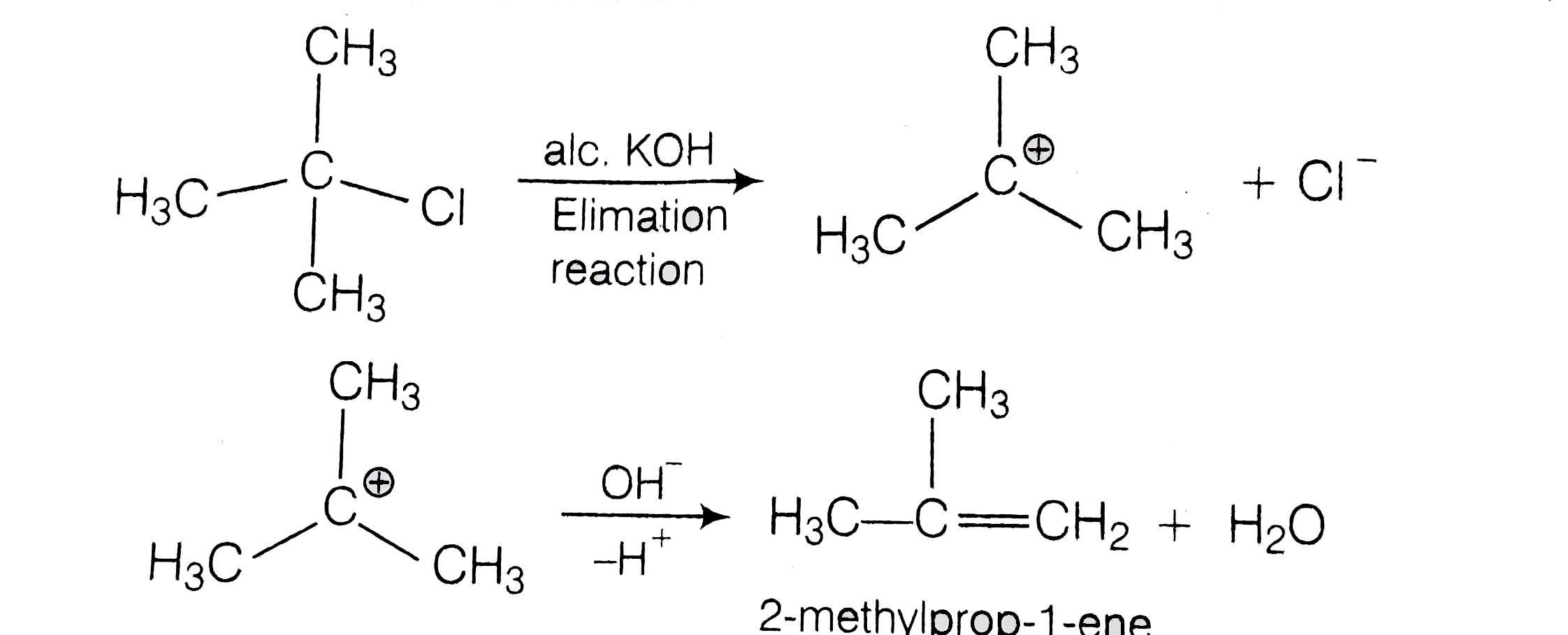 As alc. KOH is a strong base, so elimination competes over substitution and alkene is formed |
|