

Saved Bookmarks
This section includes 7 InterviewSolutions, each offering curated multiple-choice questions to sharpen your Current Affairs knowledge and support exam preparation. Choose a topic below to get started.
| 1. |
Crude calcium carbide is made in an electric furance by the following reactions: CaO+3CtoCaC_2+CO. The product contains 85% of CaC_2 and 15% unreacted CaO. (a). How much CaO is to be added to the fur |
|
Answer» Solution :(a). `CaO+3CtoCaC_2+CO` All the CaO is not USED up. Calculate how MUCH CaO is required for 85 g of `CaC_2`. That much CaO plus 15 g excess should be taken. 15 g remains as it is. `64 g of CaC_2-=56g of CaO` `therefore85g of CaC_2-=56g of CaC` `therefore85g of CaC_2-=56xx(85)/(64)=74.374 g of CaO` Total `CaO-=74.347+15=89.374g` For each 85 g of PURE `CaC_2` and 100 g of impure `CaC_2`. 85 kg pure `CaC_2=89.374kg of CaO` `1000kg pure CaCl_2=(89.374xx1000)/(85)` `=1051.46kg of CaO` (b). `100 kg` crude `CaC_2=89.374kg CaO` `therefore1000kg` crude `CaC_2=893.74kg CaO` |
|
| 2. |
Cr(OH)_(3)+H_(2)O_(2)overset("Alkali")(to)CrO_(4)^(-2)+H_(2)O the number of OH^(-) required to balance the above equation |
|
Answer» 1 So `4OH^(-)`required to BALANCE the EQUATION |
|
| 3. |
Cr(OH)_(3)+10_(3)^(-)+OH^(-)toCrO_(4-)^(2-)+H_(2)O+I_(2): In the balanced equation of this reaction ,coefficent of H_(2)O is- |
|
Answer» 2 |
|
| 4. |
CrO_(7)^(-2)overset(H^(+))toCr^(+3) in this reaction equivalent mass of Cr_(2)O_(7)^(-2) is ("molecular mass")/6. |
|
Answer» Solution :True. `UNDERSET(+12)(underset(darr)(Cr_(2)O_(7)^(-2)))tounderset(+6)(underset(darr)(2Cr^(+3)))` EQUIVALENT weight = `("molecular MASS")/6` |
|
| 6. |
Crixivan, a drug produced by Merck by Merck and Co., is widely used in the fight against AIDS (acquired immune deficiency syndrome). The structure of cirxivan is given below: How many 2^@ amine groups are present in the compound? |
|
Answer» 0 |
|
| 7. |
Crixivan, a drug produced by Merck by Merck and Co., is widely used in the fight against AIDS (acquired immune deficiency syndrome). The structure of cirxivan is given below: How many amide groups are present in the compound? |
|
Answer» 0 |
|
| 8. |
Crixivan, a drug produced by Merck by Merck and Co., is widely used in the fight against AIDS (acquired immune deficiency syndrome). The structure of cirxivan is given below: How many 3^@amine groups are present in the compound? |
|
Answer» 0 |
|
| 9. |
Crixivan, a drug produced by Merck by Merck and Co., is widely used in the fight against AIDS (acquired immune deficiency syndrome). The structure of cirxivan is given below: How many 2^@ alcohol groups are present in the above compound? |
|
Answer» 0 |
|
| 10. |
Critical temperatures of ammonia and CO_2 are 405.5K and 304K respectively. On cooling these gases from 500K, which gas will liquify first? |
| Answer» Solution :Ammonia will LIQUIFY first because its CRITICAL temperature will be REACHED first on COOLING. | |
| 11. |
Critical temperatures of ammonia and carbon dioxide are 405.5 K and 304.1 K respectively. Which of these gases will liquify first when you start cooling from 500K to their critical temperature? |
| Answer» SOLUTION :Ammonia will liquify first because its critical TEMPERATURE will be REACHED first. Liquifaction of `CO_2` will REQUIRE more COOLING. | |
| 12. |
Critical temperatures of ammonia and carbondioxide are respectively 405.5 and 304.1K. Cooling from 450K, which gas can be liquify first? Why? |
| Answer» SOLUTION :AMMONIA gas can be liquified FIRST, Because the CRITICAL temperature of ammonia will be reached first, Liquification of CARBONDIOXIDE will require more cooling. | |
| 13. |
Critical temperature of O_(2) and N_(2) are 154.3 K and 126.0 K respectively then during liquification of air, which gas liquified fast ? |
|
Answer» Solution :`O_(2)` GAS Liquification of `O_(2)` gas is OCCURS when temperature decreases at low PRESENCE which gas having high CRITICAL temperature that gas liquified first, so at high temperature (less cooled) `O_(2)` gas convert into liquid phase. |
|
| 15. |
Critical temperature for CO_(2) and CH_(4) are 31.1^(@)C and -81.9^(@)C respectively. Which of these has stronger intermolecular forces and why ? |
| Answer» Solution :Higher the CRITICAL temperature, more EASILY the gas can be liquefied, i.e., greater are the intermolecular forces of attraction. Hence, `CO_(2)` has STRONGER intermolecular forces than `CH_(4)`. | |
| 16. |
Critical temperature of NH_(3) and SO_(2) are 405.0 and 430.3 K respectively. Which one will have higher value of van der Waals constant 'a' and why ? |
| Answer» Solution :Higher the critical TEMPERATURE, more EASILY the gas is liquefied, i.e., greater are the intermolecular forces and hence greater is the VALUE of 'a'. THUS, 'a' will be greater for `SO_(2)`. | |
| 17. |
Critical temperature for CO_2 and CH_4 are 30.98^@C and -81.9^@C respectively. Which of these has stronger intermolecular forces. Why? |
| Answer» SOLUTION :HIGHER the CRITICAL temperature, more easily the GAS can be liquified and hence greater will be the intermolecular forces of attraction. Hence `CO_2` has stronger intermolecular forces than `CH_4`. | |
| 18. |
Critical temperature for carbon dioxide and methane are 31.1 ""^(@)C and -81.9 ""^(@)C respectively. Which of these has stronger intermolecular forces and why ? |
|
Answer» Solution :Intermolecular forces is more STRONG in CARBON DIOXIDE. Critical temperature of carbon dioxide is `31.1 ""^(@)C`. Which is more than methane liquification of carbon dioxide occurs easily at high temperature. Intermolecular attraction forces are strong in methane and LESS strong (weak) than `CO_(2)`. Molecular mass of `CO_(2)` is 44 gm/mol. and methane is 16 gm/mol. So attraction force of Van der waal are more in `CO_(2)` than `CH_(4)`. |
|
| 19. |
Critical temperature for carbon dioxide and methane are 31.1^@C and - 81.9^@Crespectively. Which of these has stronger intermolecular forces and why? |
| Answer» Solution :Higher the critical TEMPERATURE, more easily the GAS can be LIQUEFIED. This is possible only when intermolecular FORCES are stronger. THUS, `CO_2` has stronger intermolecular forces than `CH_4`. | |
| 20. |
Critical temperature for a particular gas is-177^(@)C then for which of the following case value of compresibility factor of the gas may be more than unity? |
|
Answer» At `0^(@)C` and 0.01atm |
|
| 21. |
Critical density of a gas having molecular mass 39 g mol^(-1) is 0.1 g cm^(-3).Its critical volume in L mol^(-1)is |
|
Answer» `0.390` Critical volume `= ("Molecular mass")/("Criticaldensity")` `= ((39 mol^(-1)))/(100 gL^(-1)) = 0.39 L mol^(-1)` |
|
| 22. |
Critical constants for a real gas are given as T_(C)=180K, V_(C)=0.123L/"mole" P_(C)=45 atm, the correct statement for the real gas is: |
|
Answer» The actual volume of SINGLE gas molecule is `((0.123xx10^(-3))/(6023xx10^(23)))cc` |
|
| 23. |
Find the valency if Chlorine. |
|
Answer» |
|
| 24. |
Cracking is a process in which |
|
Answer» PETROL is produced by cracks on the SURFACE of wax |
|
| 25. |
Cr has electronic configuration as |
|
Answer» `3s^(2)3p^(2)3d^(4) 4s^(1)` |
|
| 26. |
C_(p)-C_(v) =R and ideal gas ((deltaU)/(deltaV))_(T) =0 for an ideal gas . |
| Answer» SOLUTION :These are FACTS . | |
| 28. |
Covalent radii (in A) for some elements of different groups and periods are listed below. Plot these values against atomic number. From the plot, explain the variation along a period and a group. 2^nd group elements : Be (0.89), Mg (1.36), Ca (1.74), Sr (1.91) Ba(1.98) 17^th group elements : F (0.72), CI (0.99), Br(1.14). T (1.33) 3^rd Period elements : Na(1.57), Mg(1.36). AI (1.25), Si(1.17). P(1.10), S(1.04). C1(0.99)4^th period elements : K(2.03), Ca(1.74). Sc(1.44). Ti(1.32), V(1.22), Cr(1.17), Mn(1.17) Fe(1.17). Co(1.16). Ni(1.15). Cu(1.17). Zn(1.25), Ga(1.25). Ge(1.22). As(1.21). Se(1.14). Br(1.14) |
Answer» Solution :`2^nd` group ELEMENTS : 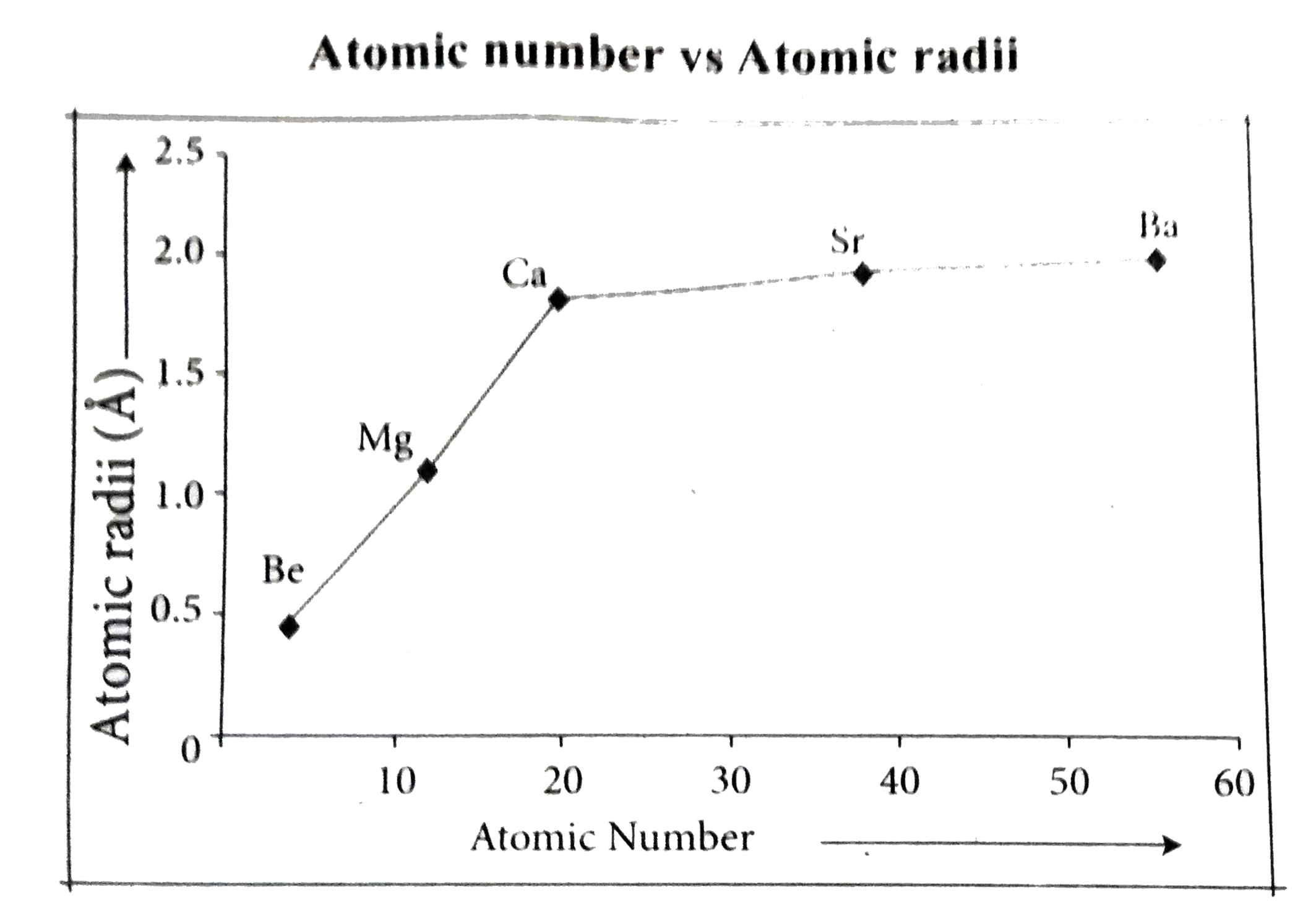 `17^th` group elements : 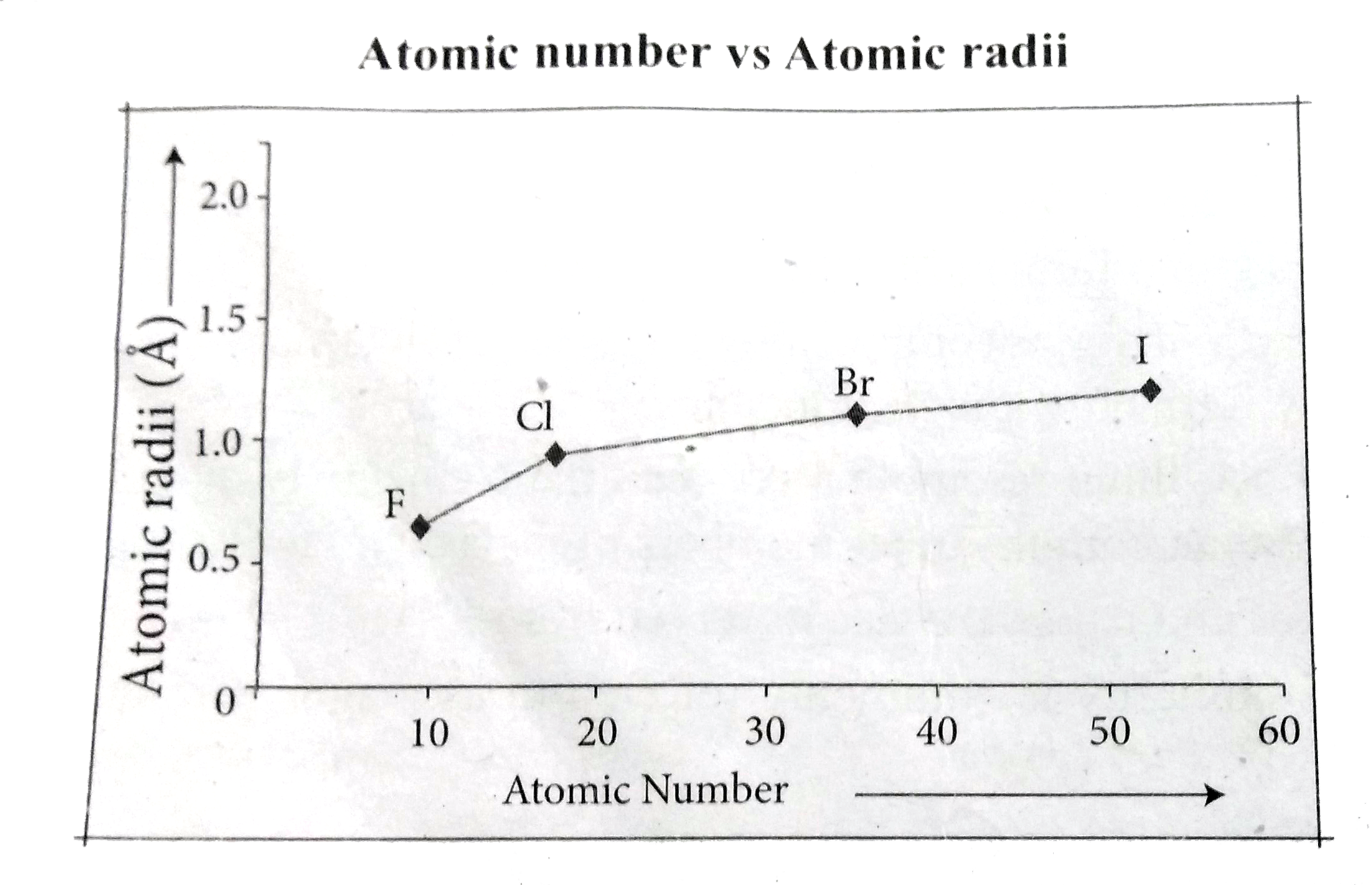 As we move down the group, atomic radii increase an INCREASES with the increase in atomic number. As we move down the group, the number energy levels increases, as the number of CICUS increases. Each subsequent energy level is further from the nucleus than the LAST. Therefore the atomic radius increases as the group and energy level increases. `3^rd` period: 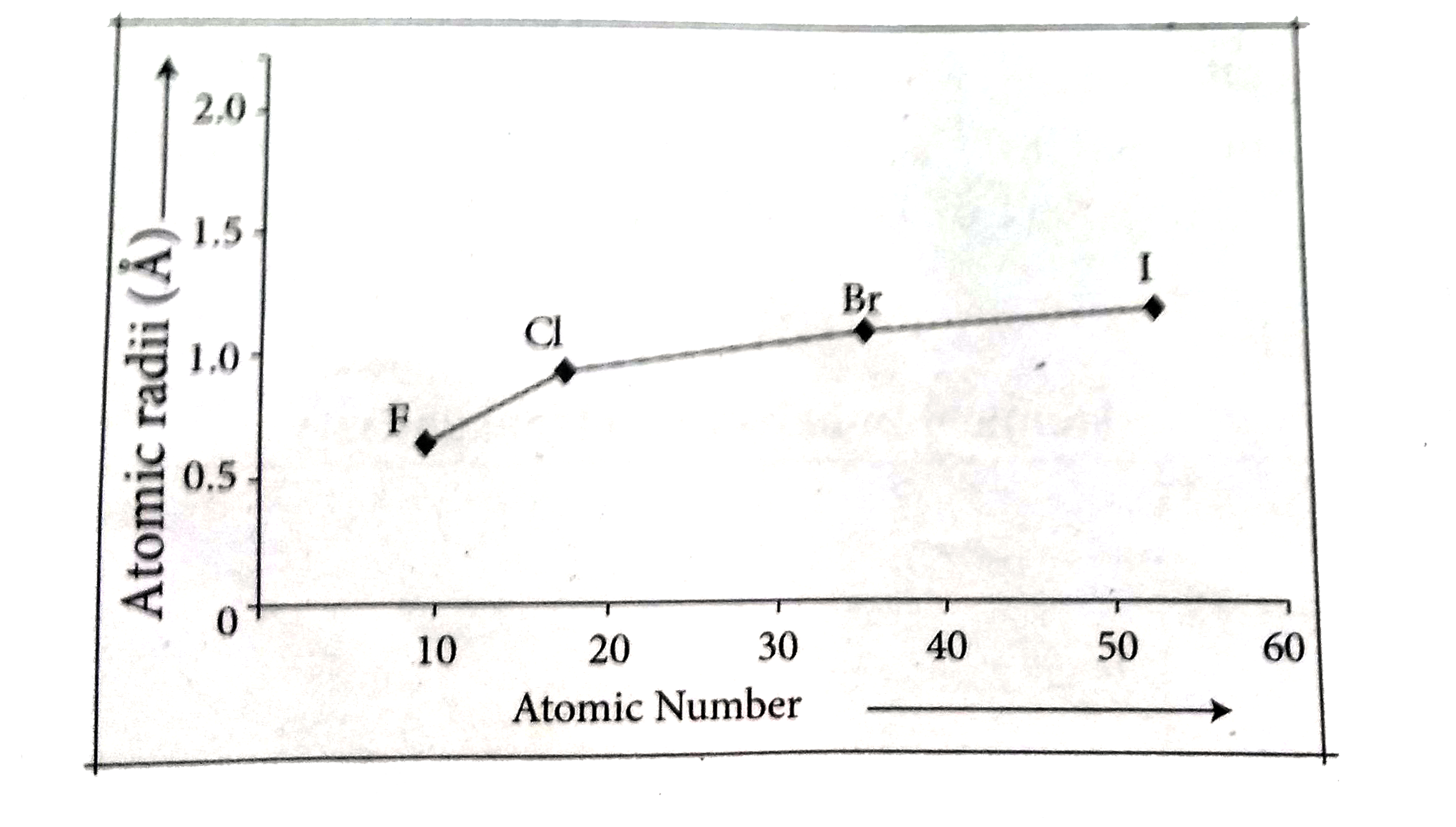 `4^th` period: 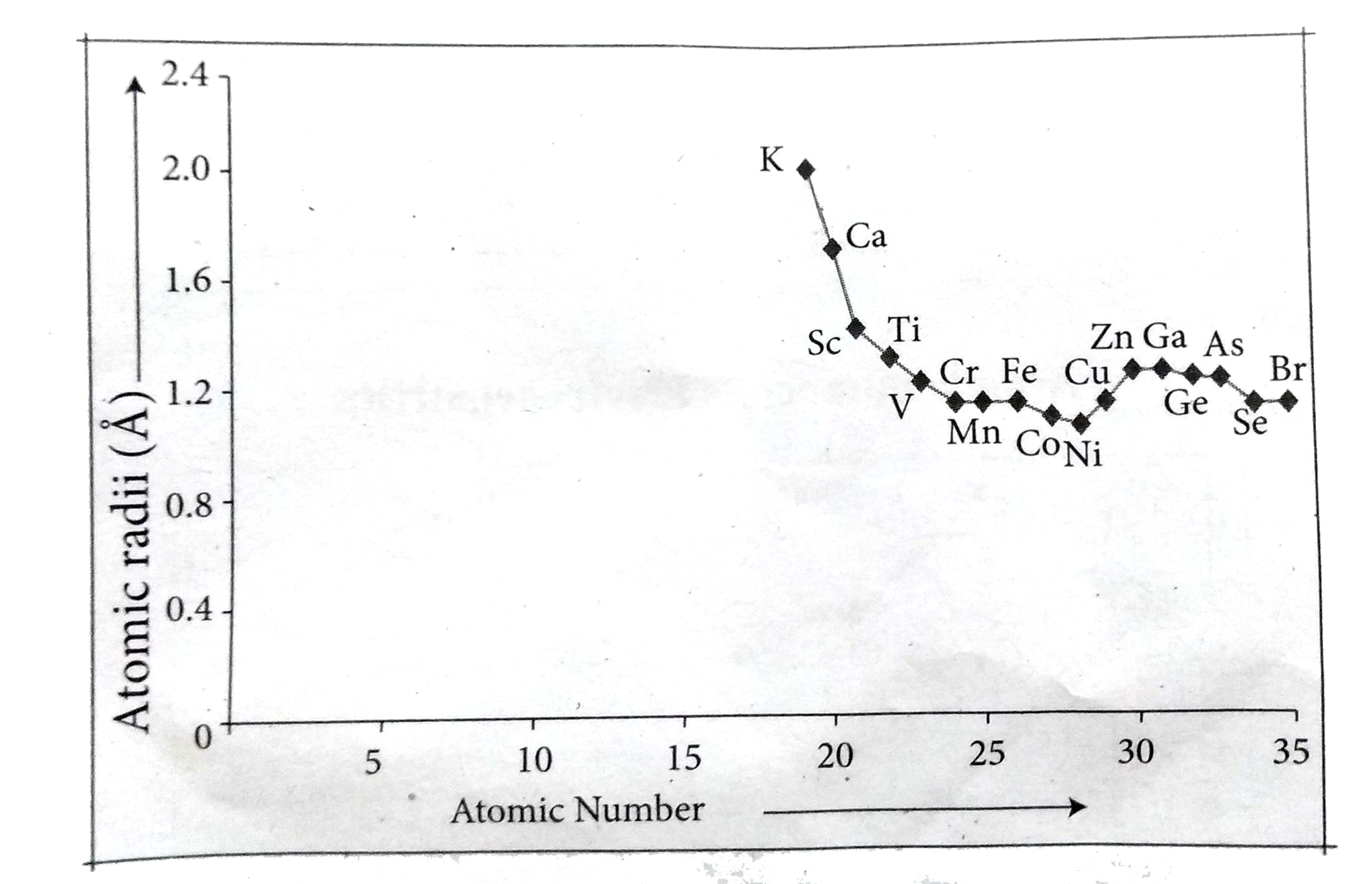 As we move across the period, the atomic radii generally decreases with the increase in atomic number. This is due to the increase in nuclear CHARGE. Across the period, the extra electrons are only added to the same quantum shell, as a RESULT, the electron cloud contracts and the atomic radius decreases |
|
| 29. |
Covalent molecules formed by heteroatoms bound to have some ionic character. The ionic character is due to shifting of the electron pair towards A or B in the molecule AB. Hence, atoms acquire small and equal charge but opposite in sign. Such a bond which has some ionic character is described as polar covalent bond. Polar covalent molecules can exhibit dipole moment. Dipole moment is equal to the product of charge separation, q and the bond length, d for the bond. The unit of dipole moment is Debye. One Debye is equal to 10^(-18) esu cm. Dipole moment is a vector quantity. It has both magnitude and direction. Hence, dipole moment of molecules depends upon the relative orientation of the bond dipoles, but not on the polarity of bonds alone. A symmetrical structure shows zero dipole moment. Thus, dipole moments help to predict the geometry of the molecules. Dipole moment values can be used to distinguish between cis-and traps-isomers, ortho-, meta-and para-forms of a substance, etc. The percentage of ionic character of a bond can be calculated by the application of the following formula : % " ionic character " = ("Experimental value of dipole moment ")/("Theoretical value of dipole moment ") xx 100 The dipole moment of NF_(3) is very much less than that of NH_(3) because : |
|
Answer» Number of lone PAIRS in `NF_(3)` is MUCH less greater than in `NH_(3)` |
|
| 30. |
Covalent polymeric chloride among the following is |
|
Answer» `CaH_(2)` |
|
| 31. |
Covalent molecules formed by heteroatoms bound to have some ionic character. The ionic character is due to shifting of the electron pair towards A or B in the molecule AB. Hence, atoms acquire small and equal charge but opposite in sign. Such a bond which has some ionic character is described as polar covalent bond. Polar covalent molecules can exhibit dipole moment. Dipole moment is equal to the product of charge separation, q and the bond length, d for the bond. The unit of dipole moment is Debye. One Debye is equal to 10^(-18) esu cm. Dipole moment is a vector quantity. It has both magnitude and direction. Hence, dipole moment of molecules depends upon the relative orientation of the bond dipoles, but not on the polarity of bonds alone. A symmetrical structure shows zero dipole moment. Thus, dipole moments help to predict the geometry of the molecules. Dipole moment values can be used to distinguish between cis-and traps-isomers, ortho-, meta-and para-forms of a substance, etc. The percentage of ionic character of a bond can be calculated by the application of the following formula : % " ionic character " = ("Experimental value of dipole moment ")/("Theoretical value of dipole moment ") xx 100 Arrange the following compounds in increasing order of dipole moments, toluene (I), o- dichlorobenzene (II), m-dicblorobenzene (III) and p dichlorobenzene (IV) : |
|
Answer» `IV LT I lt II lt III` |
|
| 32. |
Covalent molecules formed by heteroatoms bound to have some ionic character. The ionic character is due to shifting of the electron pair towards A or B in the molecule AB. Hence, atoms acquire small and equal charge but opposite in sign. Such a bond which has some ionic character is described as polar covalent bond. Polar covalent molecules can exhibit dipole moment. Dipole moment is equal to the product of charge separation, q and the bond length, d for the bond. The unit of dipole moment is Debye. One Debye is equal to 10^(-18) esu cm. Dipole moment is a vector quantity. It has both magnitude and direction. Hence, dipole moment of molecules depends upon the relative orientation of the bond dipoles, but not on the polarity of bonds alone. A symmetrical structure shows zero dipole moment. Thus, dipole moments help to predict the geometry of the molecules. Dipole moment values can be used to distinguish between cis-and traps-isomers, ortho-, meta-and para-forms of a substance, etc. The percentage of ionic character of a bond can be calculated by the application of the following formula : % " ionic character " = ("Experimental value of dipole moment ")/("Theoretical value of dipole moment ") xx 100 A diatomic molecule has a dipole moment of 1.2 D. If the bond length is 1.0 xx 10^(-8) cm, what fraction of charge does exist on each atom? |
|
Answer» `0.1` |
|
| 33. |
Covalent molecules formed by heteroatoms bound to have some ionic character. The ionic character is due to shifting of the electron pair towards A or B in the molecule AB. Hence, atoms acquire small and equal charge but opposite in sign. Such a bond which has some ionic character is described as polar covalent bond. Polar covalent molecules can exhibit dipole moment. Dipole moment is equal to the product of charge separation, q and the bond length, d for the bond. The unit of dipole moment is Debye. One Debye is equal to 10^(-18) esu cm. Dipole moment is a vector quantity. It has both magnitude and direction. Hence, dipole moment of molecules depends upon the relative orientation of the bond dipoles, but not on the polarity of bonds alone. A symmetrical structure shows zero dipole moment. Thus, dipole moments help to predict the geometry of the molecules. Dipole moment values can be used to distinguish between cis-and traps-isomers, ortho-, meta-and para-forms of a substance, etc. The percentage of ionic character of a bond can be calculated by the application of the following formula : % " ionic character " = ("Experimental value of dipole moment ")/("Theoretical value of dipole moment ") xx 100 Which are non-polar molecules? |
|
Answer»
|
|
| 34. |
What is Covalent hydride? Explain with an example. |
| Answer» | |
| 35. |
Covalent compounds have low melting point. |
| Answer» Solution :In covalent compound MOLECULES are HELD together by WEAK intermoleuclar FORCES. | |
| 36. |
Covalent compounds are generally soluble in |
|
Answer» POLAR solvents |
|
| 37. |
Covalent character is maximum for |
|
Answer» `AlF_(3)` |
|
| 38. |
Covalent bonds have definite orientations but electrovalent bonds have no definite orientation-explain. |
| Answer» SOLUTION :Covalent bonds are formed by the overlap of atomic orbitals having definite ORIENTATION. Consequently, covalent bonds have specific orientations. On the other hand, ELECTROVALENT bonds have no definite orientations because oppositely CHARGED ions attract each other from all possible DIRECTIONS by electrostatic forces. | |
| 39. |
Covalent bonds are directional bonds while ionic bonds are non-directional. |
| Answer» Solution :A covalent BOND is formed by the overlapping atomic orbitals. The direction of overlapping gives the direction of bond. In ionic bond, the electrostatic FIELD of an ion is non-directional. Each POSITIVE ion is surrounded by a NUMBER of anions in any direction DEPENDING upon its size and vice-versa. That.s why covalent bonds are directional bonds and ionic bonds are non.directional. | |
| 40. |
Covalent bond undergo fission in two different ways. The correct representation involving a heterolytic fission of CH_(3)-Br is |
|
Answer» `CH_(3)-Br RARR overset(o+)(C)H_(3)+Br^(ɵ)` 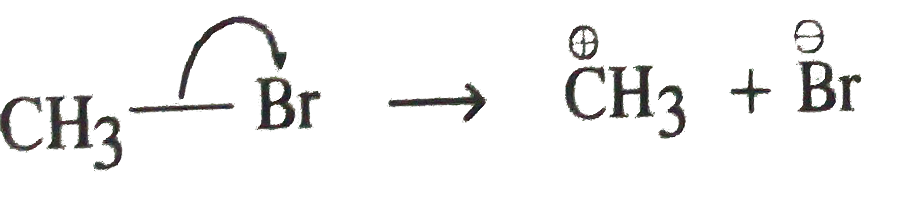
|
|
| 41. |
Covalent bond length of chlorine molecule is 1.98Å. Then covalent radius of chlorine is |
|
Answer» `198 Å` |
|
| 43. |
Covalent bond can undergo fission in two different ways. The correct representation involving a heterolytic fission of CH_(3)-Br is……. |
|
Answer»
 The ELECTRONEGATIVITY of Br in `""^(**)C -Br` BOND is more than carbon. The heterolytic fission of `""^(**)C -Br` bond is occurs and both electron of bond TRANSFER on negative atom Br Therefore, there are positive ion `""^(+)C H_(3)` and negative ion `Br^(-)` formed. (A) It is incorrect, because the bonding `e^(-)` pair is not come towards the negative Br  (B) It is correct because of bonding `e^(-)` pair is comes on negative Br and FORM C positive and Br negative (C ) It is incorrect, because the bonding `e^(-)` pair on Br and then after the C of `CH_(3)` becomes negative because, in it homolytic fission (D ) The electron of bonding `e^(-)` pair is shifted on different atom. |
|
| 44. |
Covalent bond can undergo fission in two different ways. The correct represenation involving a heterolytic fission of CH_(3)-Br is |
|
Answer»
 Since Br is more electronegative (2.8) than carbon (2.5), therefore, heterolytic FISSION OCCURS in such AWAY that Br GETS the negative charge and `CH_(3)` the +ve charge. Thus, option (b) is correct. |
|
| 45. |
Covalency of carbon in diamond is |
|
Answer» 4 |
|
| 46. |
Count number of chiral centres in the following compound. |
Answer» 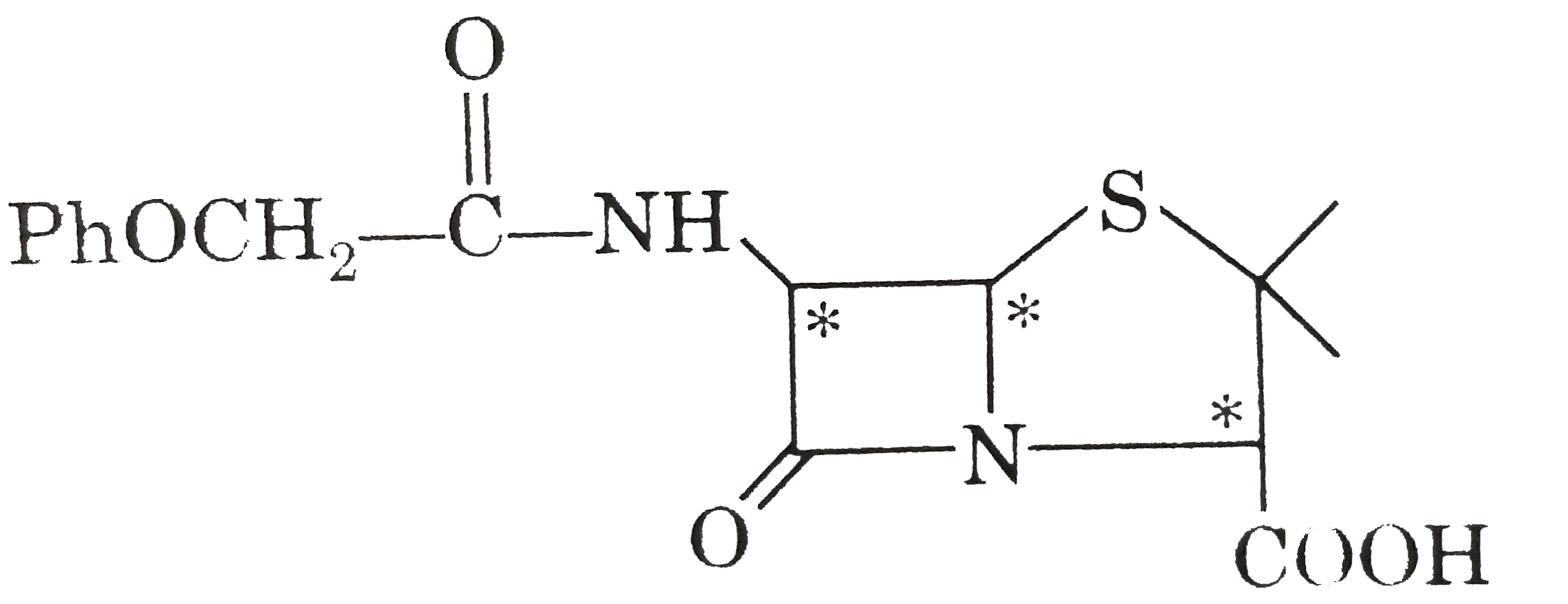
|
|
| 47. |
Cosider the following gasecous equilbria with equilibria with equilibrium constants K_(1) and K_(2) respectively SO_(2) + 1/2 O_(2)(g) hArr SO_(3) (g)-K_(1) 2SO_(3)(g) hArr 2SO_(2) + O_(2)(g)-K_(2) The equilibrium constants are related as.......... |
|
Answer» `1/(K_1^2) = ([SO_(2)]^(2)[O_2])/([SO_3]^2)=K_(2) rArrK_(2) 1/(K_1^2) RARR K_(1)^(2)=(1)/(K_2)` |
|
| 48. |
Cosider the following equilibrium reaction and relate their equilibrium constants (i) N_2 + O_(2) hArr 2NO,K_1 (ii) 2NO + O_(2) hArr 2NO_(2), K_2 (iii) N_2 + 2O_(2) hArr 2NO_(2),K_3 |
|
Answer» Solution :`K_(1)= ([NO]^2)/([N_2][O_2]),K_(2) = ([NO_2]^2)/([NO]^2[O_2]),K_3 = ([NO_2]^2)/([N_2][O_2])` Now, `K_(1)xx K_(2) = ([NO]^2)/([N_2][O_2])xx([NO_2]^2)/([NO]^2[O_2])=([NO_2]^2)/([N_2][O_2]^2)=K` `THEREFORE"" K_3 = K_1 xx K_2` |
|
| 49. |
Corundum is "…………" mineral of aluminium |
|
Answer» silicate |
|





