Saved Bookmarks
This section includes 7 InterviewSolutions, each offering curated multiple-choice questions to sharpen your Current Affairs knowledge and support exam preparation. Choose a topic below to get started.
| 1. |
Draw the structure of white phosphorus and red phosphorus. Which one of these two types of phosphorus, is more reactive and why ? Or Which allotrope of phosphorus is more reactive and why? Or Why is red phosphorus less reactive than white phosphorus. Or Draw the structural difference between white and red phosphorus. |
|
Answer» Solution :Both white and red phosphorus consist of `P_(4)` tetrahedra. In white phosphorus, the various `P_(4)` molecules are HELD TOGETHER by weak van der Waals forces of attraction. In each `P_(4)` molecule, the PPP ANGLE is only `60^(@)` (Fig. 11.31, page 11/127) which is much smaller than the NORMAL tetrahedral angle of `109^(@)-28`. As a result, there is considerable angle strain. Due to weaker forces of attraction and considerable angle strain, white phsphorus is very reactive. In contrast, in red phosphorus, these `P_(4)` tetrahedra are joined together throughi covalent BONDS to give polymeric structure (Fig. 11.32, page 11/129). Since it is difficult to break strong covalent bond as compared to weak van der Waals forces of attraction, therefore, white phosphorus is more reactive than red phosphorus. |
|
| 2. |
Draw the structure of the isotopes of hydrogen and distinguish them. |
Answer» SOLUTION :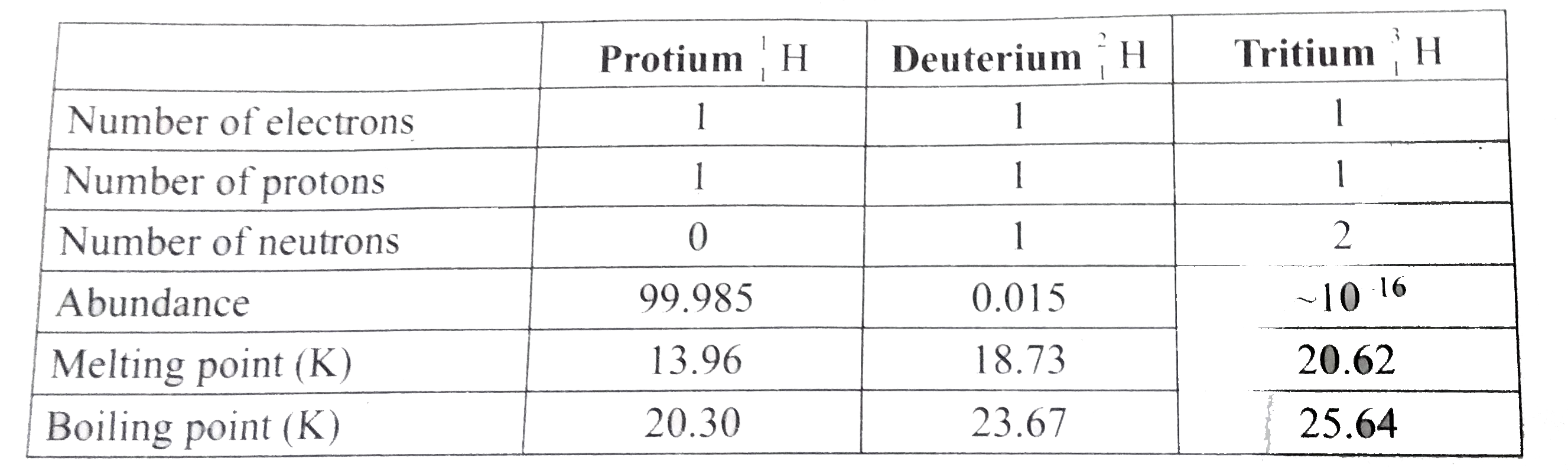
|
|
| 3. |
Draw the structure of PCl_(5). Or Solid PCl_(5) is ionic in nature. |
Answer» Solution :In the solid, `PCl_(5)` EXISTS as `[PCl_(4)]^(+)[PCl_(6)]^(-)` in which `[PCl_(4)]^(+)` SPECIES is tetrahedral while `[PCl_(6)]^(-)` species is octahedral as SHOWN : 
|
|
| 4. |
Draw the structure of P and Q. |
|
Answer» |
|
| 5. |
Draw the structure of (i) Mesitylene (ii) 1, 2, 3-trimethyl benzene |
Answer» SOLUTION :(i) 
|
|
| 6. |
Draw the structure of (i) BeCl_(2) (vapour) (ii) BeCl_(2) (solid). |
Answer» Solution :(i) In the vapour state, BECL, exists as a monomer with a LINEAR STRUCTURE. (II)`BeCl_(2)` exists as a POLYMER in condensed (solid) phase. 
|
|
| 7. |
Draw the structure of (i) Acetic acid (ii) Water. |
Answer» SOLUTION :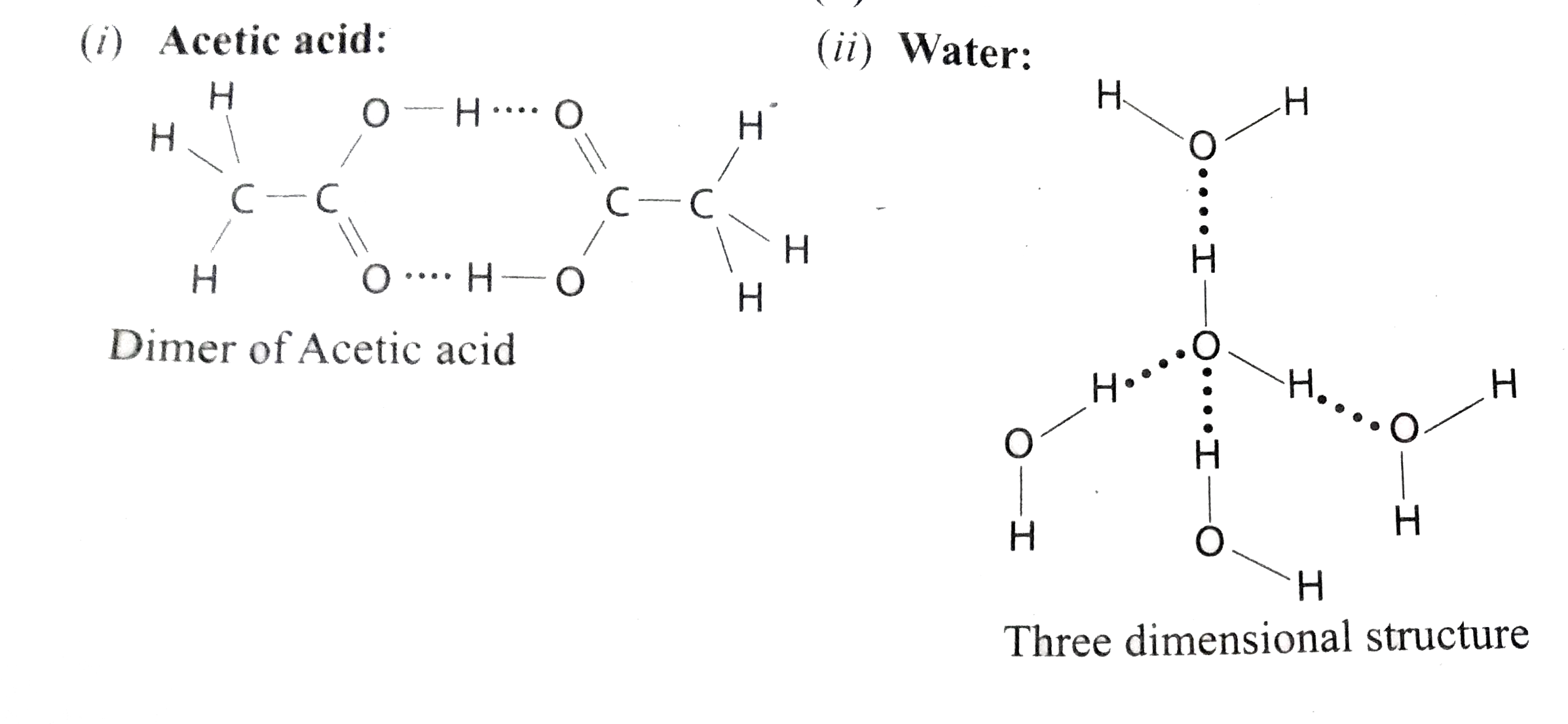
|
|
| 8. |
Draw the structure of (i) 1-ethyl-2-methyl cyclopentane (ii) 1-ethyl-2, 3-dimethyl cyclohexane (iii) 5-ethyl-2-methylcyclohex-1-ene |
Answer» SOLUTION :(i) 
|
|
| 9. |
Draw the structure of (i) 2-cyclopentyl propanal (ii) 2-cyclo-but-enyl propanal |
Answer» SOLUTION :(i) 
|
|
| 10. |
Draw the structure of H_(2) SO_(4) . What is hybridisation of S-atom in it ? |
| Answer» Solution :`H-O-UNDERSET(O) underset(DARR)OVERSET(O) overset(UARR)S-O-H` . Hybridisation of S-atom is `sp^(3)`. | |
| 11. |
Draw the structure of compound having C_(7)H_(8) and give number of sigma and pi bonds. |
|
Answer» Solution :It POSSESS three double `(PI). HC=CH` it has `7C-C sigma` bond and 8C-H `sigma`-bond, TOTAL 15 C-H `sigma` BONDS.    
|
|
| 12. |
Draw the structure of d-orbital (OrbitaI whose Azimuthal quantum no= 2). |
Answer» SOLUTION :d- ORBITAL has 5 ORIENTATIONS. 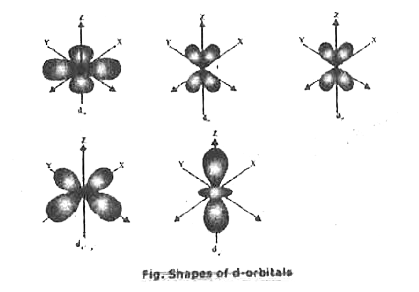
|
|
| 13. |
Draw the structure of chromium pentoxide and predict the oxidation number of chromium in it |
|
Answer» Solution :The structure of chromium PENTOXIDE is given on the RHS LET X be the O.N fo Cr then X+(4-1)+ 1(-2) =0 or x=+6+ 
|
|
| 14. |
Draw the structureof boricacid showinghydrogenbonding. Which speciesis present in water ? What is the hybridisation of boron in this species ? |
|
Answer» Solution :In water, boric acid is present in form of `[B(OH)_(4)]^(-)` SPECIES . `B(OH)_(3) + 2H_(2)O RARR [B(OH)_(4)]^(-) +H_(3)O^(+)` Since in thisspecies , `[B(OH)_(4)]^(-)`, Bis attachedto fourOH group , therefore , B is `SP^(3)` hybridized. |
|
| 15. |
Draw the structure of boric acid showing hydrogen bonding. Which species is present in water ? What is the hybridizations of boron in this species ? |
|
Answer» Solution :It has a layer structure in which planar `H_3BO_3` units are JOINED by HYDROGEN bonds forming hexagonal rings. Boric ACID is a weak monobasic acid. It is not a protonic acid but acts as a LEWIS acid by accepting electrons from a hydroxyl ion. In water, boric acid is present in the form of `[B(OH)_4]^(-)`species. The HYBRIDIZATIONS of boron in this species is `sp^3`. `B(OH)_3+ 2HOH to [B(OH)_4]^(-) + H_3O^+` 
|
|
| 16. |
Draw the structure of BeCl_(2) in different physical states. |
Answer» SOLUTION :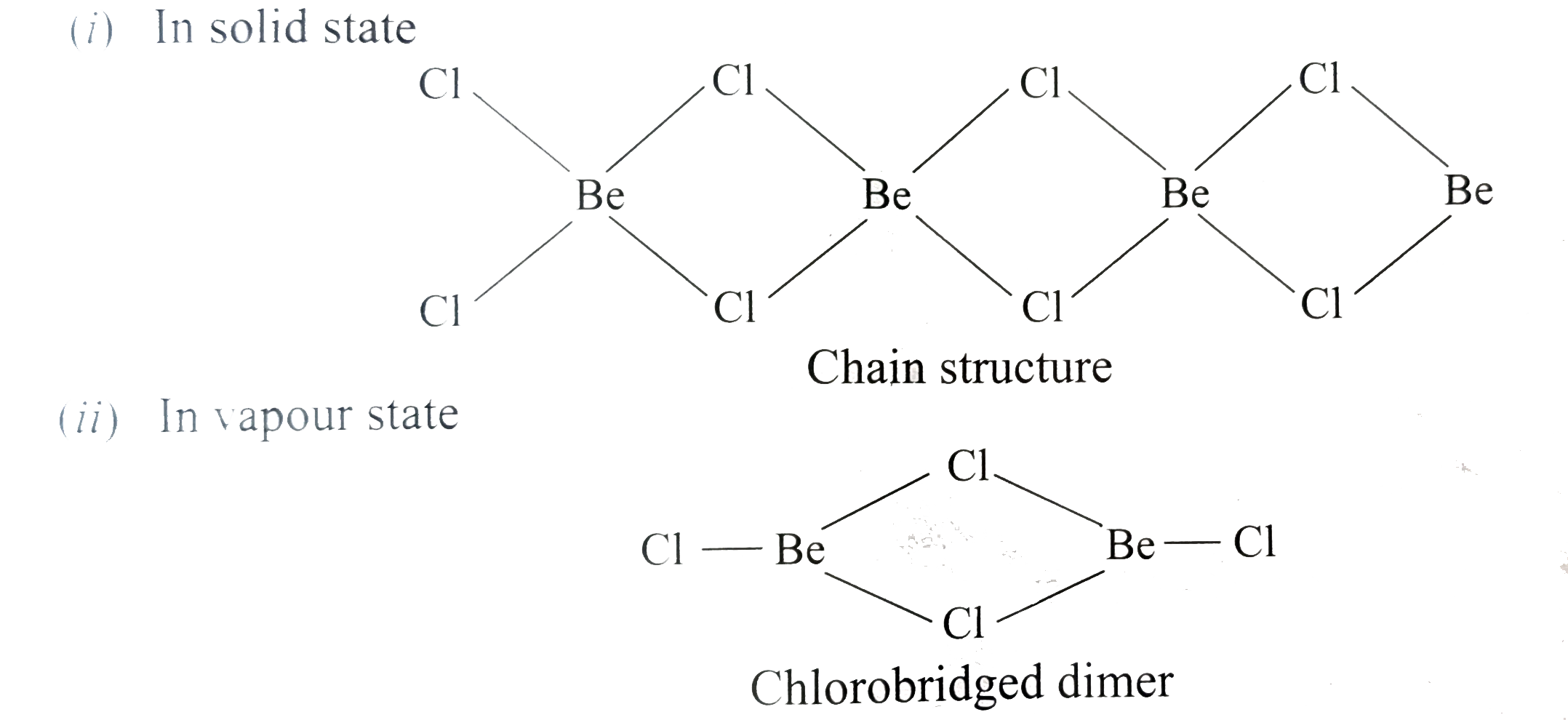
|
|
| 17. |
Draw the structure of BCl_(3).NH_(3) and AlCl_(3) (dimer). |
Answer» Solution :In `BCl_(2)` the CENTRAL B atom has six electrons in the valence shell. It is,therefore, an ELECTRON deficient molecule and needs twomore electrons to completeits octet. In otherwords, `BCl_(3)`actsas a Lewis acids. `NH_(3)`,on theother hand, has a lone pair of electronswhich it can donate EASILY. Therefore,`NH_(3)` acts as a Lewisbase. The Lewis acid `(BCl_(3))`and theLewisbase `(NH_(3))`combinetogetherto form an adduct as SHOWN below :  In `AlCl_(3)`, Al has sixelectronsin the velence shell. Therefore, it is an electrondeficient moleculeand needs two more electrons tocompleteits octet. In otherwords, `AlCl_(3)` acts as a Lewis acid. Chlorine, on the other hand,has THREE lone pairs of electrons. Therefore, to completeits octet, the central Al atom of one moleculeaccepts a lone pair of electronsfrom Cl atom of theother moleculeforming adimericstructureas shownabove. 
|
|
| 18. |
Draw the structure of AB_(4)L_(2) and AB_(7) type of molecules with example. |
Answer» SOLUTION :
|
|
| 19. |
Draw the structure of AB_(2), AB_(3), AB_(3)L type of molecules with example. |
|
Answer» Solution :(i) `AB_(2)` : Number ot bond PAIRS = 2 Shape = Linear Example : `BeCl_(2)` (ii) `AB_(3)` : Number of bond pairs = 3 Shape = Tirgonal planar Example : `BF_(3)` (III) `AB_(2)L` : Number of bond pairs = 2 Number of lons pairs = 1 Shape = Bent (or) inverted V shape Example : `NH_(3)` ` (##FM_CHE_XI_V02_C10_E03_170_S01.png" width="80%"> |
|
| 20. |
Draw the structure of 4-hydroxy-3(2-hydroxy ethyl) hexanoic acid. |
| Answer» Solution :`UNDERSET("4-hydroxy-3-(2 hydroxyethyl-hexanoic ACID)")(overset(6)CH_(3)-overset(5)CH_(2)-underset(OH)underset(|)(overset(4)CH)-overset(overset(CH_(2)OH)overset(|)(CH_(2)))overset(|)(overset(3)CH)-overset(2)CH_(2)-overset(1)COOH` | |
| 21. |
Draw the structure (i) 1-(cyclo butyl)-2 (cylopropyl) ethane (ii) 2-carbomyl cyclobutane-1-carboxylic acid |
Answer» SOLUTION :(i) 
|
|
| 22. |
Draw the structure and write down the IUPAC name for the isomerism exhibited by the molecular formulae. (i) C_(5)H_(12)-Pentane (3isomers) (ii) C_(6)H_(14)-Hexane(5isomers) |
|
Answer» Solution :`(i) C_(5)H_(10)` `(a) CH_(3)-CH_(2)-CH_(2)-CH_(2)-CH_(3) to n` PENTANE `(b) CH_(3)-CH_(2)-underset(2-"methyl"-1-"but"-1"are")underset(CH_(3))underset(|)(CH)-CH_(2)` `(c ) CH_(3)-overset(CH_(3))overset(|)underset(CH_(3))underset(|)(C )-CH_(3)to2`, `2`-Dimethyl propane `(ii) C_(6)H_(14)` `(a) underset(n-"hexane")(CH_(3)-CH_(2))-CH_(2)-CH_(2)-CH_(2)-CH_(3)to` `(b) underset("pentane")(CH_(3)-underset(CH_(3))underset(|)(C )H)-CH_(2)-CH_(2)-CH_(3)to"Methyl"` `(c ) underset(3"Methyl pentane")(CH_(3)-CH_(2)-CH)-CH-CH-CH_(2)-CH_(3)to` `(d) CH_(3)-overset(CH_(3))overset(|)underset(CH_(3))underset(|)(C )-CH_(2)-CH_(3)to2"methyl pentane"` `(e) CH_(3)-underset(CH_(3))underset(|)(C )H-underset(CH_(3))underset(|)(C )H-CH_(3)to2,2- "dimethyl"` butone [These two compounds exhibits constitutional isomerism] |
|
| 23. |
Draw the structure and writedownthe IUPc name for the isomerism exhibited by the molecular formulae (i) C_(5)H_(10) -Pentene (3 isomers) (ii) C_(6)H_(12)-Hexene (5 isomers ) |
|
Answer» Solution :`(i) C_(5) H_(10)-`Pentene(3 isomers ) (a) `CH_(3) - CH_(2) - CH_(2) - CH = CH_(2) to 1-` pentene(or)pent- ene (b)`CH_(3)- CH_(2) - CH =CH - CH_(3) to 2-`PENTANE(or)pent -2-ene (c ) `CH_(3) - UNDERSET( CH_(3)) underset(|) (CH ) - CH = CH_(2) to 3-`methyl- but -2- ene (ii)`C_(6) H_(12)-`Hexzne(5 isomer ) (a) `CH_(3)- CH_(2)- CH_(2) - CH_(3)n = CH_(2) to ` Hex-1- ene (b) ` CH_(3) - CH_(2) - CH_(2)- CH = CH - CH_(3) to`Hex -2-ene (c )`CH_(3)- CH_(2)- CH - CH = CH_(2)- CH_(3) to`Hex -3-3ene (d ) ` CH_(3)- underset( CH_(3))underset(|)(CH )- CH_(2) l - CH= C H_(2)to 4-`methyl-pene-1-ene ` (e )CH_(3) - underset(CH_(3) )underset(|)overset( CH_(3) ) overset( |) (C ) - CH = CH_(2) to3,3- `dimethylbut1- ene Thesetwocompoundsexihibitsconstitutionisomerism |
|
| 24. |
Draw the structural formula of the following compounds. (i) N-ethyl-N-methylpropan-1-amine (ii) N,N-dimethyl benzenamine |
Answer» Solution :(i) `CH_(3)-CH_(2)-CH_(2)-OVERSET(CH_(3))overset(|)N-CH_(2)-CH_(3)` (II) 
|
|
| 25. |
Draw the structural formula of: (i) 4-methylpent-3-en-2-one (ii) pent-1-yne-3-one |
| Answer» SOLUTION :(i) `CH_(3)-UNDERSET(CH_(3))underset(|)C=CH-underset(O)underset(||)C-CH_(3)` (ii) `CH_(3)-CH_(2)-underset(O)underset(||)C-C=CH` | |
| 26. |
Draw the structural formula for 4,5 diethyl -3,4,5 trimethyloctane |
|
Answer» Solution :`CH_(3) -CH_(3) underset(H) underset(|) (C ) - underset(C_(2)H_(7) )underset(|) OVERSET( 4)(C ) - underset(C_(2)H_(5))underset(|) (C ) -CH_(7) -CH_(3)` `(4,5` -DIETHYL -3.4trimethyloctane ) |
|
| 27. |
Draw the staggered conformation of ehtane. |
|
Answer» |
|
| 28. |
Draw the sp^(3) hybridized C. |
Answer» Solution :In `SP^(3)` hybridization from `1s^(2)2s^(1)2p_(x)^(1)2_(y)^(1)2p_(2)` the orbitals `2s^(1)2p_(x)^(1)2_(y)^(1)2p_(2)` hybridization to give `sp^(3)` HYBRIDIZED C as FOLLOWS. 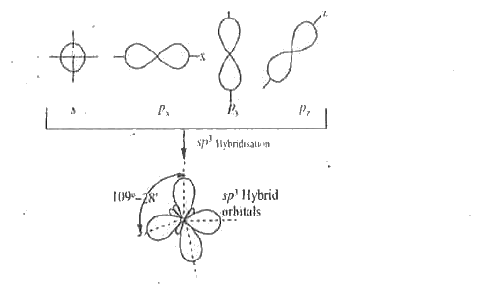
|
|
| 29. |
Draw the sp^(2) hybridized C. |
Answer» SOLUTION :In `SP^(3)` HYBRIDIZATION, the `2s^(1),2p_(x)^(1),2_(y)^(1)` orbtials hybridization where as `2p_(2)` is not involves in hybridization. 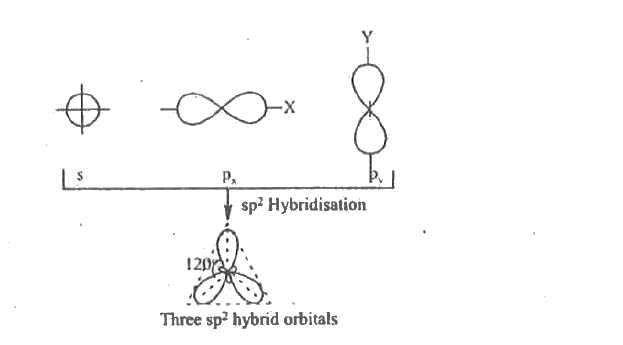
|
|
| 30. |
Draw the shapes of the following hybridorbitals:sp sp^(2) and sp^(3) . |
Answer» Solution :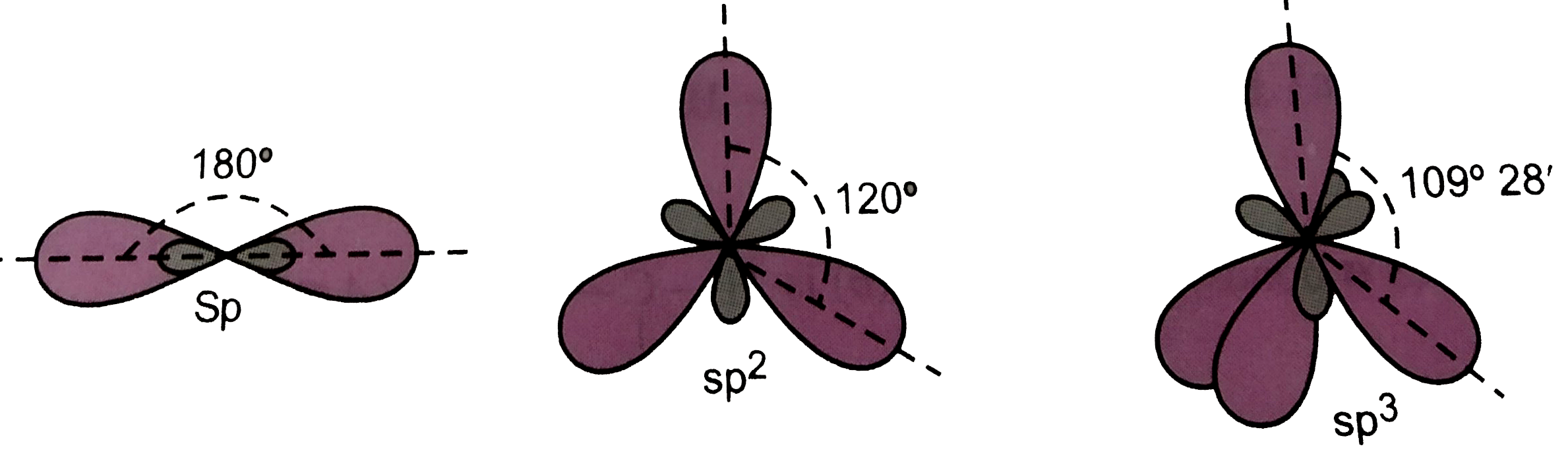 All the HYBRID ORBITALS have same SHAPE . However , their sizes are in the order ` SP lt sp^(2) lt sp^(3)`  . .
|
|
| 31. |
Draw the sp^ hybridized C. |
Answer» SOLUTION :In SP hybridized C, the `2S^(1)&2p_(x)^(1)` is hybridizes where are `2p_(y)^(1)and2p_(x)^(1)` is not. 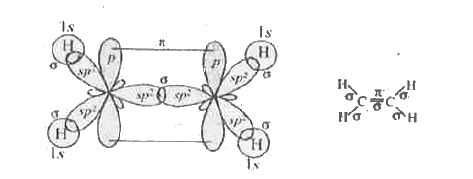
|
|
| 32. |
Draw the shapes of 1s,2s and 3s orbitals. |
Answer» SOLUTION :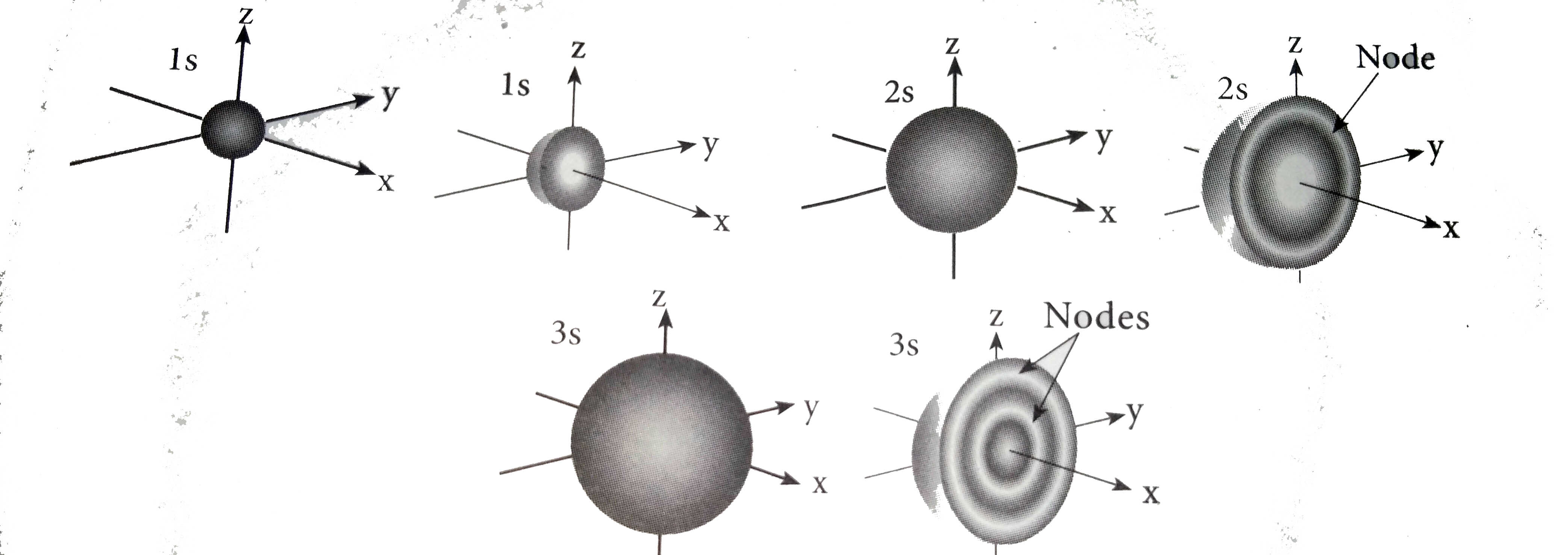
|
|
| 33. |
Draw the shape of (i) XeF_(2) (ii) IOF_(5) (iii) XeOF_(4) |
Answer» SOLUTION :
|
|
| 35. |
Draw the resonance structurs for the following compounds?(a)CH_(3)CH = CHCHO (b) CH_(3)CH = CHC^(oplus)H_(2) (c) CO_(2) |
Answer» SOLUTION :
|
|
| 36. |
Draw the resonating structure ofC_(6) H_(5) NH_(2) . |
Answer» SOLUTION :
|
|
| 38. |
Draw the resonating structure of (A) Ozone molecule (B) Nitrate ion |
Answer» SOLUTION :The resonating STRUCTURE of ozone MOLECULE may be written as (B) The resonating structure of nitrate ion`(NO_(3)^(-))` is 
|
|
| 39. |
Draw the resonance structures of the following compounds : (i) CH_(2) = CH-underset(..)overset(..)(Cl):(ii) CH_(2) = CH - CH = CH_(2) (iii) CH_(2) = CH - underset(H)underset(|)(C) = O |
Answer» SOLUTION :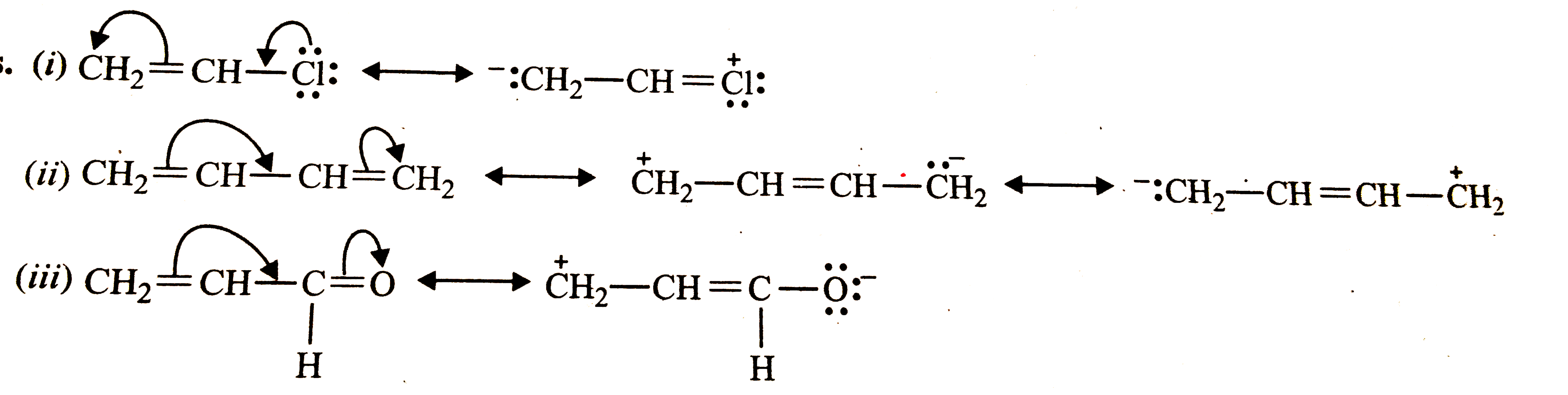
|
|
| 40. |
Draw the resonance structures of the following compounds. (a) CH_(2)= CH= underset(..)overset(..)(C )l: (b) CH_(2)=CH-CH= CH_(2) (c ) CH_(2)= CH- underset(underset(H)(|))(C )=O |
|
Answer» Solution :(a) `CH_(2)= CH- underset(..)overset(..)(C )l: HARR overset(+)(C )H_(2) - CH= underset(..)(C )overset(+)(l):` In ethenal, Cl is negative atom which give the non-bonding electron pair to the adjacent C-Cl and form `pi`-BOND.  In structure (A) 1-2 CARBON and 3-4 carbon, `pi`-electron pair respectively more in `C_(2)-C_(3) and C_(4)` so structure (B) form. The `pi` electron pair of `C_(3)-C_(4)` shift on `C_(2)-C_(3) and C_(1)-C_(2) pi`-electron pair shift on `C_(1)`. So negative charge on `C_(1)` and positive charge on `C_(4)` possessive structure (C ) form |
|
| 41. |
Draw the resonance structures for the following compounds. Show the electron shift using curved-arrow notation. (a) C_(6)H_(5)OH(b) C_(6)H_(5)NO_(2) (c) CH_(3)CH = CHCHO (d) C_(6)H_(5) - CHO (e) C_(6)H_(5)-overset(+)(C)H_(2) (f) CH_(3)CH = CHoverset(+)(C)H_(2) |
Answer» SOLUTION :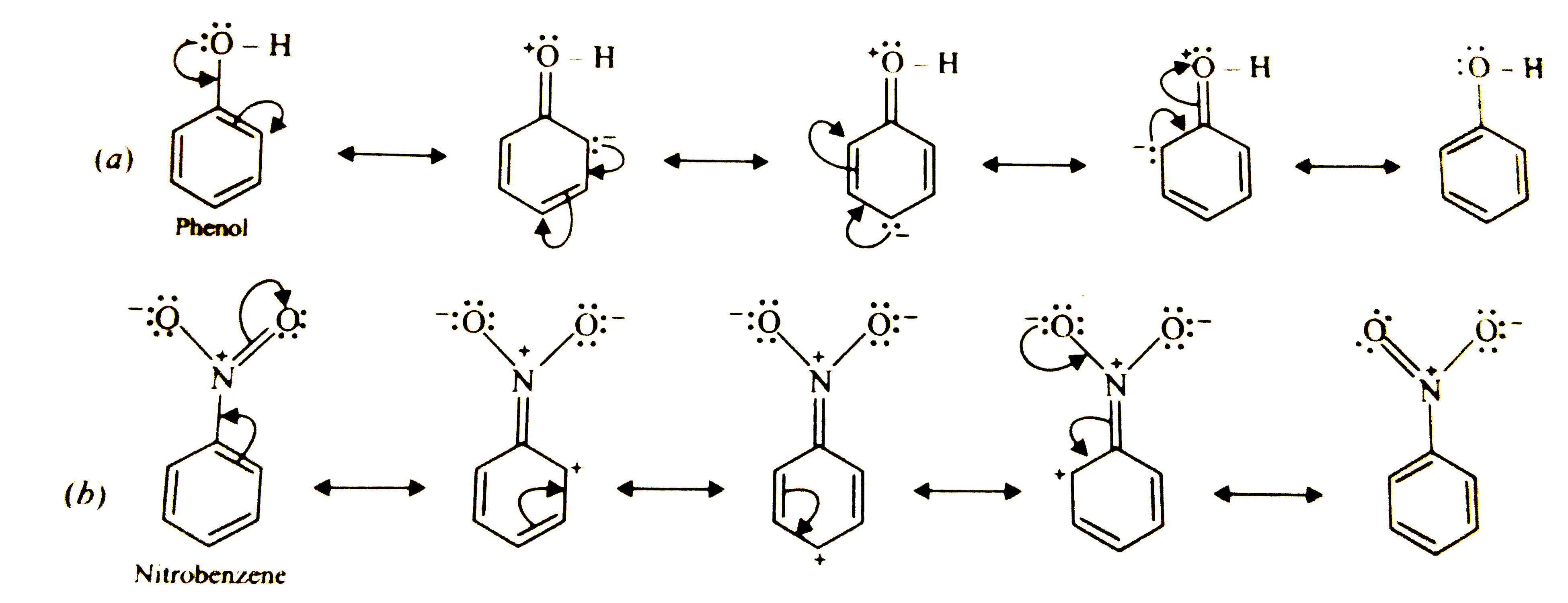 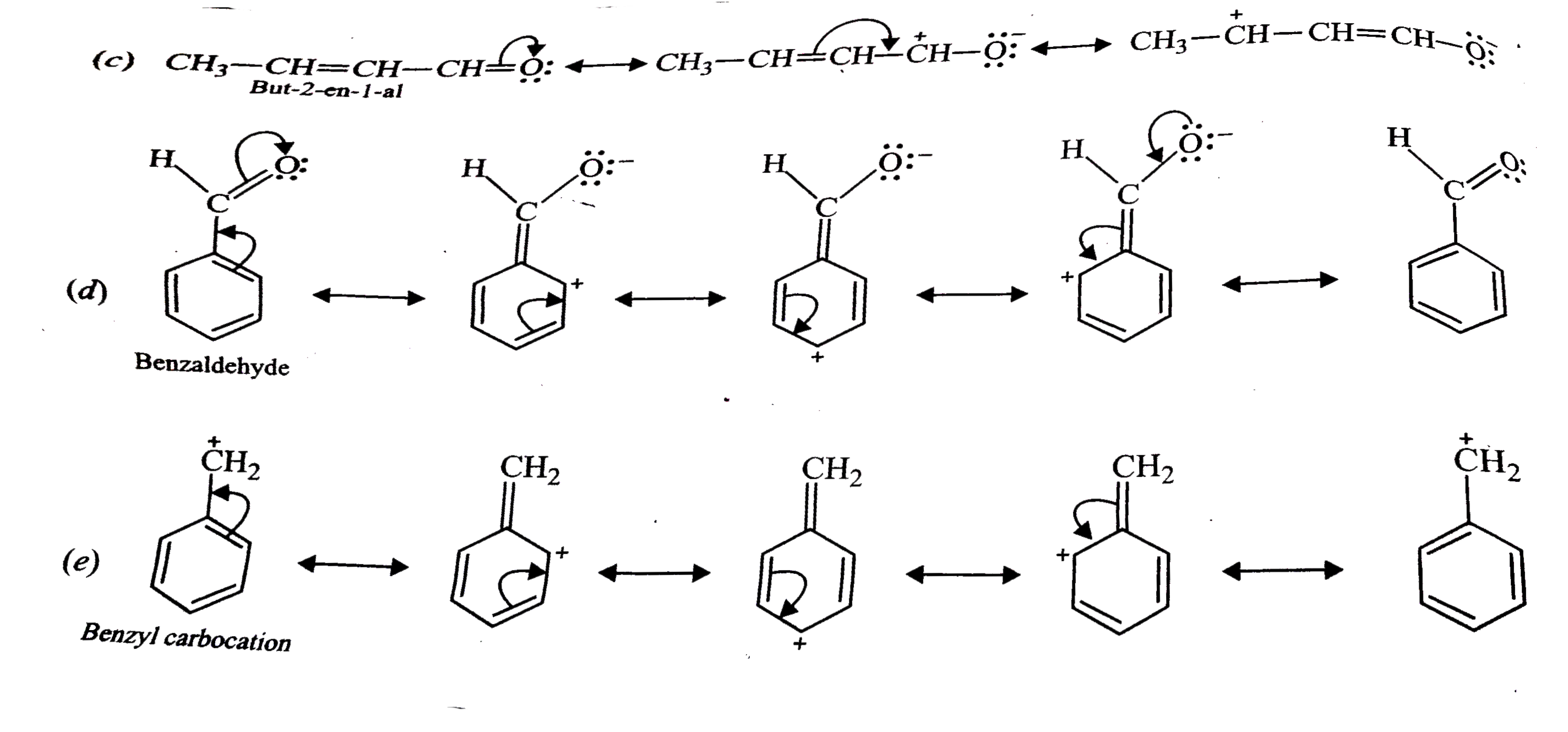
|
|
| 42. |
Draw the resonance structures for the following compounds. Show the electron shift using curved-arrow notation. (a) C_(6)H_(5)OH (b) C_(6)H_(5)NO_(2) (c ) CH_(3)CH= CHCHO (d) C_(6)H_(5)-CHO (e ) C_(6)H_(5)- overset(+)(C )H_(2) (f ) CH_(3)CH= CH overset(+)(C )H_(2) |
Answer» SOLUTION :(a) RESONANCE structures of `C_(6)H_(5)OH`:  (b) Resonance structures of NITROBENZENE: (c ) Resonance structures of `CH_(3)CH= CHCHO`  (d) Resonance structures of `C_(6)H_(5)-CHO` (Benzaldehyde)  (e ) Resonance structures of `C_(6)H_(5)overset(+)(C )H_(2)` (Benzyl Carbocation):  (f) Resonance STRUCTURE of carbocations of `CH_(3)-CH = CH-overset(+)(C )H_(2)` (But-2-en-1-yl)  Positive charge is displace by these structure |
|
| 43. |
Draw the resonance structures for the following compounds. Show the electron shift using curved-arrow notation. (a) C_6H_5OH (b) C_6H_5NO_2 ( c) C_6H_5 overset (oplus) CH_2 (d) CH_3CH=CHCHO ( e) CH_3CH=CH-overset (oplus) CH_2 (f) C_6H_5CHO (g) CH_2=CHOCH_3. |
Answer» SOLUTION :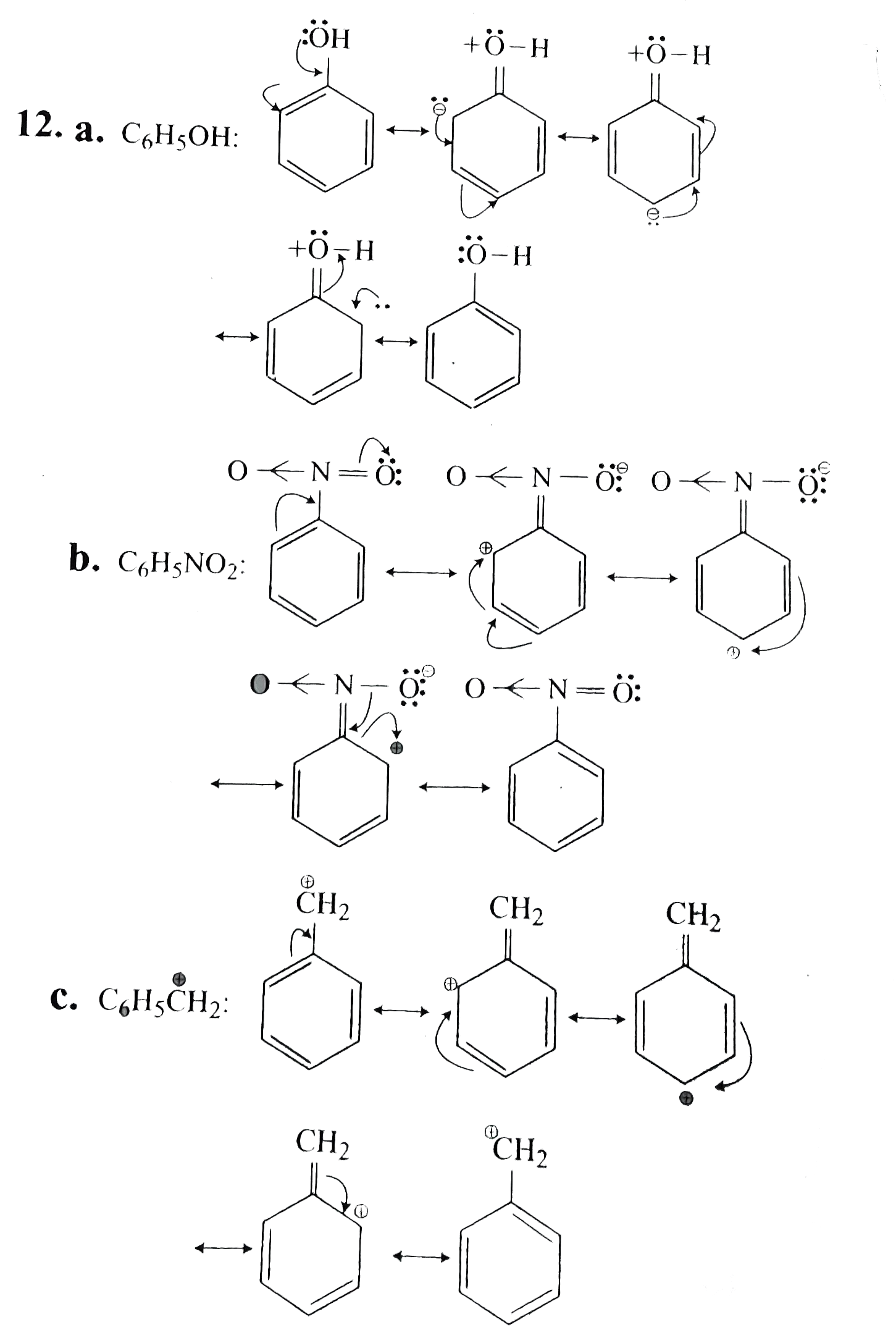 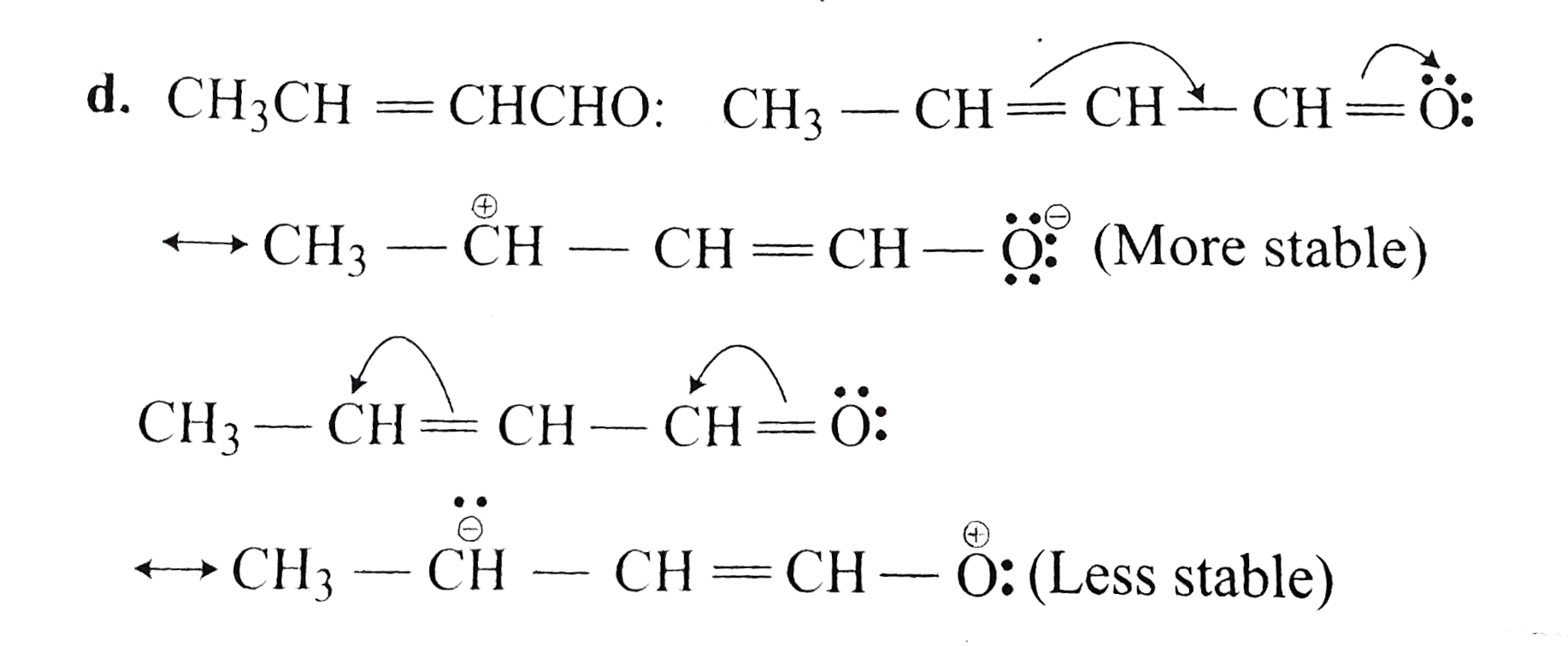 . . `({:("Electropositive ELEMENT with POSITIVE cahrge"),("ELECTRONEGATIVE element with negative charge"):})` |
|
| 44. |
Draw the resonance structure of CO_2 |
| Answer» SOLUTION :`:UNDERSET(..)ddotO OVERSET(ɵ)-C-=O:^(+) HARR:ddotO=C=ddotO: harr:^(+)O-=C-ddotO:^(ɵ)` | |
| 45. |
Draw the functional isomers for the formula C_(3)H_(6)O_(2) with their names. |
|
Answer» Solution :`C_(3)H_(6)O_(2)` : (i) `CH_(3)-CH_(2)-COOH` (Propanic acid) (II) `CH_(3)-COOCH_(3)` (METHYL acetate) |
|
| 46. |
Draw the possible resonance structures for CH_(3) - underset(..)overset(..)(O)-overset(+)(C )H_(2) and predict which of the structures is more stable. Give reason for your answer. |
Answer» SOLUTION :The GIVEN carbocation has two resonance STRUCTURE i.e., (i) and (ii) are as under: 
|
|
| 47. |
Draw the polygon formulae for all the possible structural isomers having the molecular formula C_(5)H_(10). |
Answer» Solution :By polygon formulae, we mean CYCLIC formulae. `C_(5)H_(10)` has the FOLLOWING six polygon formulae : 
|
|
| 49. |
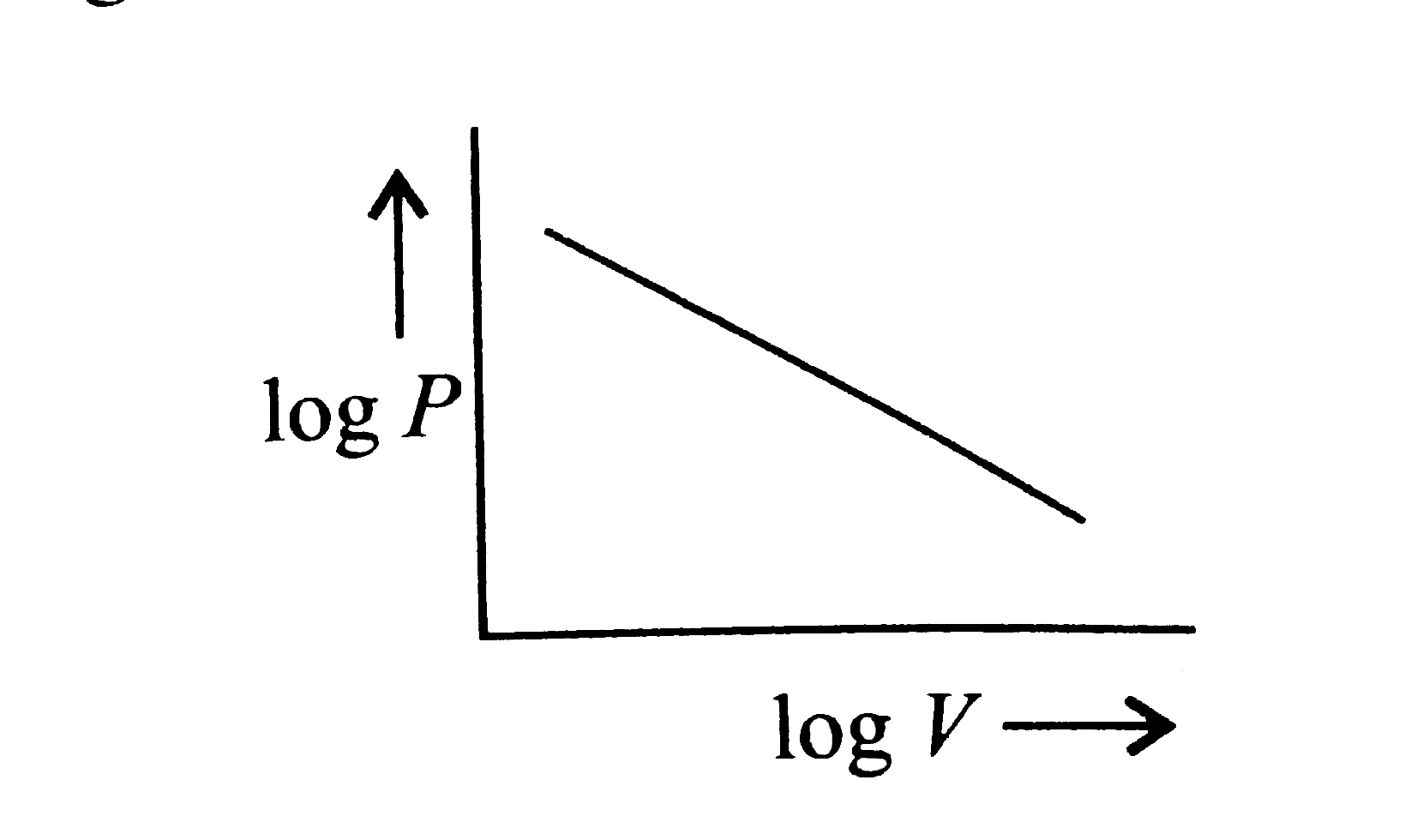
Draw the plot log P vs log V for Boyle's law. |
| Answer» SOLUTION :This implies that at this value of pressure ATTRACTIVE and repulsive forces balance each other this pressure attraction DOMINATES and `Zlt1` above this pressure REPULSION DOMINATE and `Zgt1`. | |
| 50. |
Draw the most stable conformer of N-methylpiperidine. |
|
Answer» |
|