

Saved Bookmarks
This section includes 7 InterviewSolutions, each offering curated multiple-choice questions to sharpen your Current Affairs knowledge and support exam preparation. Choose a topic below to get started.
| 1. |
How does covalent radii vary in a period as well as in a group in the periodic table ? What is the reason ? |
|
Answer» SOLUTION :In a period as we have from left to left to right covalent radius decreases in a period. As we move from left to right atomic number or nuclear charge increases. The pull of the ELECTRON cloud by the nucleus increases, the electron cloud shrinks and as a result the covalent radius decreases. In a GROUP . covalent radius increases from top to bottom . In a group as we move from top to bottom one by one new orbitals are ADDED up thereby the size of the atom goes on INCREASING . The atomic radius also goes on increasing. |
|
| 2. |
How does classical smog differ from photochemical smog? |
Answer» SOLUTION :
|
|
| 3. |
How does classical smog differ from photochemical smog ? |
|
Answer» |
|
| 4. |
How does chlorobenzene react with sodium in the presence of ether? What is the nane of the reaction ? |
|
Answer» Solution :(i) CHLOROBENZENE when heated with sodium in ether solution will FORM biphenyl as the product. This REACTION is called FITTING reaction. `underset("Chlorobenzene")(C_6H_5Cl) + 2Na + ClC_6H_5 underset(DELTA)overset("Ether")to underset("Biphenyl")(C_6H_5C_6H_5) + 2NaCl` |
|
| 5. |
How does chlorine is harmful to ozone layer ? |
|
Answer» Solution :CHLORINE converts ozone into oxygen a) `Cl_2 OVERSET(HV)to 2 overset(*)(Cl)` B) `overset(*)(Cl)+O_3 to Cl overset(*)O + O_2` `Cloverset(*)(O) + (O) to overset(*)(Cl) + O_2` |
|
| 6. |
How does calcium carbonate occurs in nature? |
| Answer» Solution :`CaCO_(3)` is found in nature as CHALK, is found in nature as chalk, marble, carbols, DOLOMITE `(CaCO_(3) + MgCO_(3))`. | |
| 7. |
How does bromo ethane react with the following? (i) Silver Oxide (oxide) (ii) Sodium hyrogen sulphide (iii) Potassium cyanide. |
Answer» SOLUTION :(i) Silver oxide (moist):  (ii) Sodium hydrogen sulhpide: `underset("Bromo ethane")(CH_(3)CH_(2)Br)+NASH underset(Delta)overset("alcohol/"H_(2)O)to underset("Ethane THIOL")(CH_(3)CH_(2)SH+NaBr)` (iii) Potassium cyanide: `underset("Bromoethane")(CH_(3)-CH_(2)-)Br+KCN to CH_(3)-underset("Ethyl cyanide")(CH_(2)-CN+KBr)`. |
|
| 8. |
How doesBF_(3) act as a catalyst industrial processes ? |
| Answer» Solution :Due to the PRESENCE of sixelectrons in the VALENCE shell, `BF_(3)` ACTS as a Lewis ACID CATALYST in Friedel - Craftsreaction and many other industrialprocess. | |
| 9. |
How does biogas produce ? |
| Answer» SOLUTION :Separate iron plastic, GLASS, PAPER etc. from GARBAGE, it is mixed with water. Then ADD amount of bacterial in it which produce methane known as biogas. | |
| 10. |
How does borax react with water? |
|
Answer» SOLUTION :Boax is solube in water and more solube in hot water . A solution of borax in water is basic due to hydrolysis. `Na_(2) B_(4) O_(7)+2H_(2)O to 2 NaOH +H_(2) B_(4) O_(7)` |
|
| 11. |
How does boron occur in nature and how is it prepared ? Describe its important chemical properties and uses. |
| Answer» SOLUTION :In the COMBINED STATE | |
| 12. |
How does BF_(3) act as a catalyst in industrial processes ? |
| Answer» SOLUTION :`BF_(3)` is electron DEFICIENT therefore ACTS as a CATALYST in industrial processes. | |
| 13. |
How does benzene diazonium chloride react with HBF_(4) ? |
|
Answer» Solution :Fluoro benzene is prepared by treating benzene DIAZONIUM chloride with fluoro boric acid. This REACTION PRODUCES diazonium fluoroborate which on heating produces fluorobenzene. This reaction is CALLED Balz-Schiemann reaction. `underset("Benzene diazonium chloride")(C_(6)H_(5)N_(2)Cl+HBF_(4)) underset(-HCl) to C_(6)H_(5)BF^(-) underset(heat)to underset("Fluorobenzene")(C_(6)H_(5)F+BF_(3)+N_(2))`. |
|
| 14. |
How does atomic hydrogen or oxy-hydrogen toch function for cutting and welding purposes? Explain. |
|
Answer» Solution :When MOLECULAR hudrogen is passed through tungsten electric arc `(2000-3000^(@)C)`, at low pressure, it dissociates to form ATOMS of hydrogen, known as atomic hydrogen. `underset("Molecular hydrogen")(H_(2)) overset("Electic arc")to underset("Atomic hydrogen")(2H), DeltaH=435.9kJ mol^(-1)` Atomic hydrogen is extremely unstable (life period is about 0.3sec). THEREFORE atoms immddiately unite to form molecular hydrogen again accompained by the liberation of a large amount of heat energy. The temperature rises to `4000-5000^(@)C`. This is HTE principle of atomic hydrogen torch which is USED for welding purposes. Oxy hydrogen torch. When hydrogen is burnt in oxygen, the reaction is highly exothermic in nature. A temperature ranging between `2800^(@)C "to" 4000^(@)C` is generated. This temperature can be employed for weldin purpose in the form of oxy hydrogen torch. |
|
| 15. |
How does atomic radius vary in a period and in a groups ? How do you explain the variation ? |
|
Answer» Solution :The atomic size decreases as we move from left to right in a period. This is because when we move along a period the nuclear charge increases and therefore, the attraction of the nucleus for the other electrons increases and hence the atomic size decreases Within a group, the atomic size increases down the group. This is because of ADDITION of a NEW energy shall at each succeeding ELEMENT while the number of valence electrons remain the same.  When atomic number (Z) increases atomic radius decreases in period. Periodicity in Period :This can be explain by nuclear charge & energy level. Number of velence electron are same from the same group but Atomic number increases effective nuclear charge of element in period is increases. Attraction of outermost electron & center increases & atomic radius decreases. Periodicity of Group : Atomic radius increases in same group of elements according to their atomic number. Ex. : Atomic radius of `1^(st)` group elements and `17^(th)` group of elements are given in table.  Changes in atomic radius of group of elements is shown by group:  Explanation of tendency of atomic radius in group: When go top to bottom in group principle quantum numbe (n) increases. Electrons arranged far from nucleus because INTERNAL orbital are filled with electrons which can decreases attraction forces, so volume of atom increases means atomic radius increases. Note: Remember that elements 1 to 17 having metalic or covalent radius & noble gas having van DER Waals radius. |
|
| 16. |
How does atomic radius vary in a period and in a group? How do you explain the variation. |
|
Answer» |
|
| 17. |
How does ammonia react with a solution of Cu^(2+)? |
|
Answer» Solution :`Cu^(2+)` ions REACT with EXCESS of ammonia to form a deep blue coloured COMPLEX. `Cu^(2+)(aq)+4NH_(4)OH(aq)tounderset("Tetramminecopper (II) ion (Deep blue)")([Cu(NH_(3))_(4)]^(2+))+4H_(2)O` |
|
| 18. |
How does ammonia react with diborane ? |
|
Answer» Solution :Diborane on treating with ammonia gives different products. (a) With excess of ammonia at high temperature it FORMS boron nitride. `nB_(2) H_(6) underset(NH_(3))OVERSET("heat") (rarr)(BN)_(2n) + 3nH_(2(g))` (b ) With ammonia at `200^(@)` C forms borazine `3B_(2)H_(6) +6NH_(3) rarr underset(" borazine ") (2B_(3) N_(3)H_(6))+12H_(2)UARR` |
|
| 19. |
How does aluminium react with sodium hydroxide ? |
|
Answer» Solution :Aluminium being amphoteric in NATURE reacts with aqueous alkalies and LIBERATES hydrogen. `2AI_((s)) + 2NaOHI_((aq)) +6H_(2)O_((I)) rarr UNDERSET("sodium tetrahydroxo alu min ate (III)") (2Na^(+)[AI(OH)_(4)]_(aq)^(-) +3H_(2)) uarr` |
|
| 20. |
How does aluminium react with air? |
|
Answer» Solution :ALUMINIUM is not attacked by DRY air. But it gets a coating of aluminium oxide in the presence of moist air. The oxide film PROTECTS aluminium from further corrosion. When heated aluminium burns brightly in air to form aluminium oxide . `4AI_((s)) +3O_(2(g)) overset ("BURN ") to 2 AI_(2) O_(3(s))` |
|
| 21. |
How does a person feels the effect of drop in pressure? Explain |
| Answer» SOLUTION :When one ascends a mountain the EXTERNAL pressure drops the same. This creates an imbalance The greater internal pressure forces the EARDRUM to bulge otward causing pain. With the HELP of a yawn or two the EXCESS air within your ear's cavities escapes therby equalizing the internal and externalpressure and relieving the pain. | |
| 22. |
How do you represent an atom symbolically with atomic number and mass number? |
| Answer» Solution :`X^(A)` where A= MASS NUMBER, X = atom, Z = ATOMIC number. | |
| 23. |
How do you measure the enthalpy of formation of carbon monoxide? |
|
Answer» Solution :(i)Hess.s law can be applied to calculate the enthalpy of formation of carbon monoxide. It is very DIFFICULT to CONTROL the oxidation of graphite to give pure CO. However, enthalpy for the oxidation of graphite to `CO_2` can be easily measured and enthalpy of oxidation of CO to `CO_2` is also measurable. (ii)The APPLICATION of Hess.s law ENABLES us to estimate the enthalpy of formation of CO. `C+O_2 to CO_2 "" DeltaH^@` =-393.5 kJ ...(i) `CO+1//2O_2 to CO_2 "" DeltaH^@`=-283 kJ ...(ii) on inverting equation (2), we get `CO_2 to CO+1//2O_2 "" DeltaH^@`=+283 kJ ...(3) on ADDING equations (2) and (3) , we get `C+1//2 O_2to CO "" DeltaH^@`=-393.5 +283 =-110.5 kJ |
|
| 24. |
How do you obtain an alkene from alkyne? |
|
Answer» Solution :Alkynes react with HYDROGEN in the PRESENCE of (Palladium supported over calciumcarbonante and deactivated with quinoline ) Lindlar's catalyst, to give alkene. `R - C equiv CH + H_(2) underset("Quinoline")overset(PdlCaCO_(3))(rarr)R - CH = CH_(2)` |
|
| 25. |
How to prepare benzene from ethyne? |
|
Answer» SOLUTION :When ethyne is passed through a red hot copper TUBE, it polymerises to form benzene. `3CH=CHoverset("Hot CU Cube")(to)C_(6)H_(6)`or 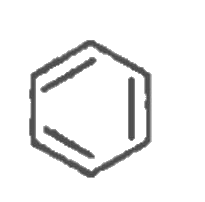
|
|
| 26. |
How do you express the bond length in terms of bond order? |
| Answer» Solution :GREATER the bond ORDER , SHORTER in the bond LENGTH. | |
| 27. |
How do you express the bond strength in terms of bond order ? |
|
Answer» SOLUTION :The BOND order between two atoms is increase so bond ENTHALPY increase and bond length decreases and stability and bond strength ALSO high. `({:("Bond")/("strenght"):}) prop ({:("Bond")/("order"):}) prop ((1)/("Bond length")) prop ({:("Stability"),("molecule"):}) ` Bond order increase so bond length decrease, bond enthalpy increase and bond strength increase, this is clear by two example. 
|
|
| 28. |
How do you expect the metallic hydrides to be useful for hydrogen storage? Explain |
| Answer» Solution :Due to the inclusion of H ATOMS into the metal lattic , the lattice becomes unstable. so UPON heating , the hydride EASILY DECOMPOSES to form `H_2` gas. | |
| 29. |
How do you expect the metallic hydrides to be useful for hydrogen storage ? Explain. |
|
Answer» SOLUTION :The Metallic hydride are formed by many d -block and f-block elements. However, the metals of group 7, and 9 do not form hydride. Even from group 6, only chromium forms CRH. These hydrides conduct heat and electricity though not as efficiently as their parent metals do. Unlike saline hydrides, they are almost always non-stoichiometric, being deficient in hydrogen. For example : `LaH_(2.87), YbH_(2.55),TiH_(1.5-1.8),ZrH_(1.3-1.75), VH_(0.56), NiH_(0.6-0.7), PdH_(0.6-0.8)` etc. In such hydrides, the law of CONSTANT composition does not hold good. In these hydrides, hydrogen occupies interstitial space in the metal lattice producing distortion without any change in its TYPE. Consequently, they were termed as interstitial hydrides. The except for hydrides of Ni, Pd, Ce and Ac, other hydrides of this class have lattice different from that of the parent metal. The property of absorption of hydrogen on transition metals is widely used in catalytic reduction / hydrogenation reactions for the preparation of large number of compounds. Some of the metals (e.g., Pd, Pt) can accommodate a very large volume of hydrogen and, therefore, can be used as its storage media. This property has high potential for hydrogen storage and as a source of energy. |
|
| 30. |
How do you expect the metallic hydrides to be useful for hydrogen storage ? Explain . |
| Answer» Solution :In metallic hydrides , hydrogen is absorbed as H-atoms . DUE to the inclusion of H atoms, the metal lattice expands and THUS becomes less STABLE, therefore, when the metallic HYDRIDE is heated, it decomposes to form hydrogen and very finely divided metal. | |
| 31. |
How do you expect the metallic hydrides to be useful for hydrogen storage? |
| Answer» SOLUTION :In metallic hydrides, hydrogen is absorbed as H-atoms. Due to the absorption of H atoms the metal LATTICE expands and become unstable. THUS, when metallic hydride is heated, it decomposer to form hydrogen and finely DIVIDED metal. The hydrogen evolved can be used as fuel. | |
| 32. |
How do you do purification of the following? (i) The boiling point of liquid X is 450K and it decompose at 400K temperature. (ii) Mixture of 60% Camphour and 40% BaSO_(4) |
| Answer» SOLUTION :(i) Distillation at LOW pressure (II) SUBLIMATION | |
| 33. |
How do you distinguish between 1-butyne and 2-butyne? |
|
Answer» Solution :Upon treatment with ammonical silver NITRATE solution, 1-butyne gives WHITE precipitate whereas2-butyne does not react. 1-Butyne contains acidic hydrogen whereas 2-butyne does not CONTAIN. |
|
| 34. |
How do you detect the presence of nitrogen and sulphur together in an organic compound? |
|
Answer» Solution :If both N and S are present, a blood red colour is obtained due to the following reactions `Na + C+N+S overset(DELTA)RARR underset("Sodium sulphocyanide")"NaCNS"` `3NaCNS + FeCl_(3) rarr underset("(Blood red colour) ")underset("Ferric sulphocyanide")(Fe(CNS)_3 +3NaCl)` |
|
| 35. |
How do you count forthe following observations ? (a) Though alkaline potassium permanganate and acidic potassium permanaganate both are used as oxidatns yet in the manufacture of benzoic acidfrom tolurene we use alcoholic ptoassum permanganate as an oxidant why write a balaced redox equation for the reaction (b) When concentrated suphuric acid is added to an inorganic mixutre containing chloride we get pungent smelling gas HCI but if the mixture contains bromide then we get red vapour of bromine why? |
|
Answer» Solution :(a) Toluene can be oxidised to benczoic ACID in acidic basic and neutral media according to the following redox equation (i) acidic medium  in the laboratory benzoic acid is usually prepared by alkaline `KMnO_(4)` oxidation of toluene however in industry alcoholic `KMnO_(4)` is preferred to acid or alkaline `KMnO_(4)` because of the following reasons (i) The cost of adding an acid or the base is avoided because in the neutral medium the base `(OH^(-)ion)` are produced in the reaction itself (ii) since rection occur faster in HOMOGENEOUS medium than in HETEROGENEOUS medium therefore alcohol helps in mixing the tworectants i.e `KMnO_(4)` and toluene (b) when conc `H_(2)SO_(2)`is added to an inorganic mixture CONTAING chloride a pungent smelling gas hci is produced because a stronger acid displace a weaker acid from its salt `2 NaCI+2H_(2)SO_(4)rarr2NaSO_(4)+2HCI` `2 HCI+H_(2)SO_(4)rarrCI_(2)+SO_(2)+2H_(2)O` however when the mixture contains bromide ion the initally produced HBr beinga stronger REDUCING agent than HCI reduces `H_(2)SO_(4)`to `SO_(2)` and is itself oxidised to produce red vapour of `Br_(2)` `2 NaBr +2 H_(2)SO_(4)rarr2NaHSO_(4)+2 HBr` `2HBr+H_(2)SO_(4)rarrBr_(2)+SO_(2)+2H_(2)O` |
|
| 36. |
How do you count for the following observations ? (a) Though alkaline potassium permanganate and acidic potassium permanganate both are used as oxidants, yet in the manufacture of benzoic acid from toluene we use alcoholic potassium permanganate as an oxidant. Why ? Write a balanced redox equation for the reaction. (b) When concentrated sulphuric acid is added to an inorganic mixture containing chloride, we get colourless pungent smelling gas HCl, but if the mixture contains bromide then we get red vapour of bromine. Why? |
|
Answer» Solution :(a) The following redox reactions indicates toluene is converting into benzoic acid in acidic, basic and neutral medium. (i)   In laboratory, for the oxidation of toluene alkaline `KMnO_(4)` is used. Instead acidic and basic `KMnO_(4)`, alcoholic `KMnO_(4)` is used. Because ... (i) Addition of acid and base is not seen because normal base (formation of ion) is formed is a reaction. (ii) Reaction takes place rapid is same medium therefore, alcohol is used for the mixing of two different reactant. e.g., `KMnO_(4)` (its properties of polarity) and toluene (ORGANIC compound). (b) When concentrate `H_(2)SO_(4)` is added into inorganic mix containing CHLORIDE ion, then HCl is evolved with strong ODOUR because salt of strong acid. `2NaCl+underset("Strong acid")(2H_(2)SO_(4))to2NaHSO_(4)+underset("Weak acid")(2HCl)` `HCl+H_(2)SO_(4)toCl_(2)+SO_(2)+2H_(2)O` (reaction does not takes place) Therefore, weak HCl is used as reducing agent. It do not reduces `SO_(2)` from `H_(2)SO_(4)`, therefore, `Cl_(2)` do not gets oxidise from the HCl. If a mixture contains BROMIDE ion, their is a formations of HBr, it is strong reducing agent. HBr is used for the reduction of `H_(2)SO_(4)" to "SO_(2)` and itself gets oxidise and FORM `Br_(2)` gas. `2NaBr+2H_(2)SO_(4)to2NaHSO_(4)+2HBr` `2HBr+H_(2)SO_(4)toBr_(2)+SO_(2)+2H_(2)O` |
|
| 37. |
How do you count the following obeservation ? |
|
Answer» Solution :The reaction in acid medium : `MnO_(4)^(-)(aq)+BH^(+)(aq)+5etoMn^(2+)(aq)+4H_(2)O(l)` Multiplying equation (1) by (6) and equation (2) by 5 and then adding them together ,we have The reaction in alkaline or neutral medium : Multiply equation (3) by (2) and then adding it to equation (4) ,we have, Even through toluence oxidises to benxoic acid in pressence of ACIDIC or alkaline `KMnO_(4)` the manufacture of benzonic add from toluene is usually carried out by using alcoholic `KMnO_(4)`as an oxidant This is because of the following advantages: (i) The USE of alcoholic `KMnO_(4)` is cost effective because to carry out the reaction in pressence of its does not requie adding of either acid or alkali in the reaction medium .In a neutral medium `OH^(-)` ions are produced during the reaction . |
|
| 38. |
How do you count for the following observations? a. Though alkaline potassium permanganate and acidic potassium permanganate both are used as oxidants, yet in themanufacture of benzoic acid from toluence we use alcoholic potassium permanganate as an oxidant. Why? Write a balanced redoxequation for the reaction. b. When concentrated sulphuric acidadded to an inorganic mixture containing chloride, we get colourlesspungent smelling gas HCl, but if the mixture contains bromide then we get red vapour og bromine. why? |
|
Answer» SOLUTION :When conc `H_(2)SO_(4)` is ADDED to an inorgainc mixture CONTAINING chloride, a pungent smelling gas `HCl` is produced because a stronger ACID displaces a weaker acid from its sail. `2NaCl+2H_(2)SO_(4) rarr 2NaHSO_(4)+2HCl`  Since HCl is a very weak reducing agent, it can not reduce `H_(2)SO_(4)` to `SO_(2)`, and hence `HCl` is not oxidised to `Cl_(2)`. However, when the mixture contains bromide ion, the inially produced `HBr` being a stronger reducing agent reduces `H_(2)SO_(4)` to `SO_(2)` and is itself oxidised to produce red vapour of `Br_(2)`. `2NaBr+2H_(2)SO_(4) rarr 2NaHSO_(4)+2HBr` `2HBr+H_(2)SO_(4)rarr Br_(2)+SO_(2)+2H_(2)O` |
|
| 39. |
How do you convert para hydrogen into ortho hydrogen ? |
|
Answer» Solution : Para HYDROGEN can be converted into ortho hydrogen by the FOLLOWING WAYS:. By treating with catalysts platinum or iron. • By passing an electric discharge. . By heating >`800^(@C`. By mixing with paramagnetic MOLECULES such as `O_(2)`, NO, `NO_(2)`, • By treating with nascent atomic hydrogen. |
|
| 40. |
How do you convert para-hydrogen into ortho-hydrogen? |
|
Answer» SOLUTION :PARA hydrogen can be converted into ortho hydrogen by the following ways: • By treating with catalysts platinum or iron. • By passing an electric discharge. • By heating > `800^(@)C`. • By mixing with PARAMAGNETIC MOLECULES such as `O_(2),NO,NO_(2)`. • By treating with nascent/atomic hydrogen. |
|
| 41. |
How do you convert ethene to ethane? |
| Answer» Solution :When a mixture of ethene and hydrogen is passed over heated nickel CATALYST at `200^(@)`C, ethene is obtained. `H_(2)C = CH_(2) + H_(2) underset(200^(@)C)overset(NI)(rarr) CH_(3) - CH_(3)` | |
| 42. |
How do you classify of elements into blocks ? Give their electronic configuration . |
Answer» SOLUTION :
|
|
| 43. |
How do you apply law of mass action to a gaseous reversible reaction? |
|
Answer» Solution :If the reactants and products are in gaseous state, then for the reaction, `A+Bunderset(V_(b))OVERSET(V_(f))(hArr)C+D` The total pressure `P=P_(A)+P_(B)+P_(C)+P_(D)` If `P_(A),P_(B),P_(C)andP_(D)` represent the PARTIAL pressures exerted by A, B, C and D respectively, then according to the law of mass action, Velocity of FORWARD reaction `V_(f)` is proportional to `P_(A) P_(B)` or `V_(f)=K_(f)P_(A)P_(B)"".....(3)` where `K_(f)` is the velocity (proportionality) CONSTANT of forward reaction. Velocity of backward reaction `V_(b)propP_(C)P_(D)or` `V_(b)=K_(b)P_(C)P_(D)""....(4)` where `K_(b)` is the velocity (proportionality) constant of backward reaction. At equilibrium, velocity of the forward reaction is EQUAL to the velocity of the backward reaction. i.e., `V_(f)=V_(b)` then from (3) and (4) `K_(f)P_(A)P_(B)=K_(b)P_(C)P_(B)orK_(f)/K_(b)=K_(p)=(P_(C)P_(D))/(P_(A)P_(B))` Where `K_(p)` is equilibrium constant with respect to the partial pressures of the reactants. |
|
| 44. |
How do you account for the reducing behaviour of H_(3)PO_(2) ? Or (i) Draw the structure of phosphinic aicd (H_(3)PO_(2)). (ii)Write a chemical reaction for its use as a reducing agent. |
|
Answer» SOLUTION :The sturcture of `H_(3)PO_(2)` has two P-H BONDS. Due to the presence of these P-H bonds, `H_(3)PO_(2)` acts as a strong reducing AGENT. For example it reduces `AgNO_(3)` to METALLIC Ag and arenedizaonium SALTS to arenes. `4AgNO_(3)+H_(3)PO_(2)+2H_(2)Oto4Ag+H_(3)PO_(4)+4HNO_(3)` `underset("Benzenediazonium chloride")(2C_(6)H_(5)N_(2)Cl+H_(3)PO_(2)+2H_(2)O)tounderset("Benzene")(2C_(6)H_(6)+H_(3)PO_(4)+2N_(2)+2HCl` 
|
|
| 45. |
How do you account for the strong reducing power of lithium in aqueous solution ? |
|
Answer» Solution :Electrode potential is a measure of the tendency of an element to lose electrons in the aqueous solution . It mainly depends upon the FOLLOWING three factors , i.e., (i) `Li (s) overset("Sublimation enthalpy")(to) Li (G) , (ii) Li (g) overset("Ionization enthalpy")(to) Li^(+) (g)` (iii) `Li^(+) (g) + aq to Li^(+) (aq) + ` enthalpy of HYDRATION The sublimation enthalpy of alkali metals are almost SIMILAR . since Li has the smallest size , its enthalpy of hydration is the highest among alkali metals . Although ionization enthalpy of Li is the highest among alkali metals , it is more than compensated by the high enthalpy of hydration . Thus , Li has the most negative standard electrode potential `(-3*04 V)` and hence Li is the strongest REDUCING agent in aqueous solution mainly because of its high enthalpy of hydration . |
|
| 46. |
How do you account for formation of ethane during chlorination of methane? |
|
Answer» Solution :CHLORINATION of methane takes place by free radical mechanism. Chlorine free RADICALS produced in the initiation step attacks methane to FORM methyl radical. `CH_4+ClrarrCH_3+HCl` In the TERMINATION step, TWO methyl radicals combine together to form small quanity of ethane `CH_3+CH_3rarr CH_3-CH_3` |
|
| 47. |
How do you account for the formation of ethane during chlorination of methane ? |
|
Answer» Solution :Halogenation is supposed to proceed via free radical chain mechanism involving three steps namely (a) Initiation, (b) Propagation and (c) Termination as given below : (a) Initiation (Step-I) : The reaction is initiated by homolysis of chlorine molecule in the presence of light or HEAT. The Cl-Cl bond is WEAKER than the C-C and C-H bond and hence, is easiest to break. `underset("Dichlorine")(Cl-Cl)underset("Homolysis")overset(hv)rarr underset("Chlorine free radicals")(overset(.)(Cl)+overset(.)(Cl))` ....(i) (b) Propagation (Step-II) : Chlorine free radical attacks the methane molecule and takes the reaction in the forward direction by breaking the C-H bond to generate methyl free radical with the formation of H-Cl. (i) `underset("Methane")(CH_(4))+underset("radicals")underset("free")underset("Chlorine")(overset(.)(Cl))overset(hv)rarr underset("radicals")underset("free")underset("Methyl")(overset(.)(Cl))+H-Cl` ...(ii) (ii) The methyl radical thus obtained attacks the second molecule of chlorine to form `CH_(3)-Cl` with the liberation of ANOTHER chlorine free radical by homolysis of chlorine molecule. `underset("radicals")underset("free")underset("Methyl")(overset(.)(CH_(3)))+underset("of chlorine")underset("Moelcule")(Cl-Cl)overset(hv)rarr underset("Chloromethane")(H_(3)C)- underset("radicals")underset("free")underset("Chlorine")(Cl+overset(.)(Cl))`...(ii) The chlorine and methy free radicals generated above repeat steps (a) and (b) respectively and thereby setup a chain of reactions. The propagation steps (a) and (b) are thse which directly give PRINCIPAL products, but manyother propagation steps are possible and may occur. Two such steps given below explain how more highly halogenated products are formed. `CH_(3)Cl + overset(.)(Cl) rarr overset(.)(C)H_(2)Cl+HCl` `overset(.)(C)H_(2)Cl + (Cl)-Cl rarr overset(.)(C)H_(2)Cl_(2)+overset(.)(Cl)` (c) Termination (Step -II) : The reaction stops after some time due to consumption of reactants and /or due to the following side reactions : The possible chain terminating steps are : (i) `overset(.)(Cl) + overset(.)(Cl)rarrCl + Cl` (ii) `H_(3)overset(.)(C)+ overset(.)(C)H_(3) rarr H_(3)C-CH_(3)` (Ethane) (iii) `H_(3)overset(.)(C)+ overset(.)(Cl) rarr CH_(3)-Cl` Through in (c), `CH_(3)-Cl`, the one of the product is formed but free radicals are consumed and the chain is terminated. Chlorination of methane ethane is obtained because according to step-III (b) ethane is obtained when joining of methyl free radical. |
|
| 48. |
How do you account for the formation of ethane duringchlorination of methane ? |
Answer» Solution : CHLORINATION of methane occurs via a free radical mechanism in which `OVERSET(**)(C)H_3` free radicals are produced during Propagation STEP. In the termination step, the two `overset(**)(C)H_3` free radicals COMBINE together to form ETHANE. The mechanism is as follows:  Therefore, some ethane is formed during chlorination of methane |
|
| 49. |
How do you account for the formaiton of ethane during chlorination of methane ? |
|
Answer» Solution :In third step of chlorination of METHANE, two free METHYL radical REACT with each other and FORM ethane. `underset("Methyl free radicals")(H_(3)C+CH_(3)) rarr underset("Ethane")(H_(3))-CH_(3)` |
|
| 50. |
How do you account for the following observations ? When concentrated sulphuric acid is added to an inorganic mixture containing chloride, we get colourless pungent smelling gas HCI, but if the mixture contains bromide then we get red vapour of bromine. Why? |
|
Answer» Solution :When conc. `H_(2)SO_(4)` is added to an inorganic mixture containing chloride, the less volatile acid `H_(2)SO_(4)` displaces more volatile acid HCl and a pungent smelling gas (HCI) is obtained. <BR> `2NaCl(s)+H_(2)SO_(4)(L)to2NaHSO_(4)(s)+2HCl(g)` HCI being a weaker reducing agent is unable to reduce `H_(2)SO_(4)` to `SO_(2)`. When the mixture contains a bromide, the more volatile acid HBR is DISPLACED. HBr is a stronger reducing agent and REDUCES `H_(2)SO_(4)` to `SO_(2)`. It itself gets oxidised to bromine which evolves as red vapour. `2NaBr+H_(2)SO_(4)to2NaHSO_(4)+2HBr` `2HBr+H_(2)SO_(4)toSO_(2)+2H_(2)O+underset(("Red vapour"))(Br_(2)(g))` |
|