Saved Bookmarks
This section includes 7 InterviewSolutions, each offering curated multiple-choice questions to sharpen your Current Affairs knowledge and support exam preparation. Choose a topic below to get started.
| 1. |
Complete the reaction as follows. Complete oxidation of butane : |
| Answer» Solution :`underset("Butane")(C_(4)H_(10(G))) + (13)/(2)O_(2(g)) RARR 4CO_(2(g)) + 5H_(2)O_((l)) Delta_(c)H^(ɵ) = -2875.84 kJ MOL^(-1)` | |
| 2. |
Complete the reaction as follows. Complete oxidation of alkane : |
| Answer» SOLUTION :`C_(n)H_(2n+2) + ((3n+1)/(2))O_(2) RARR nCO_(2) + (n+1)H_(2)O` | |
| 3. |
Complete the reaction as follows. CH_(4) + O_(2) overset(Mn_(2)O_(3), Delta)rarr |
| Answer» Solution :`CH_(4) + O_(2) overset(Mn_(2)O_(3), Delta)rarr UNDERSET("Methanol")(HCHO) + H_(2)O` | |
| 4. |
Complete the reaction as follows. CH_(4) + Required Cl_(2) |
| Answer» Solution :`underset("methane")(CH_(4))+Cl_(2) underset("or 573-773")overset(hv)rarr underset("Chloromethane")(CH_(3)CL+HCl)` | |
| 5. |
Complete the reaction as follows. CH_(4) + O_(2) underset("100 atm")overset("Cu, 523 K")rarr |
| Answer» Solution :`underset("Methane")(2CH_(4)) + O_(2) underset("100 atm")OVERSET("Cu, 523 K")RARR underset("Methanol")(2CH_(3)OH)` | |
| 6. |
Complete the reaction as follows. CH_(4) + HIO_(3) |
|
Answer» SOLUTION :`HO_(3) + 5HI rarr 3I_(2) + 3H_(2)O` `CH_(4) + I_(2) hArr CH_(3) I + HI` |
|
| 7. |
Complete the reaction as follows. CH_(4) + More Cl_(2) |
| Answer» Solution :`CH_(4) UNDERSET(-HCl)overset(hv, Cl_(2))RARR CH_(3)Cl underset(-HCl)overset(hv, Cl_(2))rarr CH_(2)Cl_(2) underset(-HCl)overset(hv, Cl_(2))rarr CHCl_(3) underset(-HCl)overset(hv, Cl_(2))rarr C Cl_(4)` | |
| 8. |
Complete the reaction as follows. CH_(3)CH_(3)+O_(2) underset(Delta)overset((CH_(3)COO)_(2)Mn)rarr |
| Answer» Solution :`underset("Ethane")(3CH_(3)CH_(3))+3O_(2) underset(Delta)overset((CH_(3)COO)_(2)Mn)RARR underset("ETHANOIC acid")(2CH_(3)COOH) + 2H_(2)O` | |
| 9. |
Complete the reaction as follows. CH_(3)(CH_(2))_(4)CH_(3) underset(AlCl_(3)HCl_((g)))overset("Anhy.")rarr |
Answer» SOLUTION :
|
|
| 10. |
Complete the reaction and name the products. CH_3-CH=CH-CH_3 overset(H^+ //KMnO_4)to ?Overset(HCN)to ? |
| Answer» SOLUTION :`CH_3-CH=CH-CH_3 overset(H^+//KMnO_4)to 2CH_3CHO overset(HCN)to CH_3-UNDERSET(OH)underset(|)overset(CN)overset(|)C-H` | |
| 11. |
Complete the reaction and name the products. CH_3 -CH_2 - OH overset(K_2 Cr_2O_2//H^(+))to ? overset((O))to ? overset(SOCl_2)to ? |
| Answer» Solution :`underset("(ETHANOL)")(CH_3-CH_2)-OH overset(K_2 Cr_2 O_7//H^+)to underset("(ACETIC ACID)")(CH_3COOH) overset(SOCl_2)to underset("(Acetyl CHLORIDE)")(CH_3COCl)` | |
| 12. |
Complete the reaction and mention name of the reaction. CH_(3)CH_(2)Br+(CH_(3))_(2)LiCuto |
|
Answer» Solution :`UNDERSET(("Bromo ETHANE"))(CH_(3)CH_(2)Br)+(CH_(3))_(2)LiCuto underset(("Propane"))(CH_(3)CH_(2)CH_(3))+CH_(3)Cu+LiBr` This reaction is known as Corey-House Mechanism. |
|
| 13. |
Complete the reaction : 8LiH + Al_2Cl_6 to (?) |
| Answer» SOLUTION :`8LiH + Al_2Cl_6 to 2LiAlH_4 + 6LiCl` | |
| 14. |
Complete the reaction : 4 LiNO_(3) overset(Delta)to ………. . |
|
Answer» `2Li_(2)O+4NO_(2)+O_(2)` |
|
| 15. |
Hybridisation of boron in B_2H_6 is ----- |
|
Answer» |
|
| 17. |
Complete the following table |
|
Answer» Solution :For F atom Atomic no. =9 (Given) `""`No. of electrons =9 `" "` No. of PROTONS =9 No. of neutrons = 10(Given) `""` Mass no. = Z+n=9+10=19 For `Mg^(2+)` ION No. of protons = 12 (Given) `""` Atomic no. = 12 `" "` No. of electrons =12-2=10 Mass no. = 24 (Given) `""` No. of neutrons = A-Z =24-12 =12 For S atom No. of protons = 16(Given) `""` Atomic no. = 16, `" "` No. of electrons = 16 Mass no. =32 (Given) `""`No. of neutrons =A-Z=32-16=16 For `P^(3-)` ion No. of electrons = 18 (Given) `"" `No. of protons = 18-3=15, `" "` Atomic no.=15 No. of neutrons = 16(Given) `""` Mass no. = Z+n=15+16=31 The complete table is as follows : 
|
|
| 18. |
Complete the following reactions(a) BeO+C+CI_(2)overset(600 - 800 K)to ?(b) 2 BeCl, +LIAIH_(4)to ? (ii) What happens when quick lime reacts with (a) H_(2)O and(b) CO_(2)? |
|
Answer» Solution :Beryllium oxide is HEATED with carbon and chloride to get `BeCI_(2)` `BeO + C + Cl_(2) overset(600-800K)to BeCl_(2) + CO` (B) Beryllium chloride is treated with `LiAlH_(4)` to get beryllium hydride. `2BeCl_(2) + LiAlH_(4) to 2BeH_(2) + LiCl + AICI_(3)` (II) (a) `CAO + H_(2)O + Ca(OH)_(2)`(calcium hydroxide) (b) `CaO + CO_(2) to CaCO_(3)`(calcium carbonate) |
|
| 19. |
Complete the following reaction. (Zn_(s) + NaOH_(aq) rarr^(heat) ……………….) |
| Answer» SOLUTION :`ZN (s) + 2NAOH(AQ) undersetrarrheat Na_2AnO_2(aq)+H_2(G)` | |
| 20. |
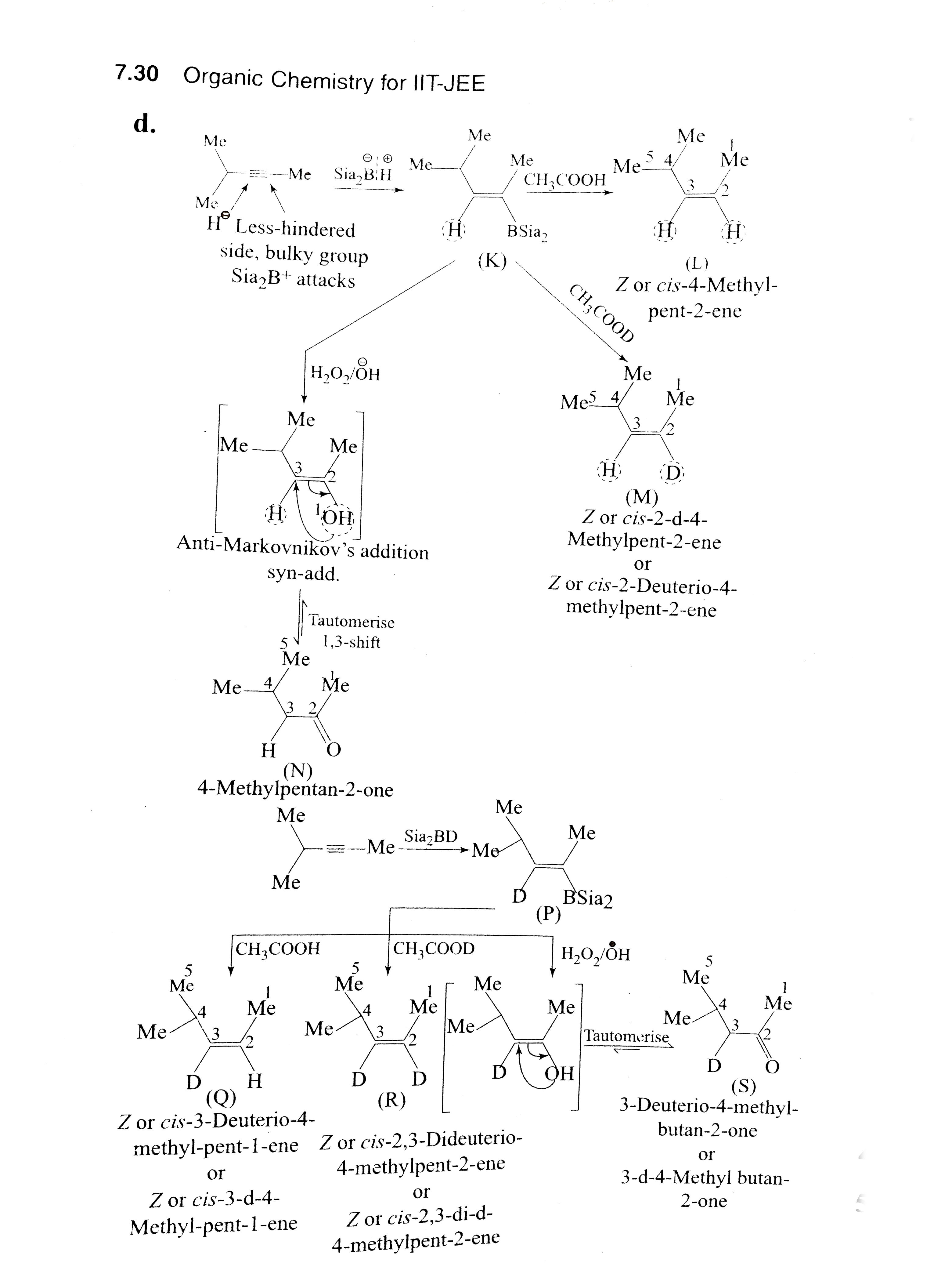
Complete the following reactions with appropriate structures of products ? C_6H_5CH=CH_2 overset(Br_2)to [A] underset((ii)CH_3I) overset((i)NaNH_2 "(3.0 equiv.)")to B |
Answer» SOLUTION :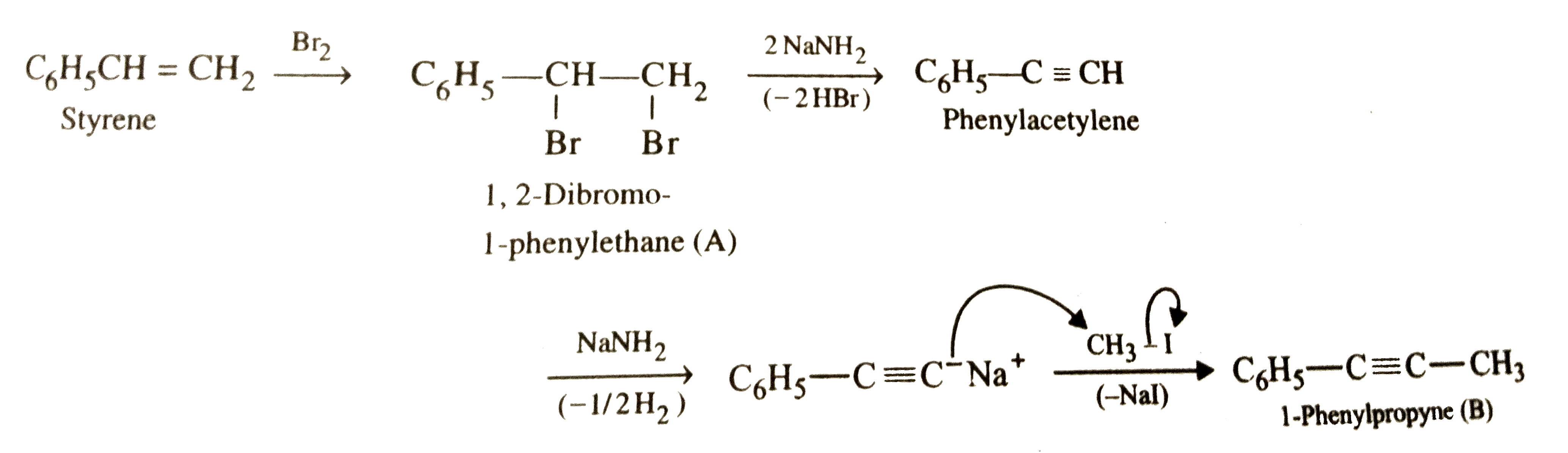 THUS, [A] is 1,2-dibromo-1-phenylethane and [B] is 1-phenylpropyne. |
|
| 21. |
Complete the following reactions . (i)H_(2(g)) + M_m O_(o(s)) oversetDeltato (ii)CO_((g))+ H_(2(g)) underset"catalyst"overset(Delta)to (iii) C_3H_(8(g)) + 3H_2O_((g)) underset"catalyst"oversetDelta to (iv) Zn_((s)) + NaOH_((aq)) overset"heat"to |
|
Answer» Solution :(i)`H_(2(G)) + M_m O_(o(s)) oversetDeltato mM_((s)) + ._oH_(2o)` (ii)`CO_((g))+ H_(2(g)) underset"catalyst"overset(DELTA)to underset"methanol"(CH_3OH_((l)))` (III) `C_3H_(8(g)) + 3H_2O_((g)) overset"Ni,1270 K"to 3CO_((g)) + 7H_(2(g))` (iv) `Zn_((s)) + 2NaOH_((aq)) overset"heat"to underset"Sodium zincate"(Na_2ZnO_(2(aq))) +H_(2(g))` |
|
| 22. |
Complete the following reactions (i)C+H_(2)Ooverset(1270K)(to) (ii) PbS+4H_(2)O_(2)to (iii) NaH+H_(2)Oto |
|
Answer» SOLUTION :(i)`C+H_(2)Ooverset(1270K)(to)CO+H_(2)` (ii) `PBs+4H_(2)O_(2)toPbSO_(4)+4O_(2)` (III) `NaH+H_(2)OtoNaOH+H_(2)` |
|
| 23. |
Complete the following reactions: ? (i) SiO_(2) + 2NaOH to X + H_(2) O (ii) SiO_(2) + 4HF to Y + 2H_(2) O (iii) Si + 2CH_(3)CI underset(570 K)overset("Cu power")(to) Z {:(X,Y,Z):} |
|
Answer» `{:(Na_(2)SiO_(3), SiF_(4), (CH_(3))_(2) SiCI_(2)):}` `SiO_(2) 4HF to underset((Y))(SiF_(4)) + 2H_(2) O` `Si + 2CH_(3)CI underset(570 K)OVERSET("Cu.power")(to) (CH_(3))_(2)SiCI_(2)` |
|
| 24. |
Complete the following reactions : (i) P_(4)+SOCl_(2)to (ii) CH_(3)COOH+PCl_(5)to |
|
Answer» Solution :(i) White phosphorus `(P_(4))`reacts with thionyl chloride `(SOCl_(2))` to form phosphorus trichloride `(PCl_(3))` `P_(4)+8SOCl_(2)to4PCl_(2)+4SO_(4)+2S_(2)Cl_(2)` (ii) Acetic acid reacts with phosphorus pentachloride `(PCl_(5))` to form acetly chloride `underset("Acetic acid")(CH_(3)COOH)+PCl_(5)tounderset("ACETYL chloride")(CH_(3)COCl)+POCl_(3)+HCl` |
|
| 25. |
Complete the following reactions : (i) PbS(s) + H_(2)O_(2)(aq) to ""(ii) CO(g) + 2H_(2) underset("Catalyst")overset("Cobalt")to |
| Answer» SOLUTION :(i) `PbS(s) + 4H_(2)O_(2)(aq) to PbSO_(4) + 4H_(2)O ""(II) CO(g) + 2H_(2)(g) underset("Catalyst")overset("Cobalt")to CH_(3)OH(L)` | |
| 26. |
Complete the following reactions: (i) O_(2)^(2-)+ H_(2)O to(ii) O_(2)^(-)+ H_(2)O to |
| Answer» SOLUTION :`(i) 2O_(2)^(2-)+ 2H_(2)O to 2OH^(-) + UNDERSET("Hydrogen PEROXIDE")(H_(2)O_(2))""(ii) underset("Superoxide ION")(2O_(2)^(-))+ 2H_(2)O to 2OH^(-) +H_(2)O_(2) + O_(2)` | |
| 27. |
Complete the following reactions: (i) O_(2)^(2-) +H_(2)O to ""(ii) O_(2)^(-) +H_(2)O to |
|
Answer» Solution :`O_(2)^(2-) to` Peroxideion `O_(2)^(-) to` SUPEROXIDE ION (i)Peroxide ion on REACTION with water form hydrogen peroxide `(H_(2)O_(2))`. `O_(2)^(2-) +2H_(2)O to underset("Hydrogen peroxide")(2OH^(-) +H_(2)O_(2))` (II) Superoxide ion on reaction with water produces `H_(2)O_(2) and O_(2)`. `2O_(2)^(-) +2H_(2)O to 2OH^(-) +underset("Hydrogen peroxide")(H_(2)O_(2)+O_(2))` |
|
| 28. |
Complete the following reactions "" (i) O_(2)^(2-) + H_(2) O to (ii) O_(2)^(-) + H_(2)O to |
|
Answer» SOLUTION :(i) Peroxide IONS react with water evolving `H_(2)O_(2). "" O_(2)^(2-) + 2H_(2)O to 2 OH^(-) + H_(2)O_(2)` (II) Superoxides react with water evolving `H_(2)O_(2)` and `O_(2) "" 2O_(2)^(-) + 2H_(2)O to 2 OH^(-) + H_(2)O_(2) + O_(2)` |
|
| 29. |
Complete the following reactions : (i) H_(2)(g) + M_(m)O_(o)(s) overset(Delta)to""(ii) CO(g) + H_(2)(g) underset("catalyst")overset(Delta)to (iii) C_(3)H_(8)(g) + 3H_(2)O(g) underset("Catalyst")overset(Delta)to ""(iv)Zn(s)+ NaOH(aq) overset("heat")to |
|
Answer» SOLUTION :`(i) oH_(2)(g) + M_(m)O_(o)(s) overset(DELTA)mM(s) + oH_(2)O(L) ""(ii) CO(g)+ 2H_(2)(g)underset("Catalyst")overset(Delta)to underset("Methanol")(CH_(3)OH(l))` `(iii) C_(3)H_(8)(g) + 3H_(2)O(g) overset(Ni,1270K)to 3CO(g) + 7H_(2)(g)` `(iv) Zn(s) + 2NaOH (aq) overset("heat")to underset("Sod. ZINCATE")(na_(2)ZnO_(2)(aq))+ H_(2)(g)` |
|
| 30. |
Complete the following reactions : (i) CH_(3) - CH_(2) Br + KOH "(aqueous)" overset("Boil")(to) X + Y (ii) CH_(3) - CH_(2) Br + NH_(3) to X + Y |
|
Answer» Solution :(i) `underset("Bromo ETHANE") (CH_(3) - CH_(2) ) Br +KOH "(AQUEOUS)" OVERSET("Boil") toCH_(3) - underset("ETHANOL") (CH_(2) OH) + KBr` (ii) `underset("Bromo ethane") (CH_(3) - CH_(2)) Br + NH_(3) to CH_(3) underset("Ethyl amine") (-CH_(2) NH_(2)) + HBr` |
|
| 31. |
Complete the following reactions: (i) C_(2)H_(5)I+H_(2) underset(C_(2)H_(5)OH)overset(Zn-Cu)toK (ii) CH_(30COONa+H_(2)O overset("Electrolysis")toY (iii) CH_(3)CH_(2)CH_(2)CH_(2)CH_(2)CH_(3) underset(773K)overset(Cr_(2)O_(3)//Al_(2)O_(3))toZ |
|
Answer» `X=C_(2)H_(6),Y=C_(2)H_(6),Z=C_(6)H_(6)` |
|
| 32. |
Complete the following reactions: (i) CH_3-CH = CH_2 + HBr overset("Peroxide")to(ii) CH_3-CH_2 - Br + NaSH underset(H_2O)overset("Alcohol")to (iii) C_6H_5Cl + Mg overset(THF)to(iv) CHCl_3 + HNO_3 overset(Delta)to (v) C Cl_4 + H_2O overset(Delta)to |
|
Answer» Solution :(i) `underset("Prop-1-ene ")(CH_3-CH = CH_2) + HBr overset("Peroxide")tounderset("1 - bromopropane")(CH_3-CH_2-CH_2Br)` (ii) `underset("Bromoethane")(CH_3 - CH_2Br)+ NaSH underset(H_2O) overset("alcohol")to underset("Ethanethiol")(CH_3 - CH_2 SH) + NABR` (iii) `underset("Chlorobenzene")(C_6H_5Cl)+ Mg overset(THF)to underset("Phenyl magnesium chloride ")(C_6H_5MgCl)` (iv) `underset("Chloroform")(CHCl_3) + HNO_3 overset(Delta)to underset (("chloropicrin")) underset ("Trichloronitromethane") (C Cl_3 NO_2 + H_2O)` (v) `underset("chloride")underset("CARBON tetra-")(C Cl_4) + H_2O (g)overset(Delta)to underset("Phosgene")(COCl_2) + 2H_2O` |
|
| 33. |
Complete the following reactions CO (g) + H_2 (g) undersetrarr(Delta)oversetrarrcatalyst |
| Answer» SOLUTION :`CO(G)+2H_2(g) undersetrarrDelta oversetrarrcat CH_3OH(L)` | |
| 34. |
Complete the following reactions. CaCO_(3)overset(1200K)(to)______________________+_________________ |
|
Answer» |
|
| 35. |
Complete the following reactions C_3H_8(g)+3H_2O(g) undersetrarr(Delta)oversetrarrcatalyst |
| Answer» SOLUTION :`C_3H_8(G)+3H_2O(g)undersetrarrDelta oversetrarrcat 3CO(g)+7H_2(g)` | |
| 36. |
Complete the followingreactionsby supplyingthe products and thereagents (i) CH-= CH overset([A])(to)C_(6)H_(6) overset(CH_(3) CI, " anhyd. "AICI_(3))(to) [B] overset([C])(to) overset(C_(6)H_(5)CHO) |
Answer» SOLUTION :
|
|
| 37. |
Complete the followingreactionsby supplyingthe products and thereagents (CH_(3))_(2)C=CH_(2) overset(H_(2)O, H_(2)SO_(4))(to) [A] overset(C_(6)H_(6))underset(conc. H_(2)SO_(4))(to) [B] |
Answer» SOLUTION :
|
|
| 38. |
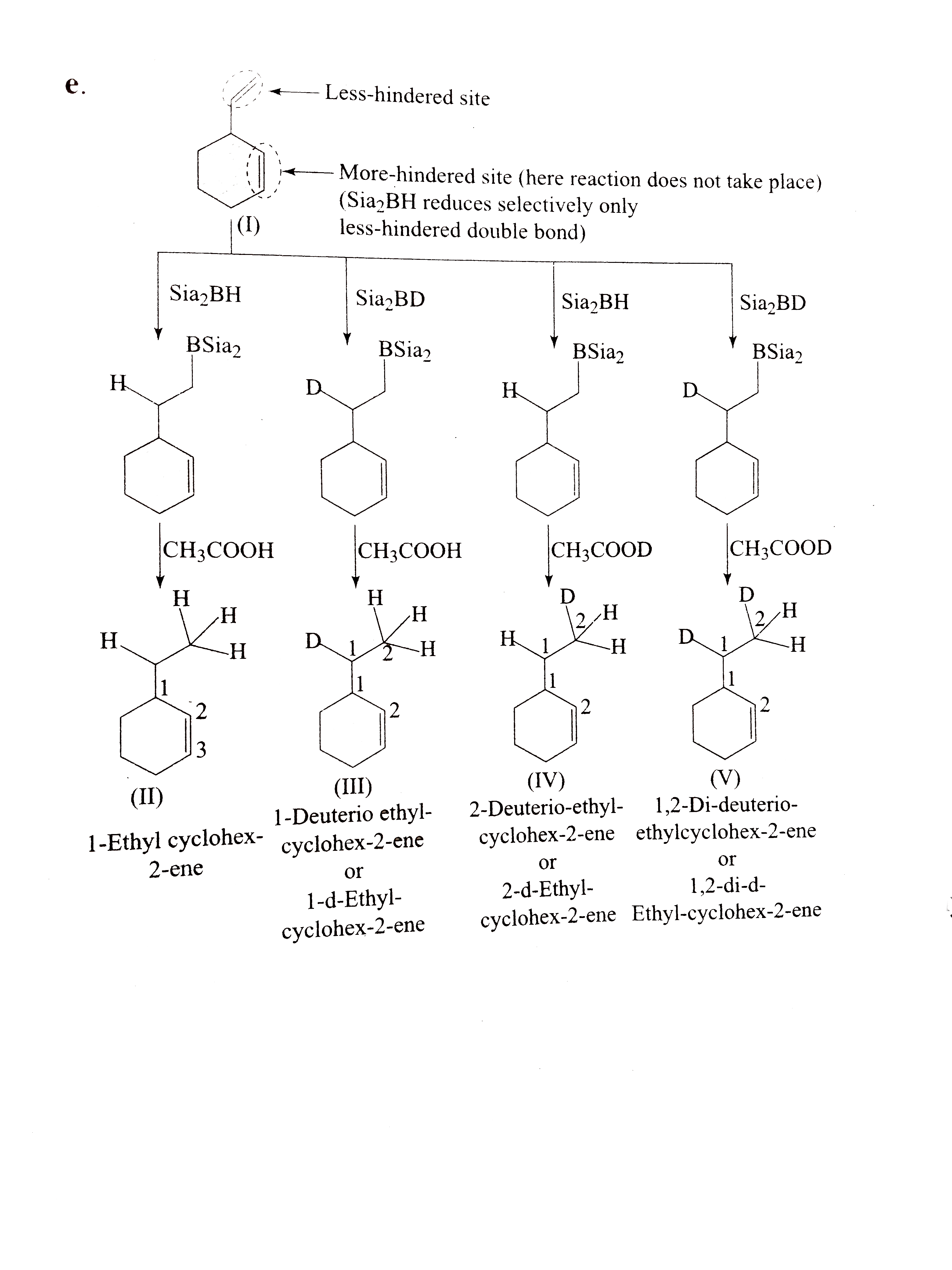
Complete the followingreactionsby supplyingthe products and thereagents CH_(3) CH=CH_(2)overset(Br)(to) [A] overset(Na//"liquid " NH_(3))(to) [B] overset(Fe " tube ") underset(873 K)(to) [C] |
Answer» SOLUTION :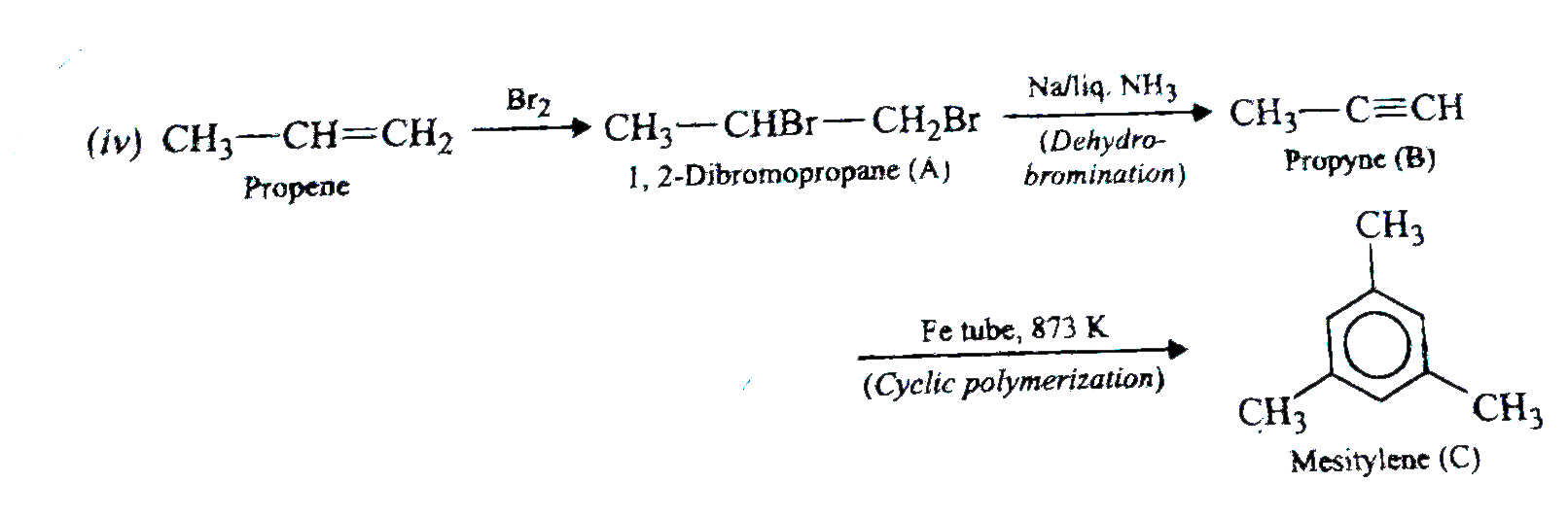
|
|
| 39. |
Complete the followingreactionsby supplyingthe products and thereagents CH_(3) (CH_(2))_(4) CH_(3)overset(Cr_(2) O_(3), AI_(2)O_(3))underset(773 K, 10-20 atm)(to) [A]overset(Br_(2) // Fe)(to) [B]overset(Mg// "ether ")(to) [C ] overset(D_(2)O)(to) [D] |
Answer» SOLUTION :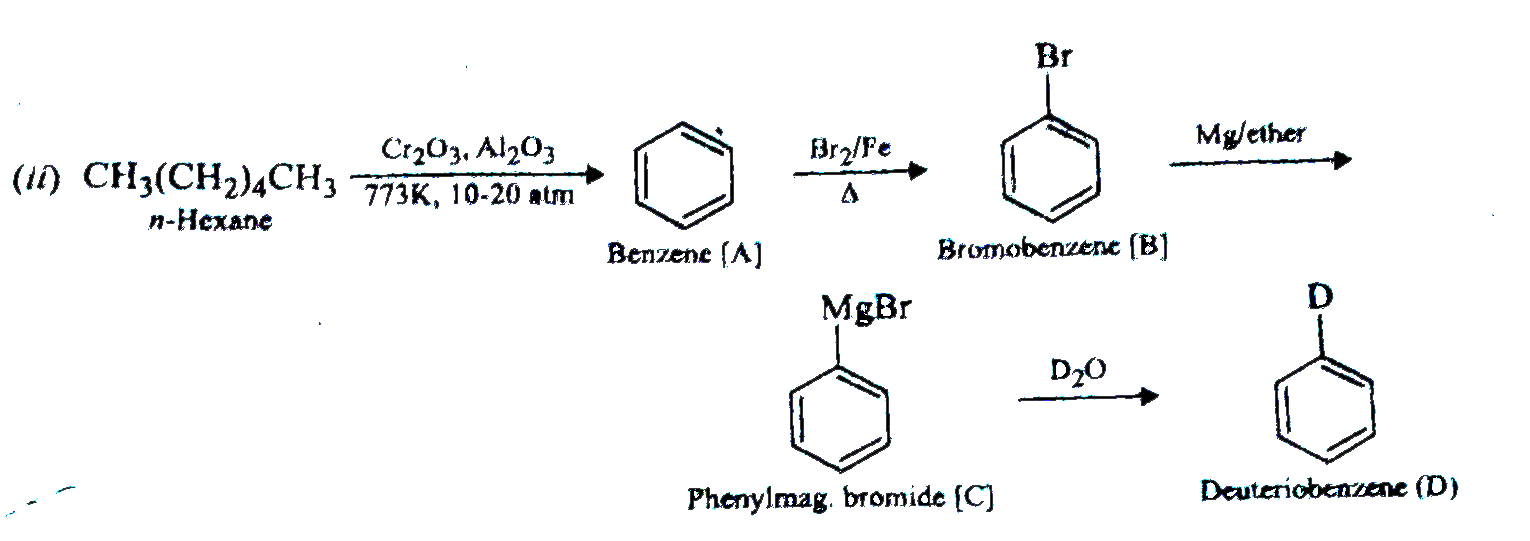
|
|
| 40. |
Complete the following reactions and findout number of carbon atmos present in compound (D) |
Answer» 
|
|
| 41. |
Complete the following reactions. AI_(4)C_(3)+D_(2)Oto? CaC_(2)+D_(2)Oto? Mg_(3)N_(2)+D_(2)Oto? Ca_(3)P_(2)+D_(2)Oto? |
|
Answer» Solution :`underset( Aluminium CARBIDE)(AI_(4)C_(3))+underset( "Heavy water")(12D_(2)O)tounderset("Aluminium deuteroxide")(2AI(OD)_(3))+underset("Deutero Methane")3CD_(4)` `underset("Calcium cardide")(CaC_(2))+2D_(2)Otounderset("calcium deuteroxide")(Ca(OD)_(2))+underset("Deutero acetylene") (C_(2)D_(2))` `underset("Magnesium Nitride")(Mg_(3)N_(2))+6D_(2)Otounderset("Magnesium deuteroxide")(3Mg(OD)_(2))+underset("Deutero AMMONIA")(2ND_(3))` `underset("Calcium Phosphide") (Ca_(3)P_(2))+6D_(2)Otounderset(("Calcium deuteroxide"))(3Ca(OD)_(2))+underset("Deutero PHOSPHINE") (2PD_(3))` |
|
| 42. |
Complete the following reactions: (a). MnO_4^(2-)+H^(o+)toMn^(2+)+? (b). NO_2+H_2Oto?+NO (d). H_2O_2+Sn^(2+)toSn^(4+)+? |
|
Answer» Solution :`MnO_4^(2-)` is reduced to `Mn^(2+)` (i.e., ACTS as oxidising AGENT) and `H^(o+)` is in maximum oxidation state. So, `MnO_4^(2-)` must also be oxidised to `Mn^(7+)` state, i.e., `MnO_4^(ɵ)` will be formed. Hence, a disproportionation reaction occurs. `MnO_4^(2-)+H^(o+)toMn^(2+)toMn^(2+)+MnO_4^(ɵ)` The balanced equation is: `8H^(o+)+cancel(4e^(-))+MnO_4^(2-)toMn+4H_2O` `UNDERLINE(MnO_4^(2-)toMnO_4^(ɵ)+cancel(e^(-))]xx4)` `underline(5MnO_4^(2-)+8H^(o+)toMn^(2+)+4MnO_4^(ɵ)+4H_2O)` (b). `NO_2(+4` oxidation state) disproportionates [as in (a)] to NO(+2) oxidation state) and `NO_3^(ɵ)` (`+5` oxidation state). `2H^(o+)+cancel(2e^(-))+NO_2toNO+H_2O` `underline(H_2O+NO_2toNO_3^(ɵ)+cancel(e^(-))+2H^(o+)]xx2)` (c). Here `I_2` is reduced to `2I^(ɵ)`, so `H_2O_2` must be oxidised and gives `O_2`. `cancel(2e^(-))+I_2to2I^(ɵ)` `underline(H_2O_2toO_2+2H^(o+)+cancel(2e^(-))` `underline(H_2O_2+I_2toO_2+2I^(ɵ)+2H^(o+))` (d). Here `Sn^(2+)` is oxidised to `Sn^(4+)`, so `H_2O_2` `Sn^(2+)toSn^(4+)+2e^(-)` `underline(2H^(o+)+cancel(2e^(-))+H_2O_2to2H_2O)` `underline(Sn^(2+)+H_2O_2+2H^(o+)toSn^(4+)+2H_2O)` |
|
| 43. |
Complete the followingreactions (a) CH=CH+H_(2)overset(pt)rarr?overset(H_(2))rarr (b)CH_(3)-C=CH+Br_(2)rarr?overset(Br_(2))rarr (c )CH_(3)-C=C-CH_(3)overset(HCI)rarr |
Answer» SOLUTION :
|
|
| 44. |
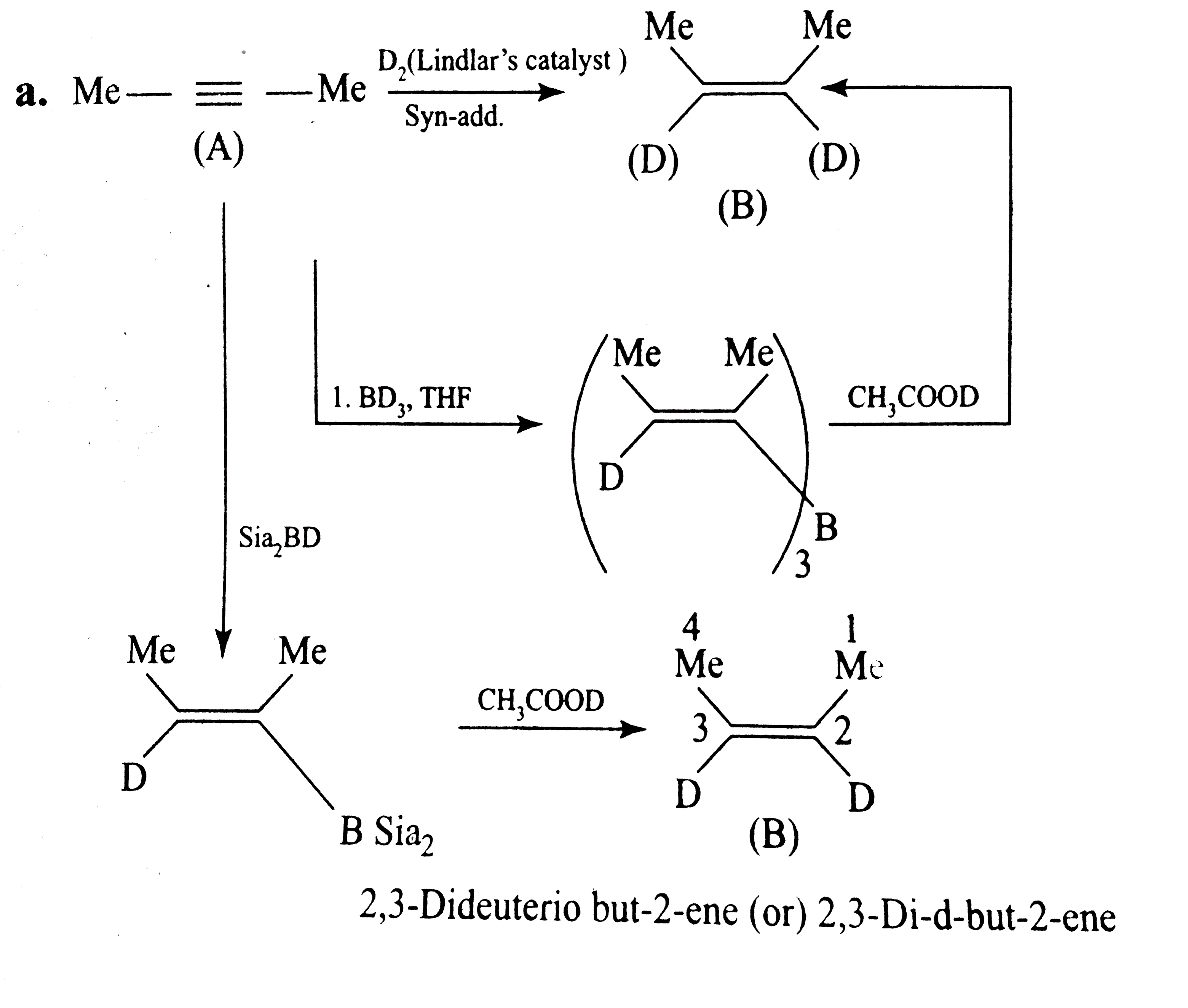
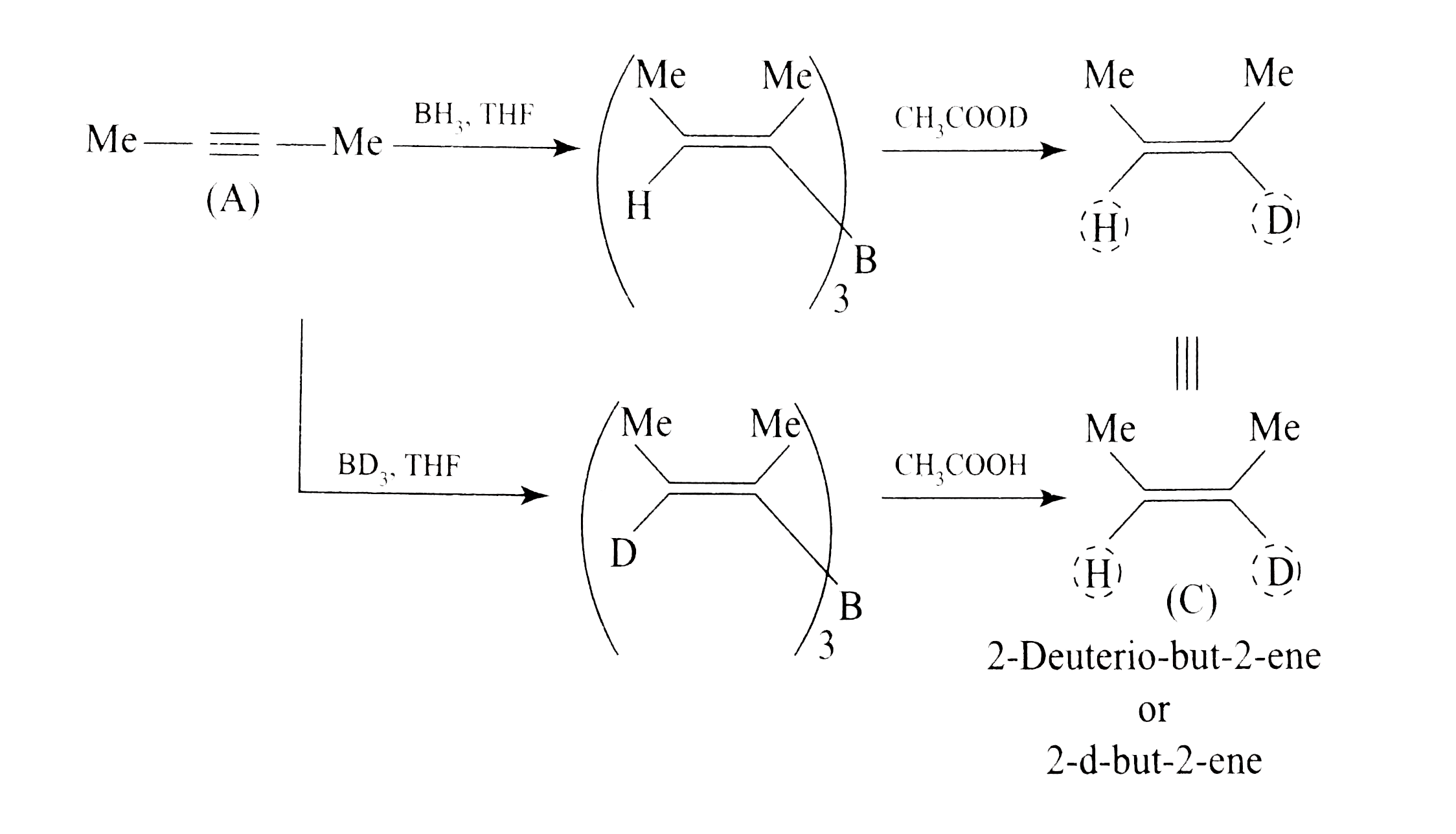
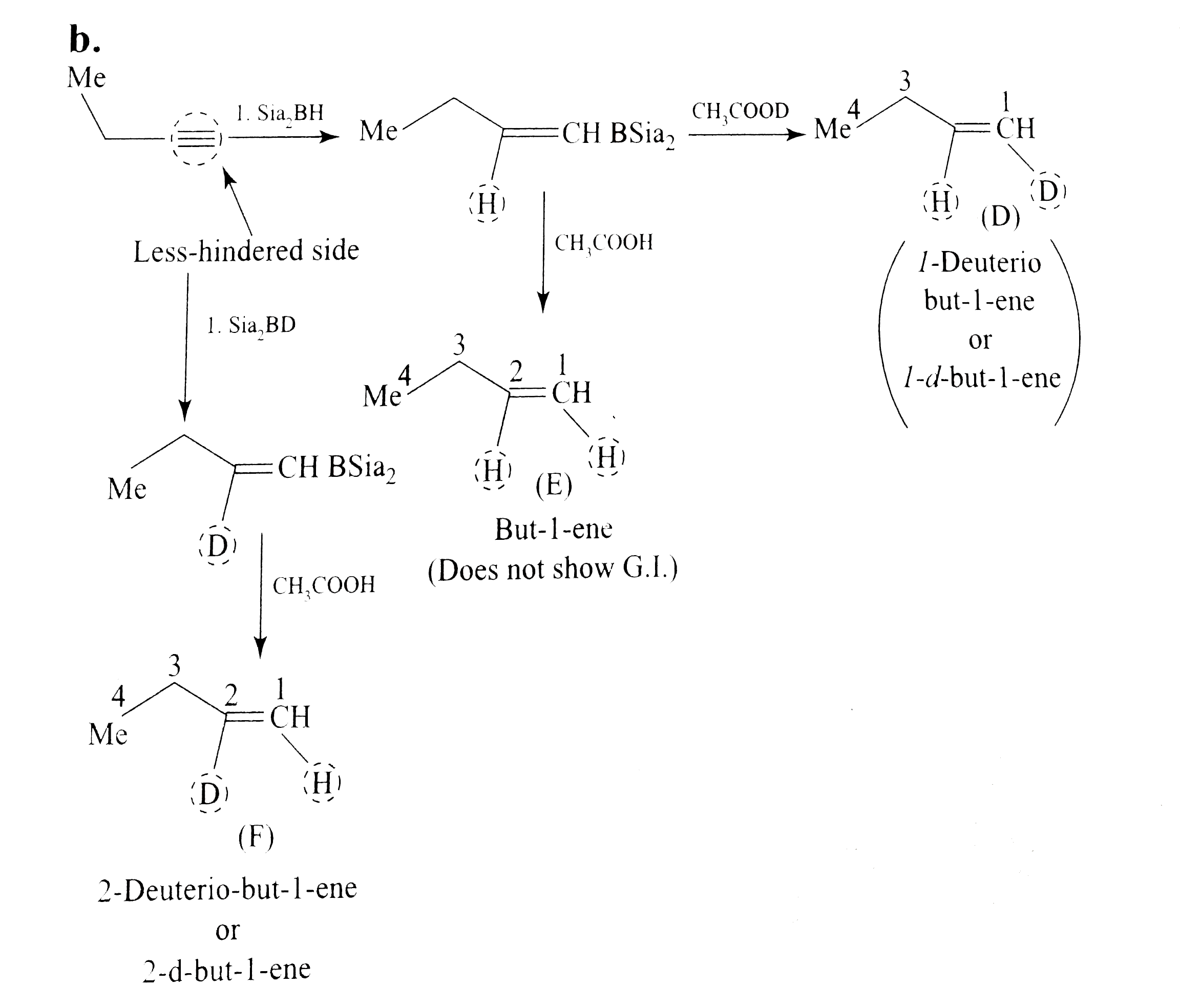
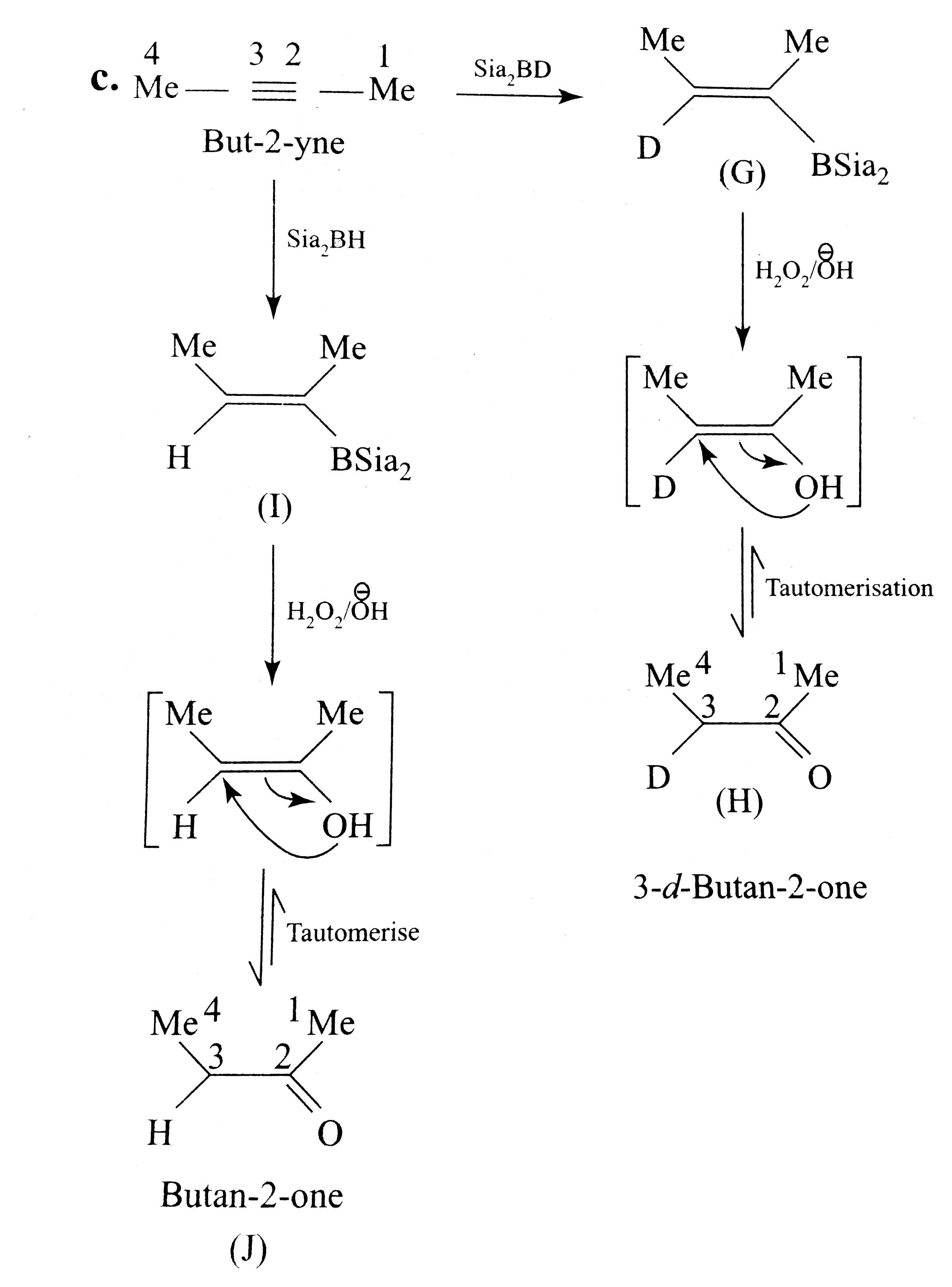
Complete the following reactions : a. b. c. d. e. f. g. h. i. Alkenes like ethene dissolve in conec. H_(2)SO_(4) but alkynes like ethyne do not dissolve in cone. H_(2)SO_(4), whereas but -2 yne dissolves. Explain. j. Identify X,Y and Z k. l. 2CH_(2)=CH_(2)+underset("mono-chloride")underset("Sulphur")(S_(2)Cl_(2))rarr(R )+underset("Sulphur")(S) m. n. |
Answer» Solution :a. 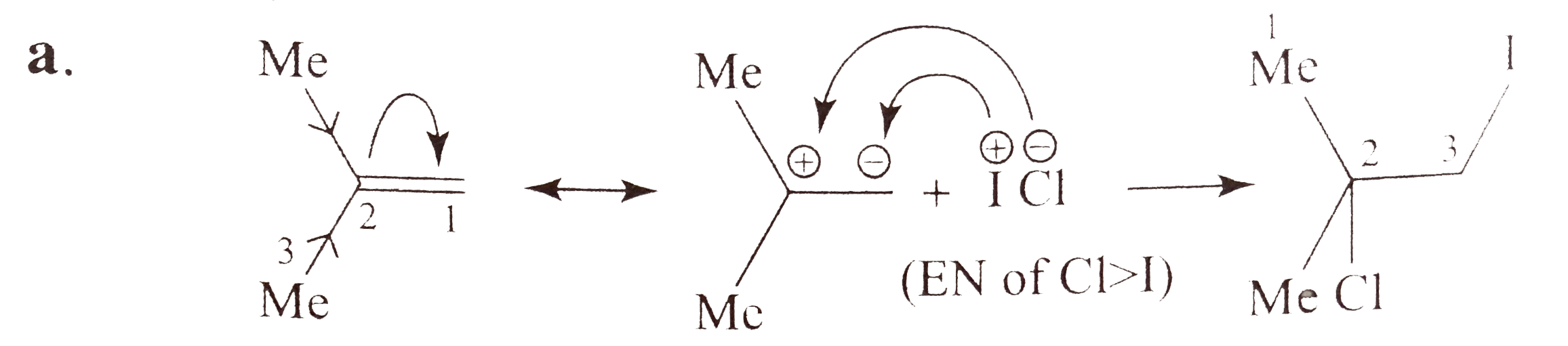 b. 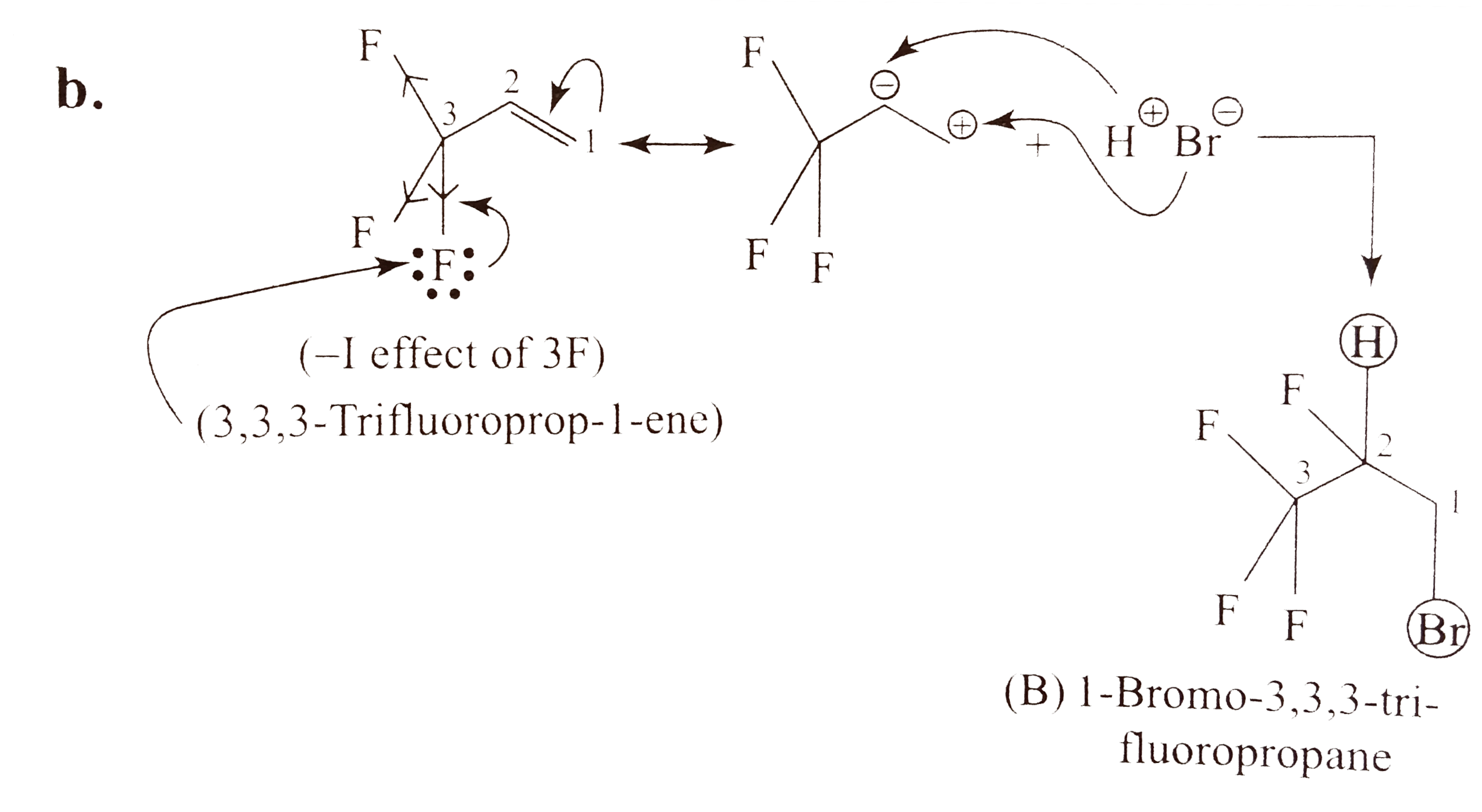 Due to the -I effect of theree `F` atoms, addiction is anti - Markovnikov's `9` negative part of the addendum is adding to the `C` atom containing more number of `H` atoms ). The resonance effect (+R effect) from the lone pair `vec (e)` 's of `F` atomes is not operative because lone pair `vec(e)'s` and double bond are not in conjugation. So the `-I` effect of`F` atoms is operative and, hence, the electronic effect of double bond takes place from `C_(1)` to `C_(2)`. c. 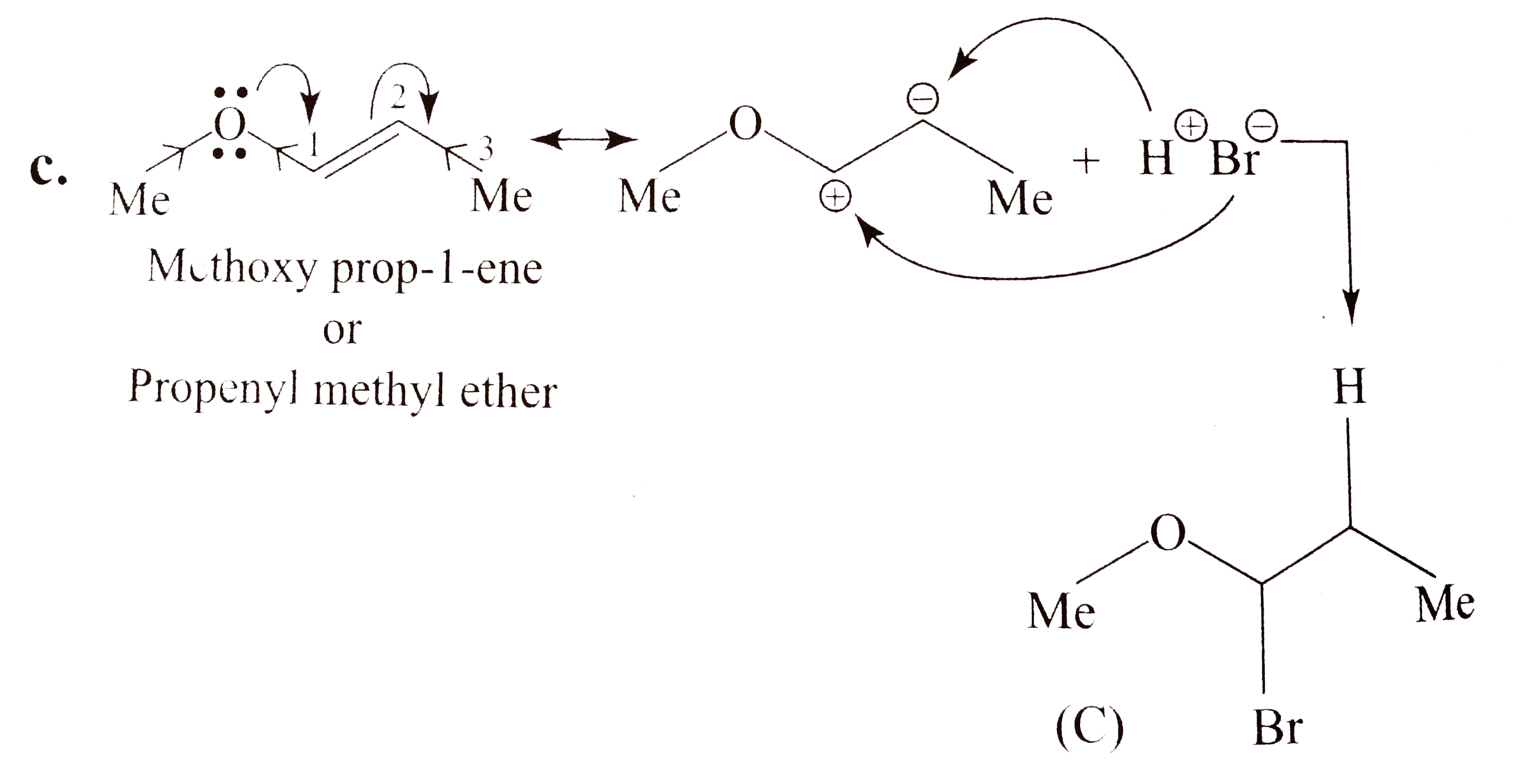 Here, `+R` effect is more operative than `-I` effect of `O ` atom, since the lone pair on oxygen and double bond are inconjugation. Moreover, `R gt 1,` so Markovnikov's addition takes place. d. 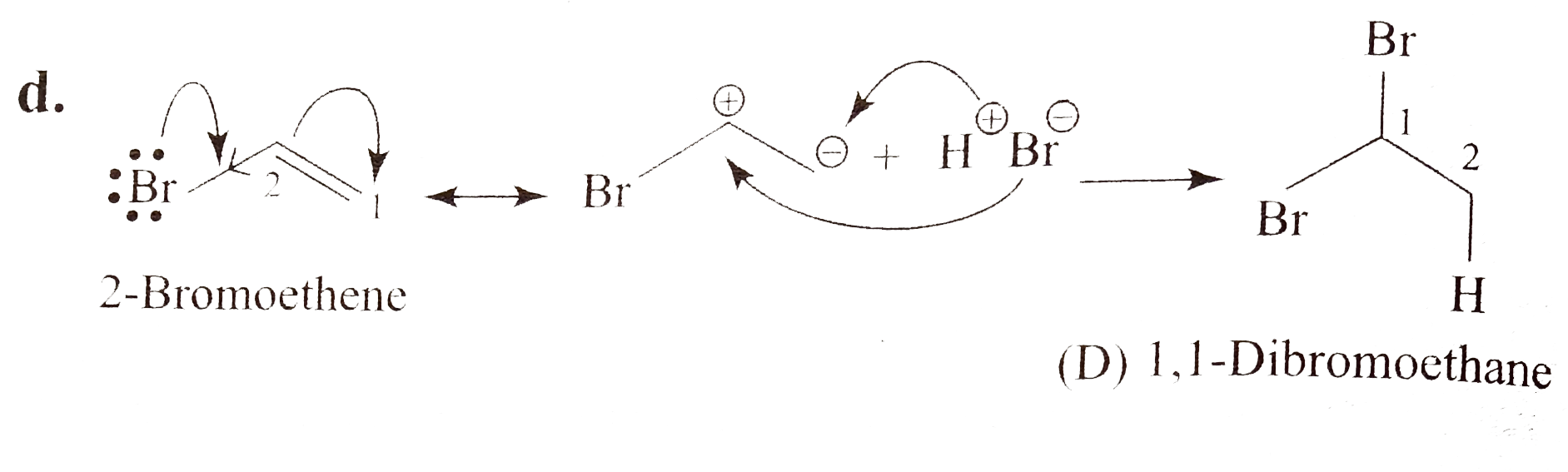 (Same explanation as in part (c)above) e. 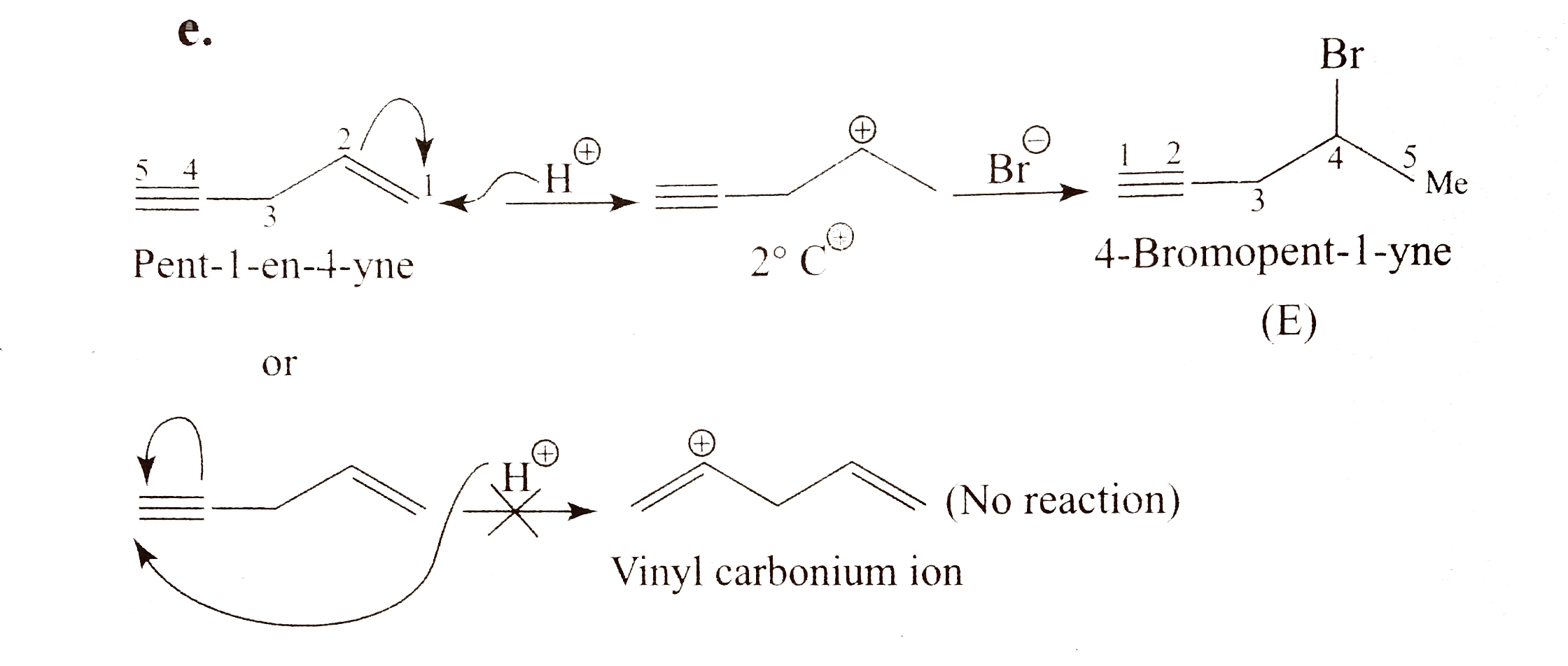 Vinyl carbonium ion Vinyl carbonium ion Since, alkyl carbonium ion is more stable than vinyl carbonium ion, alken reacts at a faster rate than alkynes towards `EA`. f. 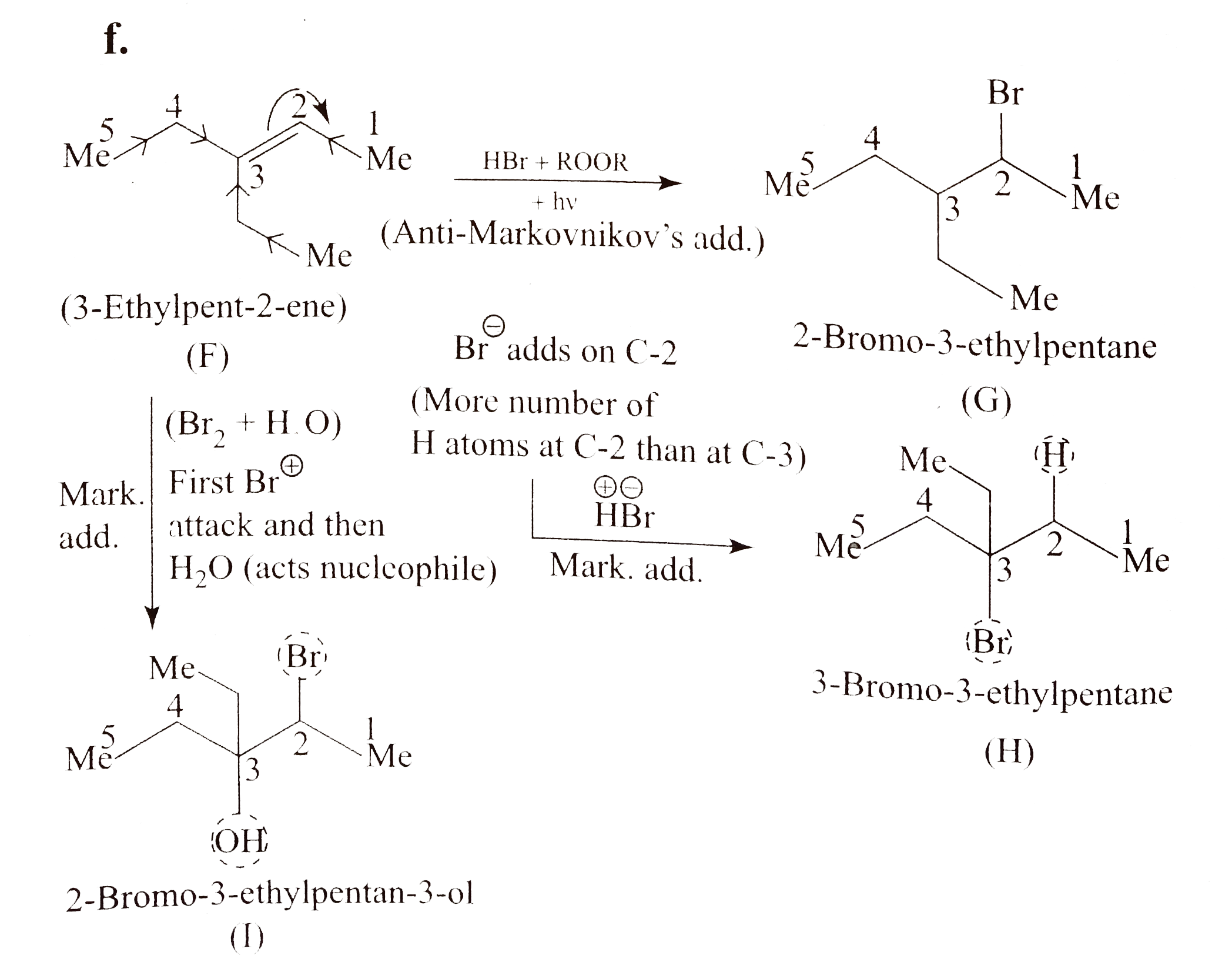 g. 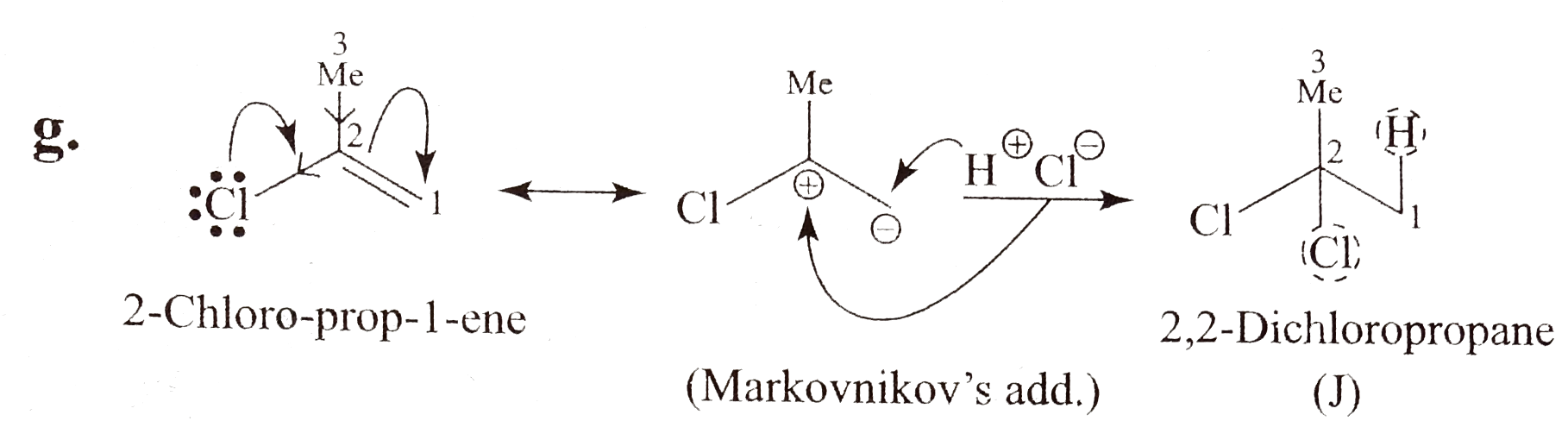 `2-` Chloro`-`prop`-1-`ene(Markovnikov's add.)2,2-Dichloropropane `2-` Chloro`-`prop`-1-`ene(Markovnikov's add.)2,2-Dichloropropane[Same explanation as in part (c)above.] h. 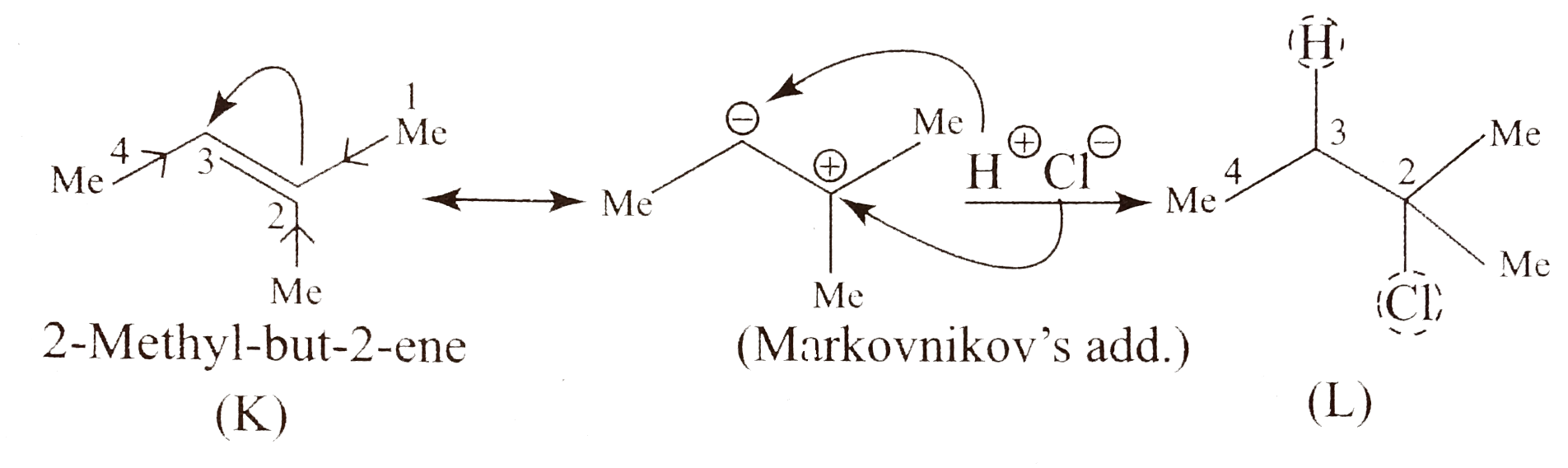 `2-`Methyl`-` but `-2-`ene`(Markovnikov's add.) `2-`Methyl`-` but `-2-`ene`(Markovnikov's add.)Alternatively, `+I` effect of two `Me` groups on `C-2` is greater than `+I` effect of ONE `Me` group on `C-3`. So, the electronic effect operates from `C-2` to `C-3`, forming `C-2` (positive) and `C-3(` negative), hence, the addition takes place ACCORDINGLY. 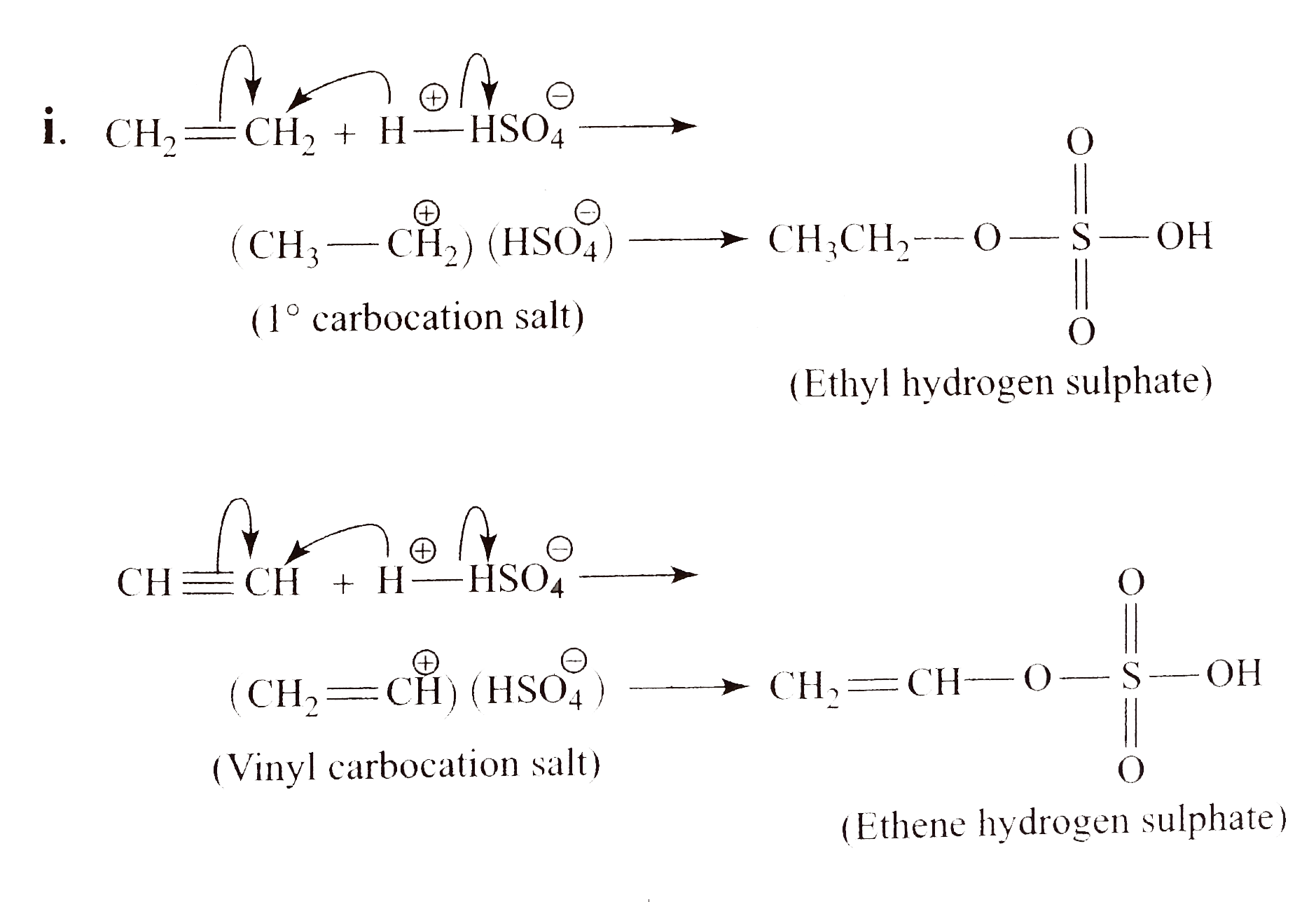 Since, with `HCI` and `HI` the peroxides effect does not take place, addition takes place according to Markovnikov's role. `i. ` 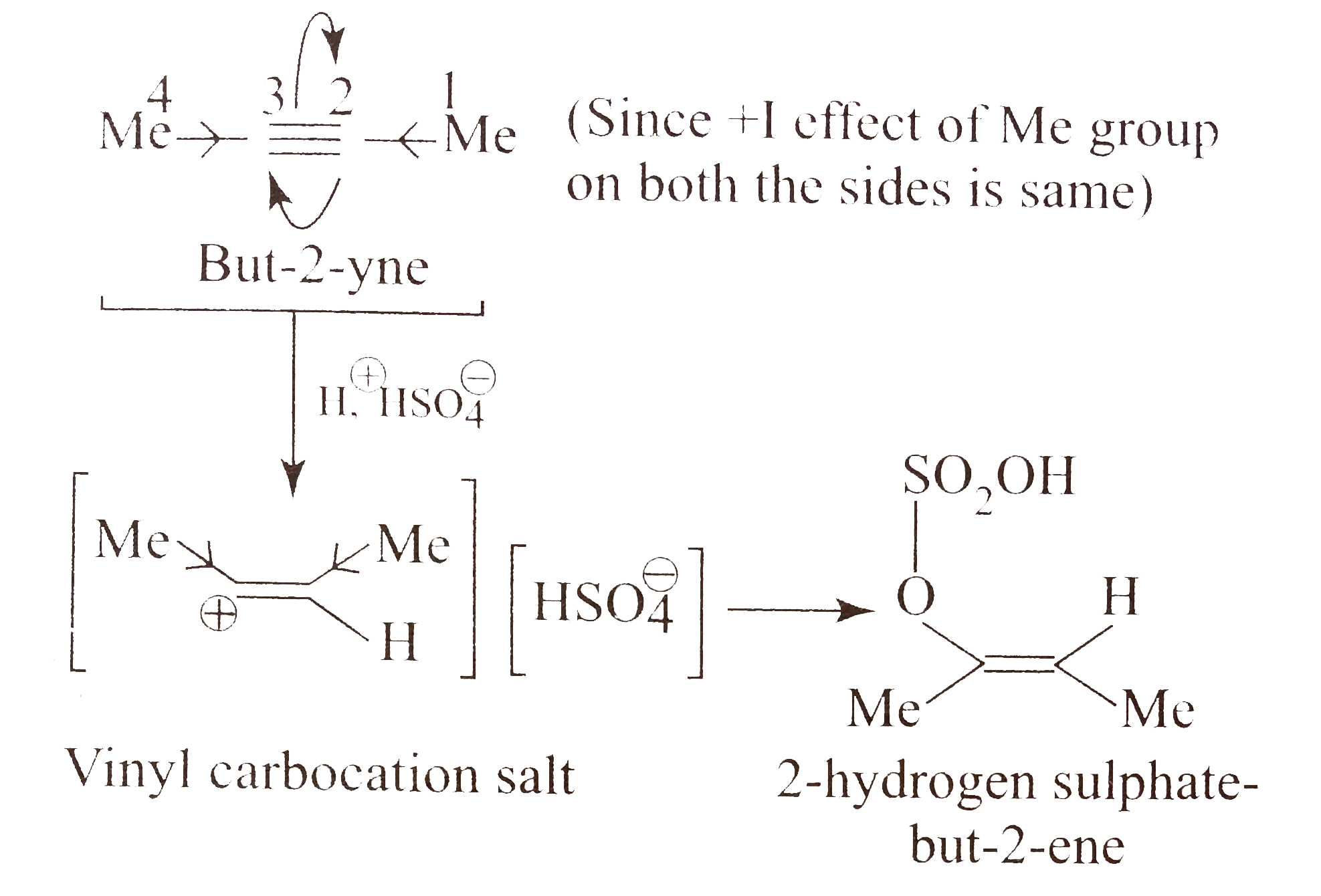 Since, alkyl carbocation salt is more stable than vinyl carbocation salt, ethene dissolves, whereas ethyne does not dissolve in conc. `H_(2)SO_(4)`. 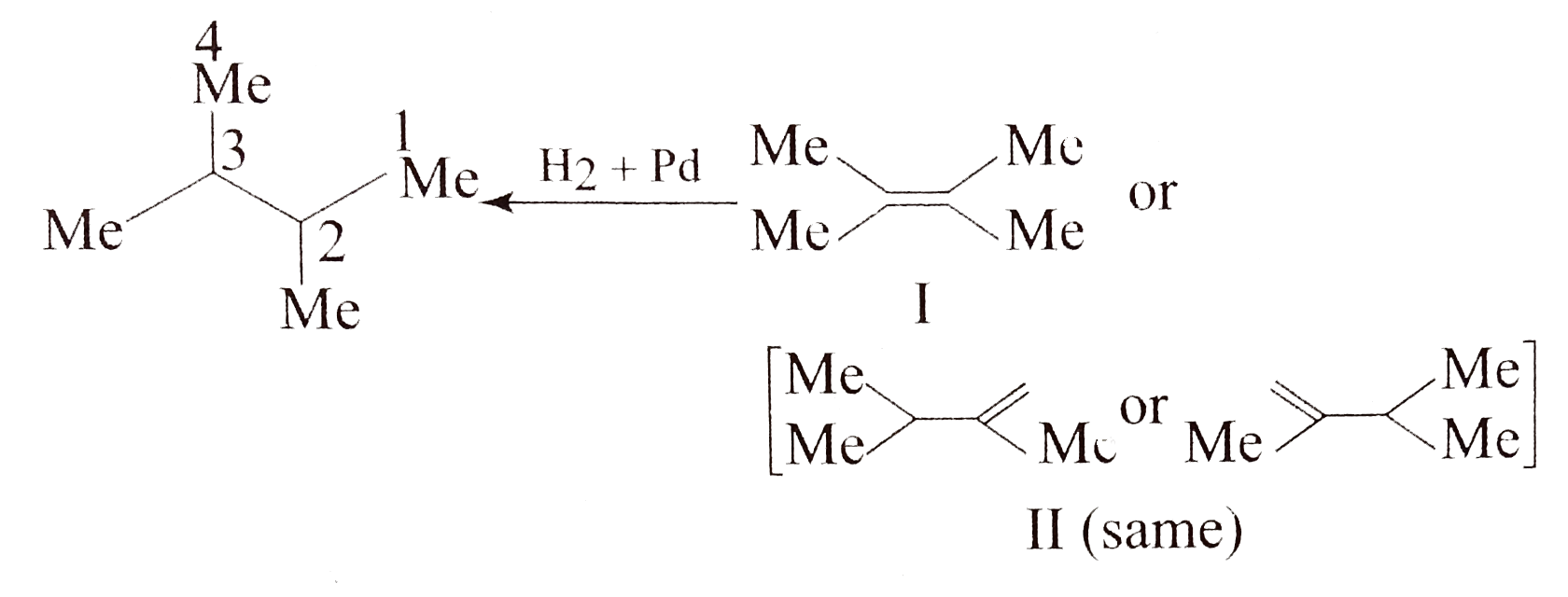 Vinyl carbocation salt`2-` hydrogen sulphate `-` but`-2-`ene Vinyl carbocation salt`2-` hydrogen sulphate `-` but`-2-`ene In this case, vinyl carbocation salt in more stabilised than vinyl carbocation sal with `(CH-=CH)`, due to `+I` effect of `(CH_(3)-)` group, hence, soluble in conc. `H_(2)SO_(4)`. `j.` Write the structure of `2,3-` DIMETHYL butane and prceed in reverse manner to find the structure of `X`. 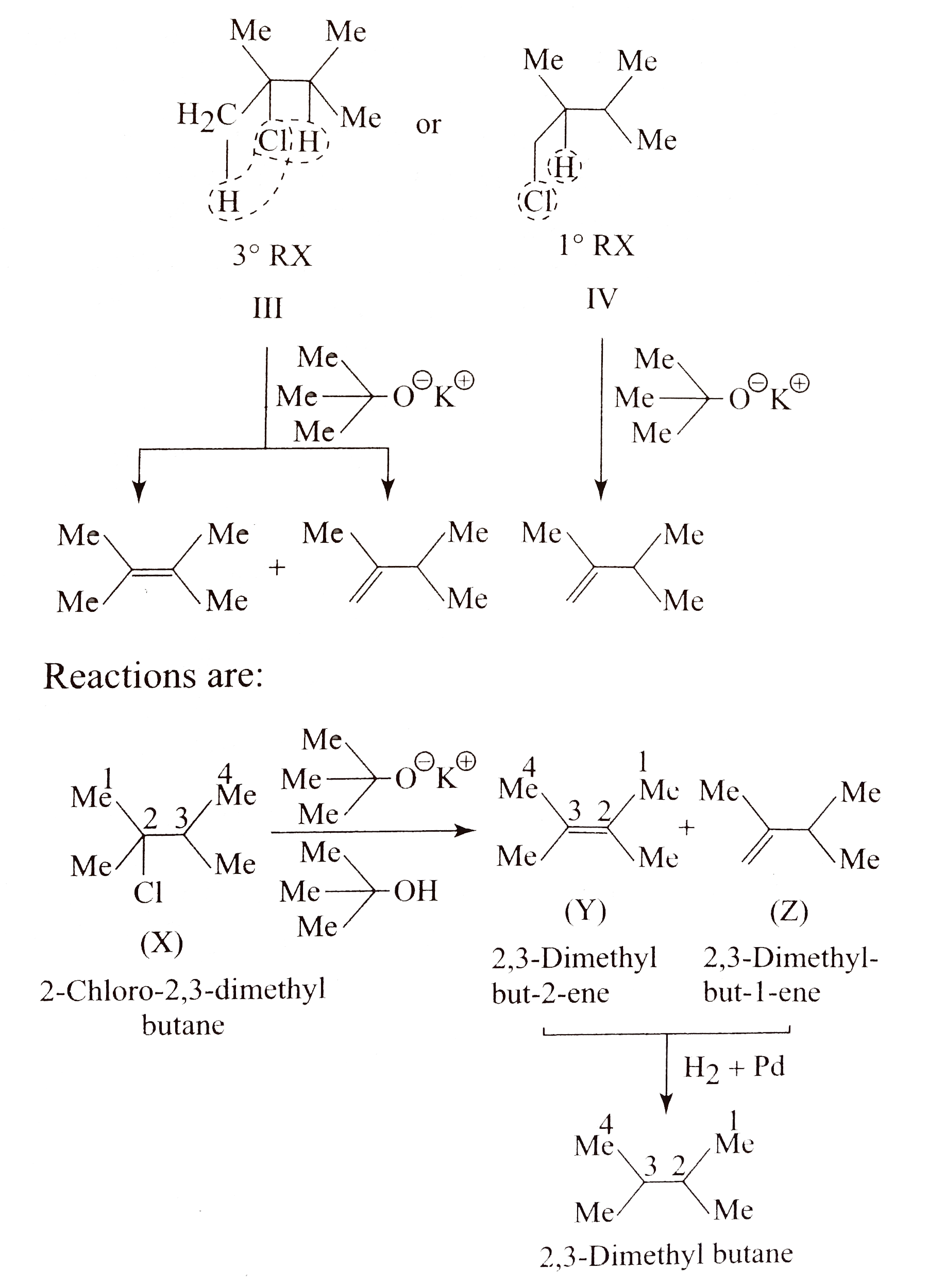 Here, `X` is an alkyl halide. It can be `III` or `IV`, BUT `III` can give two products, while `IV` can give only one product. So alkyl halide `X` is `III`. 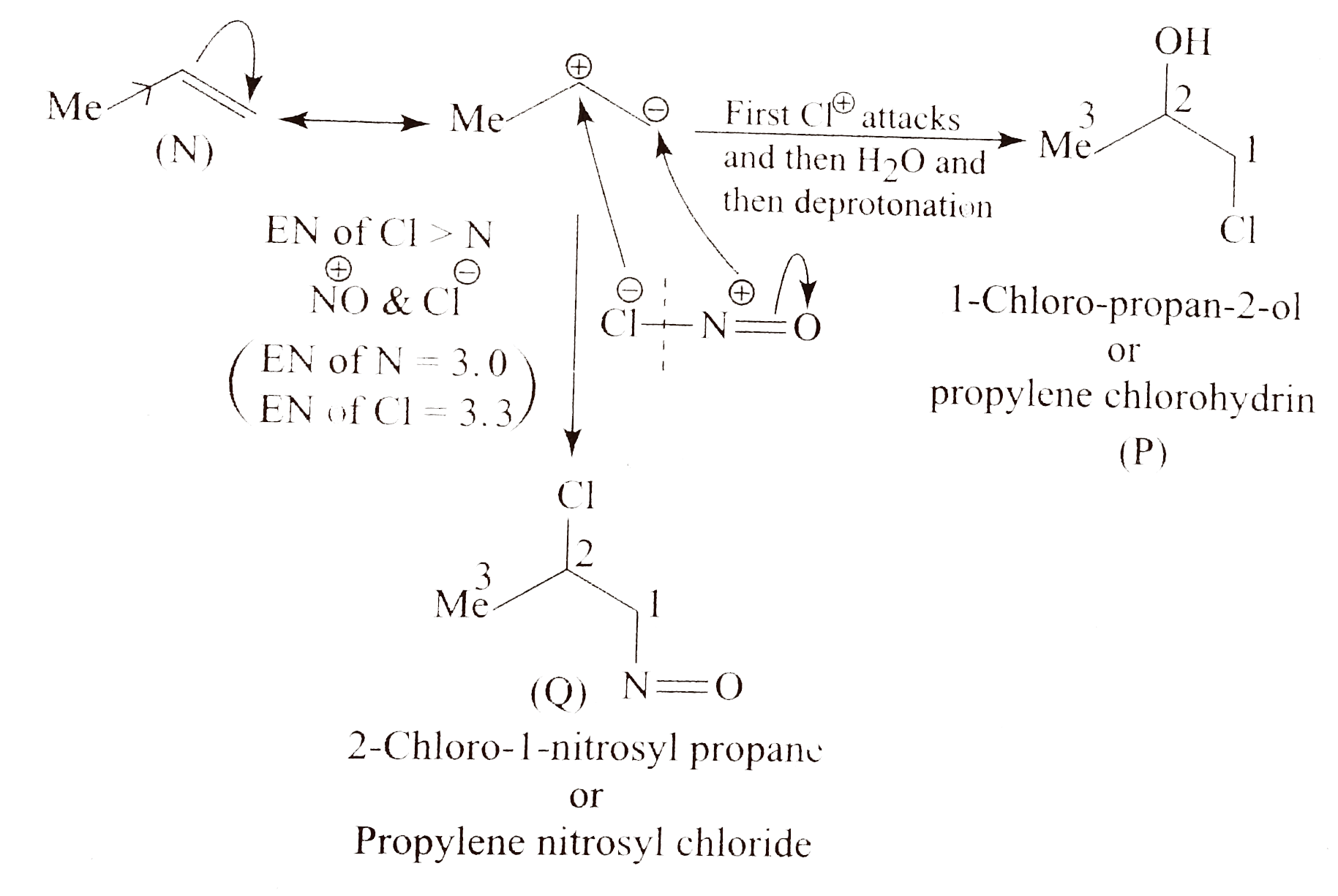 Reactions are `:` 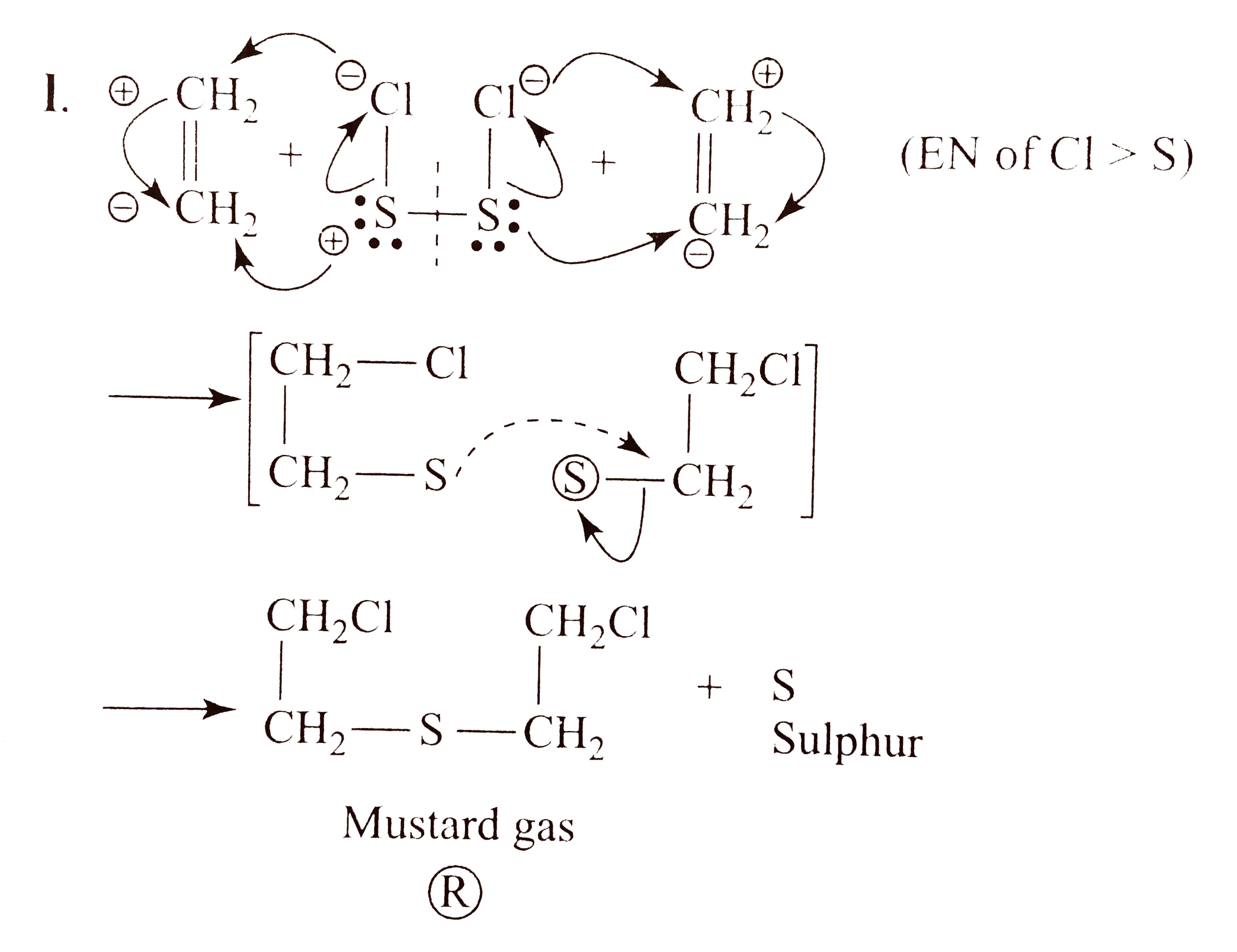 `k.` 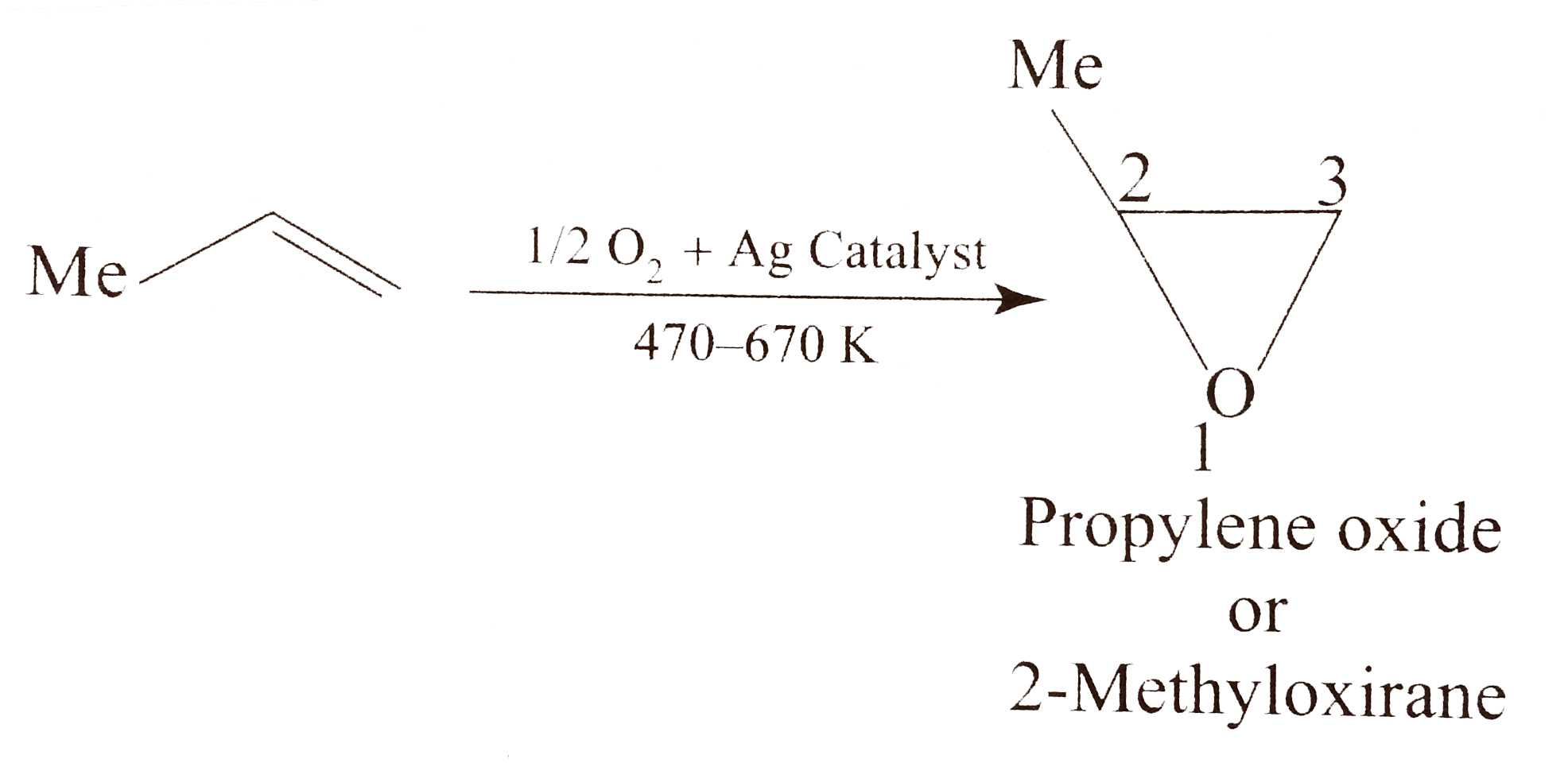 `l. ` 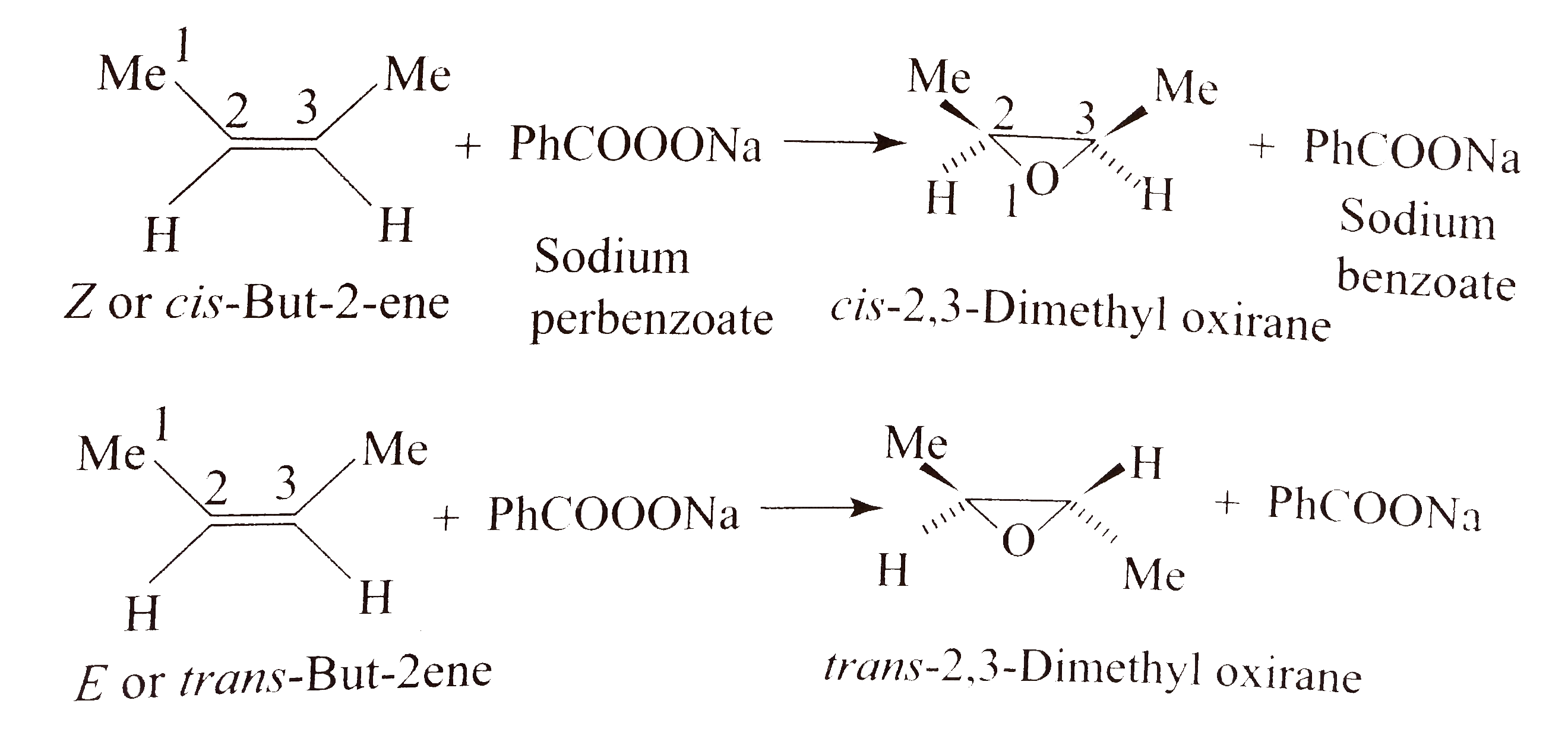 Mustard gas is a poisonous gas that was used in World War`I(1914-1918)`. It is also used as an anaesthetic. It is used in place of acctylene (ethyne) for welding purposes, in fruitindustry for the preservation and artificial ripening of green fruits such as organtes, BANANAS, and apples, andinthe manufacture of plastic and various solvents, such as glycol and dioxian. `m.` Lower alkene, when mixed with air and passed under pressure over a silver catalyst at 470-670K, adds an oxygen atom to give alkene oxide or epoxide. 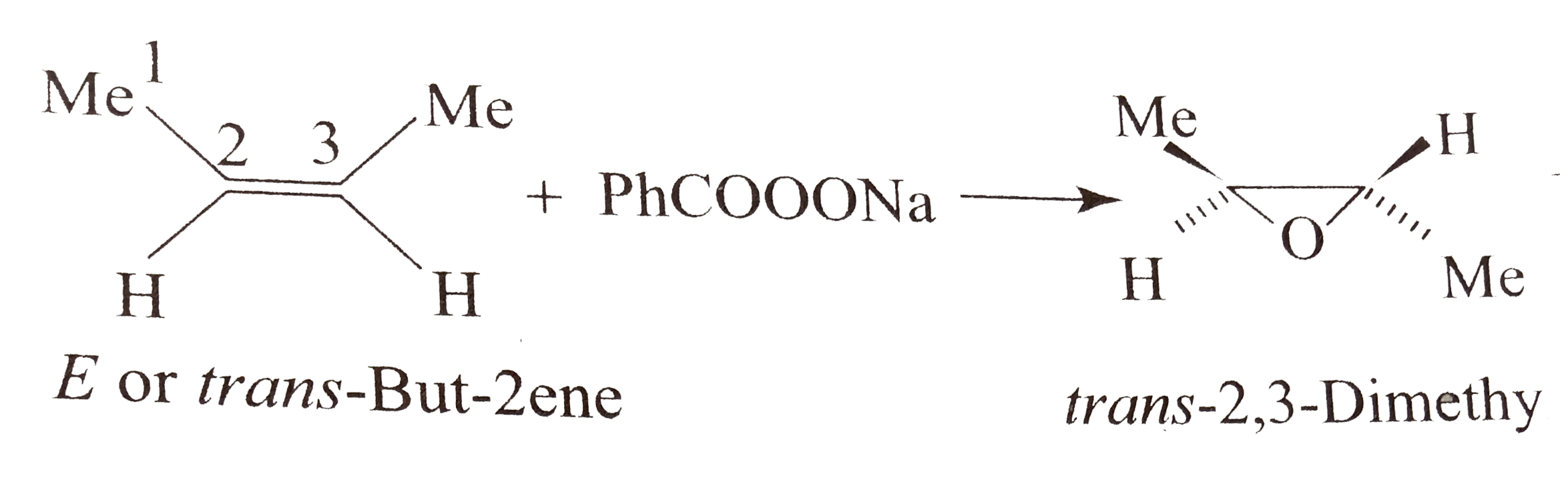 Propylene oxide Propylene oxide or `2-` Methyloxirane `n.` Epoxides are also obtained when alkenes are treated with per `-` acids (perbenzoic acid, `C_(6)H_(5)COOOH`) or their alkali metal SALTS. |
|
| 45. |
Complete the following reactions: |
|
Answer» |
|
| 46. |
Complete the following reactions: |
Answer» SOLUTION :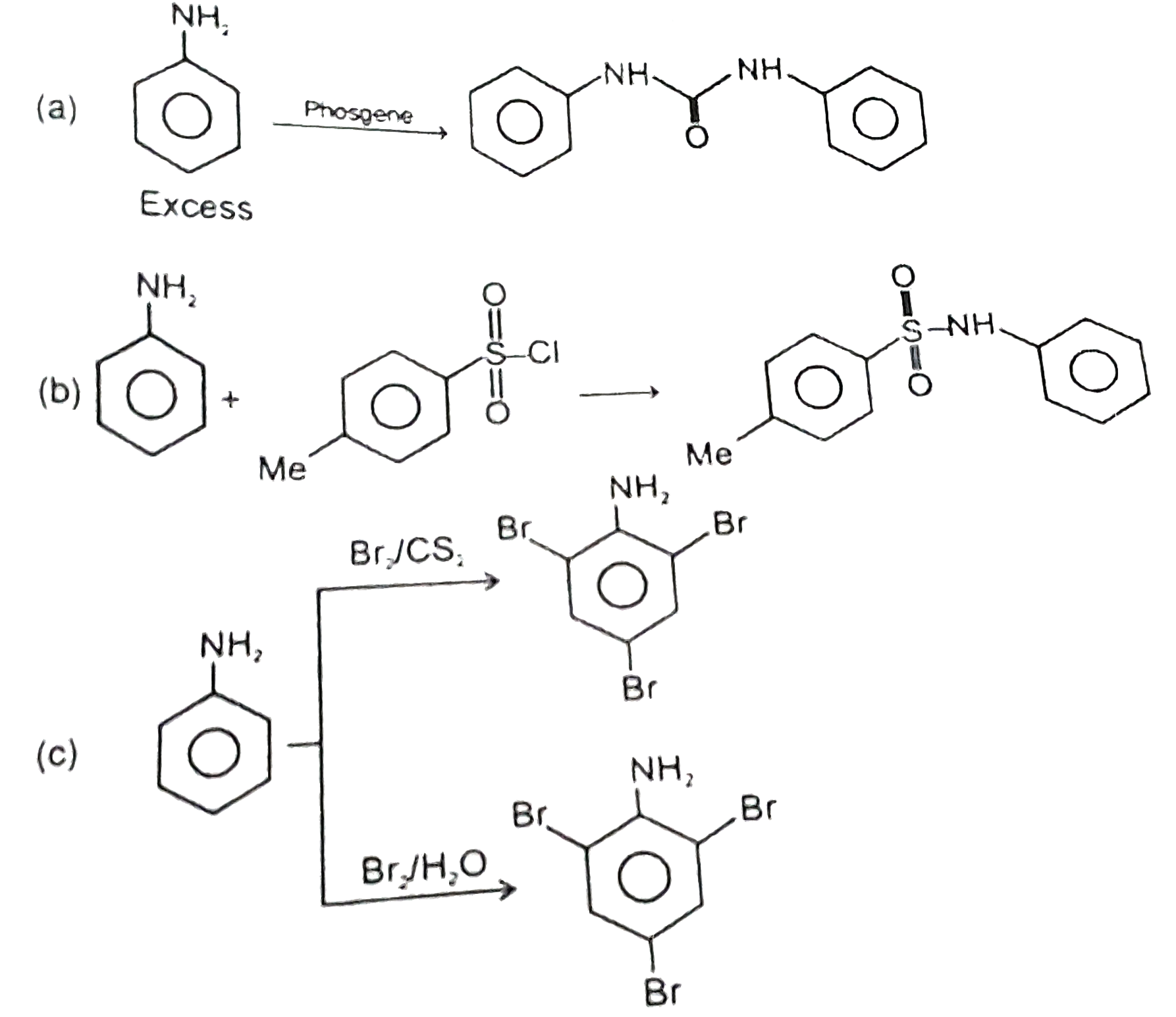
|
|
| 47. |
Complete the following reactions. 2Ca(OH)_(2)+2Cl_(2)to ________________+____________________+________________ |
|
Answer» |
|
| 48. |
Complete the following reactions. |
Answer» Solution :`a.` Proceed reverse `:` 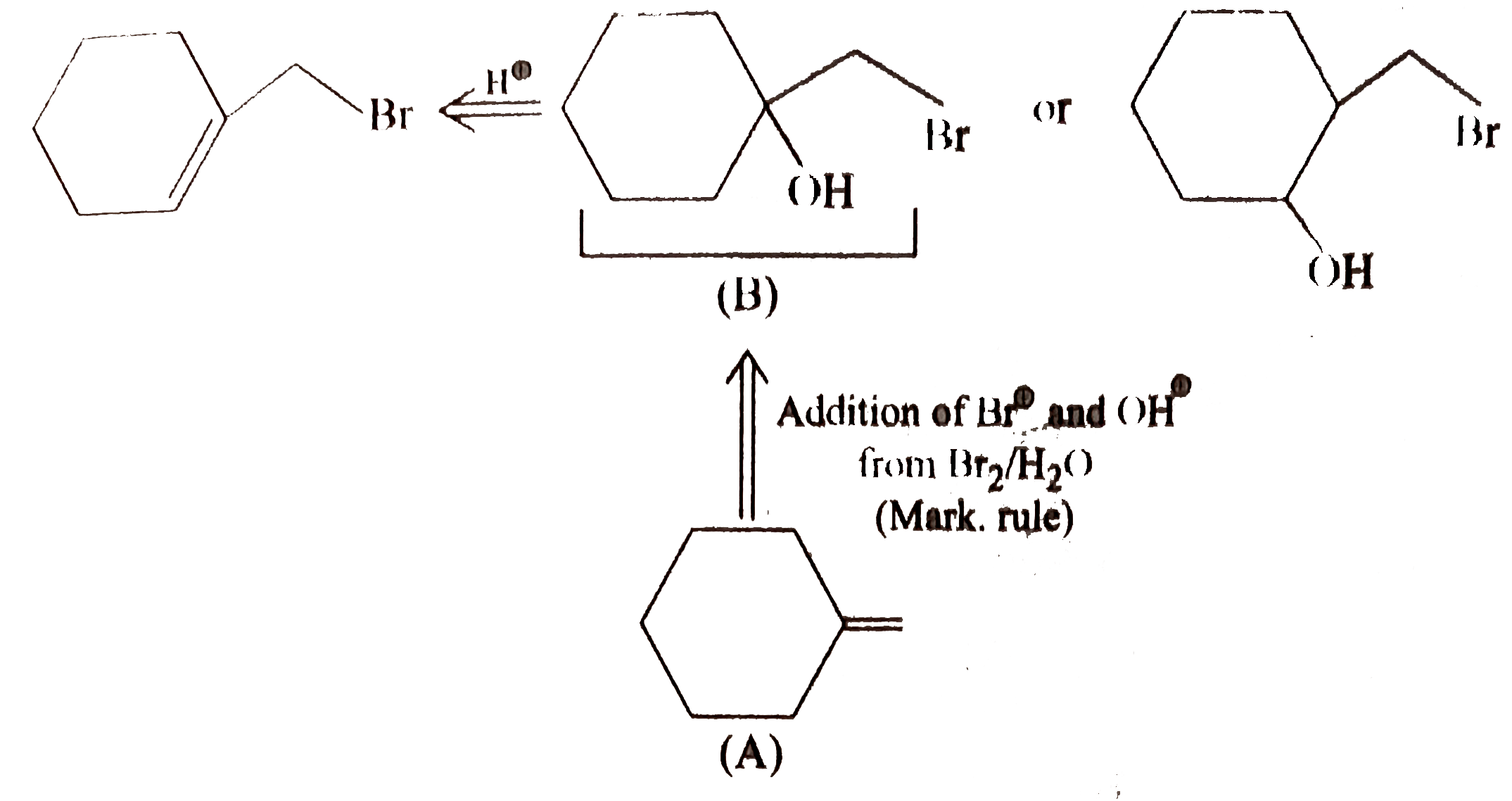 `e.` Dils `-` Alder reaction `:` 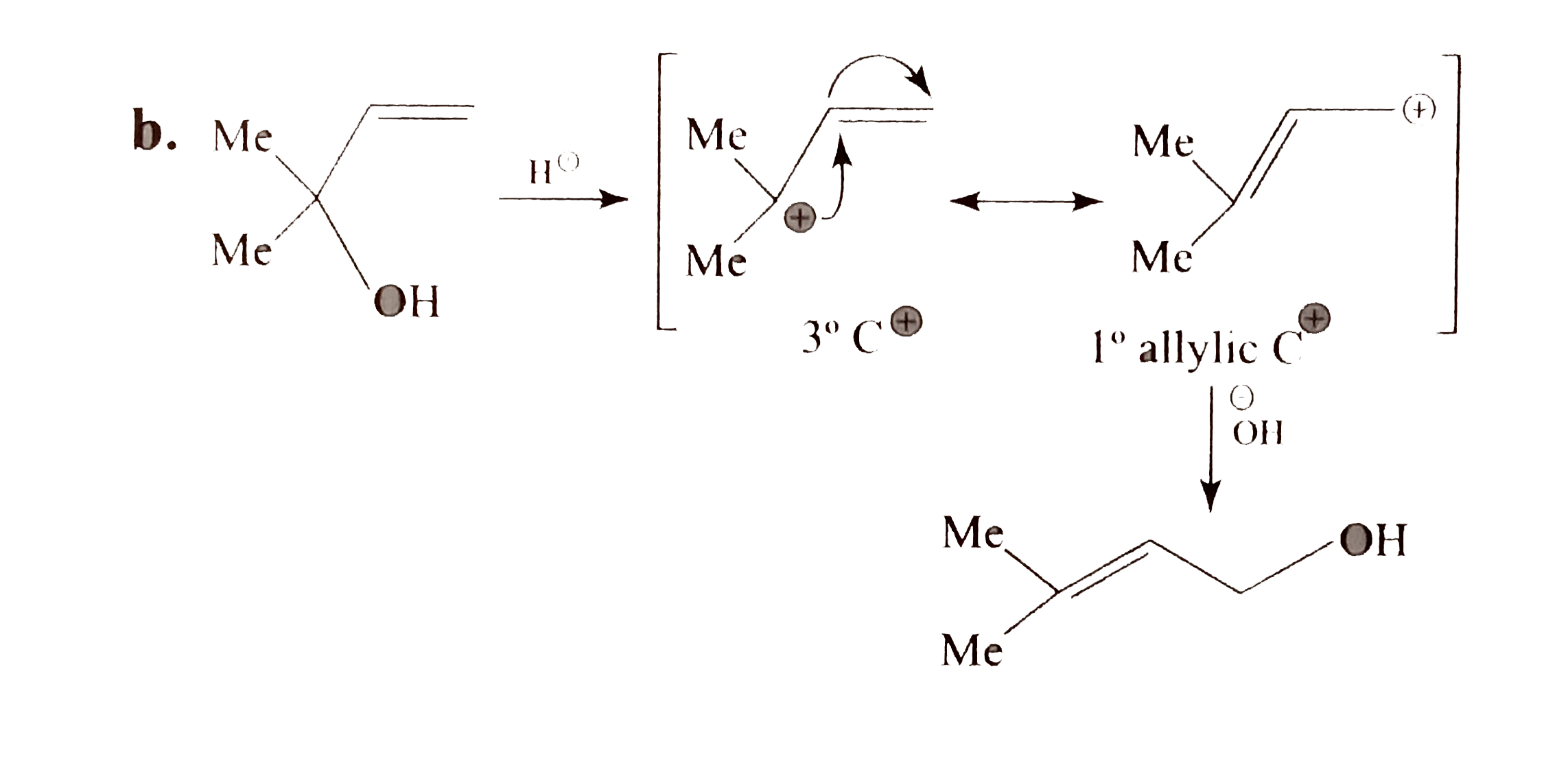 `f.` In the presence of peroxide `(H_(2)O_(2))`, free `-` radical MECHANISM TAKES place. 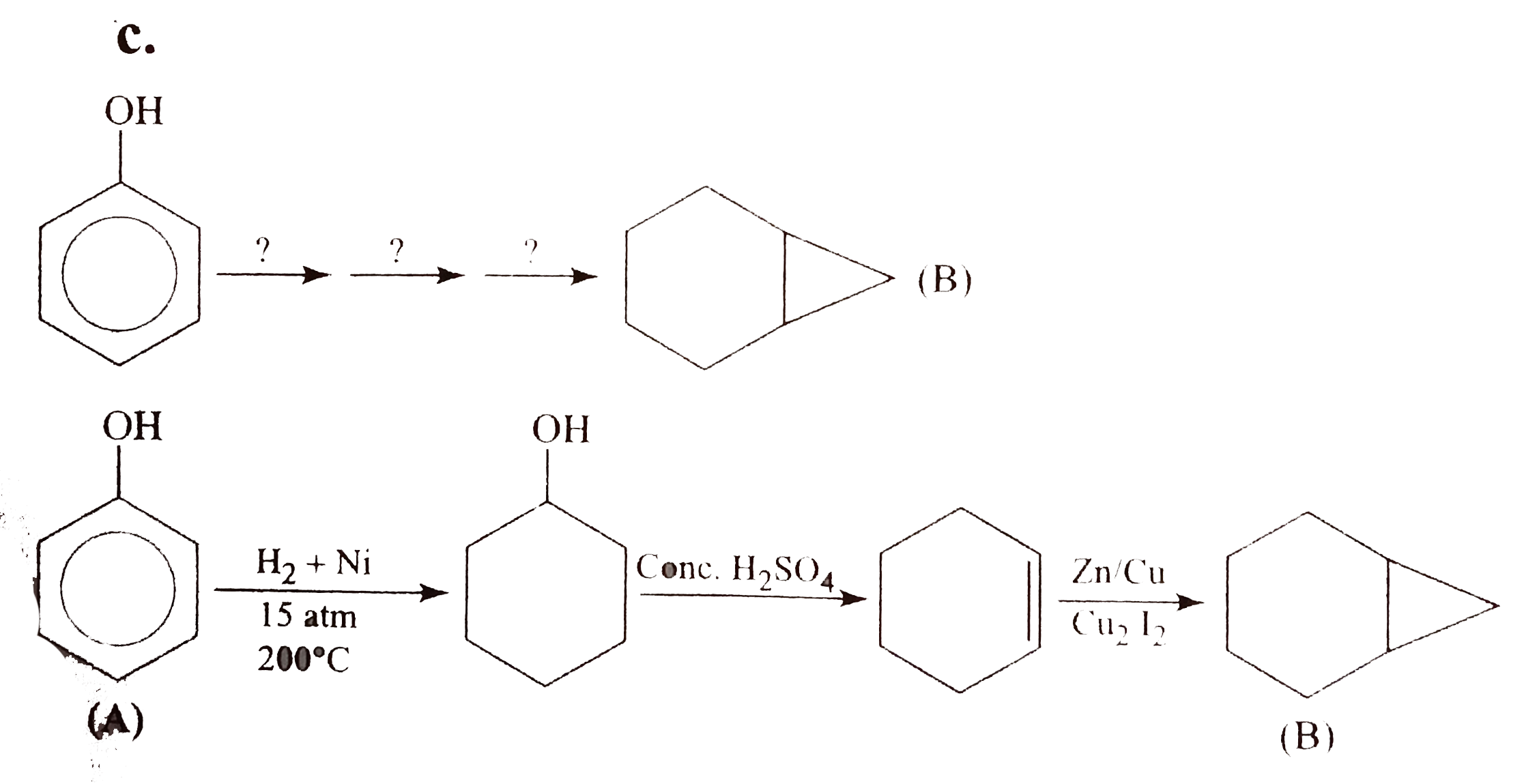 `g.` Proceed via free `-` radical mechanism. 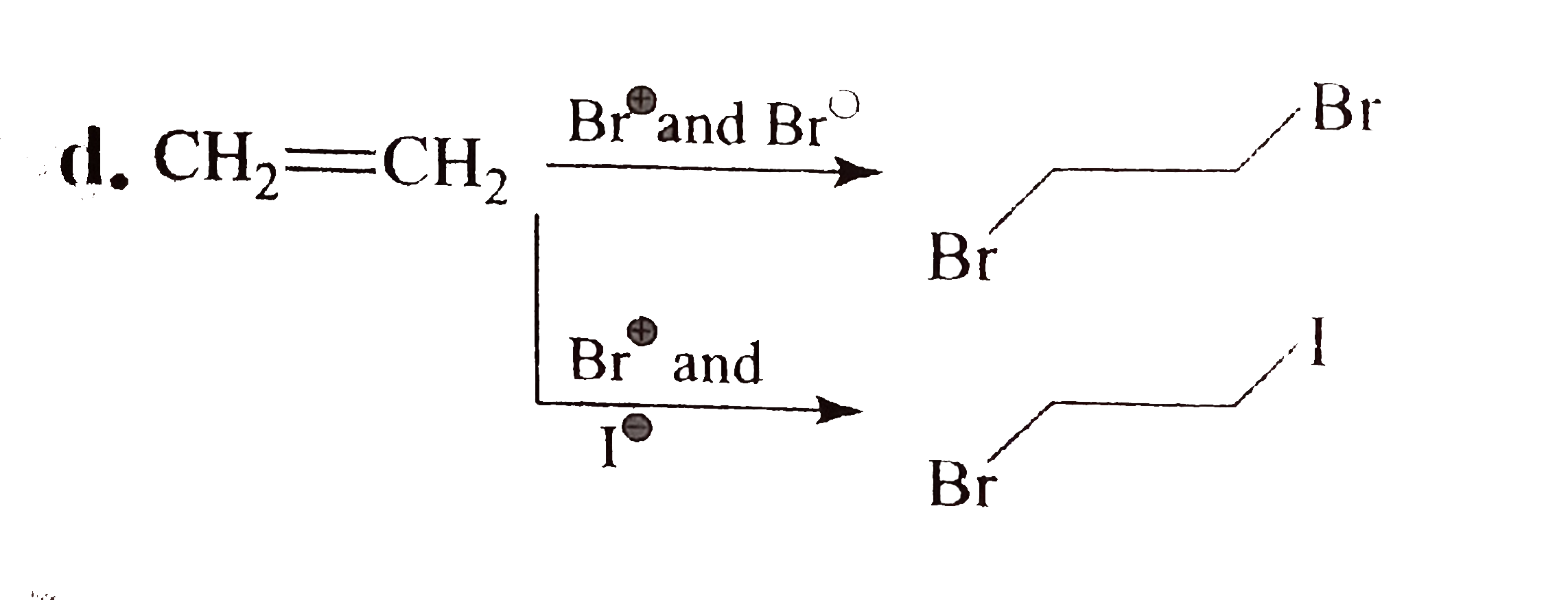 `l.` 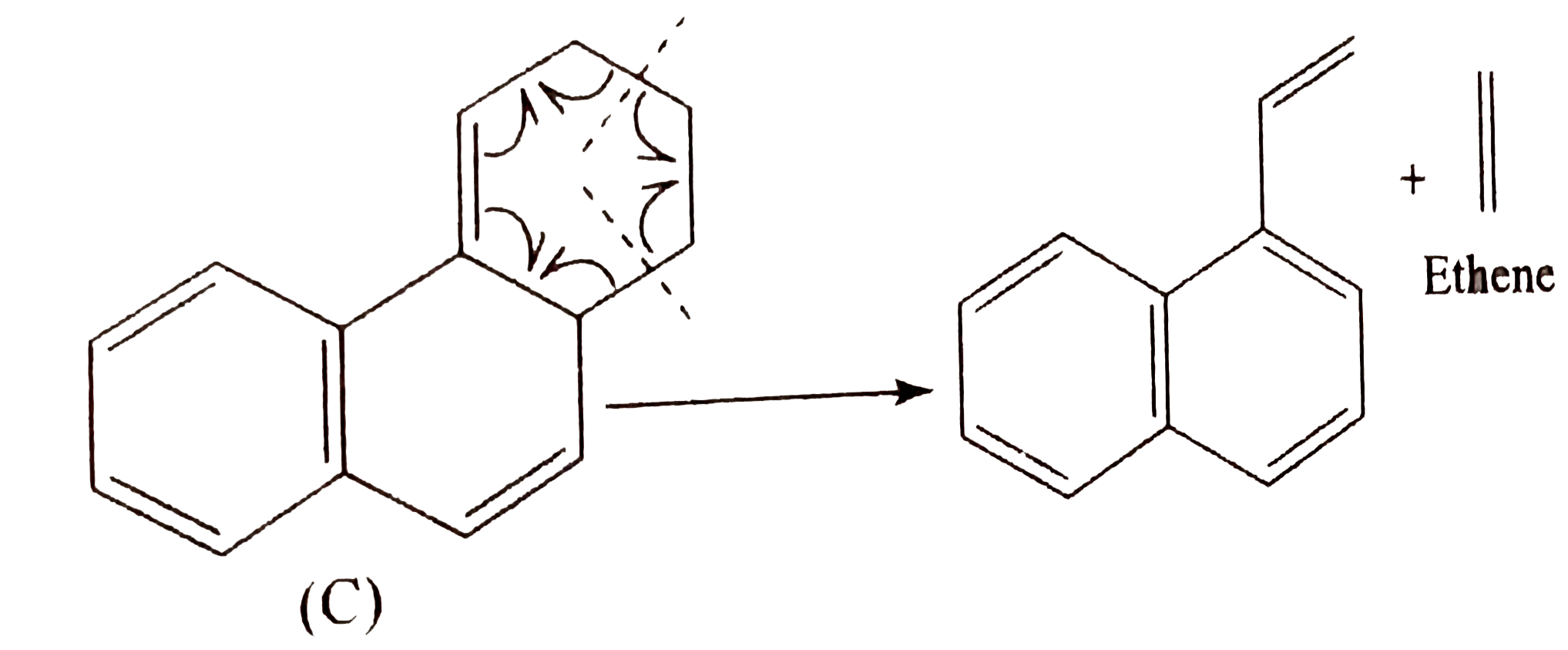 `m.` `(a)` `NBS + hv (b) (C_(2)H_(5))CuLI (`Corey `-` House synthesis `)` `n`. 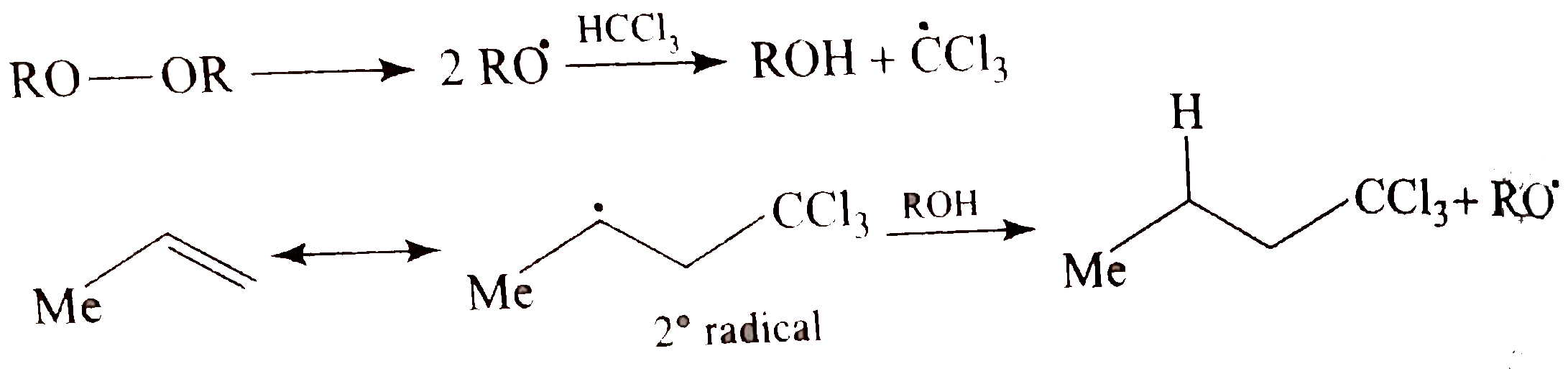 `p.` 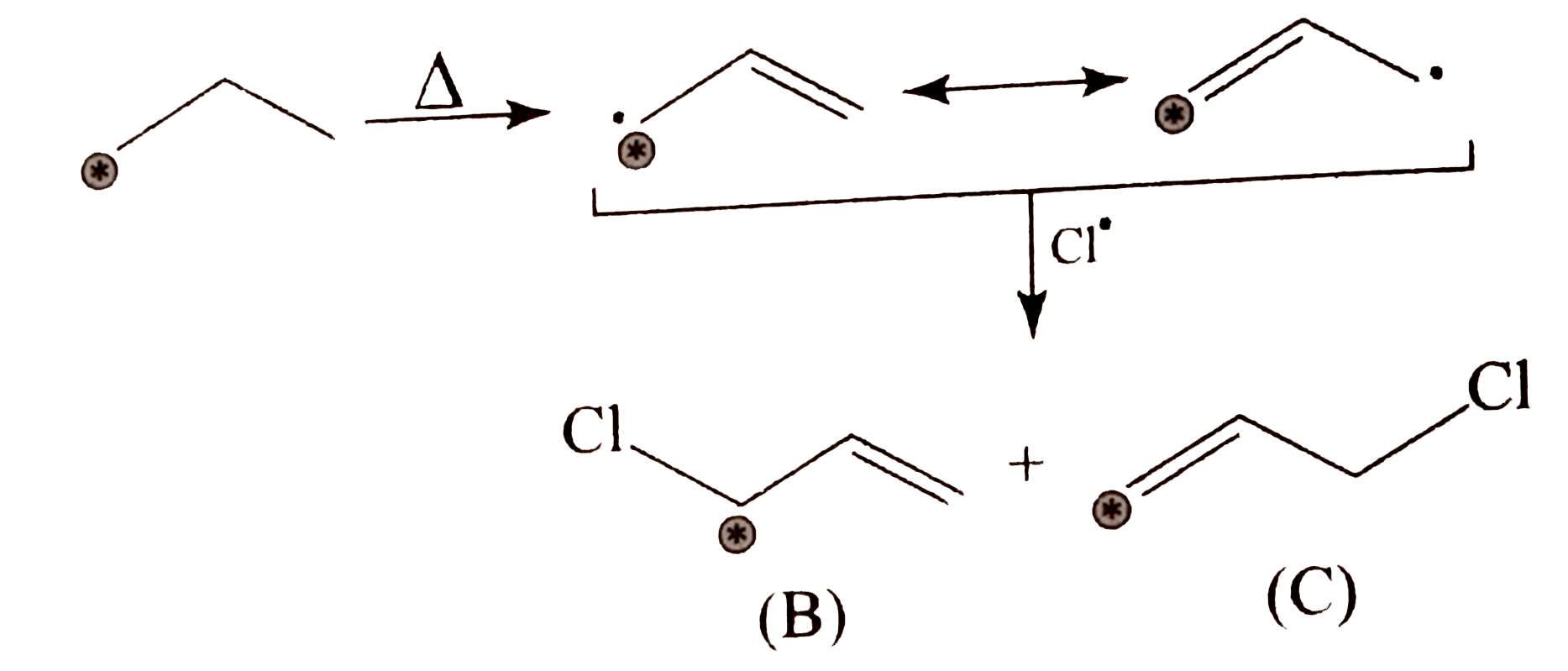 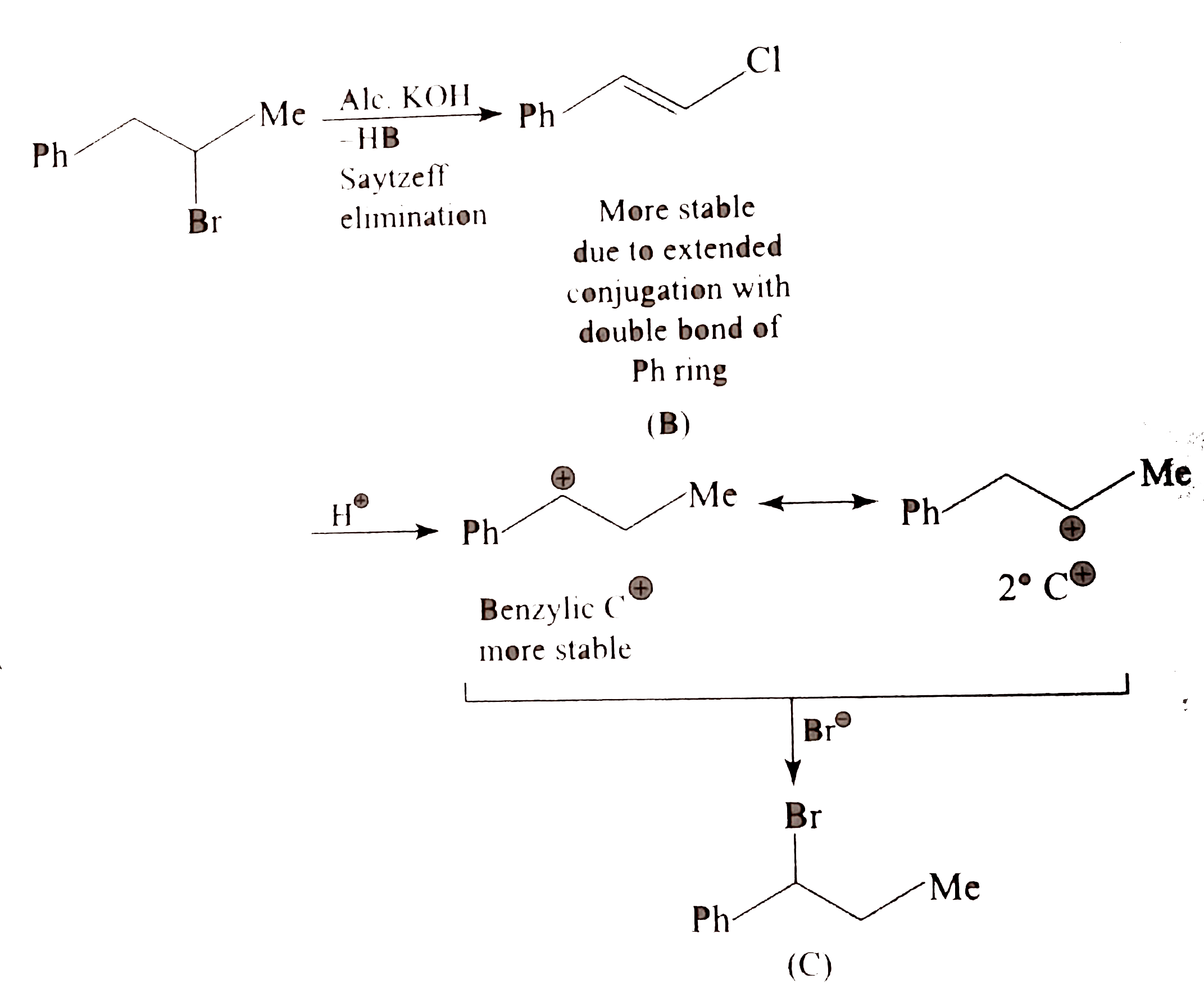   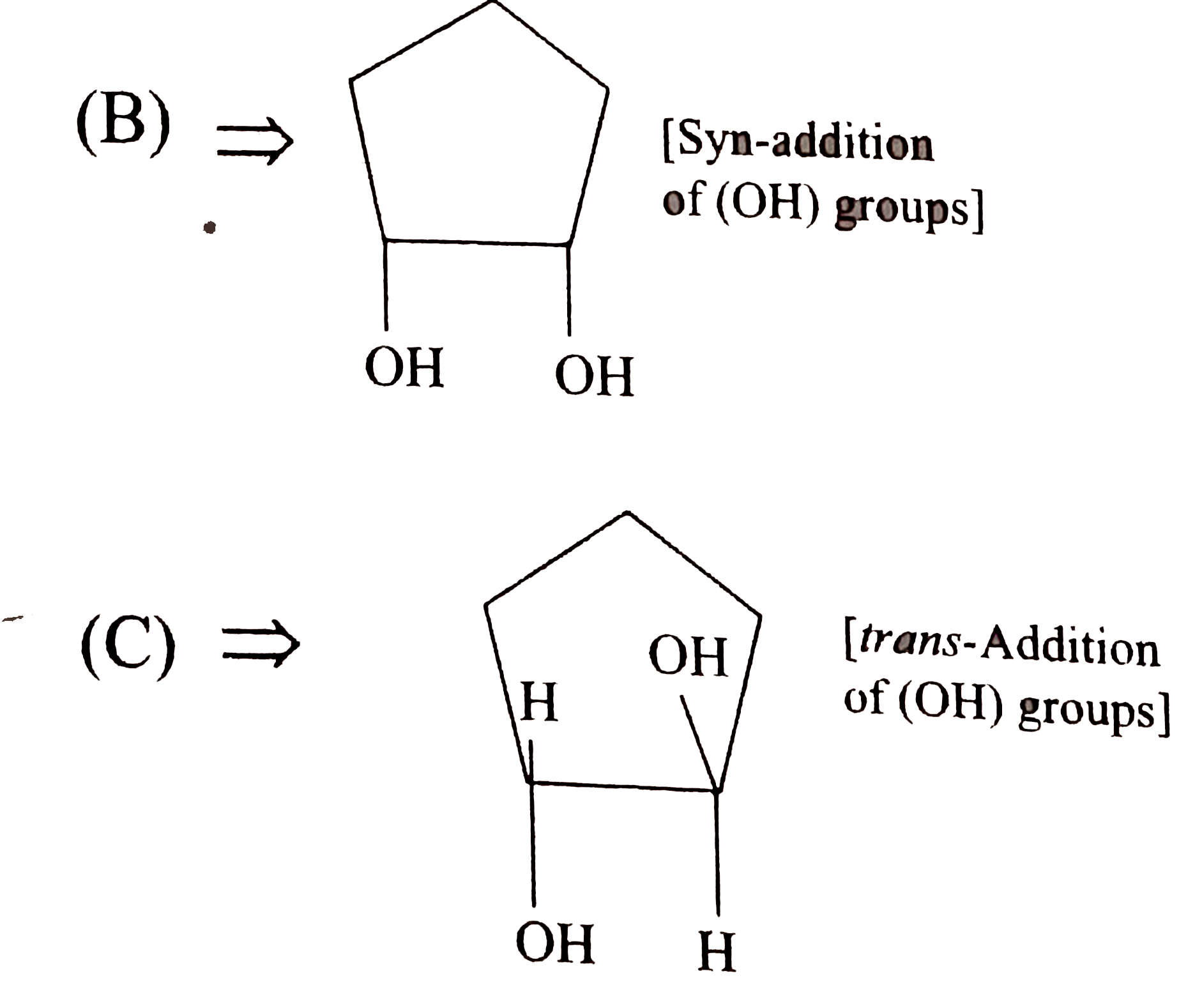  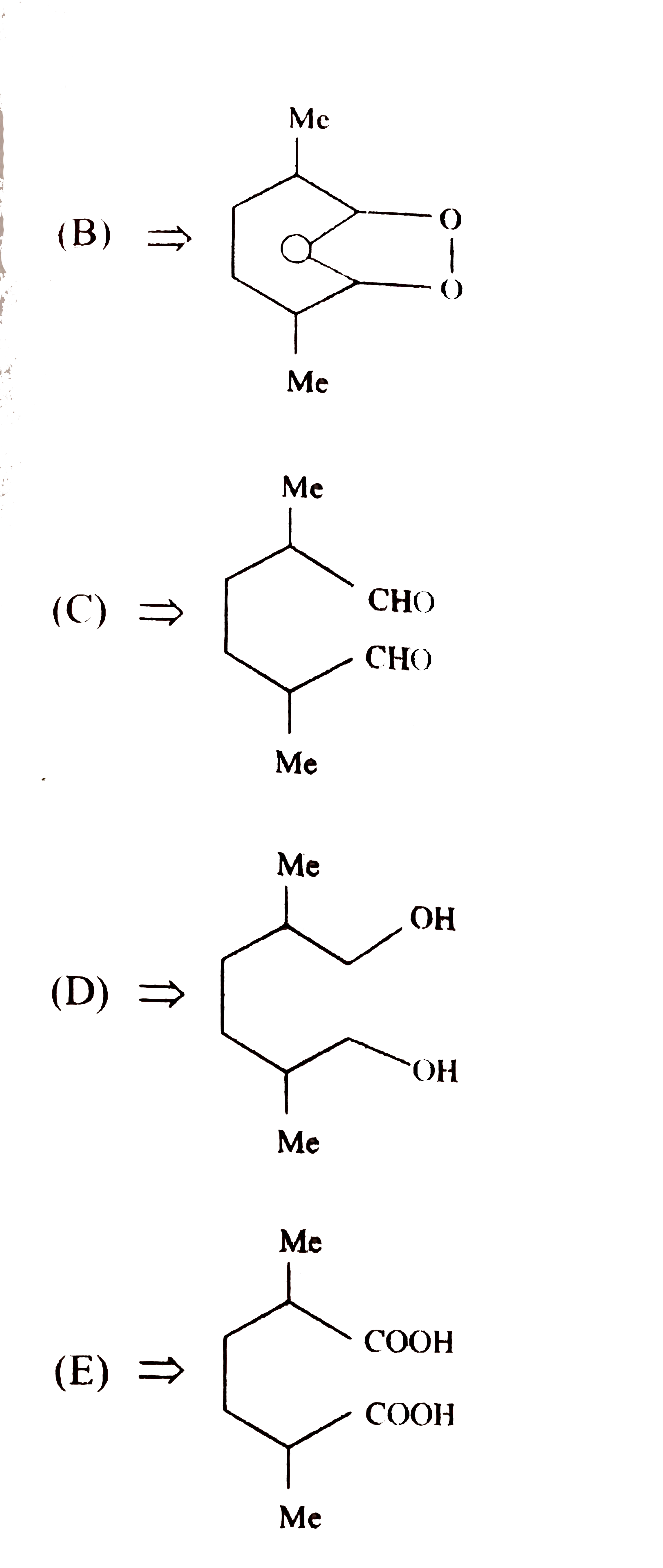 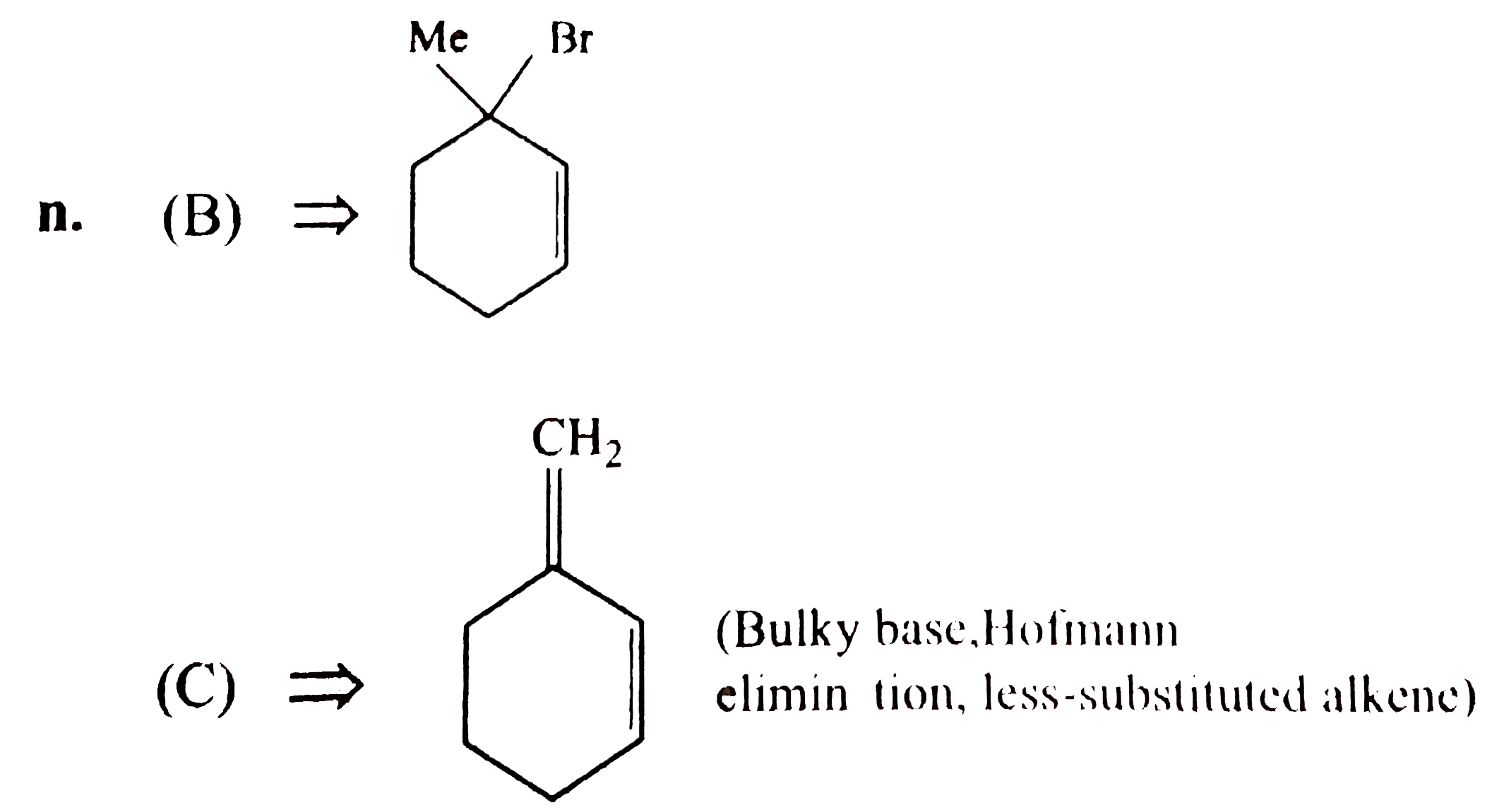 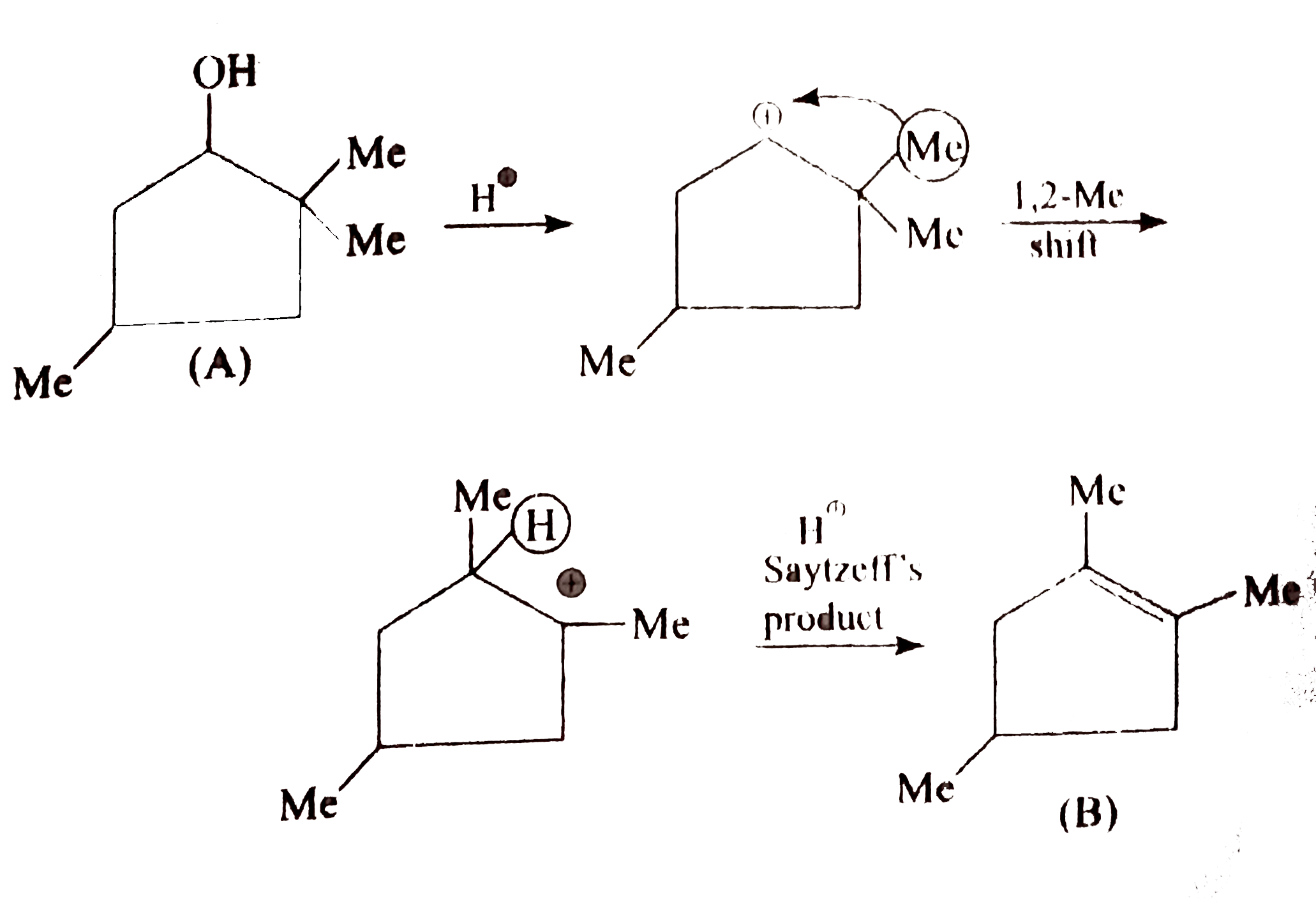 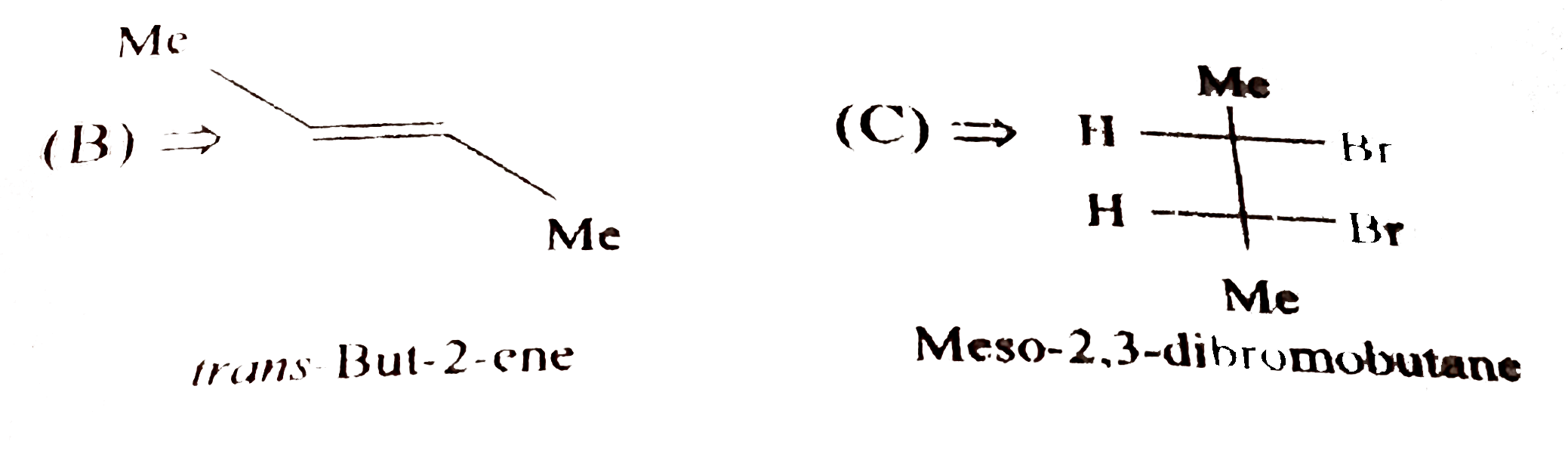 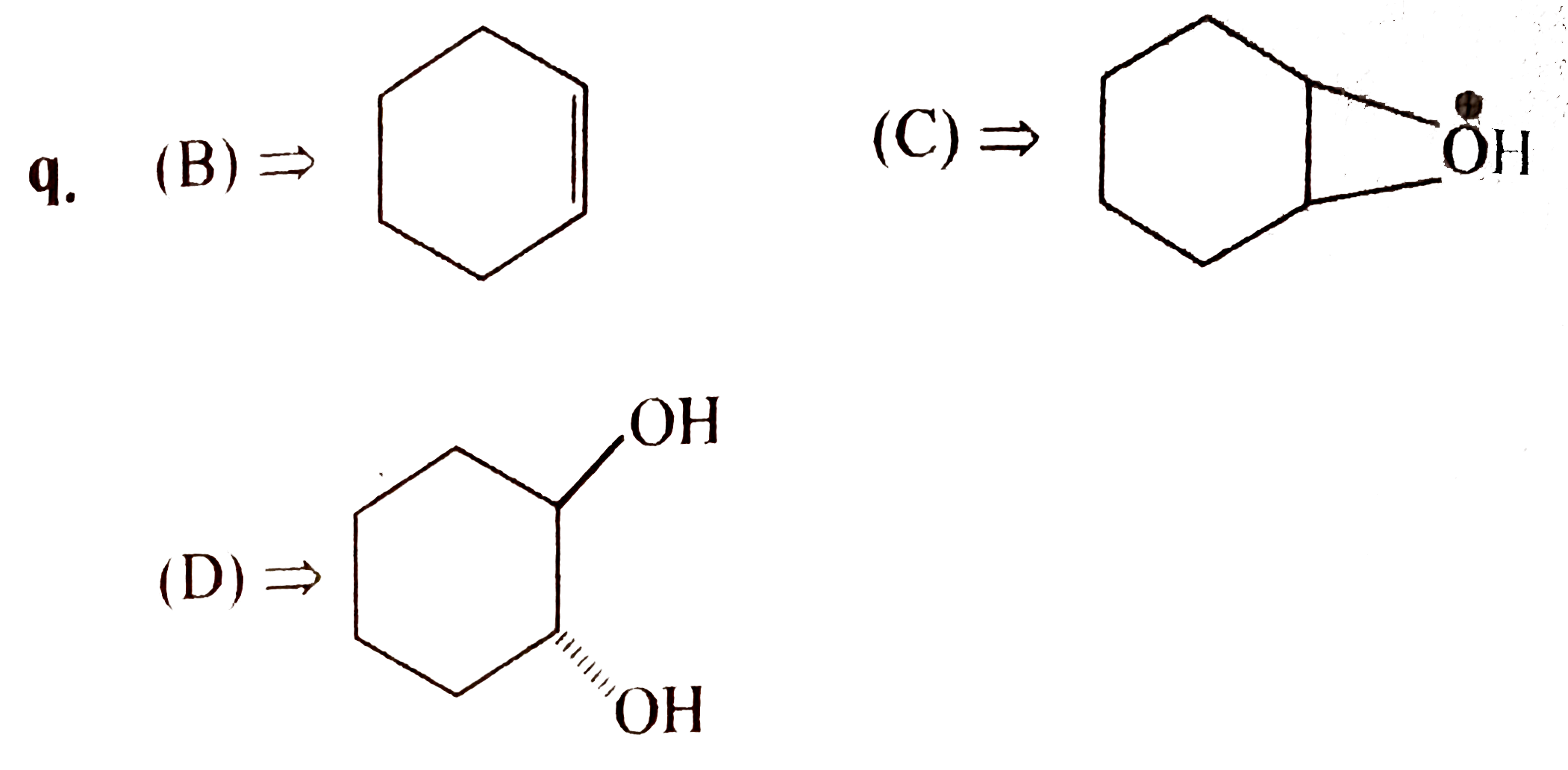
|
|
| 49. |
Complete the following reactions : |
|
Answer» `(##RES_CHM_ROHR_E01_009_A02##)` `(##RES_CHM_ROHR_E01_009_A03##)` `(##RES_CHM_ROHR_E01_009_A04##)` |
|
| 50. |
Complete the following reactions : |
|
Answer» |
|