

Saved Bookmarks
This section includes 7 InterviewSolutions, each offering curated multiple-choice questions to sharpen your Current Affairs knowledge and support exam preparation. Choose a topic below to get started.
| 2. |
Due to high electronegativity of alkali metals react with elements of high electronegative compound and formed ……….. Bond. |
|
Answer» METALLIC BOND |
|
| 3. |
Due to high _______ of H_2O, H_2O has a very strong hydrating tendency. |
|
Answer» |
|
| 4. |
Due to high bond energy of carbon , which of the following character does not possess by carbon. |
|
Answer» C can FORM normal chain. |
|
| 5. |
Due to Frenkel defect, the density of the crystal __________whereas due to Schottky defect, it.. |
|
Answer» |
|
| 6. |
Due to Frankel defect, the density of ionic solids |
|
Answer» decreases |
|
| 7. |
Due to crystal fractures , the slippage of the planes relative to each other is the easiest way of distorting the crystal . However,even along their most favoured direction distortion of the crystals required a large force it is due to |
|
Answer» displacement may bring ions of the same charge CLOSE to each other . |
|
| 8. |
Dual nature of matter was proposed by de Broglie in 1923, it was experimentally verified by Davisson and Germer by diffraction experiment. Wave haracter of matter has significance only for microscopic particles. De Broglie wavelength (lambda) can be calculated using the relation, (lambda) = (h)/(m v) where 'm' and 'v' are the mass and velocity of the particle. Which among the following is not used to calculate the de Broglie wavelength ? |
|
Answer» `lambda = (C)/(v)` |
|
| 9. |
Dual nature of matter was proposed by de Broglie in 1923, it was experimentally verified by Davisson and Germer by diffraction experiment. Wave character of amtter has significance only for microscopic partiles. De Broglie wavelength or wavelength of matter wave can be calculated using the following relation: lamda=(h)/(mv) Where, 'm' and 'v' are te mass and velocity of the particle. de Broglie hypothesis suggested that electron waves were being diffracted by the target, much as X-rays are diffracted by planes of atoms in the crystals. Q. An electron microscope is used to probe the atomic arrangement to a resolution of 5Ã…. What should be the electric potential to which the electrons need to be accelerated? |
|
Answer» 2.5 V |
|
| 10. |
Dual nature of matter was proposed by de Broglie in 1923, it was experimentally verified by Davisson and Germer by diffraction experiment. Wave character of amtter has significance only for microscopic partiles. De Broglie wavelength or wavelength of matter wave can be calculated using the following relation: lamda=(h)/(mv) Where, 'm' and 'v' are te mass and velocity of the particle. de Broglie hypothesis suggested that electron waves were being diffracted by the target, much as X-rays are diffracted by planes of atoms in the crystals. Q. Wave nature of electrons is shown by: |
|
Answer» PHOTOELECTRIC effect |
|
| 11. |
Dual nature of matter was proposed by de Broglie in 1923, it was experimentally verified by Davisson and Germer by diffraction experiment. Wave character of amtter has significance only for microscopic partiles. De Broglie wavelength or wavelength of matter wave can be calculated using the following relation: lamda=(h)/(mv) Where, 'm' and 'v' are te mass and velocity of the particle. de Broglie hypothesis suggested that electron waves were being diffracted by the target, much as X-rays are diffracted by planes of atoms in the crystals. Q. de Broglie equation is obtained by combination of which of the following theories? |
|
Answer» PLANCK's QUANTUM THEORY |
|
| 13. |
Dual nature of matter was proposed by de Broglie in 1923, it was experimentally verified by Davisson and Germer by diffraction experiment. Wave character of amtter has significance only for microscopic partiles. De Broglie wavelength or wavelength of matter wave can be calculated using the following relation: lamda=(h)/(mv) Where, 'm' and 'v' are te mass and velocity of the particle. de Broglie hypothesis suggested that electron waves were being diffracted by the target, much as X-rays are diffracted by planes of atoms in the crystals. Q. Planck's constant has same dimension as that of: |
|
Answer» work |
|
| 14. |
Dual behaviour of matter proposed by de Broglie led to the discovery of electron microscope often used for the highly magnified images of biological molecules and other types of material. If the velocity of the electron in this microscope is 1.6 xx 10^(6) ms^(-1), calculate de Broglie wavelength associated with this electron. |
| Answer» SOLUTION :`lamda = (h)/(mv) = (6.626 xx 10^(-34) kg m^(2) s^(-1))/((9.11 xx 10^(-31) kg) (1.6 xx 10^(6) MS^(-1))) m = 4.55 xx 10^(-10) m = 455` pm | |
| 15. |
Dual behavior of matter proposed by de Broglie led to the discovery of elcetron microscope often used for the highly magnified images of biological molecules and other type of material.If the velocity of the electron in this microscopeis 1.6xx10^(6)ms^(-1),calculate de Broglie wavelength associated with this electron. |
|
Answer» SOLUTION :`gamma=(H)/(mv),gamma=((6.626xx10^(-34)Js))/((9.1xx10^(-31)kg)XX(1.6xx10^(6)MS^(-1)))` `=0.455xx10^(-34+25)m=0.455nm=455p m.` |
|
| 16. |
Dualbehaviour of matterproposedby de Broglieled tothediscovery ofelectronmicroscope oftenusedfor thehighlymagnified imagesof biologicalmoleculas andothertypeof material.If thevelocityof theelectronin thismicrosocopeis 1.6 xx 10^(6) ms^(-1) Calculatede- Brogliewavelengthassociatedwith thiselectron (m_(e) = 9.1 xx 10^(31) kgh= 6.626 xx 10^(34) Js ) |
|
Answer» Solution :Velocity( v) =1.6 `XX 10^(6)ms^(-1)h= 6.626 xx 10^(34)J` `m= 9.1 xx 10^(31) kg` wavelength `lambda = (h )/(MV) = (6.626 xx 10^(34)JS)/((9.1 xx 10^(31) kg 1.6 xx 10^(6)nm))` `=0.4551 xx 10^(9) m` `=0.455 nm = 455 pm` |
|
| 17. |
Dsicuss amphoteric nature of water with an example. |
|
Answer» Solution :A substance or molecule which acts both as an ACID as WELL as base `underset("base")(H_(2)O)+HCl to H_(3)O^(+)+Cl^(-)` `underset("Acid")(H_(2)O)+NH_(3)toNH_(4)^(+)+OH^(-)` |
|
| 18. |
Drying agent which react with CO_(2) and removes water vapours from ammonia is |
|
Answer» `CAO` |
|
| 19. |
Dry ice is effective in seeding clouds because |
|
Answer» `CO_(2)` and `H_(2)O` have similar crystal structure |
|
| 20. |
Dry ice is.... |
|
Answer» Solid `NH_3` |
|
| 21. |
Dry hydrogen was passed over 1.58 g of red hot copper oxide till all of it completely reduced to 1.26 g of copper (Cu). If in this process 0.36 g of H_2 O is formed, what will be the equivalent weight of Cu and O? |
|
Answer» Solution :Copper OXIDE `+H_2 to Cu + H_2 O` `therefore` equivalent of copper oxide `=` equivalent of Cu `=` equivalent of `H_2 O`. `therefore ("weight of copper oxide")/("eq. weight of copper oxide")=("weight of Cu")/("eq. wt. of Cu")=("weight of" H_2 O)/("eq. wt. of" H_2 O)` Suppose eq. wt. of `Cu and O` are `X and y` RESPECTIVELY and SINCE, eq. wt. of H is 1, we have, equivalent weight of copper oxide `=x+y` equivalent weight of copper `=x` equivalent weight of `H_2 O = 1+y ( E_(H_2 O) = E_(H) + E_(O) )` `therefore (1.58)/( x+y) = (1.26)/( x)= (0.36)/( 1+y)` `therefore x=31.5` and `y=8`. |
|
| 22. |
Dry air was passed successively through a solution of 5 gm of solute dissolved in 80.0 gm of water and through pure water. The loss in weight of the solution was 2.5 gm and that of the pure solvent was 0.04 gm. What is the molecular weight of the solute? |
|
Answer» SOLUTION :`p ALPHA 2.5 GM,(p^(@)-p)alpha0.04 gm` `{:("The relative lowring of"),("vapour pressure"):}}=(p^(@)-p)/(p^(@))` `=(W_(2))/(M_(2)).(M_(1))/(W_(1))` `THEREFORE (0.04)/(2.54)=(5xx18)/(M_(2)xx80)(thereforeM_(2)=71.43)` `M_(2) =" mol.wt of solute "= 71.43` |
|
| 23. |
Drinking is injurious of health. But for revenue purpose government has fixed some permissible value for alcohol . The permissible value for the alcohol content in the blood is 1 % mass . On analysis of blood sample of a driver of being drunk over than the pernissible value , it was obtained that 60 gm sample reacted with 30 mL of 8 M K_(2)Cr_(2)O_(7)(Acidic solution) . Reaction : 2K_(2)Cr_(2)O_(7) + 8 H_(2)SO_(4) + C_(2)H_(5)OH rarr 2Cr_(2) (SO_(4))_(3) + 11 H_(2)O + 2K_(2)SO_(4) + 2CO_(2) Assume K_(2)Cr_(2) O_(7) reacts only with the alcohol present in blood . What is the percentage of alcohol in the blood sample? |
|
Answer» 0.092 |
|
| 24. |
Drinking is injurious of health. But for revenue purpose government has fixed some permissible value for alcohol . The permissible value for the alcohol content in the blood is 1 % mass . On analysis of blood sample of a driver of being drunk over than the pernissible value , it was obtained that 60 gm sample reacted with 30 mL of 8 M K_(2)Cr_(2)O_(7)(Acidic solution) . Reaction : 2K_(2)Cr_(2)O_(7) + 8 H_(2)SO_(4) + C_(2)H_(5)OH rarr 2Cr_(2) (SO_(4))_(3) + 11 H_(2)O + 2K_(2)SO_(4) + 2CO_(2) Assume K_(2)Cr_(2) O_(7) reacts only with the alcohol present in blood . Will the driver be prosecuted for drunken driving? |
| Answer» Answer :a | |
| 25. |
Driving force of a reaction is the |
|
Answer» RESULTANT of enthalpy and ENTROPY change |
|
| 26. |
Drew the M.O diagram of oxygen molecule. Calculate its bond order and magnetic character. (ii) Draw and explain the graph obtained by plotting solubility versus temperature for calcium chloride. |
Answer» SOLUTION : (i)  1. Electronic CONFIGURATION of O atom is `1s^2 2s^2 2p^4` 2. Electronic configuration of `O_2` molecule is `sigma 1s^2 sigma^**1s^2 sigma2s^2 sigma^**2s^2 sigma2p_x^2 pi2p_y^2 pi2p_z^2 pi^**2p_y^1 pi^**2p_x^1` 3. Bond ORDER `=(N_b-N_a)/(2) = (10-6)/(2)=2` 4. Molecular has two unpaired electrons , hence it is paramagnetic (ii) Even though the dissolution of calcium CHLORIDE is exothermic , the solubility increases moderately with increase in temperature.Here, the entropy FACTOR also plays a significant role in deciding the position of the equilibrium 
|
|
| 27. |
Draw z vs PO graph for an ideal gas, and CO_(2) gas |
Answer» SOLUTION :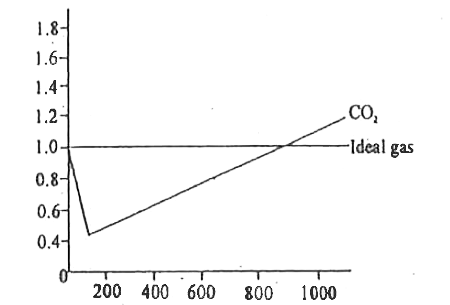
|
|
| 28. |
Drawback of DDT as pesticde is |
|
Answer» It BECOMES ineffective after some time |
|
| 29. |
Draw the two chair conformers of each compounds and indicate which conformer is more stable. (a) cis-1-ethyl-3-methylcyclohexane (b) trans-1-ethyl-2-isopropylcyclohexane (c) trans-1-ethyl-2-methylcyclohexane (d) trans-1-ethyl-3-methylcyclohexane (e) cis-1-ethyl-3-isopropylcyclohexane (f) cis -1-ethyl-4-isopropylcyclohexane |
|
Answer» |
|
| 30. |
Draw the two chair conformers of each compounds and inicate which conformer is more stable . (a) cis-1-ethyl-3-methylcyclohexane (b) trans-1-ethyl-2-isopropylcyclohexane (c)trans-1-ethyl-2-methylcylcohexane (d) trans-1-ethyl-3-methylcyclohexane (e) cis-1-ethyl-3-isopropylcylcohexane (f) cis -1-ethyl-4-isopropylcyclohexane. |
|
Answer» 54 |
|
| 31. |
What is the structure of BeCl_(2) ? |
Answer» SOLUTION :In the VAPOUR STATE, it EXISTS as a chlorobridged DIMER 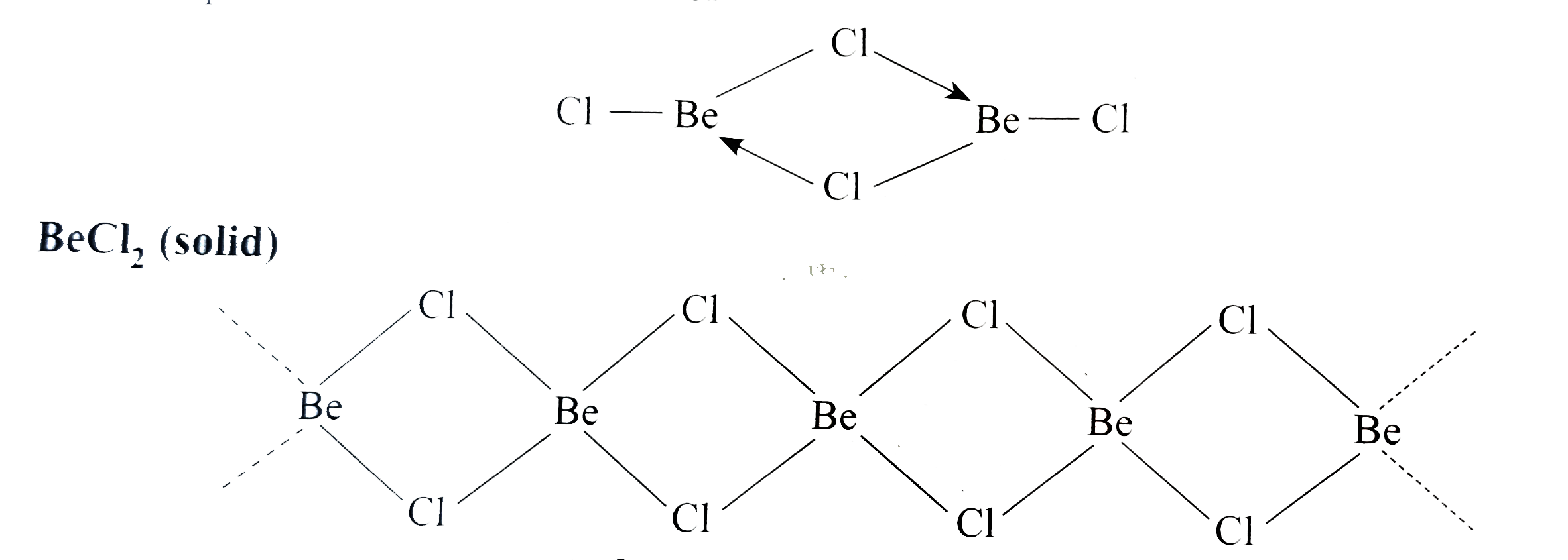
|
|
| 32. |
Draw the structures of three isotopes of hydrogen. |
Answer» SOLUTION :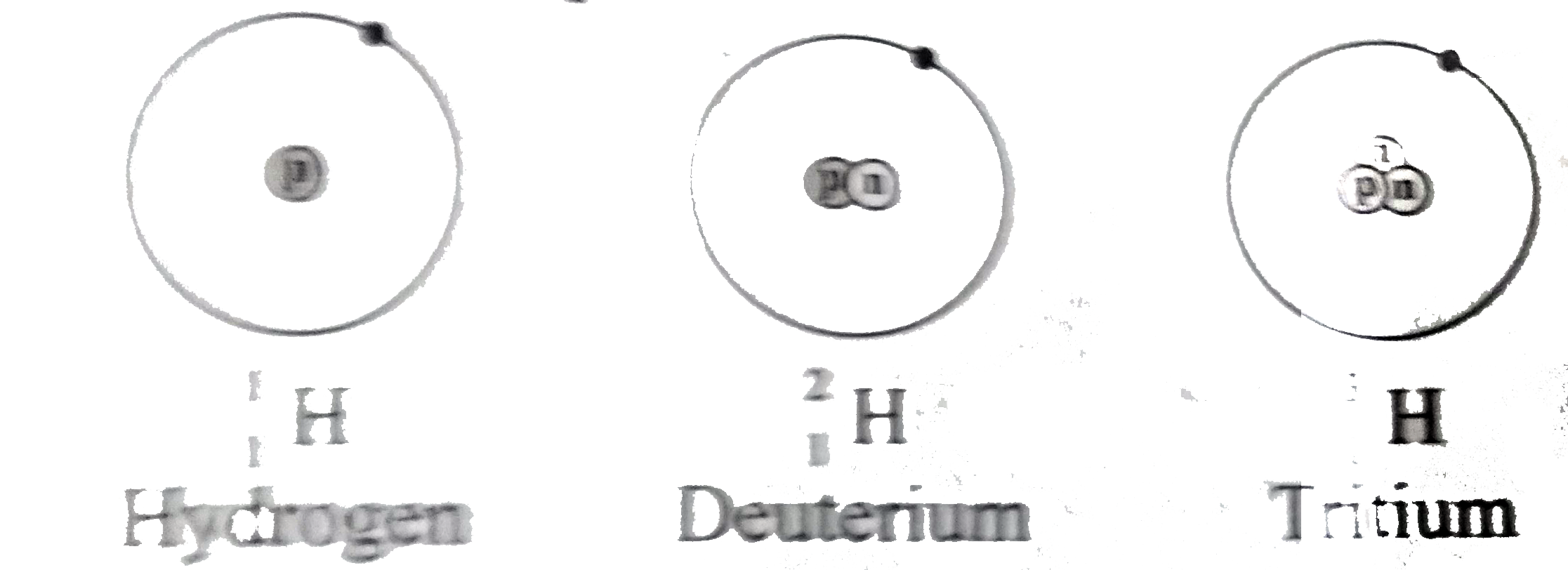
|
|
| 33. |
Draw the structures of the following compounds. (i) Hex-3-enoic acid, (ii) 2-chloro-2-methylbutan-1-ol (iii) 5, 5-Diethylnonan-3-ol, (iv) Propane-1, 3-diamine (v) 4-Nitropent-1-yne, (vi) But-2-ene-1, 4-dioic acid (vii) 4-Amino-2-ethylpent-2-enal, (viii) Ethyl-3-methoxy-4-nitrobutanoate (ix) 5-(1-Methylethyl)-3-methyloctane, (x) Hex-4-yn-2-one (xi) Hepta-1, 4 -dien-3-ol, (xii) 4-Chloropent-2-ene (xiii) 1-Phenylpropan-2-one, (xiv) 4-Ethyl-2, 6-dimethyldec-4-ene. |
Answer» SOLUTION :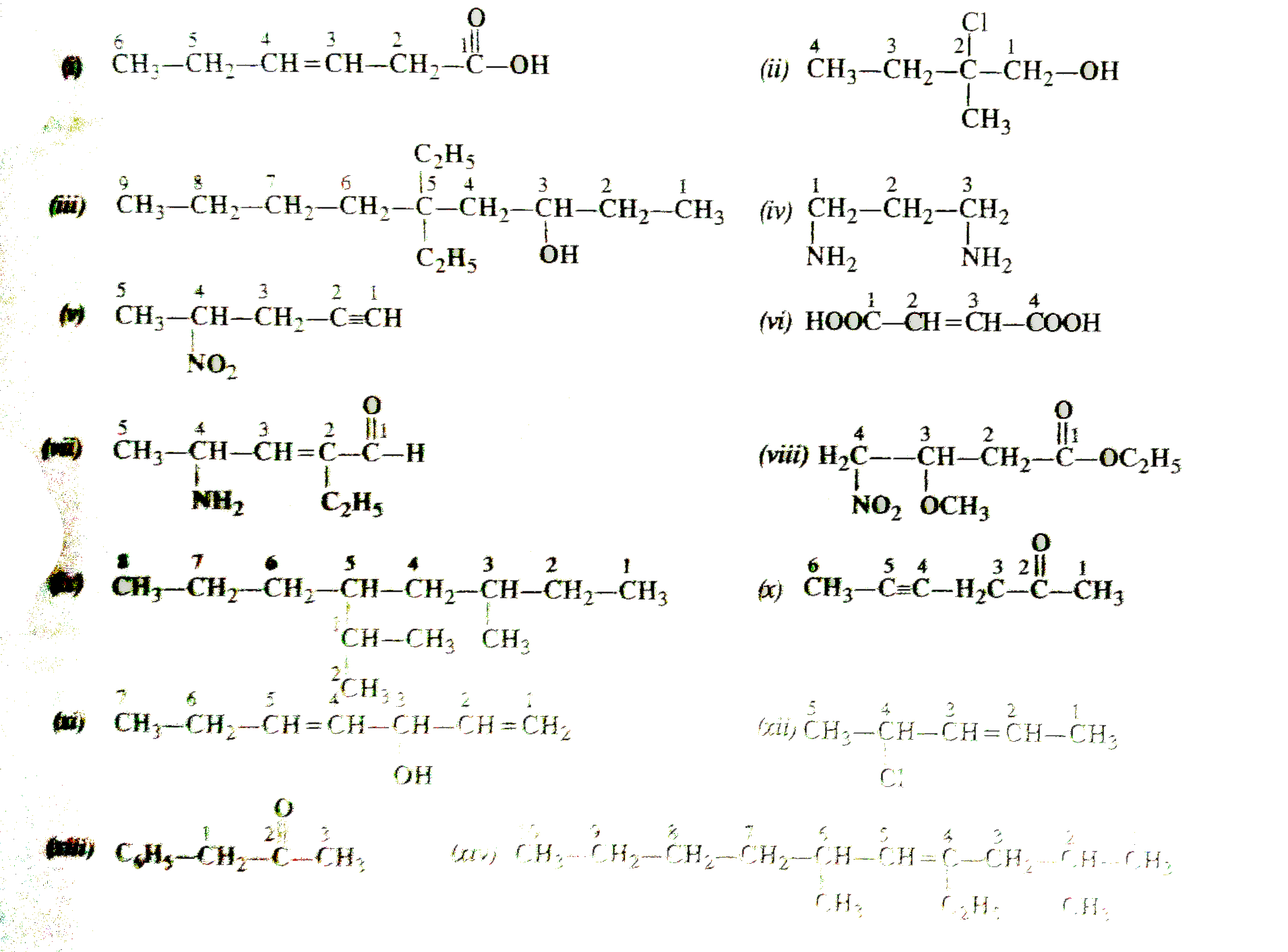
|
|
| 34. |
Draw the structures of the following compounds. (i) m-Bromochlorobenzene (or 1-Bromo-3-Chlorobenzene) (ii) p-Chlorotoluene (iii) 4-Bromo-o-Xylene (iv) p-Iodo-o-cresol( or 4-Iodo-2-methylphenol) (v) 3-Bromo -p-hydroxybenzoic acid ( or 3-Bromo-4-hydroxybenzoic acid) (vi) 2-Nitro-p-toluidine or 4-amino--3-nitrotoluence or 1-amino-4-methyl -2-nitrobenzene (vii) 2-Chloro -1-metyl-4-nitrobenzene Straregy: First draw the strucuture of the parent compound. Then place the substituents at their positiions. |
Answer» SOLUTION :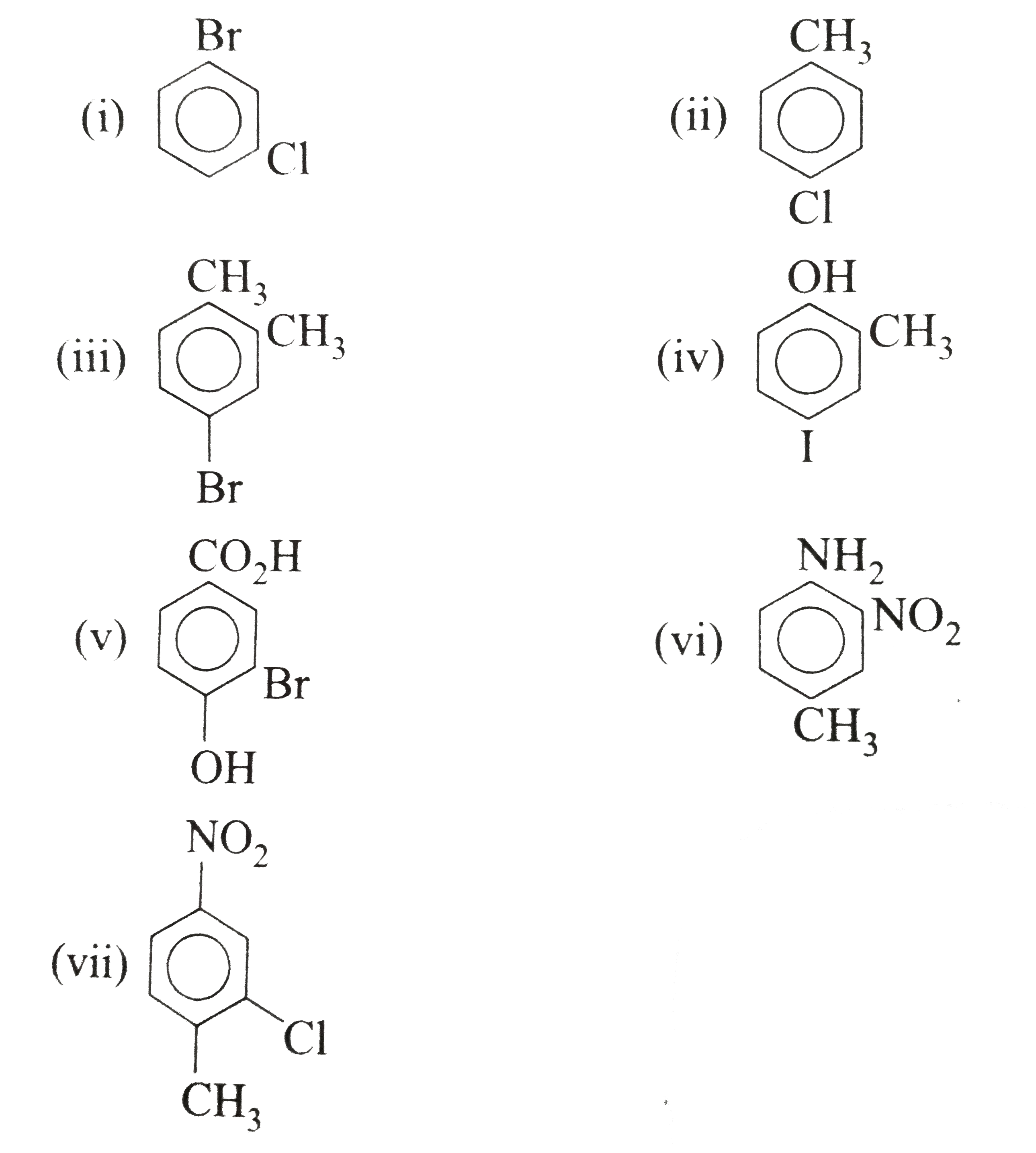
|
|
| 35. |
Draw the structures of the following compounds : (i) Hex-3-en-1-oic acid (ii) 2-Chloro-2-methylbutane-1-ol (iii) 5, 5-Diethylnonan-3-ol (iv) 1-Bromo-3-chlorocyclohex-1-ene(v) 1, 3-Dimethylcyclohex-1-ene |
|
Answer» Solution :(i) `CH_(3)CH_(2)CH=CHCH_(2)COOH`(II) `{:(""CH_(3)),("|"),(CH_(3)CH_(2)-C-CH_(2)OH),("|"),(""CL):}` (iii) `{:(""CH_(2)CH_(3)),("|"),(CH_(3)CH_(2)CH_(2)CH_(2)-C-CH_(2)-CH-CH_(2)-CH_(3)),("|""|"),(""CH_(2)CH_(3)""OH):}` 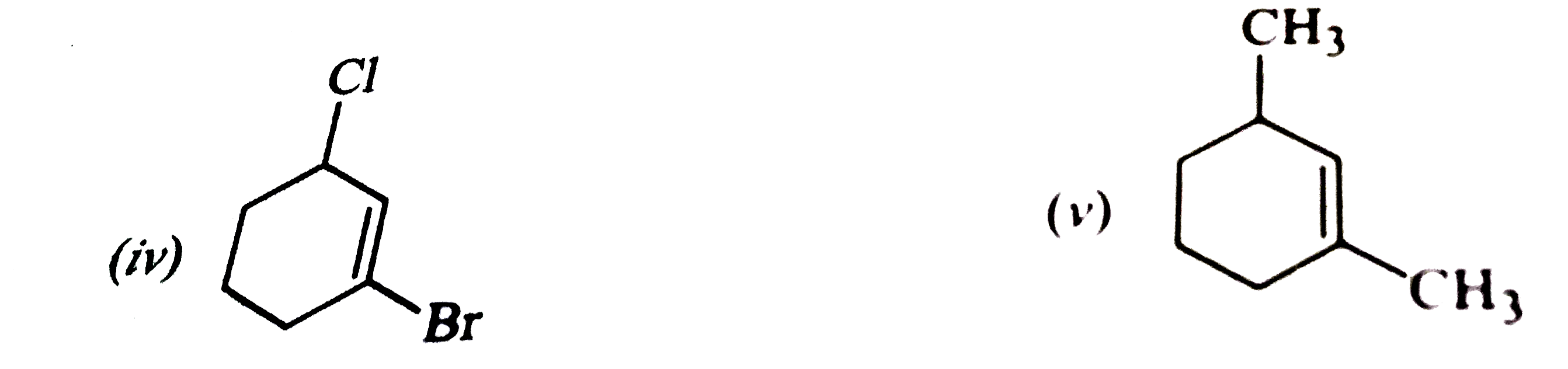
|
|
| 36. |
Draw the structures of the following compounds : (i) 4-Chloropent-2-ene (ii) Glyoxal (iii) Neohexane (iv) 2,3-Diethylbuta-1,3-diene (v) 4-Phenylbutanal (vi) 4,4-Dimethylpent-2-en-1-ol (vii) Tartaric acid (viii) Isoprene (xi) 4-Hydroxy-2-methylpent-2-enoic acid (x) 2-Ethyl-5-hydroxyhex-3-enal (xi) 5-(1,2-Dimethylpropyl) nonane (xii) 3-Oxopentanal (xiv) 1-Phenypentan-1-one (xv) 2-Methyl-3-ethoxypentane (xvi) 1-Phenylpropan-2-ol (xvii) 1-Phenylpropan-1-one (xviii) N,N-Diethylbutan-1-amine (xix) 3-Oxopentanal (xx) 4-Chloropentan-2-one (xxi) 2-Methylpropan-2-ol (xxii) Hex-1-en-3-ol (xxiii) p-Nitropropiophenone (xxiv) Hexane-1,6-dioic acid (xxv) 2-Aminotoluene (xxvi) Neopentyl alcohol (xxvii) 4,4-Dimenthylpentan-2-ol (xxviii) 1-Bromo-4-chlorobut-2-ene. |
Answer» SOLUTION :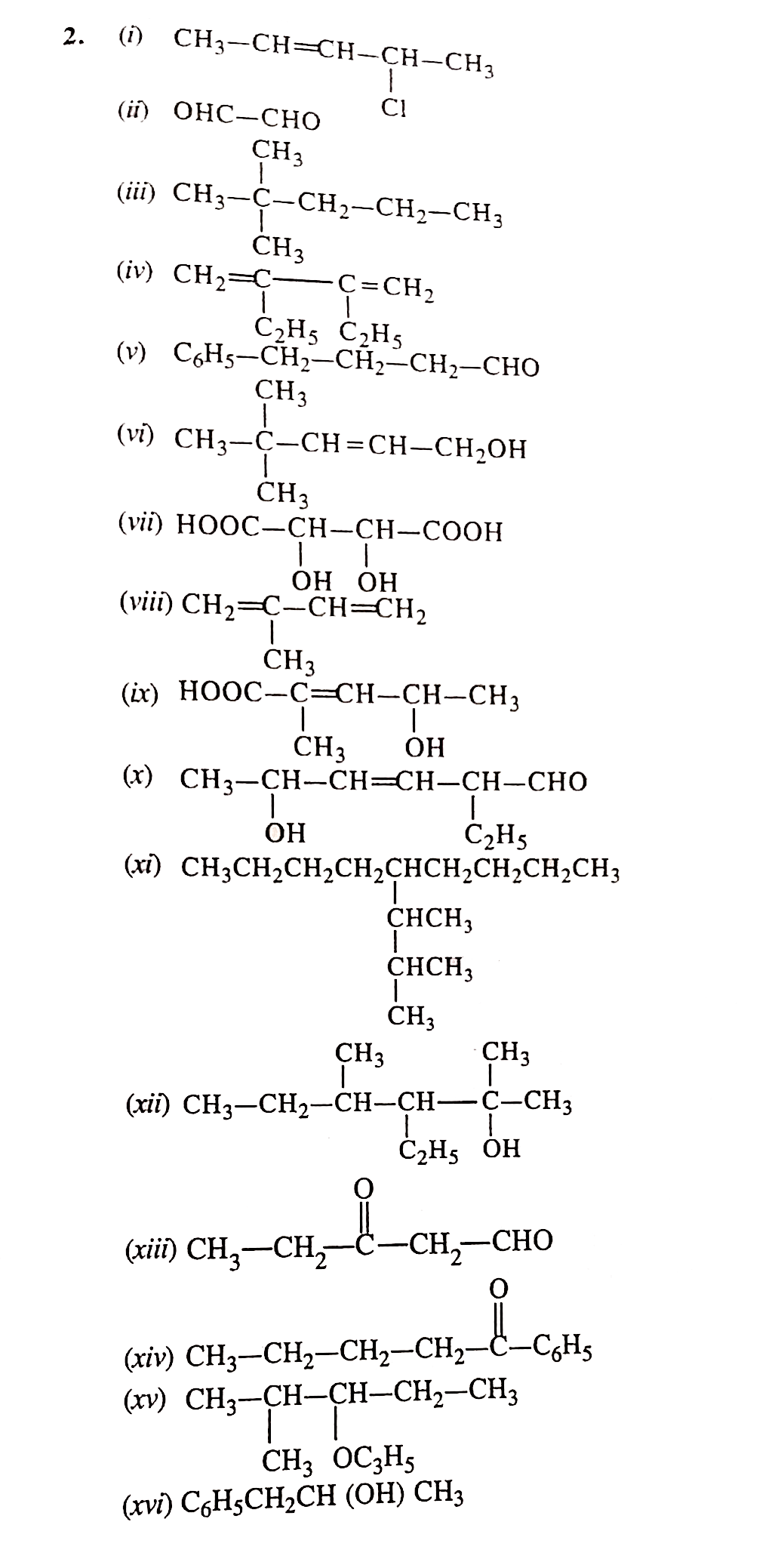 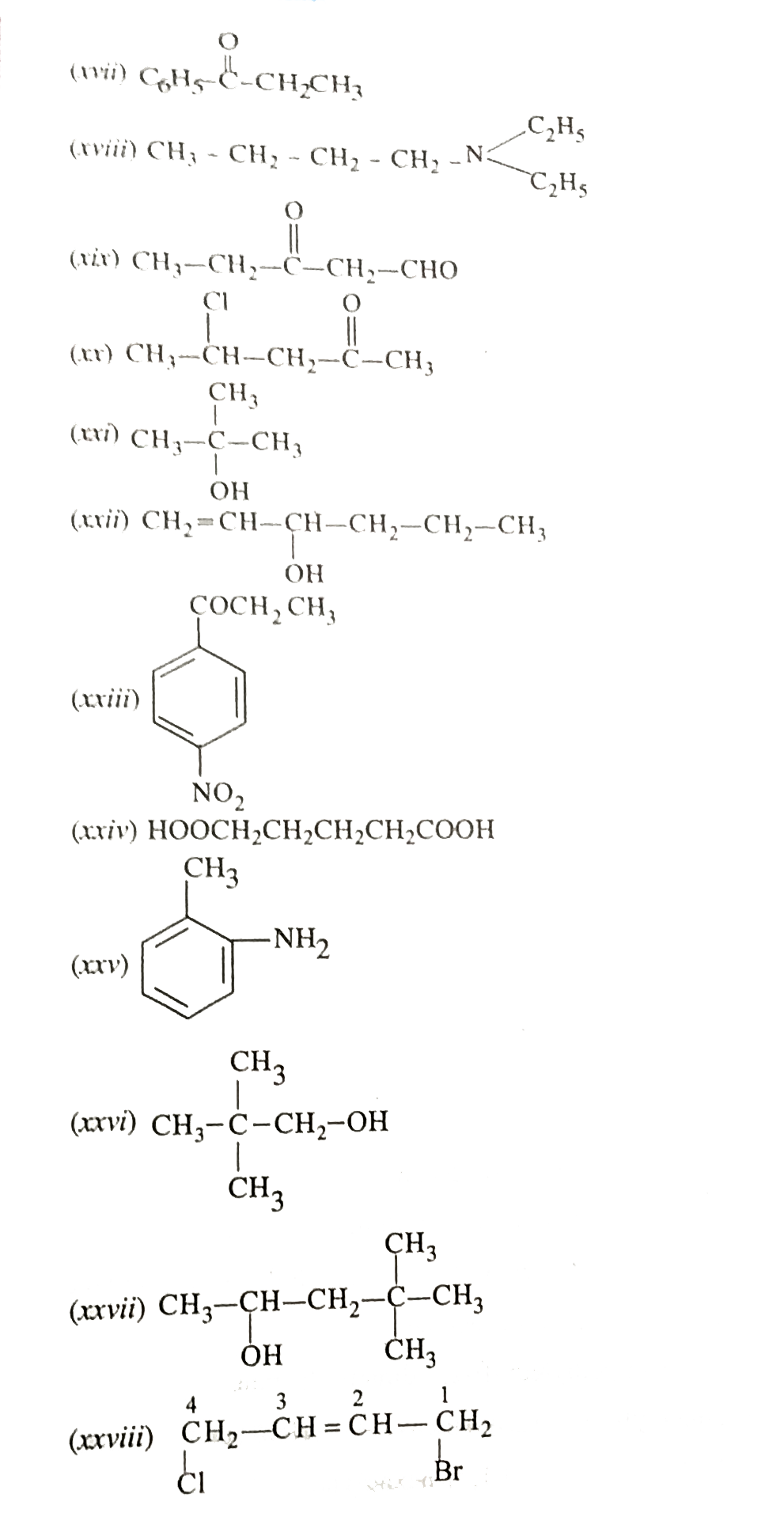
|
|
| 37. |
Draw the structures of: (i) Bromobenzene (ii) 1,2-dichlorobenzene (iii) 1-chloro-3-methylbenzene |
Answer» SOLUTION :(i) 
|
|
| 38. |
Draw the structures of (i) BeCl_(2) (vapour) (ii) BeCl_(2) (solid). |
Answer» Solution :In the VAPOUR state , it exists as a chlorine bridged dimer .  In the solid state , `BeCl_(2)` has polymeric STRUCTURE with chlorine BRIDGES. |
|
| 39. |
Draw the structures of (i) o-xylene (ii) m-xylene (iii) p-xylene |
Answer» SOLUTION :(i) 
|
|
| 40. |
Draw the structures of (i) Benzyl chloride (i) Benzal dichloride (iii) Benzotrichloride |
Answer» SOLUTION :(i) 
|
|
| 41. |
Draw the structures of (i) 3-methylpentanal (ii) 5-hydroxy 2,2-dimethyl heptanoic acid (iii) 2-ethyl-4-propylpentane-dioic acid |
|
Answer» Solution :(i) `CH_(3)-CH_(2)-underset(CH_(3))underset(|)(CH)-CH_(2)-CHO` (ii) `HOOC-underset(CH_(3))underset(|)OVERSET(CH_(3))overset(|)C-CH_(2)-CH_(2)-underset(underset(CH_(3))underset(|)(CH_(2)))underset(|)(CH)-OH` (III) `H_(3)C-CH_(2)-overset(COOH)overset(|)(CH)-CH_(2)-overset(COOH)overset(|)(CH)-CH_(2)-CH_(2)-CH_(3)` |
|
| 42. |
Draw the structures of: (i) 3-methylhepta 1,3,5-triene, (ii) pent-1-yne, (iii) 2-methylpropan-2-ol |
|
Answer» Solution :(i) `CH_(3)-CH=CH-CH=UNDERSET(CH_(3))underset(|)C-CH=CH_(2)` (ii) `CH_(3)-CH_(2)-CH_(2)-C-=CH` (III) `H_(3)C-underset(CH_(3))underset(|)overset(CH_(3))overset(|)C-OH` |
|
| 43. |
Draw the structures of (i) 3-ethyl-5-methylheptane, (ii) 3-ethyl-2-methylhexane (iii) 2,4-dimethylpent-2-ene |
|
Answer» Solution :(i) `CH_(3)-CH_(2)-UNDERSET(CH_(3))underset(|)(CH)-CH_(2)-underset(C_(2)H_(5))underset(|)(CH)-CH_(2)-CH_(3)` (ii) `CH_(3)-underset(CH_(3))underset(|)(CH)-underset(C_(2)H_(5))underset(|)(CH)-CH_(2)-CH_(3)` (iii) `CH_(3)-underset(CH_(3))underset(|)C-CH-underset(CH_(3))underset(|)(CH)-CH_(3)` |
|
| 44. |
Draw the structures of (i) 1-bromo-2 , 3-dichlorobutane (ii) 2-bromo-3-chloro-2 , 4-dimethyl pentane |
|
Answer» Solution :(i) 1-bromo-2, 3-dichlorobutane `underset(Br)underset(|)(C)H_(2) - underset(Cl)underset(|)(C)H- underset(Cl)underset(|)(C)H- CH_(3)` (ii) 2-bromo-3-chloro- 2 , 4 - dimethyl PENTANE `CH_(3) - OVERSET(CH_(3))overset(|)underset(Br)underset(|)(C)- underset(Cl) underset(|)(C)H- underset(CH_(3))underset(|)(C)H- CH_(3)` |
|
| 45. |
Draw the structures of: (i) 2-cyclobutyl propane (ii) 2-cyclopropyl butane (iii) chlorocyclo but-2-ene |
Answer» SOLUTION :(i) 
|
|
| 46. |
Draw the structures of cis-and trans-isomers of the following compounds. Also write their IUPAC names. (i)CHCl=CHCl (ii)C_2H_5C(CH_3) = C(CH_3)C_2H_5 |
Answer» SOLUTION :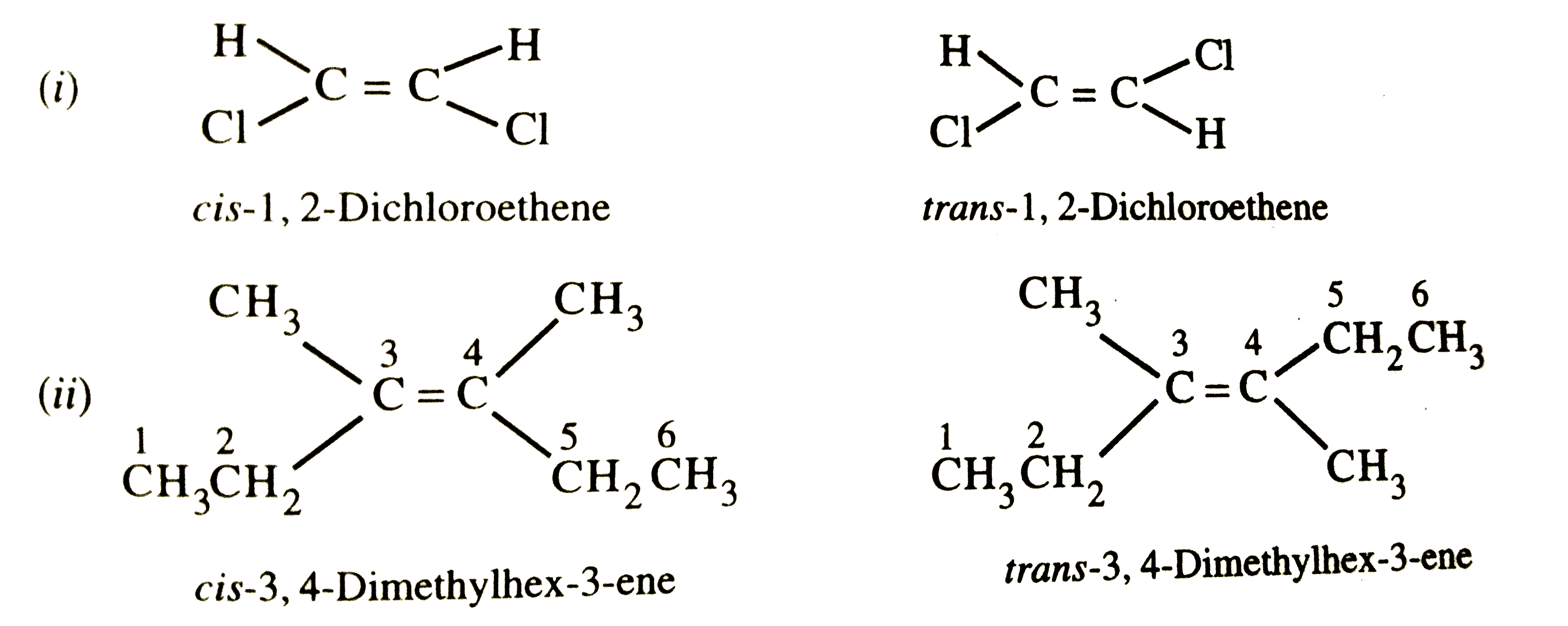
|
|
| 47. |
Draw the structure of Becl_2(vapour) |
Answer» SOLUTION :
|
|
| 48. |
Alkali metals and alkaline earth metals belong to the s-block of the periodic table. Draw the chain structure of beryllium chloride in solid state. |
Answer» SOLUTION :
|
|
| 49. |
Draw the structures of BCl_3 . NH_3 and AlCl_3 (dimer). |
|
Answer» SOLUTION :In `BCl_3` , Boron is attached with chlorine by covalent bond but OCTET of boron is not complete, it requires two electrons or pair of electron to complete it octet. Such electron deficient molecules have tendency to accept a pair of electrons to achieve stable electronic configuration and THUS, BEHAVE as Lewis acids. The tendency to behave as Lewis acid decreases with the increase in the size down the group. `BCl_3`EASILY accepts a lone pair of electrons from ammonia to form `BCl_3NH_3` . `H_3N : + BCl_3 to H_3N to BCl_3` `AlCl_3`achieves stability by forming a dimer. In trivalent state, most of the compounds being covalent are hydrolyzed in water. For example, the trichlorides on hydrolysis in water form tetrahedral `M(OH)_4^(-)`. Element M is `sp^3` hybridized and has tetrahedral shape. 
|
|
| 50. |
Draw the structures for the following alkenes (i) 6-brommo -2,3 -dimethyl -2-hexene (ii) 5-bromo -4-chloro -1-heptene (iv) 4-methyl -2 pentene |
|
Answer» SOLUTION :`(i) 6- `Bromo2,3dimethyl2-2 hexane `CH_(2)underset( CH_(3)) underset(|) (C )= underset(CH_(3))underset(|) (C )- CH_(3)-underset( Br) underset(|) (CH_(2))` (ii) 5- Bromo-4-chloro-1-heptene `CH_(2)- CH_(2)- CH_(4)- underset(CH_(3) ) underset(|)(CH )- underset( Br)underset(|) (CH)- CH_(5)- CH_(4)` (iii) 2.5dimethyl-4-Octaene `CH_(4)- OVERSET(2) (CH) -overset(2) (CH ) - underset( CH_(2))underset( |) (CH)- CH_(2)` |
|