Saved Bookmarks
This section includes 7 InterviewSolutions, each offering curated multiple-choice questions to sharpen your Current Affairs knowledge and support exam preparation. Choose a topic below to get started.
| 1. |
Hot concentrated suphuric acid is a moderately strong oxidizing agent which of the followng reaction does not show oxidizing behaviour ? |
|
Answer» `Cu+2H_(2)SO_(4)rarrCuSO_(4)+SO_(2)+2H_(2)O` Here the os of all the atoms do not change and hence it is not a REDOX reaction in other words `H_(2)SO_(4)` does notact as an oxidising AGENT in this rection while in all the reamianing reaction s it ACTS as an oxidising agent |
|
| 2. |
Hot concentrated sulphuricacid is a moderately strong oxidizing agent. Which of the following reactions does not show oxidizing behaviour ? |
|
Answer» `Cu+2H_(2)SO_(4) to CuSO_(4)+SO_(2)+2H_(2)O` |
|
| 3. |
Hot concentrated sulpuric acis is a moderatly strong oxidizing agent. Which of the following reaction does not shwo oxidizing behaviour? |
|
Answer» `CaF_(2)+ H_(2)SO_(4) rarr CaSO_(4) + 2HF` |
|
| 4. |
Hot concentrated sulphuric acid is a moderately strong oxidising agent. Which of the following reactions does not show oxidising behaviour? |
|
Answer» `Cu+2H_2 SO_4 to CuSO_4+SO_2+2H_2O` |
|
| 5. |
Hot and concentrated solution of borax is treated with hydrochloric acid to give A and B. "B" on strong heating undergoes dehydration to give C. then "C" is |
|
Answer» An ACIDIC oxide |
|
| 6. |
Hot and Con. HNO_(3) reacts with carbon to form |
|
Answer» `CO_(2)` |
|
| 7. |
Hoqw many moles of H_(3)O^(+) ions are required to completely hydrolyse one mole of borax into orthoboric acid? |
|
Answer» |
|
| 8. |
Homolytic fission of carbon-carbon bond of ethane produces an intermediate in which the carbon atom is in |
|
Answer» `sp^3` hybridised |
|
| 9. |
Homolytic fission of covalent bond takes place when bonded atoms have |
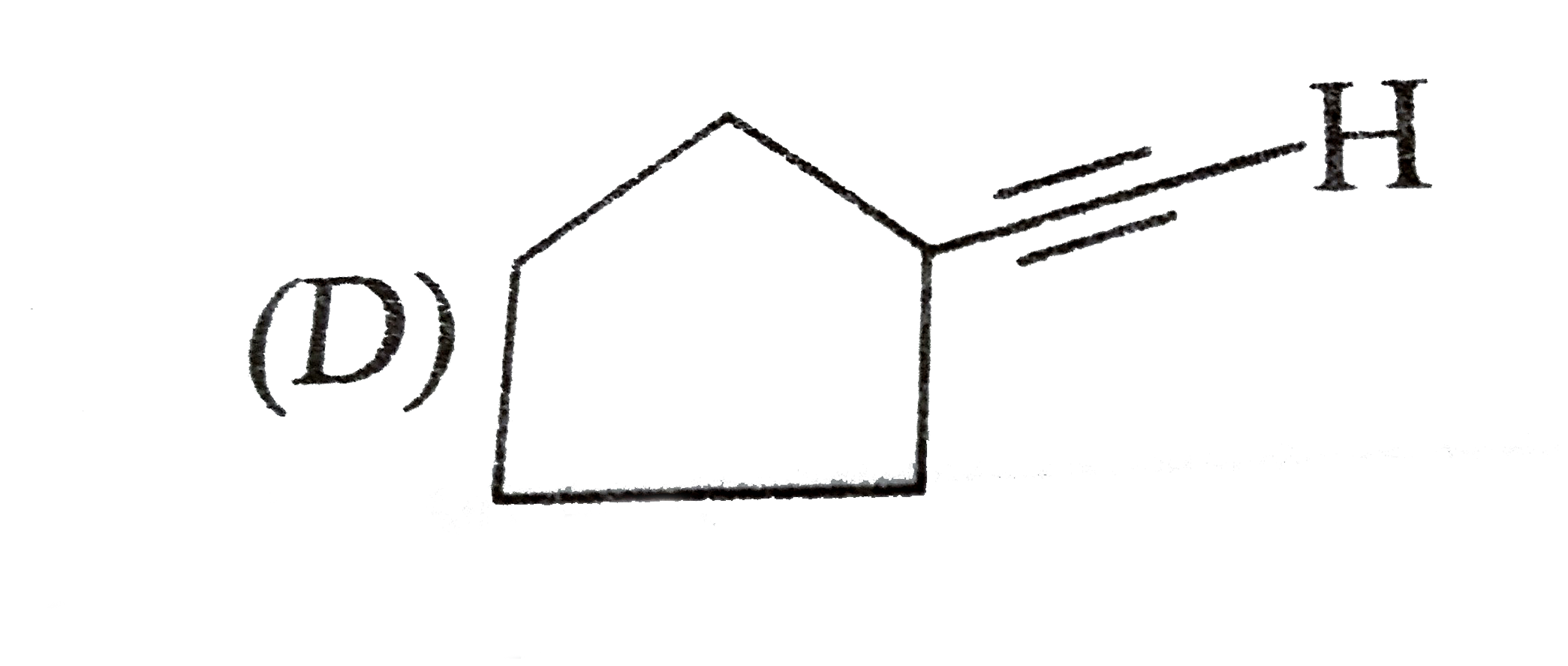
|
Answer» same electronegativity |
|
| 10. |
Homolytic fission of covalent bond leads to the formation of .... |
|
Answer» ELECTROPHILE |
|
| 11. |
Homolytic fission of covalent bond leads to the formation of |
|
Answer» electrophile |
|
| 12. |
Homolytic fission of C - C bond in ethane gives an intermediate in which carbon is |
|
Answer» `sp^(3)`-HYBRIDIZED  gives two `OVERSET(*)CH_3` free RADICALS. gives two `OVERSET(*)CH_3` free RADICALS.
|
|
| 14. |
Homolytic fission of a covalent bond leads to the formation of (a) electrophile (b) nucleophile (c) free radical (d) carbocation (e) carbanion |
|
Answer» |
|
| 15. |
Homolytic clevage occurs under the conditions of ................... |
| Answer» SOLUTION :HIGH TEMPERATURE | |
| 16. |
Homogeneous mixing and compressibiltiy both result from the fact that the molecules are far apart in gases. Mixting occurs because indicidual gaseous molecules have little interaction with their neighbours, assuming that no reaction taken place, the chemical identites is possible in gases because only about 0.1% of the volume of a typical gas is taken up by the molecules themselves under normal circumstances, the remaining 99.9% is empty space For H_(2) and He, force of attraction is negligible, hence, compressibility factor is |
|
Answer» `(PV)/(RT)` |
|
| 17. |
Homogeneous mixing and compressibiltiy both result from the fact that the molecules are far apart in gases. Mixting occurs because indicidual gaseous molecules have little interaction with their neighbours, assuming that no reaction taken place, the chemical identites is possible in gases because only about 0.1% of the volume of a typical gas is taken up by the molecules themselves under normal circumstances, the remaining 99.9% is empty space Assume molecules are spherical of radius 1 Å, volume occupied by molecules in one mole of a gas at NTP is |
|
Answer» `2.52 m^(3)` |
|
| 18. |
Homogeneous mixing and compressibiltiy both result from the fact that the molecules are far apart in gases. Mixting occurs because indicidual gaseous molecules have little interaction with their neighbours, assuming that no reaction taken place, the chemical identites is possible in gases because only about 0.1% of the volume of a typical gas is taken up by the molecules themselves under normal circumstances, the remaining 99.9% is empty space Compressibility factor of a gas is given by |
| Answer» Answer :D | |
| 19. |
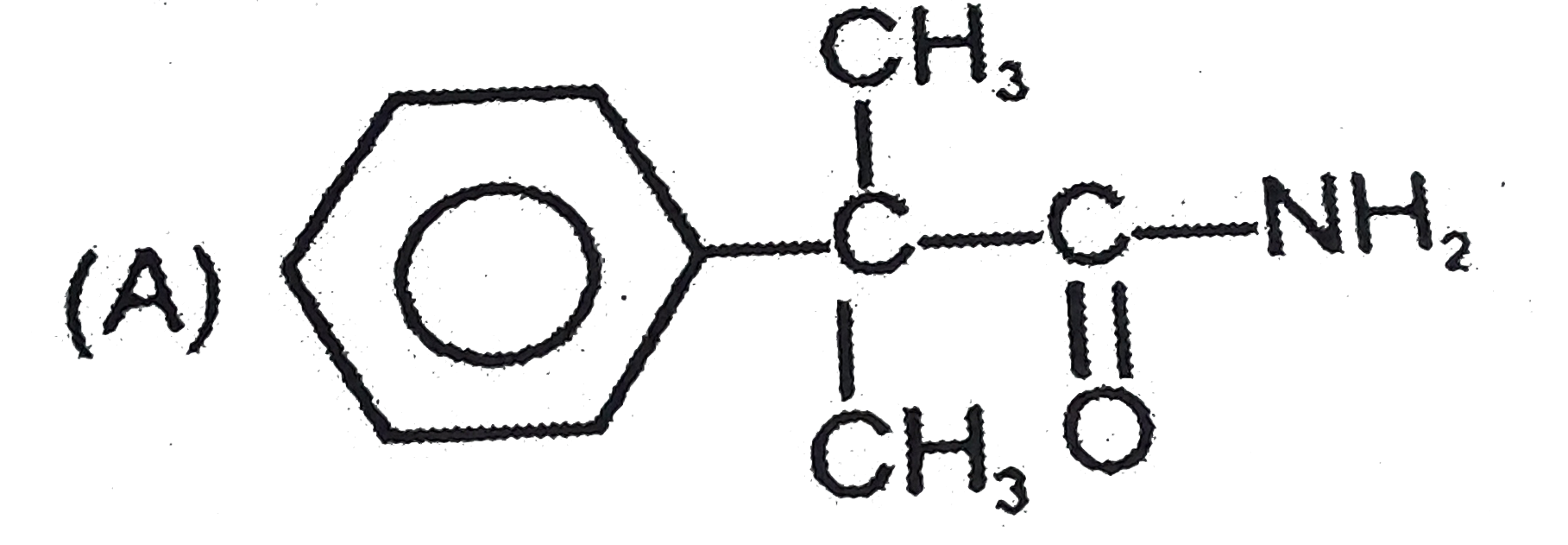
Hofmann rearrangement In the Hofmann rearrangement an unsubstitued amide is treated with sodium hydroxide and bromine to give a primary amine that has one carbon lesser than starting amide. Gneral reaction: If the migrating group is chiral then its configuration is retained. Electron releasing effects in the migrating group increase reactivity of Hofmann rearangement. Arrange the following amides according to their relative reactivity when reacted with Br_(2) in excess of strong base: |
|
Answer» `IV GT I gt II gt III` |
|
| 20. |
Hofmann rearrangement In the Hofmann rearrangement an unsubstitued amide is treated with sodium hydroxide and bromine to give a primary amine that has one carbon lesser than starting amide. Gneral reaction: If the migrating group is chiral then its configuration is retained. Electron releasing effects in the migrating group increase reactivity of Hofmann rearangement. Which of the following compound(s) cannot give Hoffman rearrangement: |
|
Answer»
|
|
| 21. |
HNO_3 + P_2O_5 to A+B A is an oxi acid of phosphorqus and B is a oxide of Nitrogen. What will be A & B ? |
|
Answer» `H_3PO_4, N_2O_3` |
|
| 22. |
HNO_(3) has no action of aluminium, whether it is dilute or concentrated? |
| Answer» SOLUTION :Because the METAL is RENDERED PASSIVE. | |
| 23. |
HNO_(3) acts only as as oxidant whereas, HNO_(2) acts as reducant and oxidant both. |
|
Answer» |
|
| 24. |
HNO_(2)(l)+NaCl(s)to HCl(g)+NaNO_(2)(s) Calculate the DeltaH^(@) value for the reaction above from the information below: |
|
Answer» 157KJ |
|
| 25. |
HNO_(2) acts both as reductant and oxidant, while HNO_(3) acts only as oxidant. It is due to their. |
|
Answer» Solubility ability In `HNO_(3)` oxidation number of N = +5 |
|
| 26. |
HNCO (isocyanic acid) has following resonating structures : underset("I")(H-N=C=O)harrunderset("II")(H-overset(Theta)N-C-=O^(o+))harrunderset("III")(H-overset(o+)N-=C-O^(Theta)) |
|
Answer» `IgtIIIgtII` |
|
| 27. |
Highly pure dilute solution of sodium in liquid ammonia |
|
Answer» Shows blue colour |
|
| 29. |
Highest acidic hydrogen possessing group among C_(2)H_(2), C_(2)H_(4), C_(2)H_(6) and C_(2)H_(6) is …………. |
| Answer» SOLUTION :`C_(2)H_(2)` | |
| 30. |
Higher the bond order greater is the |
|
Answer» BOND DISSOCIATION energy |
|
| 31. |
Higher the amount of acid or base used to produce a definite change of pHin a buffer solutions, higher will be its buffer capacity . Buffer capacityof solution is maximum under the following conditions: [Salt ]= [Acid ](in acid buffer ),[Salt ]=[Base] (in base buffer)pH of a buffer solution lies in the range given below : pH= pK_a +1 In other words any buffer solutions can be used as buffer up two pH units only. depending uponthe value of pK_a or pK_b .A buffer is said to be efficient when pH =pK_a or pOH =pK_b , Buffer capacityis maximum when: |
|
Answer» ONE MOLE of `NH_4 CL` is added to one mole of `NH_4 OH` |
|
| 32. |
Higher the amount of acid or base used to produce a definite change of pH in a buffer solution,higher will be its buffer capacity. Buffer capacity of solution is maximum under the following conditions: [Salt= [Acid] (in acid buffer), [Salt] = [Base] (in base buffer) pH of a buffer solution lies in the range given below: pH = pk_(a)pm1, In other words, any buffer solution can be used as buffer up to two pH units only, depending upon the value of pK_(a), or pK_(b),. A buffer is said to be efficient when pH_(a) =pK_(a), or pOH= pk_(b) The bulfer capacity is equal to : |
|
Answer» ONE mole of `NH_4 CL` is added to one mole of `NH_4 OH` |
|
| 33. |
Higher the amount of acid or base used to produce a definite change of pH in a buffer solution,higher will be its buffer capacity. Buffer capacity of solution is maximum under the following conditions: [Salt= [Acid] (in acid buffer), [Salt] = [Base] (in base buffer) pH of a buffer solution lies in the range given below: pH = pk_(a)pm1, In other words, any buffer solution can be used as buffer up to two pH units only, depending upon the value of pK_(a), or pK_(b),. A buffer is said to be efficient when pH_(a) =pK_(a), or pOH= pk_(b) Which among the following solution will be the most efficient buffer? |
|
Answer» `0.1 M CH_3 COONa +0.01 M CH_3 COOH` |
|
| 34. |
Higher order (gt 3) reactions are rare due to : |
|
Answer» low probability of simultaneous collision of all the reacting species |
|
| 35. |
Higher alkyl substituted alkene is formed in greater proportion than the lower alkyl substituted alkene. Justify. |
|
Answer» Solution :In ALKYL SUBSTITUTED alkene, the `alpha`- hydrogen atoms of the methyl GROUP are involved in the hyperconjugation with the pi`(pi)` ELECTRON pair of the double bond. As a result, the stability of alkene increases. Greater the number of such groups more will be the stability of alkene. Thus, the relative order of stability of the following alkenes is : `underset("But-2-ene")(CH_(3)-CH)=CH-CH_(3) gt underset("Propene")(CH_(3)-CH)=CH_(2) gt underset("ETHENE")(CH_(2))=CH_(2)` |
|
| 36. |
High temperature and high pressure (as per Lechatclier principle) favour |
|
Answer» `N_(2) + 3H_(2) HARR 2NH_(3), DeltaH = -Q_(1)` |
|
| 37. |
High purity (gt 99.95%) dihydrogen is obtained by |
|
Answer» Electrolysis of pure water |
|
| 38. |
High concentration of which gas leads to stiffness of flower buds which eventually fall off from plants ? |
|
Answer» OZONE |
|
| 39. |
High concentration of fluoride is posionous and harmful to bones and teeth |
| Answer» ANSWER :D | |
| 40. |
High concentration of Fluoride is poisonous and harmful to bones and teeth at levels over |
|
Answer» 1 ppm |
|
| 41. |
Hiesenberg.s uricertainty principle states that it is impossible to determine simultaneously the position and momentum of a particle. He considered the limits of how precisely we can measure properties of an e^- (or)other microscopic particles like electron. The more accurately we measure the momentum of a particle, less accurately we can determine its position. If uncertainty in measurement of position and momentuin are equal calculate the uncertainty in velocity |
|
Answer» `(Deltap)/(m)` |
|
| 42. |
Hiesenberg.s uricertainty principle states that it is impossible to determine simultaneously the position and momentum of a particle. He considered the limits of how precisely we can measure properties of an e^- (or)other microscopic particles like electron. The more accurately we measure the momentum of a particle, less accurately we can determine its position. The police are monitoring an automobile of mass 2.0 tons speeding along a high way. They are certain about location of the vehicle only to with in Im, what is the minimum uncertainty in the speed of the vehicle ? |
|
Answer» `3.9xx10^(-38) MS^(-1)` `=(6.625xx10(-34))/(4xx3.14xx2000xx1)` `=2.63xx10^(-38)` m/sec |
|
| 43. |
If uncertainity in position is zero, the uncertainity in momentum of an electron will be |
|
Answer» `1/m sqrt(h/(4LAMBDA))` In the present case `Delta x = Delta v ` `therefore m (Deltav)^2 ge h/(4pi) IMPLIES m^2 (Deltav)^2 ge (mh)/(4pi)` `impliesm.Delta x ge sqrt((mh)/(4pi))` |
|
| 44. |
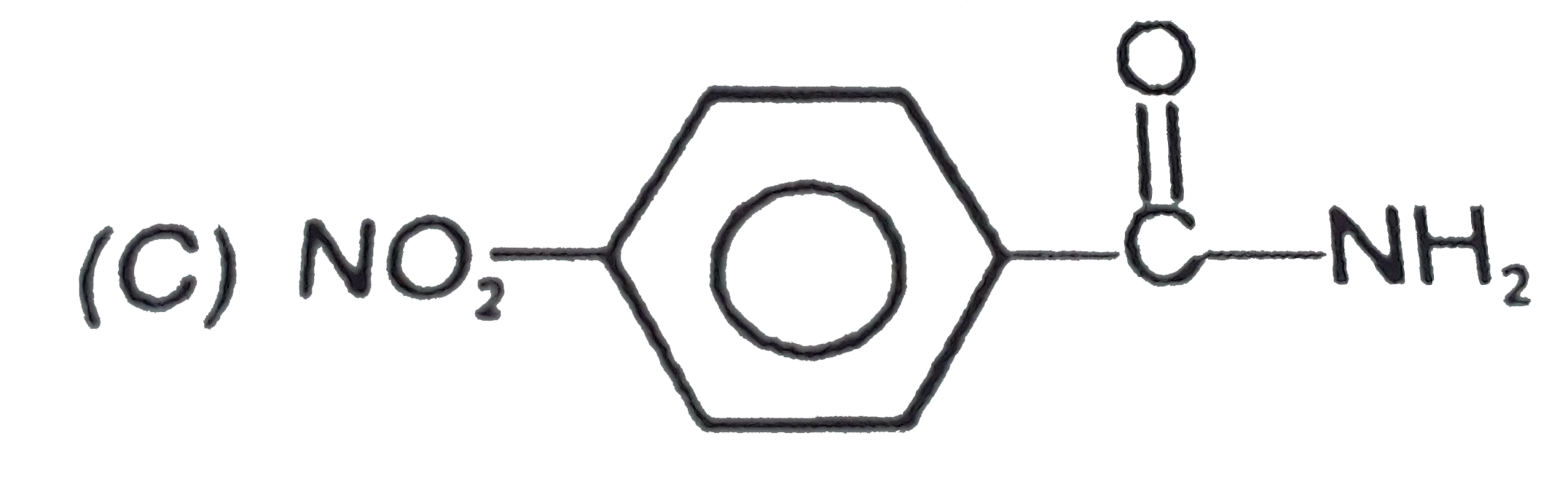
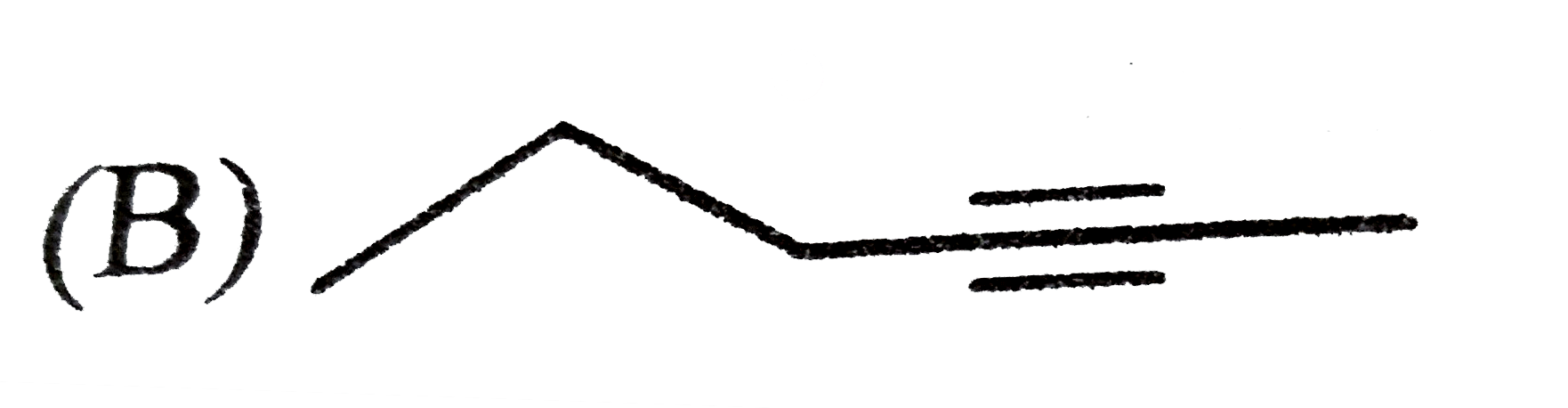
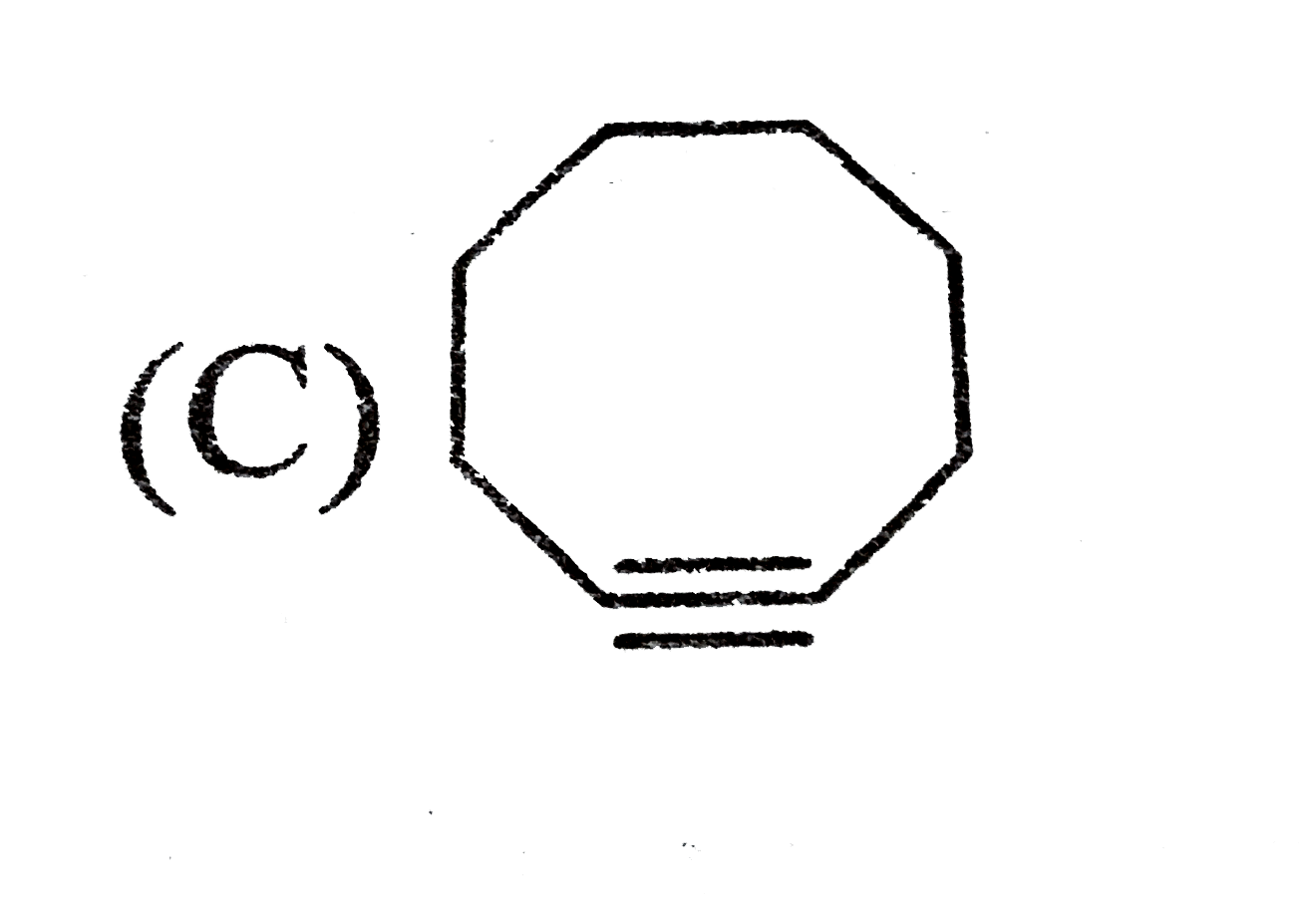
HgSO_(4)//H_(2)SO_(4) and B_(2)H_(6)//NaOHH_(2)O_(2) will give same major product, when react with which of the following. |
|
Answer» `O_(2)N-C-=CH` (B). 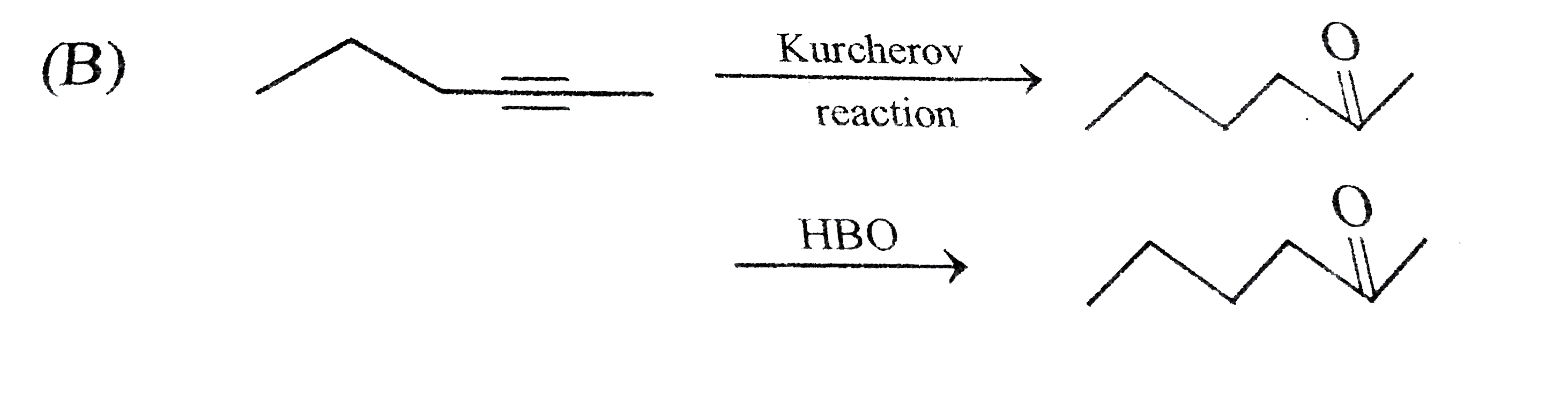 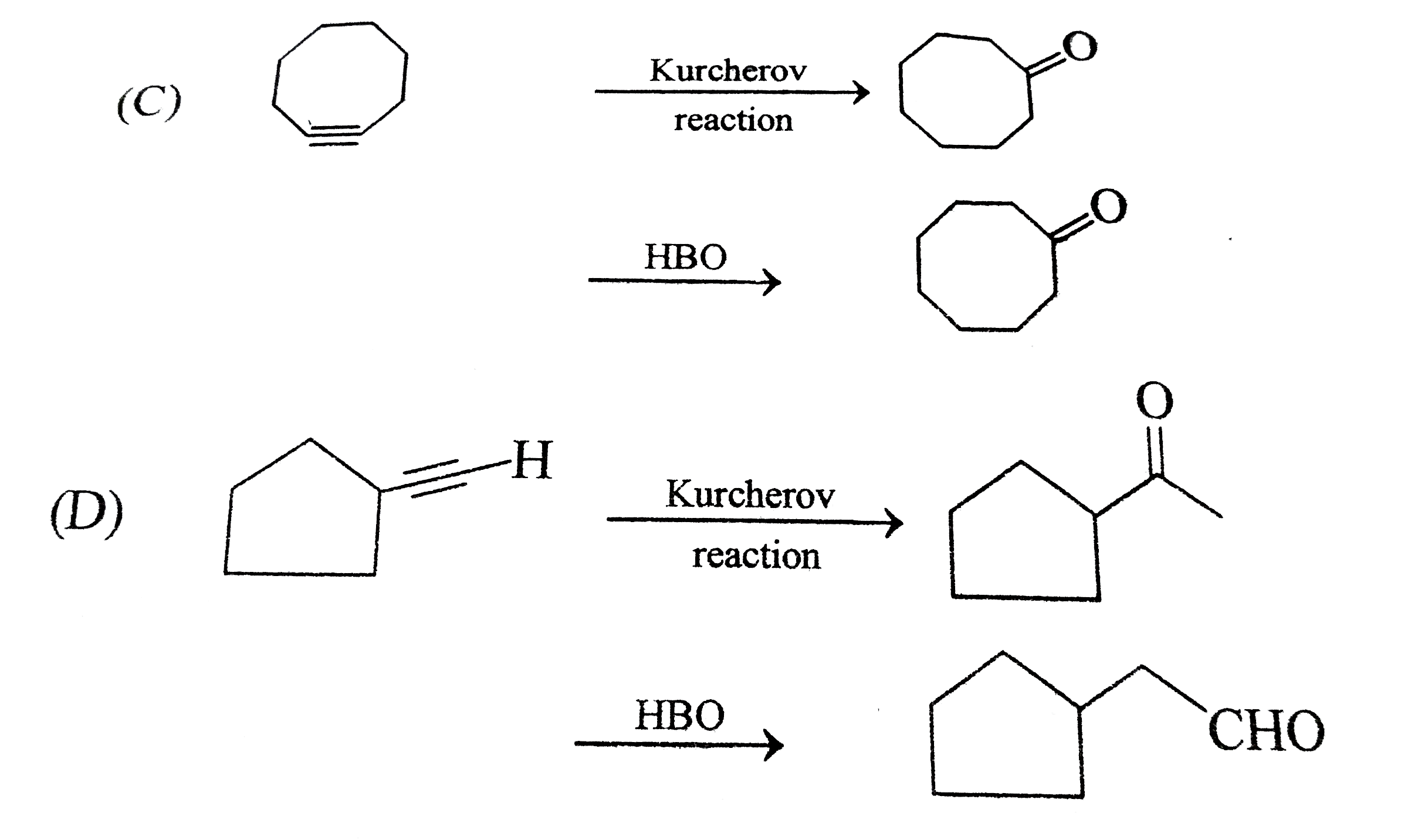
|
|
| 45. |
HgS is insoluble in: |
|
Answer» water |
|
| 46. |
HgO is prepared by two different methods: one shows yellow colour while the other shows red colour. The difference in colour is due to difference in |
|
Answer» ELECTRONIC d-d transitions |
|
| 47. |
HgO is analysed by reaction with iodide and them titrating with an acid. The equivalent mass of HgO is H_(2)O+HgO+4I^(-)rarrHgI_(4)^(-2)+2OH^(-) |
|
Answer» M `HG^(+2)rarrHg^(+2)` hence TREATING it as a salt, `n-f=2` |
|
| 48. |
HgCl_(2) and I_(2) both when dissolved in water containing I^(-)ions, the pair of species formed is : |
|
Answer» `Hgl_(2)I^(-)` |
|
| 49. |
HgCl_2 and I_2 both when dissolved in water containing I^(-) ions the pair of species formed |
|
Answer» `HG _2 I_2 ,I^(-)` |
|