Saved Bookmarks
This section includes 7 InterviewSolutions, each offering curated multiple-choice questions to sharpen your Current Affairs knowledge and support exam preparation. Choose a topic below to get started.
| 1. |
Identify the correct resonance structures of carbon dioxide from the ones given below : |
|
Answer» `O-C-=O` `O=C=O HARR .^(+)O -=C - O^(-)hArr .^(-)O - C-=O^+` |
|
| 2. |
Identify the correct resonancestructures carbondixoide from the ones given below . |
|
Answer» `O-C -= O`  , Thus OPTION (b) and (d) are correct. , Thus OPTION (b) and (d) are correct.
|
|
| 3. |
What happens when CaC_2 reacts with H_2O ? |
| Answer» | |
| 4. |
Identify the correct order regarding the electro negativity of hybrid orbitals of carbon is |
|
Answer» `sp lt sp^(2) lt sp^(3)` |
|
| 5. |
Identify the correct order of the size of the following: |
|
Answer» `CA^(2+) lt K^(+) lt Ar lt S^(2-) lt CL^(-)` In isoelectronic species radius DECREASES on increasing EFFECTIVE nuclear CHARGE. |
|
| 6. |
Identify the correct order of the size of the following |
|
Answer» `Ca^(+2) lt K^(+) lt Ar lt S^(-2) lt CL^(-)` |
|
| 7. |
Identify the correct order of the diatomicspecies arranged in their increasing order of bond roder . |
|
Answer» `He_(2)^(+) LT O_(2)^(-) lt NO lt C_(2)^(2-)` |
|
| 8. |
Identify the correct order of solubility of Na_(2)S, CuS and ZnS in aqueous solution : |
|
Answer» `CuS gt ZnS gt Na_(2)S` |
|
| 9. |
Identify the correct order of reactivity in electrophilic substitution reactions of the following compounds |
|
Answer» 1 gt 2 gt 3 gt 4 |
|
| 10. |
Identify the correct order of boiling points of the following compounds (1) CH_(3)CH_(2)CH_(2)CH_(2)OH, (2) CH_(3)CH_(2)CH_(2)CHO, (3) CH_(3)CH_(2)CH_(2)COOH |
|
Answer» `1 GT 2 t 3` |
|
| 11. |
Identify the correct order of boiling point of the following compounds : underset(1)(CH_(3)CH_(2)CH_(2)CH_(2)OH)" " underset(2)(CH_(3)CH_(2)CHO)" "underset(3)(CH_(3)CH_(2)CH_(2)COOH) |
|
Answer» `1 GT 2 gt 3 ` |
|
| 12. |
Identify the correct order of boiling points of the following compounds. 1) CH_(3)CH_(2)CH_(2)CH_(2)OH"2) "CH_(3)CH_(2)CH_(2)CHO"3) "CH_(3)CH_(2)CH_(2)COOH |
|
Answer» `1 GT 2 gt 3` |
|
| 13. |
Identify the correct order of boiling point of haloalkanes? |
|
Answer» `CH_3 - CH_2 - CH_2 - CH_2Cl gt (CH_3)_3 C -Cl gt CH_3 - CH_2 - underset(Cl) underset(|)(CH) - CH_3` |
|
| 14. |
Identify the correct order of acidic strengths of CO_(2), CuO, CaO, H_(2)O. |
|
Answer» `CaO LT CuO lt H_(2)O lt CO_(2)` |
|
| 15. |
Identify the correct order of acidic strengths of the oxides |
|
Answer» `CAO LT CUO lt H_2O lt CO_2` |
|
| 16. |
Identify the correct order in which the ionic radius of the following ions increases: (I) F^- , (ii)Na^+ , (III)N^(3-) |
|
Answer» III, I, II |
|
| 17. |
Identify the correct match from the following lists {:("List-1","List-2"),("I) Dehydrohalogenation","a) Alc. KOH"),("II) Dehydration","b) Con. "H_(2)SO_(4)//170^(@)C),("III) Unsaturation","c) Any HX"),("IV) Epoxidation","d) "Br_(2)" water"):} |
|
Answer» I - B, II - d, III - C, IV - a |
|
| 18. |
Identify the correct match from the following lists |
|
Answer» I-b,II-d,III-e |
|
| 19. |
Identify the correct formula of halides of alkaline earth metals from the following: |
|
Answer» `BaCl_(2)*2H_(2)O` |
|
| 20. |
Identify the correct formula of halides of alkaline earth metals from the following |
|
Answer» `BaCl_(2). 2H_(2)O` |
|
| 21. |
Identify the correct decreasing order of the following with respect to altitde from atmosphere. I Troposphere II Mesophere IIIThermosphere |
|
Answer» II , III, I |
|
| 22. |
Identifythe CORRECTdecreasingorderofpriorityof thefunctional groups fromthefollowing_______. |
|
Answer»
|
|
| 23. |
Identify the correct decreasing order of the following with respect to altitude from atmosphere I) Trophosphere II) Meosphere Ill) Thermosphere |
|
Answer» II, III, I |
|
| 24. |
Identify the correct decreasing order of priority of the functional groups from the following |
|
Answer»
|
|
| 25. |
Identify the conpound A, X and Zin the following reactions : (i) A + 2HCl + 5H_(2)O rarr 2NaCl + X , (ii)X overset(Delta)underset(370K)(rarr) HBO_(2) overset(Delta)underset(gt370 K)rarr Z |
|
Answer» Solution :(i) `underset("Borax (A)")(Na_(2)B_(4)O_(7)) +2HCL + 5H_(2)O RARR 2NaCl + underset(" Boric ACID (X) ")(4H_(3)BO_(3))` (ii) `underset((X)) OVERSET(Delta, 370 K)rarr underset(" Metaboric acid ")(HBO_(2)) + H_(2)O` `4HBO_(2)underset(-H_(2)O)overset(Delta, gt 370 K)rarr underset(" Tetraboric acid ")([H_(2)B_(4)O_(7)]) overset(" Red HEAT ")rarr underset(" Boron trioxide (Z) ")(2B_(2)O_(3)) + H_(2)O` |
|
| 26. |
Identify the compounds A,X and Z in the following reactions : (i)A+2HCl + 5H_2O to 2NaCl + X (ii)X underset"370 K"oversetDeltato HBO_2 underset(gt 370 K)oversetDeltato Z |
|
Answer» Solution :(i)`underset"(A)"(Na_2B_4O_7)+2HCL + 5H_2O to 2NaCl + underset"(X)"(4H_3BO_3)` (II)`underset"(X)"(H_3BO_3) overset(Delta" 370 K")to HBO_2 + underset"(Z)"(H_2O)` |
|
| 27. |
Identify the compound A, X and Z in the following reactions: (i) A+2HCl+5H_(2)Orarr2NaCl+x (ii) Xunderset(370k)overset(Delta)rarrHBO_(2)underset(gt370k)overset(Delta)rarrZ |
|
Answer» Solution :(i) `underset("Borax (A)")(Na_(2)B_(4)O_(7))+2HCl+5H_(2)Orarr2NaCl+underset("Orthoboric ACID (X)")(4H_(3)BO_(3))` (ii) `H_(3)BO_(3)OVERSET(Delta,370K)(rarr) underset("Metaboric acid")(HBO_(2))+H_(2)O` (iii) `4HBO_(2) underset(-H_(2)O)overset(Delta gt370K)(rarr)underset("Tetraboric acid")([H_(2)B_(4)O_(7)])underset("Heat")overset("RED")(rarr)underset("BORON trioxide (Z)")(2B_(2)O_(3)+H_(2)O)` |
|
| 28. |
Identify the compounds A and B in the following reaction sequence. CaC_2(s)+ H_2O(l) to A(g) underset(HgSO_4)overset(H_2SO_4)to B (l) |
|
Answer» A is ETHYLENE, B is acetaldehyde |
|
| 29. |
Identify the compound Z in the following reaction C_(2)H_(6)Ooverset(Al_(2)O_(3))underset(623K)(to)Xoverset(O_(3))(to)Yoverset(Zn//H_(2)O)(to)(Z) |
|
Answer» Formaldehyde |
|
| 30. |
Identify the compound 'Z' in the following reactin |
|
Answer» formaldehyde |
|
| 31. |
Identify the compound that exhibits tautomerism……….. |
|
Answer» 2-butene  and `ALPHA C H` EXHIBIT tautomerism of keto -enol type and `ALPHA C H` EXHIBIT tautomerism of keto -enol type 
|
|
| 32. |
Identify the compound that exhibits tautomerism |
| Answer» Answer :C | |
| 33. |
Identify the compound that exhibits tautomerism. |
|
Answer» 2-Butene |
|
| 34. |
Identify the compound that exhibits tautomerism : |
|
Answer»

|
|
| 35. |
Identify the compound possessing highest boiling point. |
|
Answer» 1-Chloropentance |
|
| 36. |
Identify the compound formed during the rusting of iron |
|
Answer» `Fe_(2)O_(3)` |
|
| 37. |
Identify the compound/comounds in the following in which S does not obey the octet rule. SO_(2), SF_(2), SF_(4), SF_(6) |
| Answer» SOLUTION :`SF_(4), SF_(6)` | |
| 38. |
Identify the compound (A) and (B) R - C -= N overset(H_(2)"O"//H^(+))to(A)overset(H_(2)"O"//H^(+))to(B) |
| Answer» Solution :`R - C -=overset(H_(2)"O"//H^(+))tounderset((A))(RCONH_(2))overset(H_(2)"O"//H^(+))tounderset((B))(RCOOH)` | |
| 39. |
Identify the colour formed when Lassigne's extract of sulphur containing organic compound is mixed with sodium nitroprusside solution? |
|
Answer» PRUSSIAN blue |
|
| 40. |
Identify the colour formed in the test for phosphorous using ammonium molybdate. |
|
Answer» CRIMSON RED colour |
|
| 41. |
Identify the colour formed in the test for phosphorous using ammonium molybdate . |
|
Answer» Crimson RED colour |
|
| 42. |
Identify the block from the following electronic configuration. (i) 6s^(2)4f^(3) "" (ii) 3s^(2) 3p^(4) (iii) 3s^(1) "" (iv) 3d^(2)4s^(2) |
|
Answer» Solution :`(i) 6S^(2) 4F^(3) : f-"block"(ii) 3s^(2) 3p^(4) : p - "block "` (III) `3s^(1) : s"block" (iv) 3D^(2) ds^(2) : d -" block"` |
|
| 43. |
Identify the chain propagation of chlorination of methane |
|
Answer» `overset(.)(C)H_(3)+overset(.)(C)ltoCH_(3)Cl` |
|
| 44. |
Identify the case where there is change in oxidation number |
|
Answer» Acidified solution of`CrO_(4)^(2-)` (b)`overset(Cr_(2)O_(7)^(2-)+2H^(+)+3SO_(2)rarroverset(+3)Cr_(2)(SO_(4))^(3)+H_(2)O` (c ) `overset(+6)Cr_(2)O_(7)^(2-)+2OHA^(-)rarr2overset(+6)CrO_(4)^(2)+H_(2)O` (d) Ammoniacal solution of `CrO_(4)^(2-)` is `NH_(3)+H_(2)OrarrNH_(4)^(+)+OH^(-)` `overset(+6)CrO_(4)^(2-)+2 NH_(4)^(+)RARR(NH_(4))_(2)overset(+6)crO_(4)` `overset(+6)CrO_(2)CI_(2)+4NaOHrarrNa_(2)overset(+6)CrO_(4)+2NaCI+2H_(2)O` Thus only in rection(b) O.N of Crchangesform +6 to +3 |
|
| 45. |
Identify the binary mixture(s) that can be separated into individual compounds, by differential extraction, as shown in the given scheme: |
|
Answer» `C_(6)H_(5)OH` and `C_(6)H_(5)COOH` |
|
| 46. |
Identify the aryl halide among the following |
|
Answer»
|
|
| 47. |
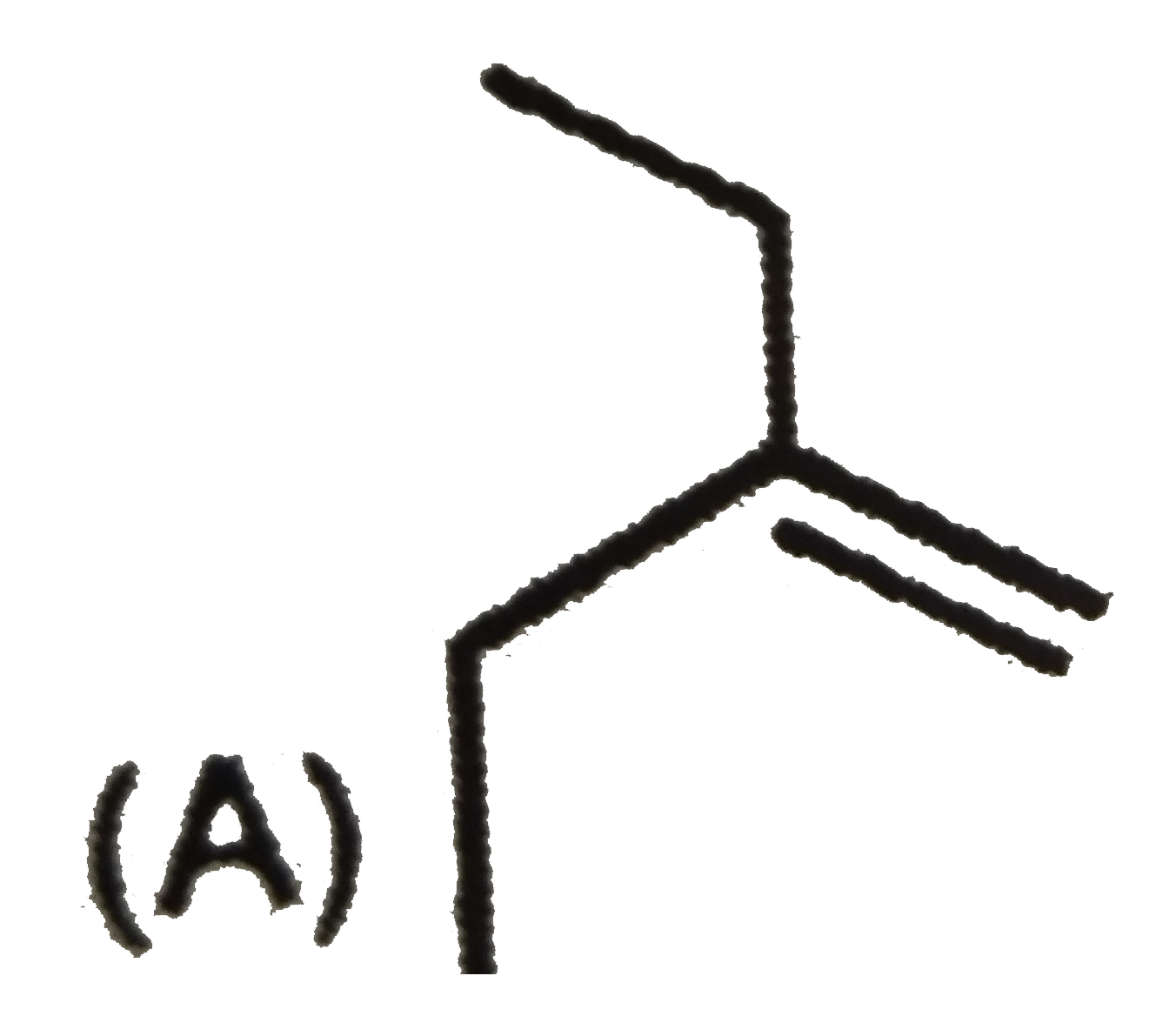
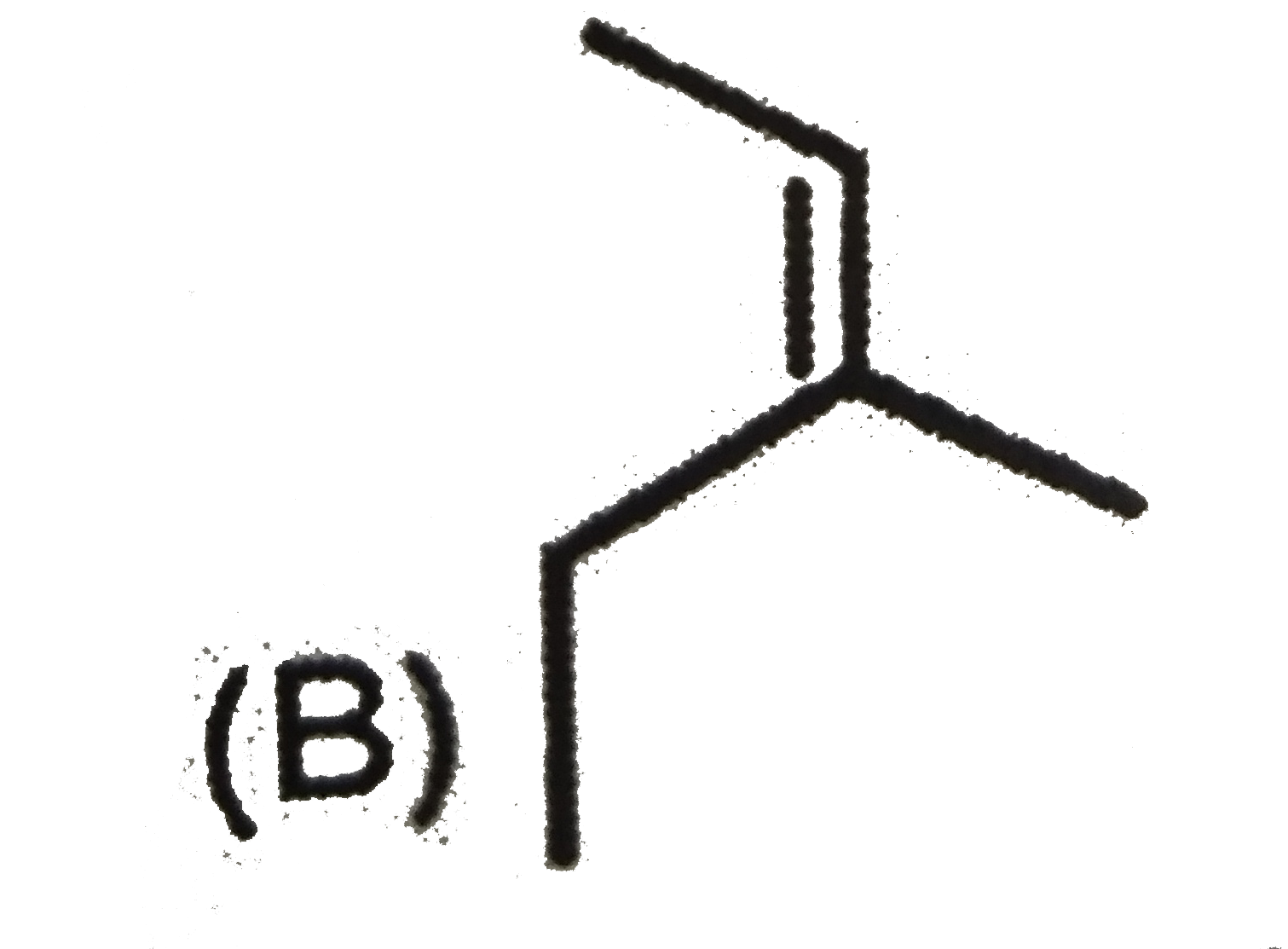
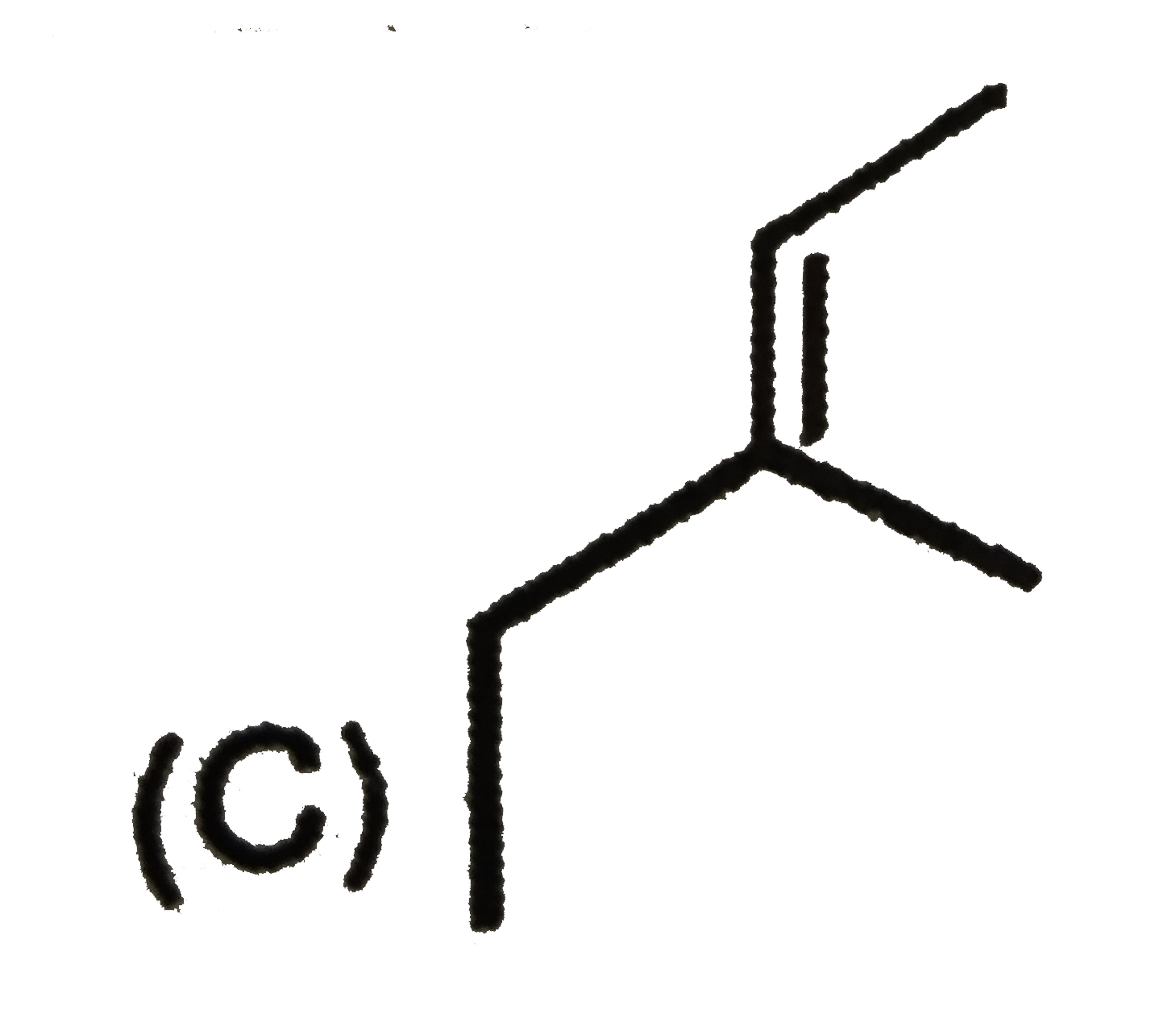
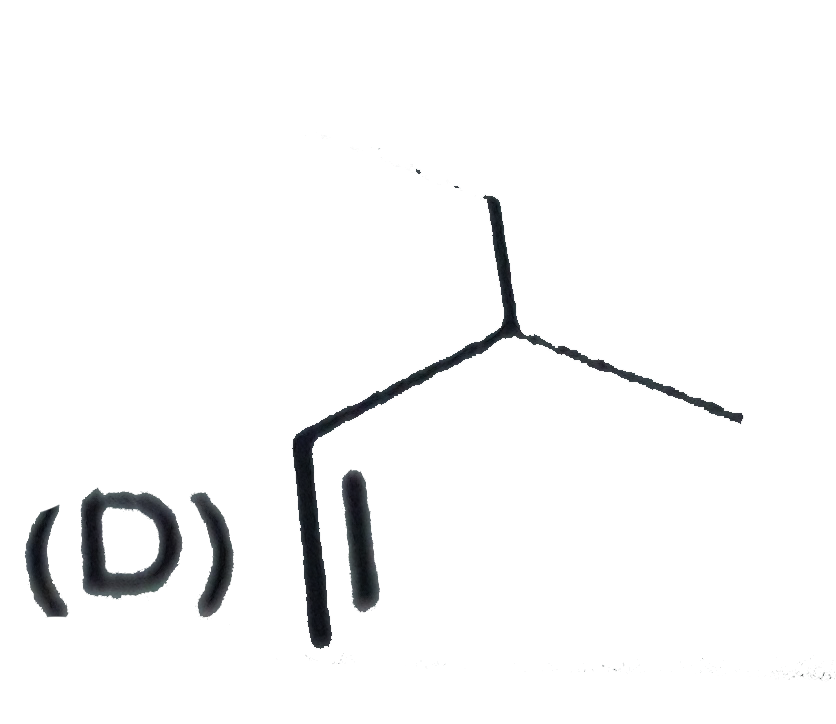
Identify the alkene which will not provide the following alcohol upon oxymercuration demercuration. |
|
Answer»
|
|
| 48. |
Identify processes under the following conditions (i) dt = 0 (ii) dP = 0 (iii) dV=0 |
|
Answer» Solution :(i) Isothermal process:Isothermal process is defined as one in which the TEMPERATURE of the system remains constant, during the change from its initial to FINAL states . For an Isothermal process dT = 0 (ii) Isobaric process: Isobaric process is defined as one in which the pressure of the system remains constant during its change from the initial to final process dP = 0 (iii) Isobaric process: Isochoric process is defined as one in which the VOLUME of system remains constant during its change from initial to final state of the process . For an isochoric processes DV= 0 |
|