Saved Bookmarks
This section includes 7 InterviewSolutions, each offering curated multiple-choice questions to sharpen your Current Affairs knowledge and support exam preparation. Choose a topic below to get started.
| 1. |
Identify numbr of substitutents those are deactivating but ortho and para directing. -underset(..)overset(..)(F :),-CH_(3),-overset(O)overset(||)(C)-NH_(2),-CH=CH-overset(O)overset(||)(C)-OH,-underset(..)overset(O)overset(||)(S)-C_(2)H_(5) -underset(O)underset(||)overset(O)overset(||)(S)-C_(2)H_(5),-overset(..)(N)=O,-overset(O)overset(||)(C)-NH_(3),-CH=CH-overset(O)overset(||)(C)-H |
|
Answer» |
|
| 2. |
Identify number of reactions that can give benzene as major product. |
|
Answer» |
|
| 3. |
Identify molecular weight of final product (Y). |
| Answer» SOLUTION :N//A | |
| 4. |
Identify mixture of ions (A): |
|
Answer» `NO_(2)^(-)` and `Br^(-)` |
|
| 5. |
Identify Lewis acid and Lewis base in the following NH_3, BF_3, N^(+) O_2 , Co^(3+), Mg^(2+) , H_2O, OH^(-), Cl^(-) , C_6H_5NH_2 , AlCl_3, FeCl_3, BCl_3, C_6H_5O^- |
|
Answer» Solution :LEWIS acid : `BF_3 , N^(+)O_2 , CO^(3+) , MG^(2+) , AlCl_3, FeCl_3, BCl_3` Lewis Base : `NH_3, H_2O, OH^(-) , Cl^(-) , C_6H_5NH_2, C_6H_5O^-` |
|
| 6. |
Identify incorrect statement regarding photochemical smog |
|
Answer» It is OXIDISING in nature |
|
| 8. |
Identify electrophilic centre in the following: CH_(3)CH= O, CH_(3)CN, CH_(3)I |
|
Answer» <P> Solution :Due to polarity of the BOND carbon BECOMES partial positive `(+p)` `+delta` containing carbon atoms are electrophilic centers and they will have positive changer so, they are electrophilic |
|
| 9. |
Identify electron - withdrawing groups in resonance among the following : |
|
Answer» `-COOH` |
|
| 10. |
Identify disproportionation reaction |
|
Answer» `CH_(4)+2O_(2) rarr CO_(2)+2H_(2)O` |
|
| 11. |
Identify disproportionation reaction. |
|
Answer» `CH_(4)+2O_(2)toCO_(2)+2H_(2)O` `overset(+4)(2NO_(2))+2OH^(-)tooverset(+3)(NO_(2)^(-))+overset(+5)(NO_(3)^(-))+H_(2)O` |
|
| 13. |
Identify Bronsted Lowry acids in the reaction given below ? [AIH_(2)O)_(6)]^(3+)+HCO_(3) rarr [A] (H_(2)O)(OH)]^(2+) +H_(2)CO_(3) |
|
Answer» A,C |
|
| 14. |
Identify basic oxide. |
|
Answer» `SiO_2` |
|
| 15. |
Identify anions of 'A' and 'B': |
|
Answer» `SO_(3)^(-)` and `(S+SO_(4)^(2-))` |
|
| 16. |
Identify and indicate the presence of centre of chirality, if any, in the following molecules? How many stereoisomers are possible for each ? (i) 2-Aminobutane (ii) 3-Bromopent-1-ene (iii) 1, 2-Dichloropropane, (iv) 3-Methyl-1-pentene |
Answer» SOLUTION :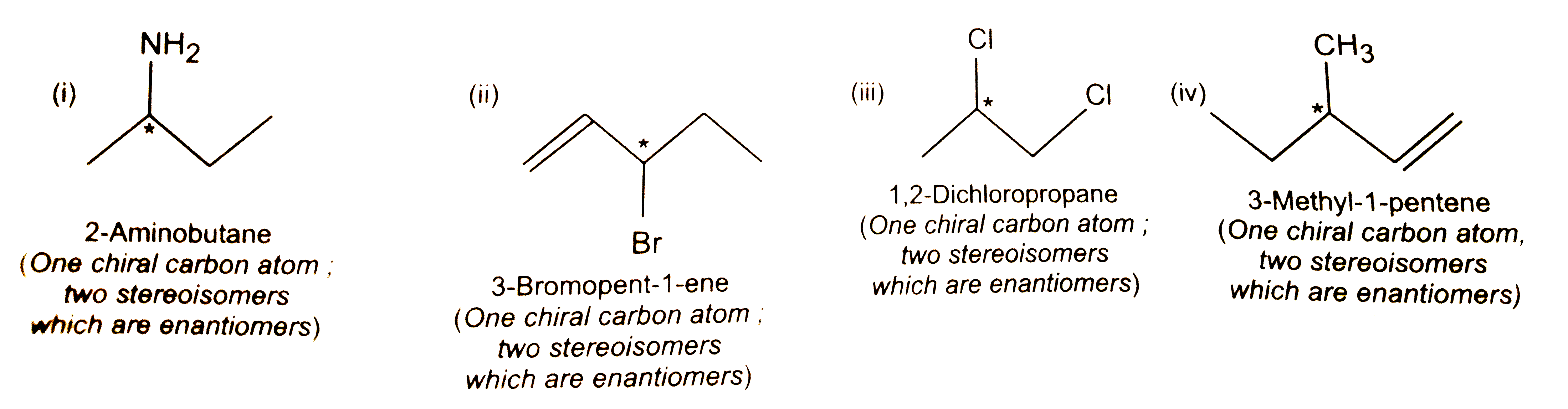
|
|
| 17. |
Identify acidic oxide |
|
Answer» `SiO_2` |
|
| 18. |
Identify A,Band C from the following equation underset((C ))underset(darrNa//NH_(3))underset((A))(C_(4)H_(6))overset(Pd-CaCO_(3))(to)(B) |
Answer» SOLUTION :
|
|
| 19. |
Identify A,B and C from the following equation. underset((A))(C_(4)H_(9)Br) underset(Delta)overset(KOH(aq))to Bunderset("Peroxide")overset("HBr")toC |
| Answer» Solution :`UNDERSET((A))(CH_(3)-underset(CH_(3))underset(|)overset(CH_(3))overset(|)(C)=Br) underset(Delta)overset(KOH(ALC))to underset((B))(CH_(3)-overset(CH_(3))overset(|)(C)=CH_(2)) underset("PEROXIDE")overset(HBR)to underset((C)" iso-butyl bromide")(CH_(3)-underset(Br)underset(|)overset(CH_(3))overset(|)(C)=CH_(3))`. | |
| 20. |
Identify Aand B from the following . C_(2)H_(6)Ooverset("con."H_(2)SO_(4))underset(430-440K)(to)Aoverset(H_(2))underset(NI,298K)(to)B |
| Answer» Solution :`UNDERSET("Ethanol")(C_(2)H_(6)O)overset("con."H_(2)SO_(4))underset(430-440K)(to)underset("Ethene")underset((A))(CH_(2)=CH_(2))overset(H_(2))underset(NI,298K)(to)underset("ETHANE")underset((B))(CH_(3)-CH_(3))` | |
| 22. |
Identify (A) to (G)Alkene (A) and Alkene (B) overset(Dil. H_(2)SO_(4))rarr Sme alcohol (C) |
|
Answer» Solution :Procedding reverse, the structure of `(A)` is `:` `D.U. ` in `D=1^(@)`, for KETO group `(` since,ALDEHYDE is not obtained in oxidation with acidic `KMnO_(4))`. The structure of `(D)=` 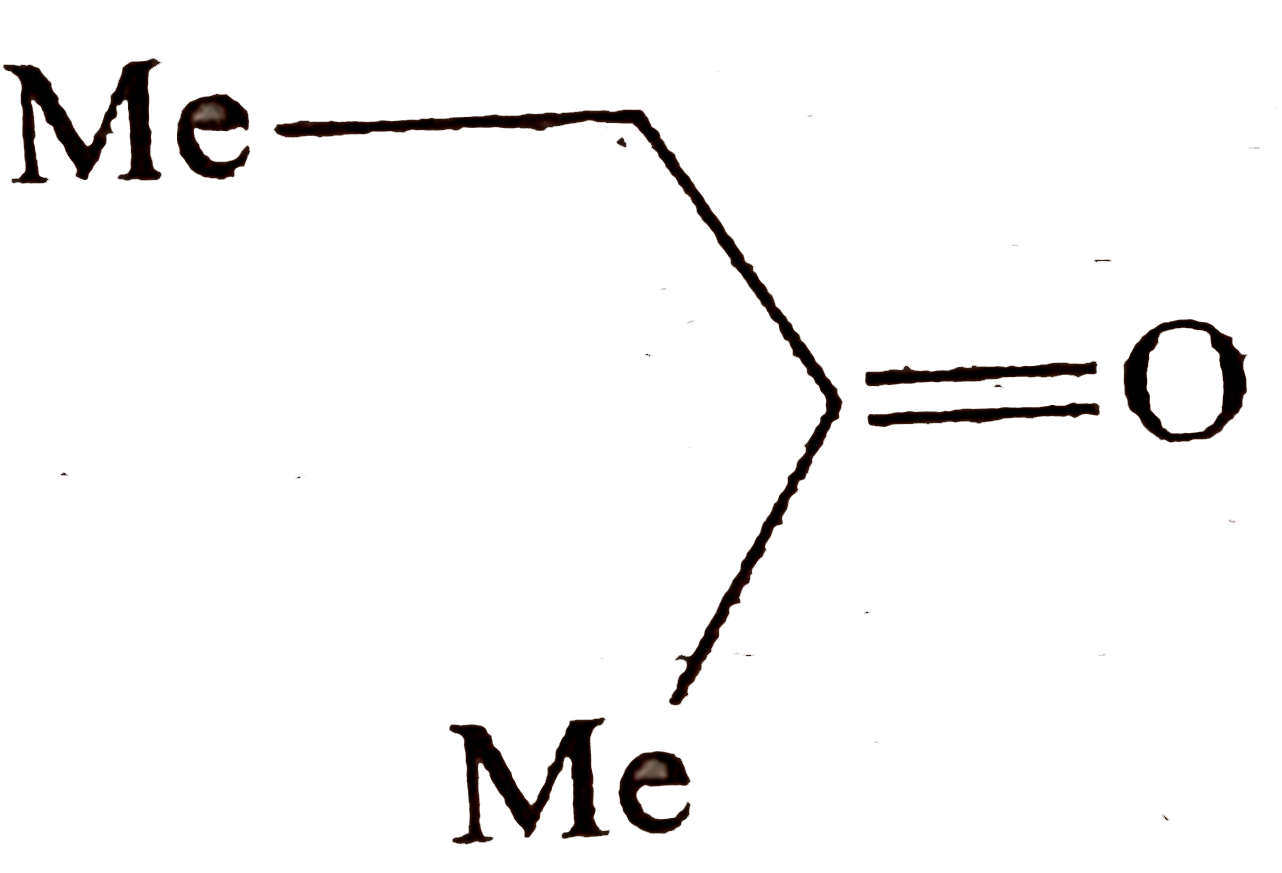 The structure of `(E)=` It is an ACID and `D.U. =1^(@)`. 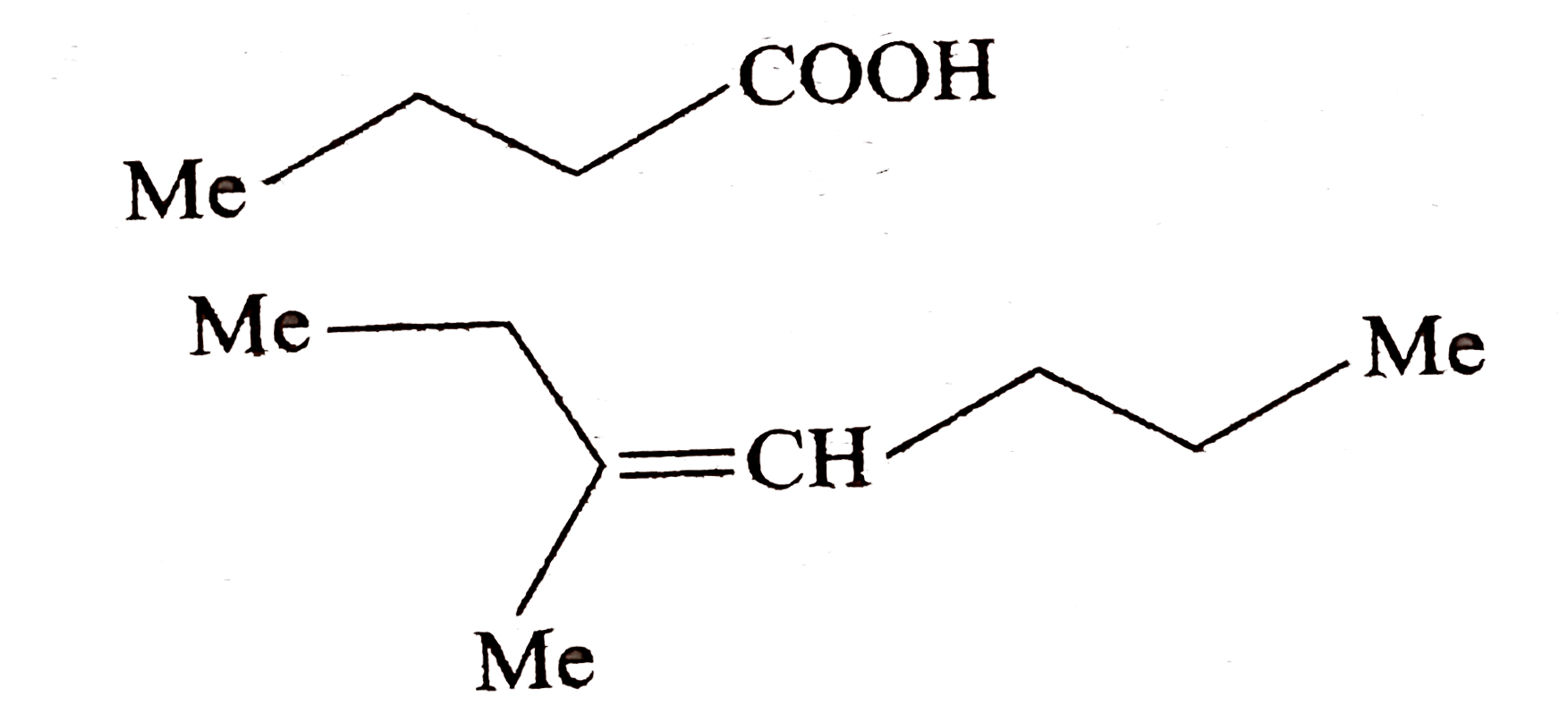 The structures of `(F)` and `(G)`, respectivel, are the following `:` 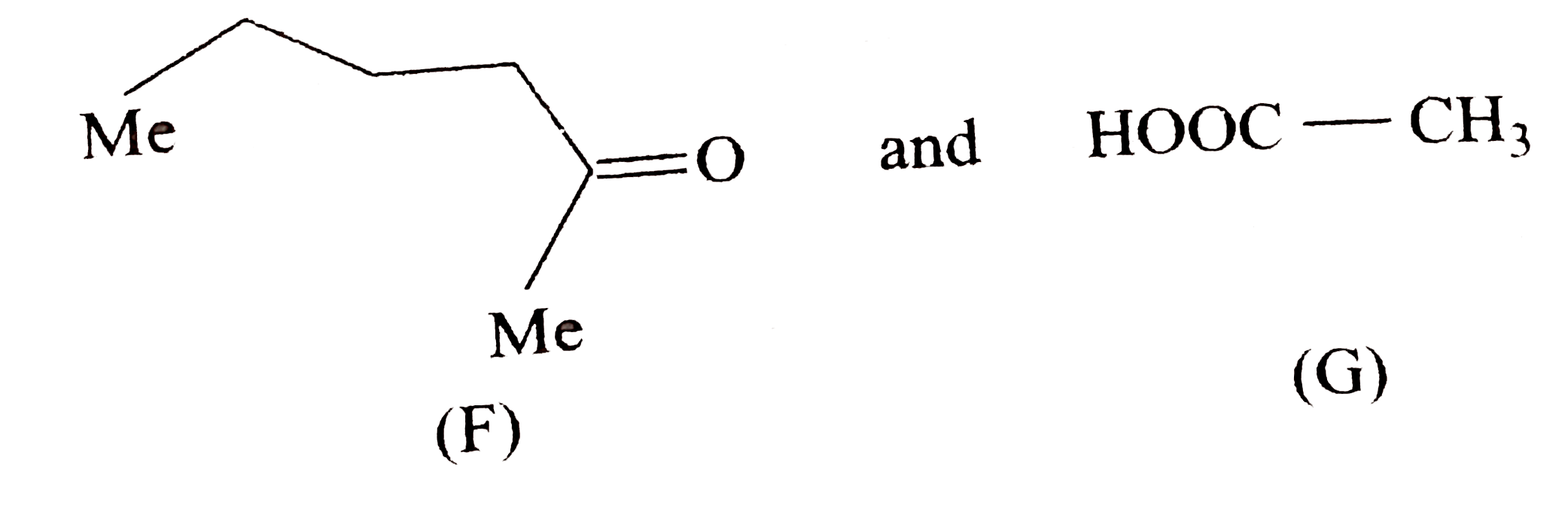 The structure of `(B)` is `:` 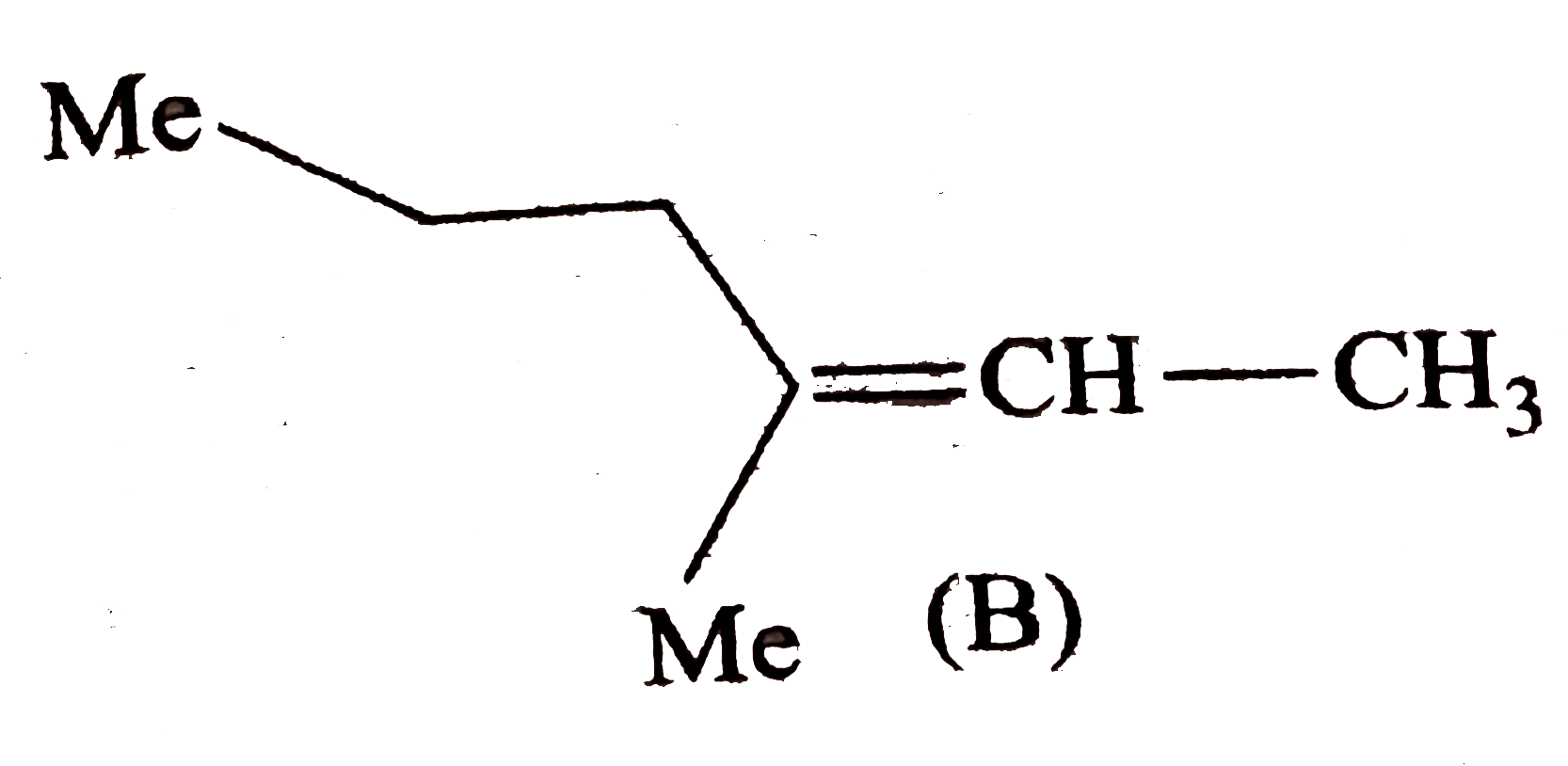 Reaction `:` 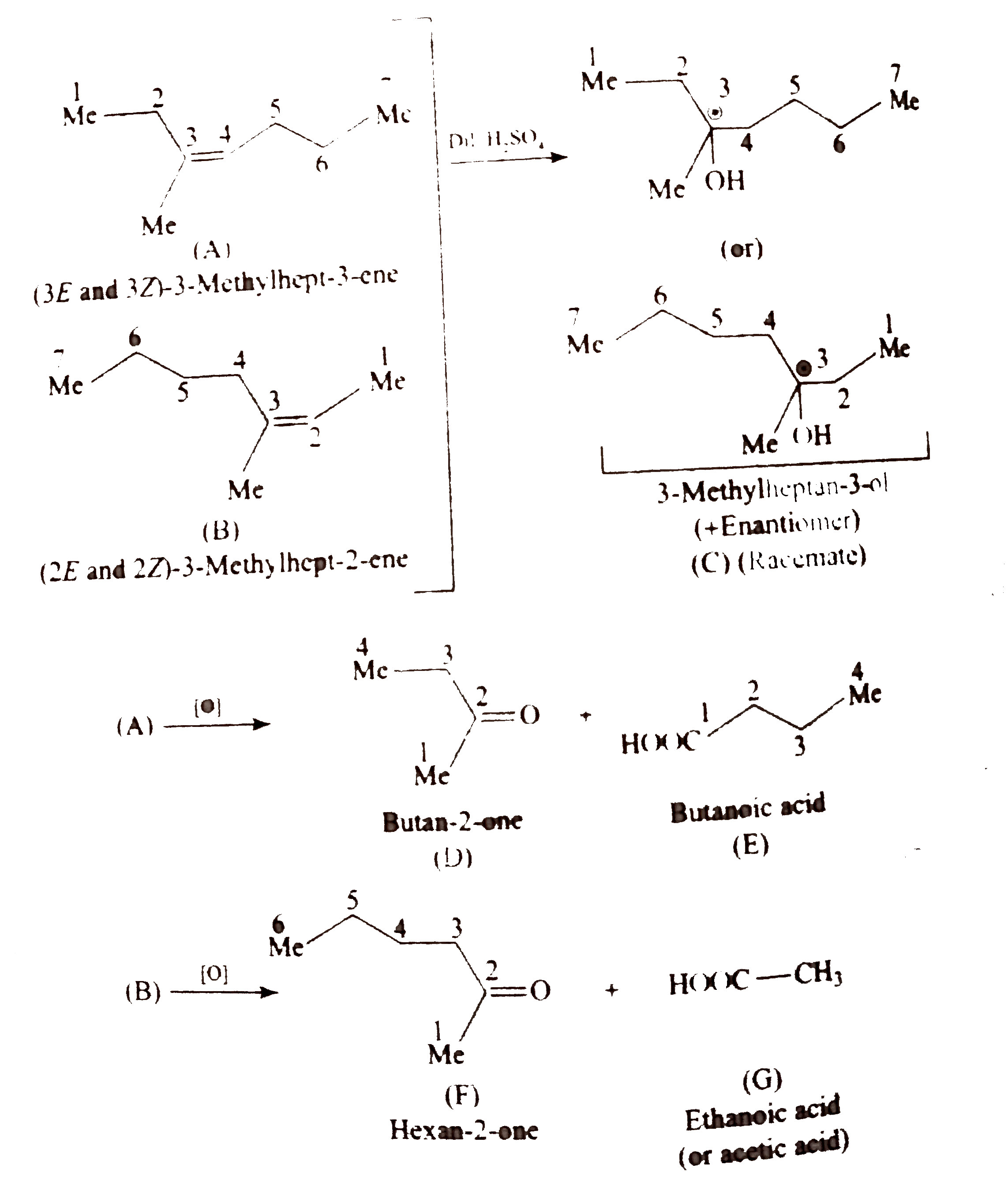
|
|
| 23. |
Identify (A) to (C). |
Answer» SOLUTION :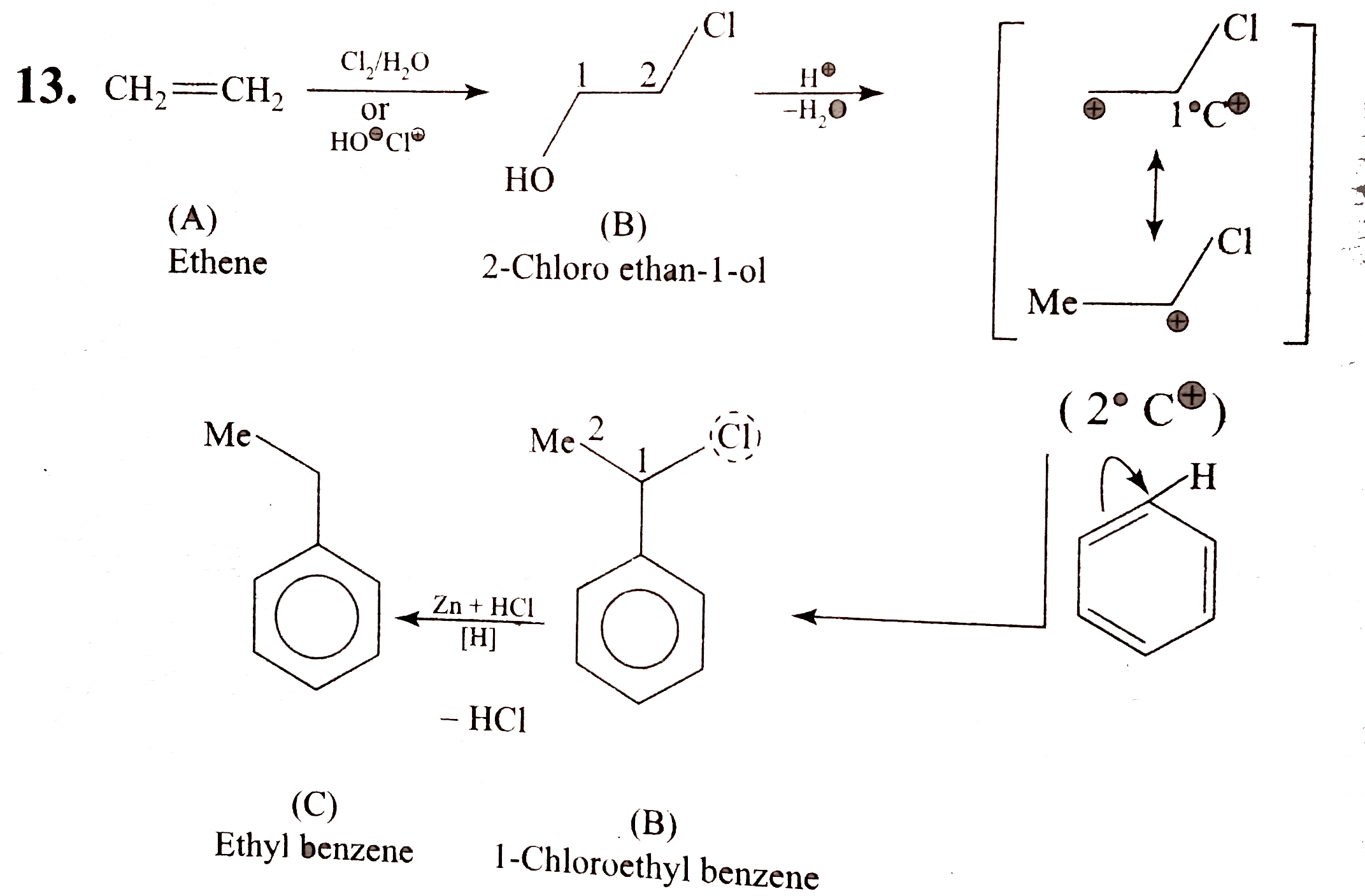
|
|
| 24. |
Identify a reagent from the following list which can easily distinguish between 1-butyne and 2-butyne: |
|
Answer» BROMINE , `C Cl_4` |
|
| 25. |
Identify a reagent from the following list which can easily distinguish between 1 -butyne and 2-butyne. |
|
Answer» bromine `C Cl_(4)` |
|
| 26. |
Identify a reagent from the following list which can easily distinguish between 1- butyne and 2-butyne. |
|
Answer» bromine, `C Cl_(4)` |
|
| 27. |
Identify A and B in the reaction given below "Ethane nitrile"underset(underset(underset(-NH_(3))(+2H_(2)O))(aq. H_(2)SO_(4)))overset("Hydrolysis")(rarr)A underset(underset(underset(-CO_(2))(Delta))("Sodalime"))overset("Decarboxylation")(rarr)B |
|
Answer» ACETONE, Methane |
|
| 28. |
Identify A and B in the given reaction. CF_2 Cl_(2(g)) overset(A)to B + CF_2 Cl_(2(g)) |
|
Answer» `HV , CL^-` |
|
| 29. |
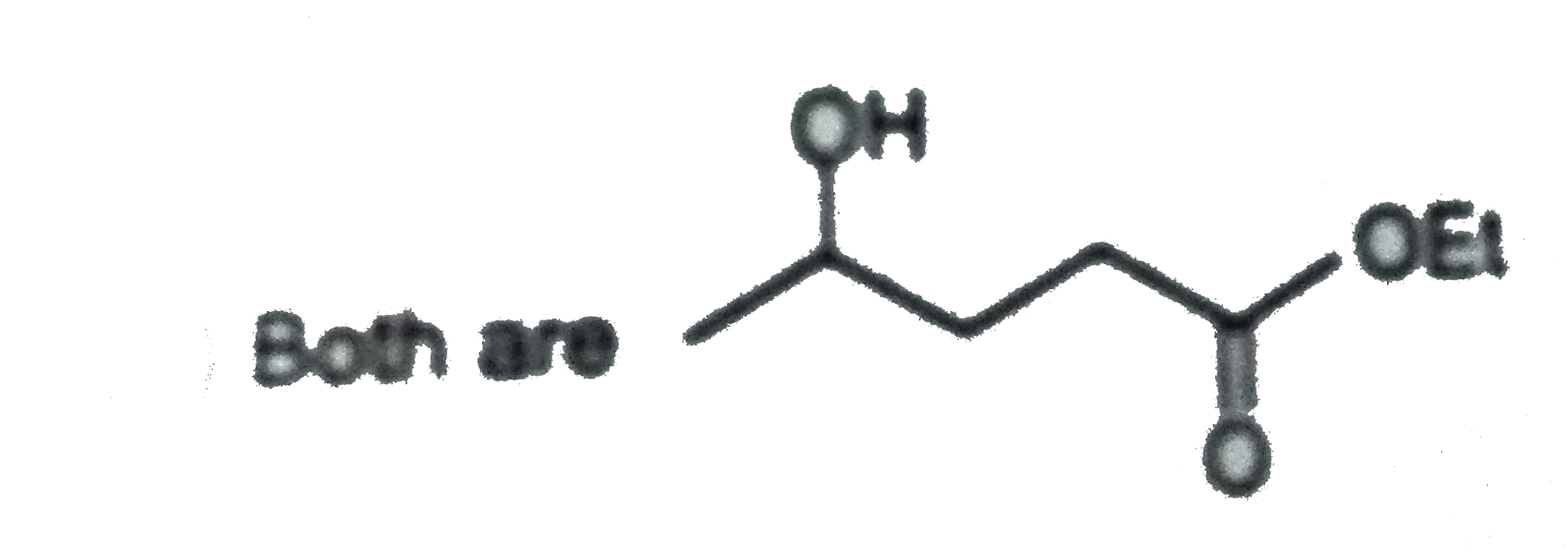
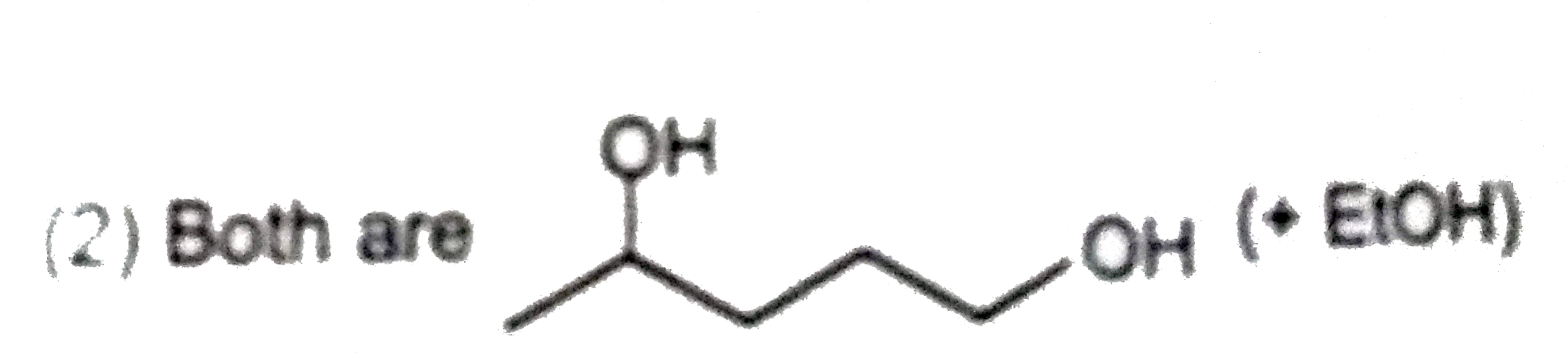
Identify a and b, in the following reactions : |
|
Answer» |
|
| 30. |
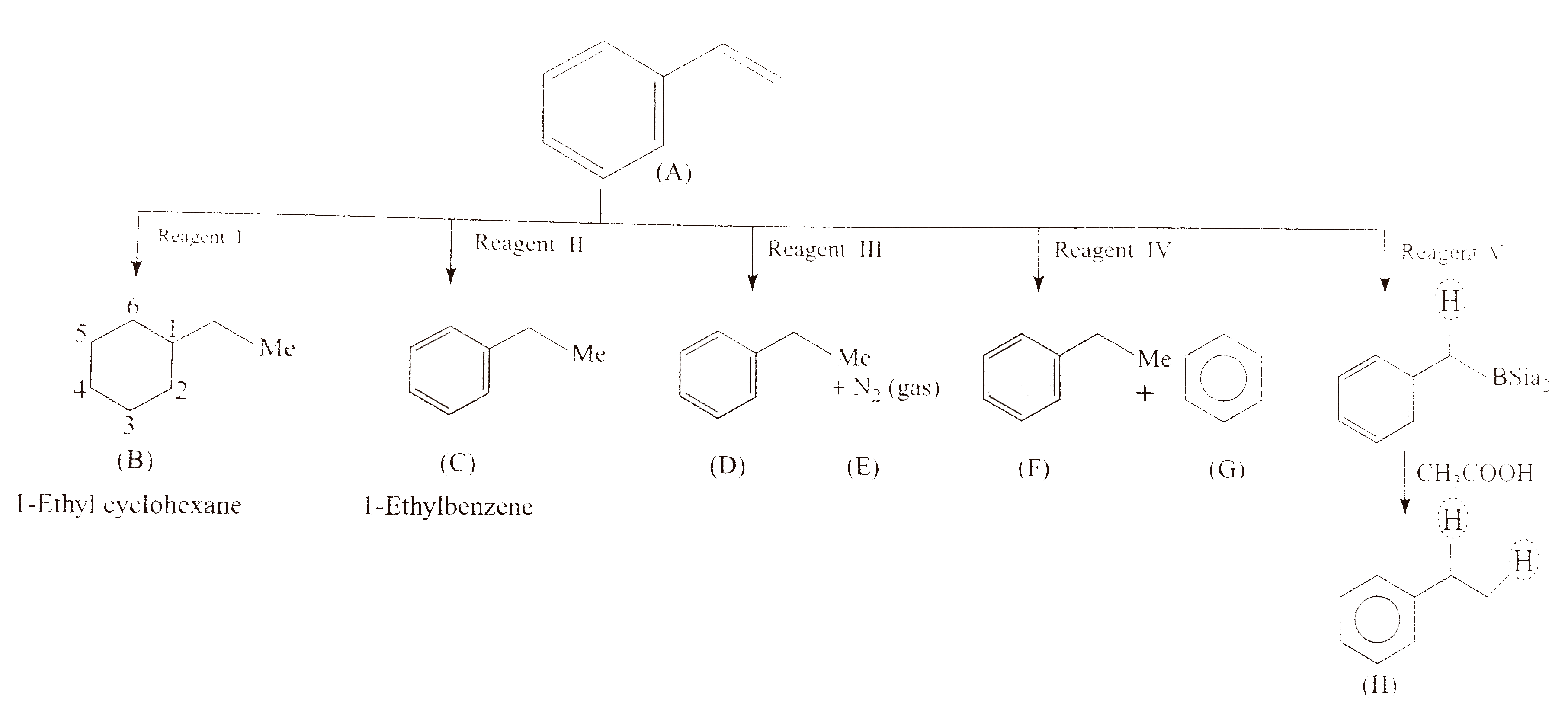
Identify A and B in the following reaction scheme? |
|
Answer» Both A and B are mixture of ortho and para chloro toluenes |
|
| 31. |
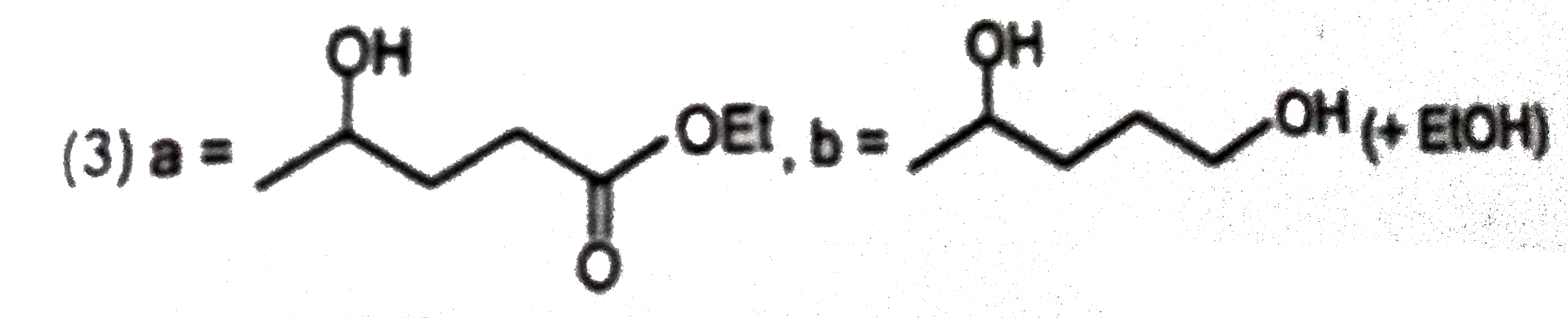
Identify a & b, in the following reaction : |
|
Answer»
|
|
| 35. |
IdentiflytheCORRECTorderof decreasingionizationenthalpiesof alkalimetals |
|
Answer» `LI GT NagtK gtRBgtCs` |
|
| 36. |
Identifity disporportionation reaction |
|
Answer» Solution :Reaction in which the same substance is oixidised as well as reduced are CALLED DISPROPORTIONATION reaction writing the O.N of eachelement above its SYMBOLS in the following reaction we have (a) `C H_(4)+2O_(2)rarrCO_(2)+2H_(2)O (b) CH_(4)+4CI_(4)RARRC CI_(4) + 4HCI (c ) 2F_(2)+2OH^(-)rarr2F^(-)+OF_(2)+H_(2)O (d) 2 N O_(2)+2OH^(-)rarr NO_(2)^(-)+ANO_(3)^(-)+H_(2)O^(-2)` Thus in reaction (d) N is both oxidised as well as reduced since the O.N of N increases from +4 in `NO_(2)` to +5 in `NO_(3)^(-)` and decreases from+4 in `NO_(2)` to +3 in `NO_(2)^(-)` Thus option (d) is correct |
|
| 37. |
Identified the product Z in the following sequence of reaction "Phenol" overset(NaOH)rarrX underset(4-7 atm, 410K)overset(CO_(2))rarrY overset(H_(3)O^(+))rarrZ |
|
Answer» Aspirin |
|
| 38. |
Identfiy the substance oxidised reduced oxidising agent and redcuing agent for each of the folloiwng rection (a)AgBr(s)+C_(6)H_(6)O_(2)(aq)rarr2()Ag(s)+2HBr(aq)+C _(6)H_(4)O_(2)(aq) (b)HCO(l)+2[Ag(NH_(3))^(2)]^(3+)(aq)+3OH^(-)(aq)rarr2Ag(s)+HCOO^(-)(aq)+4NH_(3)(aq)+2H_(2)O (c )HCHO(l)+2Cu^(2+)(aq)+5OH^(-)rarrCu_(2)(s)+HCOO^(-)(aq)+3H_(21)OO(l) (d)N_(2)H_(4)(l)+2H_(2)O_(2)rarrN_(2)(g)+4H_(2)O(l) (e )Pb(s)+PbO_(2)(s)+2H_(2)SO_(4)(aq)rarr2PbSO_(4)(s)+2H_(2)O(l) |
Answer» SOLUTION :
|
|
| 39. |
Identification of a pollutant as organic, inorganic (or) organometallic origin is called |
|
Answer» CLASSIFICATION |
|
| 40. |
Identification of a pollutant as organic, inorgamic (or) organometallic origin is called |
|
Answer» CLASSIFICATION |
|
| 41. |
Identfity molecular solide, covalent solid, ionic solid: P_(4)(s), S_(8)(s), SiC (s), Al_(2)O_(3)(s), He(s), Al_(2)Cl_(6)(s). |
|
Answer» SOLUTION :Molecular SOLIDE `RARR P_(4)(s), S_(8)(s), He(s), Al_(2)Cl_(6)(s)` Covalent SOLID `rarr SiC` Ionic solid `rarr Al_(2)O_(3)(s)` |
|
| 42. |
Idenfity oxidised ,reducedoxidising agent and reducing agent for each of the following reactions 2AgBr(s)+C_(6)H_(6)(aq)to2Ag(s)+2HBr(aq)+C_(6)h_(4)O_(2)(aq) HCHO(l)+2[Ag(NH_(3))_(2)]^(+)(aq)+3OH^(-)(aq)to2Ag(a)+HCOO^(-)(aq)+4NH_(3)(aq)+2H_(2)O(l) HCIO(l)+2Cu^(2+)(aq)+5OH^(-)(aq)toCu_(2)O(s)+HCOO^(-)(aq)+3H_(2)O(l) N_(2)H(4)(l)+2H_(2)O_(2)(l)toN_(2)(g)+4H_(2)O(l) Pb(s)+PbO_(2)(s)+2H_(2)SO_(4)(aq)toPbSO_(4)(s)+2H_(2)O(l) |
Answer» SOLUTION :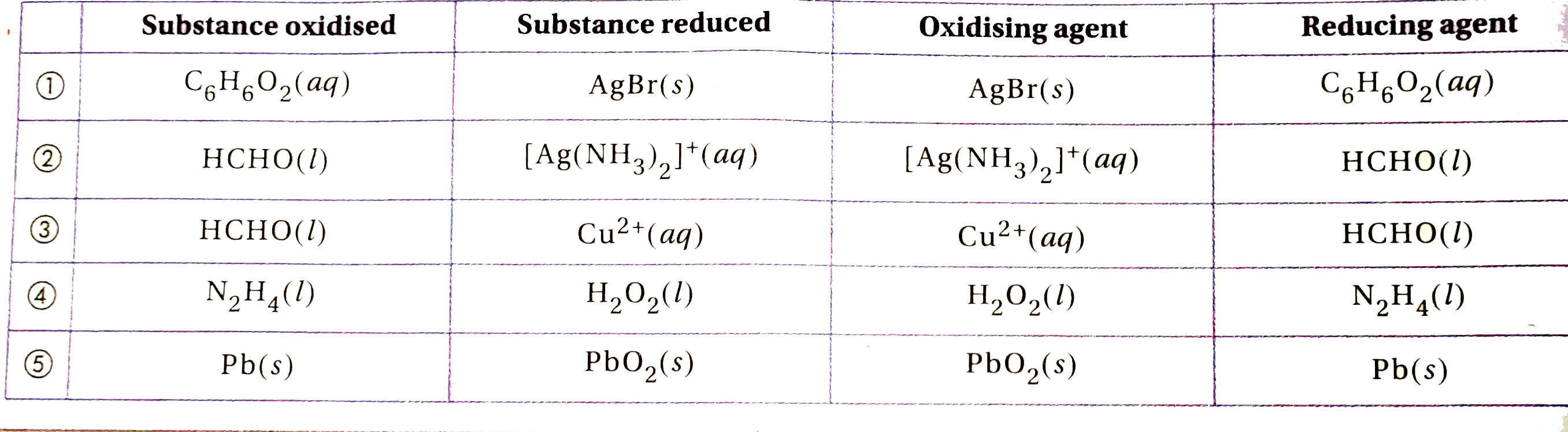
|
|
| 43. |
Ideal gas equation is represented as PV=nRT. Gases present in the universe were found idealn the Boyle's temperature range only. The compressibility factor for an ideal gas, Z= (PV)/(nRT). The main cause to show deviations were due to wrong assumptions madebout forces of attractions (which becomes significant at high pressure).olume occupied by molecules V, in PV = nRT, is supposed to be volume ofas or, the volume of container in which gas is placed by assuming thataseous molecules do not have appreciable volume. Actual volume of theas is that volume in which each molecule of a gas can move freely. Ifolume occupied by gaseous molecule is not negligible, then the term Vhould be replaced by the ideal volume which is available for free motion ofach molecule of gas. Similarly for n moles of gas V_("actual") = V-nb The excluded volume can be calculated by considering bimolecular collisions. The excluded volume is the volume occupied by the sphere of 2r for each pair of molecule. Thus, excluded volume for one pair of molecules = 4/3 pi (2r)^3 = (4 xx 8 pi r^3)/3 The excluded volume for 1 molecule = 2/3 xx 8 pi r^3 = 4 xx (4/3 pi r^3) = 4V The excluded volume for N molecules = 4NV = b (where N is Avogadro's No.) The compressibility factor for N_2 at -50^@C and 800 atm pressure is 1.95. Number of moles of N_2 required to fill a balloon of 100 L capacity is : |
|
Answer» 99.9%, 99% `=4/3 PI r^3 xx 6 xx 10^23 xx P/(RT)` at 1 BAR = 0.082%. At 10 bar = 0.82%. |
|
| 44. |
Ideal gas do not show Joule -Thoson effect as well as they cannot be liquefied ((deltaU)/(deltaV))_(T)and ((deltaT)/(deltaP))_(H) for ideal gas is zero . |
| Answer» Solution :Internal energy of an ideal gas DEPENDS only on temperature and since they have on ATTRACTIONS among their molecules `((deltaT)/(deltaP))_(H)` is ZERO i.e `MU J.T =0` . | |
| 45. |
Ice melts showly at altitudes Explain why ? |
|
Answer» Solution :`"ICE"_((s))to" Water"` The MELTING of ice is favoured at high pressure because there is decrease in volume in the FORWARD reaction. Since at high altitudes, atmospheric pressure is low and therefore, ice MELTS SLOWLY. |
|
| 46. |
Ice is less dense than water at 0^(@)C. Justify this statement. |
| Answer» Solution :Inice, each oxygen atom is SURROUNDED tetrahedrally by through hydrogen bonds to four water molecules. That is, the presence of two hydrogen atoms and two LONE electron pairs on oxygen) in each water molecule results in a three-dimensional structure. The arrangements creates an open structure, which in turn accounts for the fact that ice is LESS dense than water at `0^(@)C`. | |
| 48. |
Ice floats on water or ice is lighter than water. |
| Answer» Solution :Along with covalent bond & hydrogen bond,ice FORM of water exists in the tetrahydral SHAPE from bent structure by leaving vacant SPACE. Due to his vacant space is ice if floats in water. | |
| 49. |
Ice floats on water. Give reason |
| Answer» Solution :Ice has highly ORDERED 3D hydrogen bonded structure in which oxygen atom is tetrahedrally SURROUNDED by four hydrogen atoms. This gives ice a open cage LIKE structure. Density of ice is less than water. So ice FLOATS in water | |